News you may have missed #0122
September 30, 2009 Leave a comment
- Canada authorities push for Internet spy bill. The push for new Internet surveillance capabilities in Canada –dubbed the “lawful access” initiative– dates back to 1999, when government officials began crafting proposals to institute new surveillance technologies in Canadian fifth-generation networks. Internet Service Providers are skeptical of the initiative, while law enforcement and security agencies argue that the changes are long overdue.
- Peru’s former leader guilty of spying, bribery. Peru’s former strongman Alberto Fujimori pleaded guilty today to charges of wiretapping opponents and paying bribes to lawmakers and publishers during his rule from 1990 to 2000. Unfortunately, the CIA supported Fujimori and his right-hand man, Vladimiro Montesinos and even suppressed a CIA officer who tried to argue that supporting such lowlifes was politically wrong and ethically immoral.
- CIA honors two spies. CIA director Leon Panetta awarded the Trailblazer Medal (the supreme decoration in the US intelligence community) to two agents, one of whom is the late John Guilsher, who recruited Soviet scientist Adolf Tolkachev at the height of the Cold War. Are we to presume that Panetta has not read the recent paper by Benjamin Fischer, former CIA clandestine operative and retired CIA historian, who claims that Tolkachev was actually a KGB double agent tasked by Soviet intelligence with providing US military strategists with false information?












 intelNews.org
US Looks Away from Worsening Philippines Rights Record
October 1, 2009 by intelNews Leave a comment
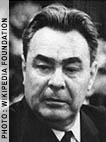
Lumbera
By JOSEPH FITSANAKIS and IAN ALLEN | intelNews.org |
Just days after Filipino prizewinning poet and dramatist Bienvenido Lumbera caught a Naval Intelligence Security Force agent spying on him outside his home, another Filipino intellectual has come forward with allegations of government spying. Pedro “Jun” Cruz Reyes, professor of creative writing at the University of the Philippines in Diliman, Quezon City, said he has been the subject of surveillance investigations by government agents since 2006. Such incidents are not a new phenomenon in the Philippines. In 2005, the US State Department noted in its annual human rights report that the Philippines National Police was the country’s “worst abuser of human rights” and that government security elements often “sanction extrajudicial killings and vigilantism”. However, the report adds that these practices are utilized “as expedient means of fighting crime and terrorism”, which may explain why no discernable action has been taken by US authorities to prevent them. In an article published today in The Foreign Policy Journal we examine the recent record of US-Philippine relations. Continue reading at The Foreign Policy Journal →
Filed under Expert news and commentary on intelligence, espionage, spies and spying Tagged with 2009 National Intelligence Strategy, Abu Sayyaf Group, Afghanistan, Bahrain, Bienvenido Lumbera, Bill Coultrup, Bill Nelson, Blackwater, Bush Administration, China, CIA, Cold War, Diliman (Philippines), diplomacy, domestic intelligence, Ferdinand Marcos, Gloria Macapagal-Arroyo, Hannival Mondido Guerrero, human rights, Ian Allen, Iraq, Joseph Fitsanakis, Kuwait, Leon Panetta, Major Non-NATO Ally, Manila (Philippines), Moro ethnic group, Morocco, NATO, Naval Intelligence Security Force (Philippines), News, Pedro 'Jun' Cruz Reyes, Philippines, Philippines National Police, Quezon City (Philippines), Ramon Farolan, Robert Gates, Timothy Keating, United States, US Department of State, US DoD, US Joint Special Operations Task Force-Philippines