Files reveal names of Americans targeted by NSA during Vietnam War

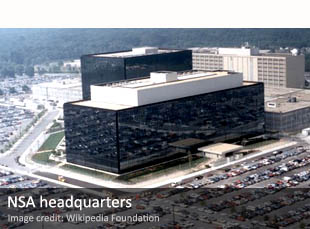
NSA headquartersBy JOSEPH FITSANAKIS | intelNews.org
The names of several prominent Americans, who were targeted by the United States National Security Agency (NSA) during the height of the protests against the Vietnam War, have been revealed in declassified documents. The controversial communications interception operation, known as Project MINARET, was publicly acknowledged in the mind-1970s, during Congressional inquiries into the Watergate affair. We know that MINARET was conducted by the NSA between 1967 and 1973, and that it targeted over a thousand American citizens. Many believe that MINARET was in violation of the Agency’s charter, which expressly prevents it from spying on Americans. But despite the media attention MINARET received during the Watergate investigations, the names of those targeted under the program were kept secret until Wednesday, when the project’s target list was declassified by the US government. The declassification decision was sparked by a Freedom of Information Request filed by George Washington University’s National Security Archive. The two Archive researchers who filed the declassification request, William Burr and Matthew Aid, said MINARET appears to have targeted many prominent Americans who openly criticized America’s involvement in the Vietnam War. The reason for the surveillance was that US President Lyndon Johnson, who authorized the operation, was convinced that antiwar protests were promoted and/or supported by elements outside the US. The newly declassified documents show that Dr. Martin Luther King, Jr., was a major surveillance target of the government. Read more of this post

Belgian state telecom targeted by ‘international espionage’

Belgacom headquartersBy JOSEPH FITSANAKIS | intelNews.org
Belgium’s largest telecommunications service provider has fallen victim to a sophisticated cyberespionage operation that was most likely carried out by a government agency of another country. According to Flemish newspaper De Standaard, the operation targeted Belgacom, which is Belgium’s state-owned telecommunications company. The paper said that the cyberhacking was uncovered in June of this year during a routine maintenance check by technicians, who detected an “unidentified virus” that had infected several dozen mainframe computers. Belgacom’s technical experts seem to think that the malware had been active for at least two years on Belgacom’s computers, and that it specifically targeted telecommunications traffic carried by Belgacom’s international subsidiaries. Among them is Belgacom International Carrier Services (BCIS), which specializes in providing wholesale carrier services to over 1,000 telecommunications service providers across Africa and the Middle East. De Standaard’s article said that the sophisticated malware had been designed so as to prevent disruption of BCIS’ voice and Internet traffic, thus remaining unnoticed. Its ultimate goal, said the paper, was “not sabotage, but rather collecting strategic communications content”. Federal prosecutors told the Reuters news agency that the technical complexity of the virus meant that it must have been designed by “an intruder with significant financial and logistic means”. The malware’s complexity, coupled with its grand scale, “points towards international state-sponsored cyber espionage”, said the Federal prosecutors. Commenting on the story, De Standaard claimed that “everything points to the [United States] National Security Agency as the culprit” of the cyberespionage. Read more of this post

NSA ‘broke, circumvented Internet encryption standards’

NSA headquartersBy IAN ALLEN | intelNews.org |
The United States National Security Agency (NSA) has been able to crack or get around basic encryption standards used daily by hundreds of millions of Internet users, according to newly leaked documents. The New York Times said on Friday that it was in possession of documents that prove that the NSA is not restrained by universal encryption standards used in the US and abroad. The NSA, which is America’s largest intelligence agency, and is tasked by the US government with intercepting electronic communications worldwide, is now able to routinely circumvent Secure Sockets Layer or virtual private networks, as well as encryption protection standards used on fourth-generation cell phones. It therefore has instant access to the content of billions of encrypted messages exchanged by users of some of the Internet’s most popular email companies, including Gmail, Hotmail, Yahoo and Facebook. The paper said it obtained the documents from Edward Snowden, a technical contractor for the NSA who defected to Russia this past summer. They include internal NSA memoranda that suggest the NSA deployed specially built supercomputers to break Internet encryption standards. In other cases, the Agency worked with selected companies and convinced them to “build entry points into their products”. The multi-billion effort was apparently launched by the NSA in the early 2000s, soon after the US government lost a lengthy battle with the communications industry centering on the so-called ‘clipper chip’. Read more of this post

New Snowden leaks reveal thousands of NSA privacy violations

NSA headquartersBy IAN ALLEN | intelNews.org |
New documents leaked by an American intelligence defector reveal that the National Security Agency (NSA) violated privacy protections nearly 3,000 times in 2012, many of them under an interception program that was later ruled unconstitutional. The documents were supplied to The Washington Post by former NSA and Central Intelligence Agency technical expert Edward Snowden, who recently defected to Russia. The paper published the documents on Thursday, indicating that they form part of an internal NSA audit completed in May of 2012. They detail 2,776 separate incidents of what the NSA describes as “unauthorized data collection”, between May 2011 and May 2012. The documented instances involve unauthorized interception of both email and telephone data belonging to American citizens and foreign nationals operating on American soil. The NSA is forbidden from spying on American citizens, while its interception activities targeting foreign nationals inside the US are severely limited by law. According to the audit report, some of the privacy violations occurred when foreign citizens targeted by the NSA entered US soil and continued to be monitored without prior permission from the Foreign Intelligence Surveillance Court (FISC). In other instances, the NSA’s auditors reported “inadvertent collection incidents” relating to targets believed to be foreign, and later proved to be American citizens. The report notes that the privacy violations were unintentional results of “errors and departures from standard [NSA] processes”, which occurred “due to operator errors” and the failure of NSA personnel to “follow procedures”. Read more of this post

Germany plans to limit NSA’s access to European communications

Philipp Rösler and Angela MerkelBy JOSEPH FITSANAKIS | intelNews.org |
The government of Germany plans to implement a series of measures designed to limit America’s access to the communications of European citizens and institutions, according to senior German cabinet officials. The move is part of a broader German response to news in July that the United States spies on the communications of Germany and other European Union countries with the same intensity it spies on China or Iraq. The information was leaked by American defector Edward Snowden, a former computer expert for the Central Intelligence Agency (CIA) and the National Security Agency (NSA), who is now living in Russia. Speaking to reporters on Wednesday, Germany’s Vice Chancellor and Minister of Economics and Technology, Philipp Rösler, said Germany will take action to limit NSA’s ability to spy on European Union communications traffic. The first step in the process will be to build “a strong European information technology industry which can offer alternatives” to American-owned firms that collaborate with the NSA, said Rösler. Further steps will include augmenting the security of European cloud computing processes and structures, and strengthening contacts between established information technology companies and start-up enterprises. At the same time, Germany will enter negotiations with the European Commission (the European Union’s executive arm) aimed at strengthening European data protection legislation and legally forcing the US to stop its indiscriminate surveillance of European communications networks. Read more of this post

Are Russian spies switching to typewriters to avoid interception?

Dmitri Medvedev and Vladimir PutinBy JOSEPH FITSANAKIS | intelNews.org |
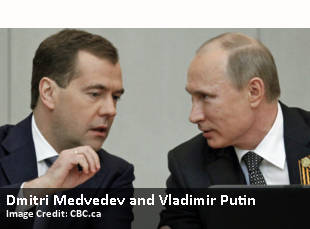
For the first time in over a decade, a Russian government department has decided to purchase typewriters, allegedly in order to safeguard classified documents against electronic interception. Russia’s Federal Protective Service has reportedly placed an order for the purchase of an estimated 20 typewriters, for 486,000 rubles –roughly US$15,000. The agency, known in Russia by its initials, FSO, is responsible for protecting high-ranking government officials, including the President of the Russian Federation, and is also tasked with operating federal emergency communications systems. It is the institutional descendant of the Soviet KGB’s Ninth Chief Directorate, which ceased to exist in 1992. According to the daily Russian broadsheet Izvestia, the FSO initially considered purchasing the typewriters in 2010, in response to a series of massive leaks of United States government classified documents by whistleblower website WikiLeaks. An unnamed source inside the FSO told the paper that the final decision to purchase the typewriters was made shortly after revelations made last month by former Central Intelligence Agency computer expert Edward Snowden. The self-styled whistleblower told Britain’s Guardian newspaper that British and American intelligence agencies targeted the electronic communications of heads of state and other senior officials during a G20 summit held in London in 2009. A principal target of the alleged spy operation was the then-Russian President Dmitri Medvedev, who headed the Russian delegation at the G20 summit. Interestingly, the FSO source told Izvestia that the initial purchase 20 typewriters will be followed by more orders, as large segments of Russia’s security establishment appear to be switching to typewriters as a means of producing classified documents. Read more of this post

World reaction to Snowden’s spying revelations continues

Edward SnowdenBy JOSEPH FITSANAKIS | intelNews.org |
Governments around the world continue to issue sharp official reactions to the revelations of large-scale spying by the United States, as Washington attempts to minimize the diplomatic fallout from the disclosures. The President of the European Commission, Jose Manuel Barroso, told a session of the European Parliament on Tuesday that, if confirmed, the claims of US espionage against European Union institutions would be “very disturbing”. He was referring to allegations, aired last week by German newsmagazine Der Spiegel, that America spies on the communications of many of its allies, including European Union (EU) agencies, with the same intensity it spies on China and Iraq. The claims were based on documents supplied by American whistleblower Edward Snowden, a former technical expert with the Central Intelligence Agency, who is currently believed to be in Russia. Numerous EU officials have contacted the US with requests for clarification, while EU ambassadors are scheduled to hold a meeting in Brussels, Belgium, on Thursday, to discuss how to commonly respond to Der Spiegel’s revelations. Some of the strongest criticisms against US intelligence policies have been issued by German officials, as some business figures in the country are raising concerns about US economic espionage against German financial interests. Christian Social Union politician Hans Michelbach reminded participants in a German parliamentary session this week that the EU may be a political ally of the US, but “is indeed a strong competitor in the global economy”. He added that business circles in Berlin are concerned that US intelligence collection aimed at German businesses would give Washington “dishonest advantages”. In Italy, the country’s Minister of Foreign Affairs, Emma Bonino, attended a special parliamentary session on Thursday, in which she assured those present that the Italian embassy in Washington was not being spied upon by US intelligence services. She noted that Italy’s “secret services have not unearthed elements of espionage in our [Washington] embassy”. The government of India, meanwhile, expressed strong concerns on Wednesday over reports that US intelligence services have especially targeted nearly 40 diplomatic missions in Washington, including that of India. Ministry of External Affairs spokesman Syed Akbaruddin said New Delhi would “take up the issue with US authorities”. But the strongest reactions to Snowden’s revelations have come from the government of Bolivia. Read more of this post

Bugging device found in Ecuador’s UK embassy where Assange lives

Ricardo PatinoBy JOSEPH FITSANAKIS | intelNews.org |
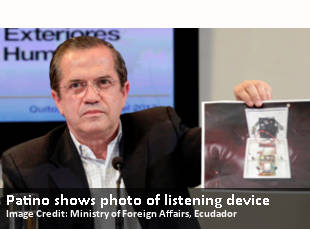
The government of Ecuador has announced the discovery of a “hidden listening device” inside its embassy in London, United Kingdom, where WikiLeaks founder Julian Assange has taken refuge. Ecuador’s Minister of Foreign Affairs, Trade and Integration, Ricardo Patino, said the device was discovered during a security sweep on June 14, in preparation for his official visit there. Speaking during a press conference on Wednesday in Ecuadorean capital Quito, Patino told journalists that the microphone was discovered inside the office of Ambassador Ana Alban, Ecuador’s envoy to the UK. Patino arrived in London two days later and met with Assange, as well as with Britain’s Secretary of State for Foreign Affairs, William Hague, to discuss Assange’s case. The WikiLeaks founder has been hosted inside the Ecuadorean embassy for over a year, resisting extradition to Sweden, where his is facing charges of rape and sexual assault. Assange denies the charges are valid and maintains that the Swedish government is intent on extraditing him to the United States, where he is likely to face more charges over Cablegate. This is the term commonly used to describe the unauthorized release in 2010 by WikiLeaks of thousands of classified cables sent to the US State Department by American diplomatic missions around the world. Patino told journalists on Wednesday that he “regretted to have to inform” them about the discovery, which he characterized as “another instance of declining ethics in the international relations between governments”. Read more of this post

US spies on Germany, EU agencies, as much as on China and Iraq

European Union offices in Washington, DCBy JOSEPH FITSANAKIS | intelNews.org |
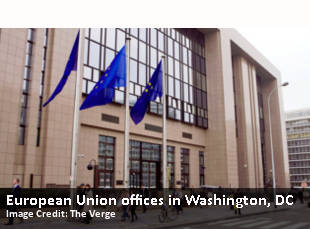
America spies on the communications of German and other European Union agencies with the same intensity it spies on China and Iraq, documents show. German newsmagazine Der Spiegel aired these claims on Sunday, based on documents it said it obtained from American whistleblower Edward Snowden. Snowden, a former technical expert with the Central Intelligence Agency, remains holed up inside the transit section of Moscow’s Sheremetyevo International Airport, as Russian authorities have rejected repeated requests by Washington to extradite him to the US. According to Spiegel, American intelligence operatives placed interception equipment in the offices of the European Union’s representation in Washington, DC, before infiltrating the building’s computer network. Similar methods were aimed at the EU’s official representation to the United Nations in New York, and even in Brussels, Belgium, where the EU is headquartered. In a separate article, also published on Sunday, Der Spiegel said the National Security Agency, America’s foremost communications interception agency, monitors data from over half a billion communications exchanges taking place in Germany each month. The data is derived from telephone calls, emails, mobile text messages, and even chat transcripts, said the newsmagazine. The information appears to suggest that United States communications intelligence agencies are far more active in Germany than in any other of the EU’s 28 member states. Late on Sunday, a spokeswoman at the Office of the German Federal Prosecutor told Spiegel that the question of whether German citizens’ rights have been violated by illegal American intelligence activities is currently being looked at, and that “criminal charges” relating to the spying revelations “appear likely”. Read more of this post

Germany probes UK spy program revealed by CIA whistleblower

Sabine Leutheusser-SchnarrenbergerBy JOSEPH FITSANAKIS | intelNews.org |
Germany wants to know whether its citizens were spied on under a British government surveillance program revealed by American intelligence whistleblower Edward Snowden. The program, codenamed Project TEMPORA, was disclosed earlier this week by Snowden, a former technical assistant for the United States Central Intelligence Agency (CIA). Snowden remains holed up at Moscow’s Sheremetyevo International Airport, as Russian authorities have rejected repeated requests by Washington to extradite him to the US. According to British newspaper The Guardian, which first wrote about Project TEMPORA on June 21, Britain’s General Communications Headquarters (GCHQ) has been able to “plug into the cables that carry internet traffic into and out” of the United Kingdom. The agency, which is tasked with communications interception, has therefore collected and stored massive quantities of foreign telephone call data and email messages, and has shared much of it with its US counterpart, the National Security Agency. On June 25, Germany’s Federal Minister of Justice, Sabine Leutheusser-Schnarrenberger, wrote a letter to her British counterpart, Chris Grayling, asking for immediate clarification on the precise legal basis for Project TEMPORA. In her letter, which was copied to the British Home Secretary, Theresa May, the German cabinet minister also inquires whether TEMPORA has been authorized by the appropriate judicial authorities. She argues that “European institutions should shed light on this [issue] immediately” and warns her British colleagues that she plans to raise the subject during the July 2013 meeting of European  Union Justice and Home Affairs ministers, which will be held in Brussels, Belgium. Read more of this post

Skype set up secret project to enable government snooping

SkypeBy IAN ALLEN | intelNews.org |
Skype, the world-famous company that provides Internet-based communications between registered users, set up a secret project five years ago to facilitate persistent requests by government agencies to listen in on users’ phone calls. The New York Times revealed the secret project, codenamed Project CHESS, on Wednesday, citing individuals with inside knowledge of the program, who asked to remain anonymous so as “to avoid trouble with the intelligence agencies”. For many years, it was believed that the US National Security Agency (NSA) and other intelligence agencies had found it impossible to intercept Skype’s instant messaging and voice traffic. This was because, like other voice-over-Internet protocol (VOIP) communications providers, Skype uses technology that converts audio signals to data, and transports them through most of the Internet infrastructure in binary, rather than audio, format. Furthermore, Skype uses very complex algorithms to encrypt its customers’ communications. The company had repeatedly pointed to the technical complexities of VOIP communications in arguing that it was often technically impossible to facilitate communications interception requests by government authorities. In 2009, rumors began to circulate in the cybersecurity community that Skype’s VOIP encryption system had been cracked. It now seems that, around that time, the company, which was then still owned by eBay, was already negotiating with the United States government in order to help intelligence agencies gain access to its users’ communications. Read more of this post

US government secretly obtained phone records of journalists

Associated PressBy JOSEPH FITSANAKIS | intelNews.org |
The Associated Press (AP) accused the United States government on Monday of secretly obtaining telephone records of its reporters, as part of a leak inquiry related to an intelligence operation. The news agency, which is owned cooperatively by news outlets worldwide, said the Department of Justice had secretly obtained pen-register information on 20 AP telephone lines in the US. Pen-register data includes lists of all numbers contacted from a particular telephone line and the duration of each call over a defined period. The agency said the government investigation included “the work and personal phone numbers of individual reporters”, as well as AP office telephone lines in New York and Washington, and even the main telephone line used by AP correspondents at the US Capitol Building. It is believed that government prosecutors were probing the source(s) of a May 7, 2012, AP report, which disclosed that the Central Intelligence Agency (CIA) had prevented a terrorist plot by al-Qaeda in the Islamic Arabian Peninsula. AP correspondents Matt Apuzzo and Adam Goldman had cited anonymous sources in claiming that the plot, allegedly hatched in Yemen, involved placing a bomb on a US-bound civilian airplane on the one-year anniversary of the death of al-Qaeda founder Osama bin Laden. Less than a fortnight later, sources told the Reuters news agency that the White House and CIA were furious with AP’s revelation, because it allegedly forced the termination of an “operation which they hoped could have continued for weeks longer”. Read more of this post

News you may have missed #827

Brigadier General Mohammed KhaloufBy IAN ALLEN | intelNews.org |
►►Analysis: The spies who fooled the world about Iraq. On the tenth anniversary of the Iraq War, the BBC flagship investigative program Panorama has aired a documentary arguing that, even before the fighting in Iraq started, intelligence from highly placed sources was available in the UK, suggesting that the administration of Iraqi President Saddam Hussein had no weapons of mass destruction.
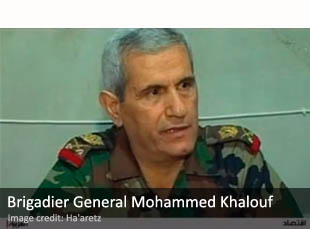
►►Syrian officer to auction spy files as general defects. Kuwaiti daily Al-Seyassah reported this past weekend that an intelligence officer that defected is offering to auction the intelligence archives of Syrian President Bashar al-Assad’s brother-in-law, Assef Shawkat. Meanwhile, Syrian Brigadier General Mohammed Khalouf and about 20 soldiers defected from the Syrian army in two separate incidents on Saturday, according to rebel-controlled media.
►►Half a million wiretapped in Turkey in last decade. Some 470,000 people in Turkey have been subject to eavesdropping over the past 11 years, said officials from the Gendarmerie Command’s intelligence unit. In 2012 alone, over 33,000 people were eavesdropped on by the Gendarmerie, according to information given to the Turkish Parliament’s Eavesdropping Examination Commission. Notably Gendarmerie authorities said that they found no information or documents regarding the case of the wire-tapping of the Turkish Prime Minister in their examination of their own records.

News you may have missed #821 (civil liberties edition)

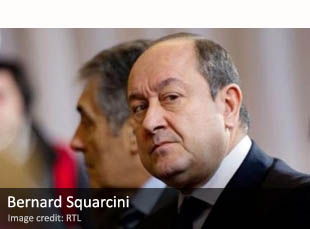
Bernard SquarciniBy IAN ALLEN | intelNews.org |
►►French domestic spy chief cleared of snooping charges. Back in October of 2011, intelNews reported that Bernard Squarcini, who then headed France’s domestic intelligence agency, the DCRI, had been charged with spying on a journalist with the daily Le Monde. The accusation was part of a wider case of domestic snooping, in which Squarcini was believed to have been trying to detect the source of government leaks to the press, allegedly on orders by then-President Nicolas Sarkozy. Earlier this month, however, an appeals court in Paris rejected two of three charges against the former DCRI chief. Squarcini could face up to five years in prison if convicted of the remaining charge.
►►FBI documents termed Occupy movement as ‘terrorism’. A number of heavily redacted US government documents, released following a Freedom of Information Act request, reveal that the FBI organized a nationwide law enforcement investigation and monitoring of the Occupy Wall Street movement beginning in August of 2011. In some documents, the FBI refers to the Occupy Wall Street protests as a “criminal activity” and “domestic terrorism”.
►►Wiretapping by Russian spy agencies doubled in five years. Wiretapping by Russia’s intelligence agencies has nearly doubled over the past five years, according to The Moscow Times. In Western countries, intelligence agencies were given wider powers after the 9/11 terrorist attacks. But in Russia, the exponential growth of wiretapping began after 2007, when terrorism by Islamic-inspired separatists was already on the decline. A federal law passed in 2010 expanded the legal grounds for wiretapping Russian citizens. Now, intelligence officers can wiretap someone’s phones or monitor their Internet activity simply because they allegedly received reports that an individual is preparing to commit a crime.

News you may have missed #799

Russell TiceBy IAN ALLEN | intelNews.org |
►►Is NSA using UK spy base to guide predator drones? Surrounded by farmland and sheep, hundreds of National Security Agency staff go to work every day at RAF Menwith Hill, where they eavesdrop on communications intercepted by satellite dishes contained in about 30 huge golf ball-like domes. Menwith Hill has been used by the NSA since the 1960s; but lately there is growing disquiet in Britain over whether intelligence gathered at the base is being used to help with the CIA’s controversial clandestine drone strikes. And the British government is keeping mum.
►►Aussie envoy seduced by spy feared her phone was bugged. Former senior Austrade commissioner to Hanoi Elizabeth Masamune, who recently admitted before an Australian court that she had sexual relations with a Vietnamese intelligence officer, told police she feared her Hanoi offices were bugged. In her statement during the trial of eight former Reserve Bank company executives on bribery charges, she said that after receiving a call from a journalist she recalled “being concerned of the level of information which she had. I was also more concerned about whether my phone was being monitored”, she said.
►►NSA whistleblower describes beating polygraph test. Russell Tice, the National Security Agency whistleblower who helped blow the lid open on warrantless wiretapping conducted by the federal government on US citizens post-9/11, says that he took between 12 and 15 polygraph tests during his nearly 20-year-long government career. The tests mellowed over time, Tice says, and they may have also gotten easier to beat. Tice, who is no longer at the NSA, says he, along with those still in contact with at the agency, marvel at how easy it is to beat the lie detector.