US spies confirm Qatar’s claims that its media were hacked by Emirates to spark crisis

Sheikh Tamim Bin Hamad al-ThaniAmerican officials appear to confirm Qatar’s allegations that its news media were hacked by its Gulf adversaries, who then used the fake news posted by hackers to launch a massive campaign against it. Tensions between Qatar and other Muslim countries have risen since late May, when the country’s state-controlled news agency appeared to publish an incendiary interview with Qatar’s Emir, Sheikh Tamim Bin Hamad al-Thani. In the interview, which appeared on May 24, the sheikh appeared to praise Saudi regional rival Iran as a “great Islamic power” and to express support for the militant Palestinian group Hamas. On the following day, Saudi Arabia, the United Arab Emirates, Egypt and Bahrain immediately banned all Qatari media —primarily Al Jazeera— from broadcasting in their territories and broke diplomatic relations with Doha. Later on, they declared a large-scale commercial embargo against the small oil kingdom. They have since threatened war unless Qatar changes its alleged support for Iran and for a number of militant groups in the region.

The Qatari government has dismissed the embargo as unjust and has claimed that Sheikh al-Thani’s controversial interview was fake, and was placed on the country’s state-owned news agency and social media as a result of a computer hack. It has also claimed to have evidence of a number of iPhones that were used from locations in Saudi Arabia and the Emirates to launch the hacks on its networks. Qatari officials have also said that an investigation into the incident is underway, but their claims have been criticized as outlandish by Qatar’s regional rivals.

Now, however, a report by The Washington Post claims that American officials have uncovered evidence that Qatar’s allegations of a computer hack are true. The paper cited “US intelligence and other officials” who spoke “on the condition of anonymity”. The officials said that US intelligence agencies recently became aware of a meeting of senior UAE state administrators that took place on May 23 in Abu Dhabi. At the meeting, the officials discussed a plan to hack Qatari news websites and social media, in order to post incendiary messages that could be used to spark a row between Qatar, the Saudi government and its allies. The alleged computer hacks is reported to have taken place on the following day. According to The Post, the only thing that US intelligence is unsure about is “whether the UAE carried out the hacks itself or contracted to have them done” by a third party.

The Post said that several US intelligence agencies, including the Central Intelligence Agency and the Federal Bureau of Investigation, refused to comment on its report. The paper received a response from the UAE embassy in Washington, DC, which said that the Emirates had “no role whatsoever in the alleged hacking described in the article”.

Author: Joseph Fitsanakis | Date: 18 July 2017 | Permalink

New clues emerge about targeted efforts by Russia to hack US elections

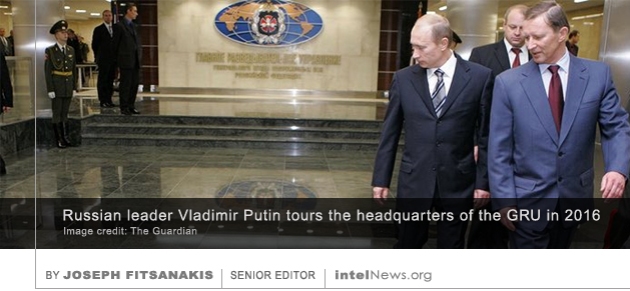
GRUNew information about carefully targeted attempts by Russian operatives to compromise the November 2016 presidential elections in the United States have emerged in a newly published intelligence document. The document, which dates from May of this year, was produced by the US National Security Agency and published on June 5 by The Intercept. The web-based outlet published the leaked document on the same day that Reality Leigh Winner, a US federal contractor with a top-security clearance, was charged with espionage for leaking classified documents to the media. This has led to speculation that Winner may be the source of the leak.

The NSA document details attempts by hackers to compromise the online accounts of over 100 election officials, as well as employees of private contractors involved in administering the election process. The attempts reportedly took place during the period leading up to November 8, 2016. To do that, hackers resorted to a technique commonly known as ‘spear-fishing’. They sent carefully crafted emails, claiming to be from Google, to specifically targeted individuals. The goal was to trick the email recipients into downloading and opening Microsoft Word attachments, which were infected with malware. The infected software would then allow the hackers to remotely access the compromised computers. The NSA document states that at least one targeted person had his or her computer compromised though the ‘spear-fishing’ technique. Importantly, the leaked document appears unequivocal in its assessment that the hackers behind the ‘spear-fishing’ attacks worked for the General Staff Main Intelligence Directorate (GRU) of the Russian armed forces. The document also states that the main goal of the attacks was to compromise the software used to manage voter registration lists, and that the attackers were operating under a “cyber espionage mandate specifically directed at US and foreign elections”.

American intelligence officials have previously said that Russian spies launched in a complex and prolonged campaign to undermine public faith in the US electoral process. It is also known that the Russian campaign targeted election officials in the months leading up to the November 2016 elections. But the NSA report is the first publicly available description of some of the specific techniques employed by the alleged Russian hackers as part of their campaign. The leaked document does not provide technical details about the ‘spear-phishing’ campaign. Nor does it discuss whether the attacks were successful, whether vote tallies were actually compromised, or whether the election process itself was sabotaged by the hackers. The Intercept said it contacted the NSA and the Office of the Director of National Intelligence, who refused to publicly comment on the content of the NSA report.

Author: Joseph Fitsanakis | Date: 09 June 2017 | Permalink

Same hacker group is targeting French and German elections, says report

Konrad Adenauer FoundationThe same group cyber-spies that attacked the campaign of French presidential candidate Emmanuel Macron is now attacking German institutions that are connected to the country’s ruling coalition parties, according to a report by a leading cyber-security firm. The Tokyo-based security software company Trend Micro published a 41-page report on Tuesday, in which it tracks and traces the attacks against French and German political targets over the past two years. The report, entitled From Espionage to Cyber Propaganda: Pawn Storm’s Activities over the Past Two Years, concludes that the hackers are seeking to influence the results of the national elections in the European Union’s two most powerful nations, France and Germany.
The Trend Micro report focuses on a mysterious group that cyber-security experts have dubbed Pawn Storm —otherwise known as Sednit, Fancy Bear, APT28, Sofacy, and STRONTIUM. It says that the group has launched an aggressive phishing campaign against German political institutions, which has intensified in the past two months. The group allegedly set up fake computer servers in Germany and the Ukraine, and used them to try to infiltrate the computer networks of two elite German think-tanks, the Konrad Adenauer Foundation (KAF) and the Friedrich Ebert Foundation (FEF). The KAF is connected with the Christian Democratic Union party, which is led by Germany’s Chancellor, Angela Merkel. The FEF has strong ties with the centrist Social Democratic Party, which is part of Germany’s governing alliance.

The report’s leading author, cyber-security expert Feike Hacquebord, told the Reuters news agency that the hackers were possibly seeking to infiltrate the two think-tanks as a means of gaining access to the two political parties that are connected with them. Some cyber-security experts in Europe and the United States have said that the Russian Main Intelligence Directorate, the country’s military intelligence agency, known as GRU, is behind the cyber-attacks on France, Germany and the United States. But the Trend Micro report did not attempt to place blame on Moscow or any other country for the cyber-attacks. The Kremlin has denied involvement with the alleged hacking operations.

Author: Ian Allen | Date: 26 April 2017 | Permalink

New report details one of history’s “largest ever” cyber espionage operations

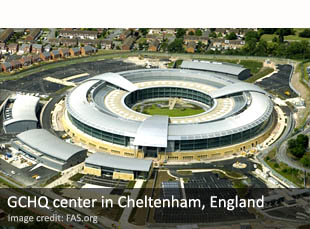
GCHQ center in Cheltenham, EnglandA new report authored by a consortium of government and private organizations in Britain has revealed the existence of a computer hacking operation, allegedly based in China, that is said to be “one of the largest ever” such campaigns globally. The operation is believed to have compromised sensitive information from an inestimable number of private companies in Southeast Asia, Europe and the United States. The report was produced by a consortium of public and private organizations, including BAE systems and the London-based National Cyber Security Centre, an office of the United Kingdom’s signals intelligence agency, the Government Communications Headquarters. It details the outcome of Operation CLOUD HOPPER, which was launched to uncover the cyber espionage activities.
According to the report, the attacks were first launched several years ago against targets in Japan’s government and private sector. But after 2016, they spread to at least 14 other countries, including France, the United Kingdom and the United States. It is claimed that the attacks are “highly likely” to originate from China, given that the targets selected appear to be “closely aligned with strategic Chinese interests”. The authors of the report have named the hacker group APT10, but provide limited information about its possible links —or lack thereof— with the Chinese government.

The report claims that APT10 uses specially designed malware that is customized for most of their targets, thus constituting what experts describe as “spear fishing”. Past successful attacks have already resulted in an “unprecedented web of victims” who have had their information compromised, say the authors. The victims’ losses range from intellectual property to personal data. One of the report’s authors, Dr. Adrian Nish, who is head of threat intelligence at BAE Systems, told the BBC that it is currently impossible to estimate the number of organizations and agencies that have been impacted by APT10’s activities.

Author: Ian Allen | Date: 05 April 2017 | Permalink

North Korea is now robbing banks, says US intelligence official

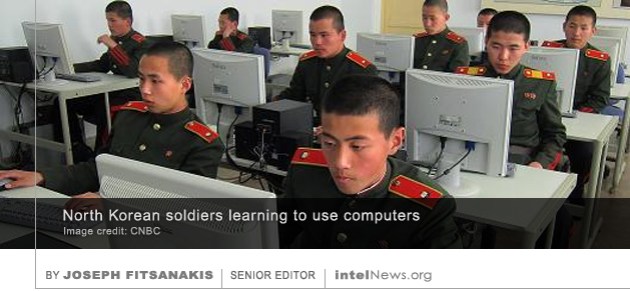
North KoreaComments made by a senior American intelligence official on Tuesday appeared to suggest that the North Korean government was behind an attempt to steal nearly $1 billion from a Bangladeshi bank last year. The heist took place in February of 2016, when a computer malware was used to issue several requests to transfer funds from Bangladesh Bank —the state-owned central bank of Bangladesh— using the SWIFT network. The hackers were able to transfer five separate sums of $101 million each to a linked Bangladesh Bank account at New York’s Federal Reserve Bank. However, when further requests were issued, Federal Reserve Bank employees contacted Bangladesh Bank and blocked further transactions. Eventually, most of the transferred funds, which neared $1 billion, were recovered; but the hackers managed to get away with approximately $81 million worth of funds.

Forensic investigators described the heist as technically advanced. The antivirus company Symantec said it identified a piece of code in the malware that is known to have been used by North Korean government hackers in the past. Not everyone agreed with the claim that Pyongyang was behind the bank heist. But those who did, said that it was unprecedented in scope and aggressiveness. Some even said that the heist showed that North Korea’s cyber capabilities were among the most sophisticated and powerful in the world.

Meanwhile the United States government did not comment on the matter. However, this past Tuesday the deputy director of the National Security Agency appeared to confirm reports that North Korea was behind the Bangladesh Bank heist. Rick Ledgett, a 30-year veteran of the NSA, who is due to retire in 2018, was speaking at a public event hosted by the Aspen Institute in Washington, DC. He reminded the audience that private researchers had connected the malware code used in the Bangladesh Bank heist with that used in previous hacking attempts launched by North Korea. “If that linkage […] is accurate”, said Ledgett, it “means that a nation state is robbing banks”. When asked by the moderator whether he believes that to be the case, Ledgett responded “I do. And that’s a big deal”. Foreign Policy magazine reached out to Ledgett following his talk and asked him for clarification about his comments regarding the Bangladesh Bank heist. But the NSA official simply said that “the public case [about the heist] was well-made”. Foreign Policy also contacted the NSA, but the agency said it preferred not to comment on the matter.

Author: Joseph Fitsanakis | Date: 23 March 2017 | Permalink

FBI launches criminal investigation into WikiLeaks’ CIA disclosures

WikiLeaksThe United States federal government has launched a criminal investigation into the public disclosure of thousands of documents that purportedly belong to the Central Intelligence Agency. The documents were released on Tuesday by the anti-secrecy website WikiLeaks. They reveal what appear to be technical collection methods used by the CIA to extract information from digital applications and electronic devices, ranging from flash drives to smart screen televisions. WikiLeaks named the collection “Vault 7”, and said that it consists of nearly 8,000 web pages and 1,000 attachments. It also said that its editors redacted hundreds of pages of computer code, in order to prevent the public release of advanced cyberweapons allegedly used by the CIA to sabotage electronic devices and systems.
On Wednesday, former director of the CIA Michael Hayden told the BBC that the disclosure appeared “incredibly damaging”, because it revealed some of the methods that the CIA uses to acquire information. But some cybersecurity experts said that the techniques contained in the leaked documents did not appear to be uniquely advanced, and most focused on exploiting technical vulnerabilities that were generally known. Still, The New York Times reported on Wednesday that the CIA had begun to assess the damage caused by the release. The agency was also trying to contain the extent of the damage, and had even “halt[ed] work on some projects”, said The Times. Officials from the CIA are reportedly in communication with the Federal Bureau of Investigation, which on Wednesday launched a criminal investigation into the “Vault 7” release.

The main purpose of the FBI investigation is to find out how WikiLeaks acquired the files. The website said that the documents were leaked by a CIA contractor, which would imply that they were accessed from a server outside the CIA’s computer network. However, federal investigators are not excluding the possibility that the leaker of the information may be a full-time CIA employee. Reports suggest that the FBI is preparing to conduct hundreds, and possibly thousands, of interviews with individuals who are believed to have had access to the documents that were released by WikiLeaks. Meanwhile, neither the FBI nor the CIA have commented on the authenticity of the information contained in “Vault 7”. WikiLeaks said that Tuesday’s release, which it codenamed “Year Zero”, was the first part of several installments of documents that will be released under its Vault 7 program.

Author: Joseph Fitsanakis | Date: 09 March 2017 | Permalink

Files released by WikiLeaks show advanced CIA technical collection methods

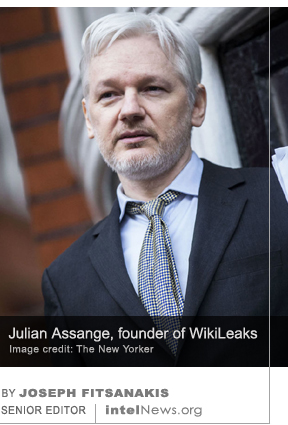
Julian AssangeThousands of documents belonging to the United States Central Intelligence Agency, which were released on Tuesday by the international anti-secrecy website WikiLeaks, are almost certainly genuine. They reveal an entire universe of technical intelligence collection methods used by the CIA to extract information from digital applications and electronic devices, ranging from flash drives to smart screen televisions. WikiLeaks named the collection Vault 7, and said that it consists of nearly 8,000 web pages and 1,000 attachments. It also said that its editors redacted hundreds of pages of computer code, in order to prevent the public release of advanced cyberweapons that are allegedly used by the CIA to sabotage electronic devices and systems.

The information contained in the leaked documents is almost certainly genuine, and most likely belongs to the CIA —though many of the programs listed may be jointly run by the CIA and the National Security Agency (NSA). These programs, with names such as McNUGGET, CRUNCHYLIMESKIES, ELDERPIGGY, ANGERQUAKE and WRECKINGCREW, appear to be designed to compromise computer systems using a series of sophisticated methods that force entry or exploit built-in vulnerabilities or systems. Targets include popular communications systems like Skype and WhatsApp, smartphones produced by Google and Apple, commercial software like PDF and Microsoft Windows, and even so-called smart televisions that connect to the Internet.

The WikiLeaks revelations are most likely related to operations conducted under the auspices of the Special Collection Service (SCS), a joint CIA/NSA program that dates to the earliest days of the Cold War. The program was started by the United States Armed Forces but was eventually transferred to civilian hands and monitored by the CIA. It used advanced communications-interception facilities around the world to collect information. Over the years, the CIA collaborated with the NSA and developed many SCS projects targeting several foreign countries using technical and human means. In recent years the SCS has been primarily operated by the NSA, which oversees the program’s technical platforms.

WikiLeaks did not reveal the source of the documents. But it said that they had been “circulated [by the CIA] among former US government hackers and contractors” and that it was one of the latter that leaked them to the anti-secrecy website. A statement by WikiLeaks said that Tuesday’s release, which it codenamed “Year Zero”, was part one of several installments of documents that will be released under its Vault 7 program. The site also claimed that the information in “Year Zero” has “eclipsed the total number of pages published over the first three years of the Edward Snowden NSA leaks”. The CIA, the NSA and the White House have not commented on this development.

Author: Joseph Fitsanakis | Date: 08 March 2017 | Permalink

British intelligence ‘among the first’ to notify US about Russian hacking

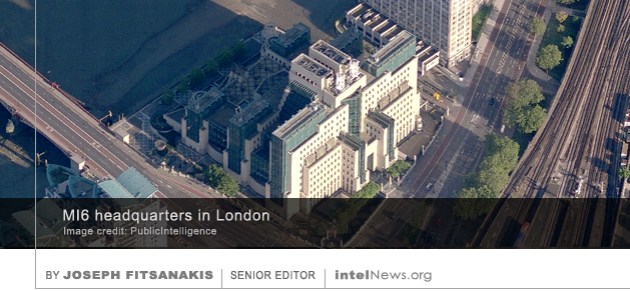
MI6British intelligence agencies gave their United States counterparts an early warning about Russian attempts to influence the outcome of the American presidential election, according to The New York Times. The American newspaper cited “two people familiar with the conclusions” of a US intelligence report, who said that British spies helped “raise the alarm” in Washington about Russian hacking. The Times were referring to a classified US intelligence report that purports to prove that Moscow tried to skew the US election results in favor of Republican Party nominee Donald Trump. The report, parts of which have been released to the public, was shared with Trump in a secret meeting with US intelligence officials last week.

Interestingly, media reports suggest that US intelligence agencies were not aware of the severity of Russian hacking operations until they were notified by allied intelligence agencies. British spy agencies were “among the first” to tell their transatlantic partners that Moscow was engaged in an allegedly large-scale operation against American political parties and institutions. According to The Times, British intelligence reports mentioned Russian hacking operations against the Democratic National Committee in Washington, DC, as well as against senior officials in the Democratic Party. There is no mention in the report about how the British acquired the information. The London-based newspaper The Guardian speculates that British intelligence agencies picked up clues by monitoring Russian government communications (voice intercepts and computer traffic). However, the possibility that the information was acquired through an agent should not be ruled out.

According to the British newspaper, government officials in London were “alarmed” by the close contacts between Moscow and the inner circle of Donald Trump’s campaign. They even contacted the Federal Bureau of Investigation and passed information about what The Guardian describes as “the depth and nature of contacts” between the Russian government and the Trump campaign. There is no information, however, about whether the FBI did anything with that information. Meanwhile, the British government is eager to cultivate good relations with the US president-elect, despite concerns in Whitehall about the close Russian connections of the incoming American administration. London needs Washington’s support as it is disengaging from the European Union, says The Guardian.

Author: Joseph Fitsanakis | Date: 9 January 2017 | Permalink

Analysis: US expulsion of Russian spies is mostly symbolic, aimed domestically

Russian embassy in WashingtonThere had been rumors for some time about a possible expulsion of Russian diplomats from the United States, in response to alleged Russian interference in the 2016 US Presidential election. The White House confirmed the rumors on Thursday morning, by announcing the expulsion of 35 accredited Russian diplomats from the US, and the reclamation of two “recreational facilities” used by Russian diplomats in New York and Maryland. Washington said the Russian diplomats are spies operating under diplomatic cover and that the recreational facilities were being “used for Russian intelligence activities”. Although the sanctions may seem significant at first, they are mostly symbolic, and their impact will be temporary and limited. They may even end up hurting the United States more than Russia.
As I told Newsweek‘s intelligence correspondent Jeff Stein earlier today, the current size of Russia’s human-intelligence presence in the United States is estimated at more than 100 officers. Therefore, the expulsion of a third of those operatives will set back Russian human-intelligence activities on US soil —but only temporarily, since most of the expelled officers will be replaced in time. Moreover, Moscow will probably respond in kind, so Washington is likely to suffer a proportional reduction of its human-intelligence presence in Russia. That could hurt the US more than Russia, because the American human-intelligence presence in Russia is smaller and more needed in a relatively closed society as Russia’s. Thus, a proportional expulsion of Russian and American spies from each other’s territory may actually harm Washington more than Moscow.

In reality, the expulsions and sanctions pertain more to domestic American politics than foreign policy. They are designed to place the incoming president, Donald Trump, who is seen as a friend of Russia, in a difficult position, by further-complicating Russian-American relations in the last weeks of President Barack Obama’s Administration. These measures should arguably have been implemented much earlier this year, and certainly before November 8, when they may have had some impact. At this late stage, they can hardly be taken seriously, given the inconsistency in US national policy toward Russia, as shown in the differing viewpoints of the Obama and Trump teams.

Assuming that Russia was indeed behind a systematic effort to influence the 2016 US Presidential election, it has already achieved one of its main goals. It was to weaken the reputation of American political institutions as a whole and to divide America by intensifying the already growing mistrust between American —and by extension Western— civil society and its political institutions. Moscow will see the US response, such as it is, as a price worth paying, given the broader accomplishments of its covert operation against US democracy.

Author: Joseph Fitsanakis | Date: 29 December 2016 | Permalink

Russia says it foiled major foreign cyber attack on its financial system

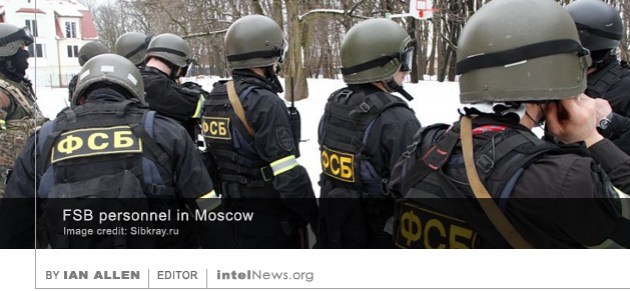
FSB - IARussian authorities say they prevented a large-scale cyber attack by “a foreign intelligence service”, which had been designed to destabilize the country’s financial system and subvert its economy. In an official statement published on its website last week, Russia’s Federal Security Service (FSB) said the perpetrators of the foiled attack had planned to carry it out on December 5. The spy agency, which stems from the Soviet-era KGB, said that the cyber attack had been designed to bring down computer systems belonging to some of Russia’s largest banking institutions.
Text to the statement by the FSB, the planned attack consisted of several components. One component included the use of social media and text messages to be spread through the mobile phone system. The goal was to spread rumors claiming that Russia’s financial system was facing imminent collapse and create panic in the Russian stock exchange. The FSB alleged that several large cities throughout Russia were to be targeted under the foiled plan. The spy agency claimed that the attack originated from a “foreign intelligence service”, but did not identify any countries as culprits of the operation. However, it said that a Ukrainian web hosting company had been used as a base from which to launch the attack through servers located in the Netherlands. On Friday, the Ukrainian web host, BlazingFast, denied that its systems had been used to prepare an attack on the Russian financial sector. In a statement published on Facebook, the company said it had not been contacted by Russian authorities, and assumed that the FSB had “been able to handle the situation without the need of BlazingFast’s cooperation”. It added that it was willing “to cooperate with any legal entity” to investigate Russia’s accusations.

In August of this year, the FSB disclosed that “a meticulously coded and sophisticated virus” had been found on the computer networks of at least 20 major Russian agencies and organizations. As intelNews reported at the time, the targets appeared to have been carefully selected by the malware’s authors. They included government bodies, weapons laboratories and defense contractors located throughout Russia.

Author: Ian Allen | Date: 06 December | Permalink

Joint British-American operation has decimated Islamic State’s cyber force

Computer hackingCoordinated efforts by Anglo-American military and intelligence agencies have resulted in the killing or capturing of nearly every senior commander of the Islamic State’s online force. The close-knit group of Islamic State hackers and online propagandists, which are informally known as “the Legion”, is responsible for hacking and online recruitment incidents that led to several lone-wolf attacks in the West. In one incident in March of 2015, the Legion claimed responsibility for the unauthorized release of personal details of over 1,300 American government employees, with orders to Islamic State volunteers to kill them. In other instances, Legion operatives reached out to impressionable young men and women in Western Europe and the United States and convinced them to move to Syria or conduct attacks at home.
According to The New York Times, which published an article last week about the current state of the Legion, in the early days of its emergence the group was viewed as a law enforcement problem. However, there were several successful and unsuccessful attacks by lone-wolf actors in the United States during the summer of 2015. According to The Times, the Federal Bureau of Investigation became overwhelmed and “was struggling to keep pace with the threat” posed by the Islamic State on the domestic front. It therefore pressed the US Department of Defense to help tackle the problem at its source. The DoD then teamed up with the British government, which was monitoring the Legion due to many of its members being British-born subjects. The two governments embarked on a “secretive campaign”, which has led to the capture of nearly 100 individuals associated with the Legion in less than two years. Another 12 members of the group, who had senior positions, have been killed in targeted drone strikes since the summer of 2015, says The Times.

The joint Anglo-American operation is allegedly responsible for the recent drop in terrorist activity instigated by the Islamic State in the West. It appears, says the paper, that the Islamic State is failing to replace the captured or killed members of the Legion with equally skilled operatives, which may point to the desperate state of the organization. But the Islamic State continues to operate a relatively sophisticated media arm, according to US government officials, and its media reach should not be underestimated, even as it is losing ground in Syria and Iraq.

Author: Joseph Fitsanakis | Date: 28 November 2016 | Permalink

France’s ex-cyber spy chief speaks candidly about hacking operations

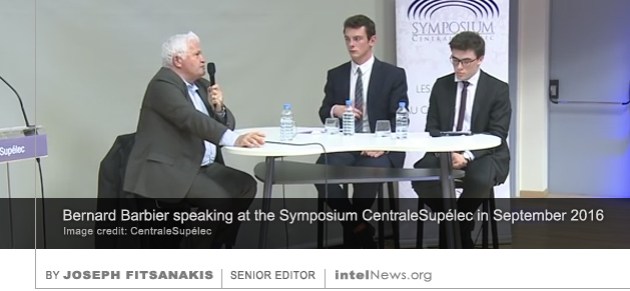
Bernard BarbierThe former director of France’s cyber spy agency has spoken candidly about the recent activities and current state of French cyber espionage, admitting for the first time that France engages in offensive cyber operations. Between 2006 and 2013, Bernard Barbier was director of the technical division of the General Directorate for External Security, France’s external intelligence agency, which is commonly known as DGSE. During his tenure at DGSE, the organization’s technical division witnessed unprecedented financial and administrative growth. Today it is said to employ over 2500 people, nearly half of DGSE’s total personnel.
Earlier this month, Barbier was interviewed on stage during a symposium held by the CentraleSupélec, a top French engineering university based in Paris. He spoke with surprising candor about France’s cyber espionage operations. In the first part of his interview, which can be watched on YouTube, he recounted the history of what he described as “France’s cyber army”. He said that France began to build “teams of hackers” in 1992. Around that time, the DGSE purchased an American-built Cray supercomputer, said Barbier, and soon discovered that it could use the machine’s immense computing power to break passwords. More recently, said the former cyber spy chief, the DGSE has been trying to “catch up” with its American and British counterparts, the National Security Agency and the Government Communications Headquarters, by increasing its annual budget to over half a billion and hiring hundreds of young hackers. Many of these new employees have little to no university education, said Barbier, and are instead self-taught, having started hacking in their teenage years.

Like most governments, France will not officially admit to conducting offensive cyber operations using computer hacking and other techniques. But Barbier said during his interview that France was behind an offensive cyber operation that targeted Iran in 2009. He added that the DGSE has also directed cyber operations against Canada, Ivory Coast, Algeria, Norway, as well as its European Union partners Spain and Greece. He also complained that French government executives do not understand the importance of cyber operations and are not aiming high enough when it comes to planning, direction and hiring. The DGSE’s technical division still needs between 200 and 300 more staff members, Barbier argued in his interview.

Author: Joseph Fitsanakis | Date: 16 September 2016 | Permalink

FBI arrests two more members of hacker group that targeted CIA director

Computer hackingTwo more members of a computer hacker group that targeted senior United States intelligence officials, including the director of the Central Intelligence Agency, have been arrested by the Federal Bureau of Investigation. The arrests of Justin Liverman, 24, and Andrew Boggs, 22, took place on Thursday in Morehead City and North Wilkesboro, in the US state of North Carolina. They are accused by the FBI of being members of Crackas With Attitude (CWA) an international group of computer hackers that specialized in targeting American intelligence and law enforcement officials.

Last October, the international whistleblower website WikiLeaks published personal emails and documents belonging to CIA Director John Brennan. The documents included a 47-page application for security clearance that Brennan had submitted to the US government a few years earlier. It was apparently found on his personal America Online (AOL) email account, which had been hacked by the CWA hacker group. Members of the group, who are all in their late teens or early 20s, routinely employed a method known as ‘social engineering’ to gain access to their victims’ information. The method refers to impersonating technicians or other service provider company personnel to gain access to private email or telephone accounts.

CWA members used these techniques to target dozens of senior US government officials from October 2015 until February 2016. Their targets included the Director of National Intelligence James Clapper and the Deputy Director of the FBI, Mark Giuliano. The hackers also gained access to electronic databases belonging to the US Department of Justice, from where they obtained the names, personal telephone numbers and home addresses of nearly 30,000 employees of the FBI and the Department of Homeland Security. That information was eventually published online by the hacker group.

In February, a 16-year-old hacker known as ‘Cracka’, who is the purported ringleader of CWA, and whose name cannot be released due to his young age, was arrested in the East Midlands region of Britain. It is believed that information on the teenager’s electronic devices eventually led the FBI to the capture of Liverman and Boggs. The two men have been charged with computer crime and are expected to appear in court in the US state of Virginia next week.

Author: Joseph Fitsanakis | Date: 09 September 2016 | Permalink

Sophisticated spy malware found on Russian government computers

FSB - IAAccording to the predominant media narrative, the United States is constantly defending itself against cyber-attacks from countries like China and Russia. But, as intelNews has argued for years, this narrative is misleading. Recent intelligence disclosures clearly show that the US cyber-security posture is as offensive as that of its major adversaries. Additionally, China and Russia have to defend their computer networks as much as America does. Last weekend’s report from Moscow helps restore some of the balance that is missing from media reporting on cyber-security. According to the Russian Federal Security Service (FSB), a meticulously coded and sophisticated virus has been found on the computer networks of at least 20 major Russian agencies and organizations. The targets appear to have been carefully selected by the malware’s authors. They include government bodies, weapons laboratories and defense contractors located throughout Russia.

The FSB said that once installed, the virus gave its handler control of the infected computer system. It permitted an outside hacker to turn on a computer’s microphone or camera, and capture screenshots. It also stealthily installed keylogging software, thus allowing an outside party to monitor keyboard strokes on an infected system. Based on its functions, the malicious software seems to be designed to conduct deep surveillance on infected computers and their physical surroundings. The FSB would not attribute the malware to a specific hacking group or nation. But it said it believed that the malware attack was “coordinated”, “planned and planned professionally”. It also said that the coding of the virus “required considerable expertise”. In a brief statement released Saturday, the FSB said that aspects of the coding of the virus, as well as other identifying information, resembled those detected in preceding hacking attacks on computer servers in Russia and other countries. The statement did not elaborate, however.

The news about hacked Russian computers comes less than two weeks after it was claimed that Russian government-backed hackers stole electronic data belonging to the Democratic National Convention (DNC) in the United States. The Democratic Party’s presidential candidate, Hillary Clinton, publicly accused the Russian government of orchestrating the hacking of the DNC computer systems in an attempt to damage her campaign.

Author: Ian Allen | Date: 01 August 2016 | Permalink

Islamic State’s online army is a Russian front, says German intelligence

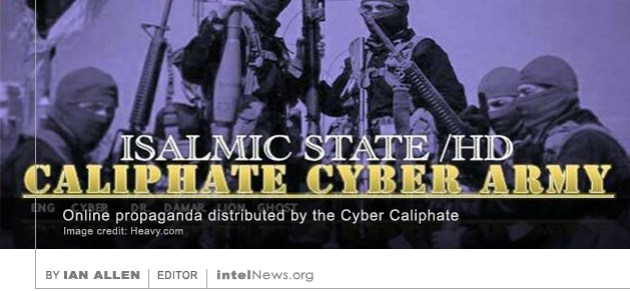
Cyber CaliphateA German intelligence report alleges that the so-called ‘Cyber Caliphate’, the online hacker wing of the Islamic State, is in fact a Russian front, ingeniously conceived to permit Moscow to hack Western targets without retaliation. The group calling itself Cyber Caliphate first appeared in early 2014, purporting to operate as the online wing of the Islamic State of Iraq and Syria (ISIS), later renamed Islamic State. Today the Cyber Caliphate boasts a virtual army of hackers from dozens of countries, who are ostensibly operating as the online arm of the Islamic State. Their known activities include a strong and often concentrated social media presence, and computer hacking, primarily in the form of cyber espionage and cyber sabotage.


Since its inception, the Cyber Caliphate has claimed responsibility for hacking a number of European government agencies and private media outlets. Its targets include the BBC and French television channel TV5 Monde, which was severely impacted by cyber sabotage in April of 2015. The Cyber Caliphate said it was also behind attacks on the servers of the United States Federal Bureau of Investigation, the Department of Defense, and the website of the Pentagon’s US Central Command. The US has since retaliated, both with cyber attacks and physical strikes. One such strike resulted in the killing of Junaid Hussain, a British hacker of Pakistani background, who was said to be among the Cyber Caliphate’s senior commanders. Hussain, 21, was reportedly killed in August 2015 in Raqqa, the Islamic State’s de facto capital in Syria, reportedly after clicking on a compromised link in an email, which gave away his physical whereabouts.

Now, however, a German intelligence report claims that the Cyber Caliphate is not associated with the Islamic State, but is rather a fictitious front group created by Russia. According to German newsmagazine Der Spiegel, which said it had seen the classified report, German authorities suggest that the Cyber Caliphate is in fact a project of APT28 (also known as ‘Pawn Storm’), a notorious Russian hacking collective with close ties to Russian intelligence. The German intelligence report echoes previous assessments by French authorities, which in 2015 stated that the TV5 Monde cyber attack was a false flag operation orchestrated by APT28. Also in 2015, a security report by the US State Department concluded that despite the Cyber Caliphate’s proclamations of connections to the Islamic State, there were “no indications —technical or otherwise— that the groups are tied”.

Author: Ian Allen | Date: 20 June 2016 | Permalink