Russian government cyber spies ‘hid behind Iranian hacker group’
October 22, 2019 Leave a comment
 Russian hackers hijacked an Iranian cyber espionage group and used its infrastructure to launch attacks, hoping that their victims would blame Iran, according to British and American intelligence officials. The information, released on Monday, concerns a Russian cyber espionage group termed “Turla” by European cyber security experts.
Turla is believed to operate under the command of Russia’s Federal Security Service (FSB), and has been linked to at least 30 attacks on industry and government facilities since 2017. Since February of 2018, Turla is believed to have successfully carried out cyber espionage operations in 20 different countries. Most of the group’s targets are located in the Middle East, but it has also been connected to cyber espionage operations in the United States and the United Kingdom.
On Monday, officials from Britain’s Government Communications Headquarters (GCHQ) and America’s National Security Agency (NSA) said Turla had hijacked the attack infrastructure of an Iranian cyber espionage group. The group has been named by cyber security researchers as Advanced Persistent Threat (APT) 34, and is thought to carry out operations under the direction of the Iranian government.
The officials said there was no evidence that APT34 was aware that some of its operations had been taken over by Turla. Instead, Russian hackers stealthily hijacked APT34’s command-and-control systems and used its resources —including computers, servers and malicious codes— to attack targets without APT34’s knowledge. They also accessed the computer systems of APT34’s prior targets. In doing so, Turla hackers masqueraded as APT34 operatives, thus resorting to a practice that is commonly referred to as ‘fourth party collection’, according to British and American officials.
The purpose of Monday’s announcement was to raise awareness about state-sponsored computer hacking among industry and government leaders, said the officials. They also wanted to demonstrate the complexity of cyber attack attribution in today’s computer security landscape. However, “we want to send a clear message that even when cyber actors seek to mask their identity, our capabilities will ultimately identify them”, said Paul Chichester, a senior GCHQ official.
► Author: Joseph Fitsanakis | Date: 22 October 2019 | Permalink
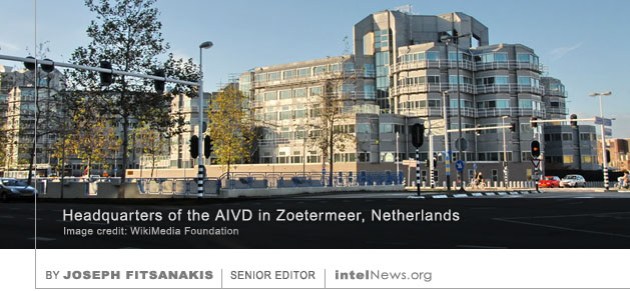 An Iranian engineer who was recruited by Dutch intelligence helped the United States and Israel infect computers used in Iran’s nuclear program with the Stuxnet cyber weapon, according to a new report.
 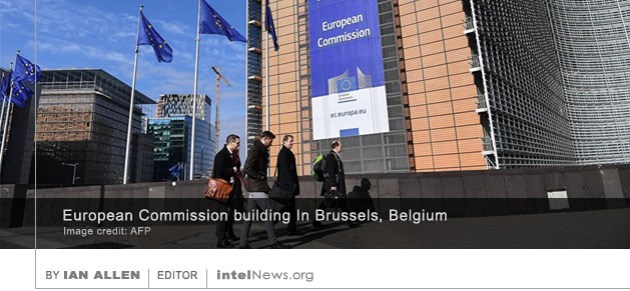 A group of hackers, allegedly working for the Chinese military, accessed thousands of classified diplomatic cables from the European Union during a protracted cyber-espionage operation, a report has revealed. Over 100 organizations are believed to have been targeted in the multi-year cyber-espionage campaign, including the United Nations, international labor groups, as well as government ministries from dozens of countries. The operation was revealed on Tuesday by Area 1, a cyber-security company founded by former officials of the United States National Security Agency, and
  Russia “paved the way” for last November’s seizure of Ukrainian Navy ships by launching a major cyber attack and disinformation campaign aimed at Ukraine, according to a cyber security firm and the European Union. In what has become known as the Kerch Strait incident of November 25, border service coast guard vessels belonging to the Russian Federal Security Service (FSB) opened fire on three Ukrainian Navy ships that were attempting to enter the Sea of Azov through the Kerch Strait. All three Ukrainian vessels, along with crews totaling 24 sailors, were captured by the Russian force and remain in detention. Ukraine condemned Russia’s action as an act of war and declared martial law in its eastern and southern provinces. But Moscow said the incident had been caused by a provocation by the Ukrainian government, in a desperate effort to increase its popularity at home. Meanwhile, the three Ukrainian ships and their crews remain in Russia.
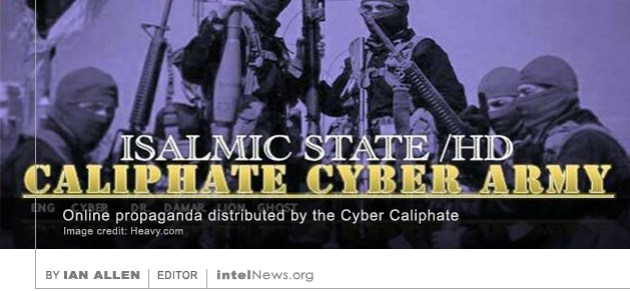 A new report by the British government alleges that the so-called ‘Cyber Caliphate’, the online hacker wing of the Islamic State, is one of several supposedly non-state groups that are in fact operated by the Russian state. The group calling itself Cyber Caliphate first appeared in early 2014, purporting to operate as the online wing of the Islamic State of Iraq and Syria (ISIS), which was later renamed Islamic State. Today the Cyber Caliphate boasts a virtual army of hackers from dozens of countries, who are ostensibly operating as the online arm of the Islamic State. Their known activities include a strong and often concentrated social media presence, as well as computer hacking, primarily in the form of cyber espionage and cyber sabotage.
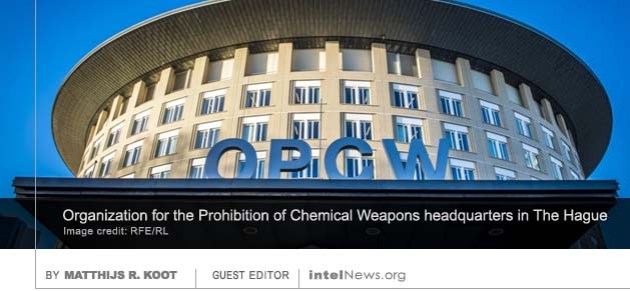 Western intelligence agencies thwarted a plot involving two Russians intending to travel to a Swiss government laboratory that investigates nuclear, biological and chemical weapons, and hack its computer systems. According to two separate reports by Dutch newspaper
 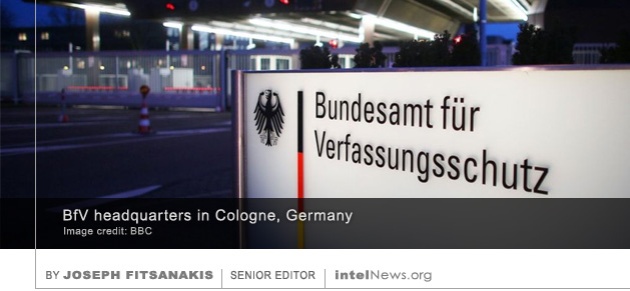 The head of Germany’s domestic security agency has publicly blamed the Russian government for a large-scale cyberattack that has targeted German energy providers. The comments follow a June 13 announcement on the subject by Germany’s Federal Office for Information Security (BSI), which is charged with securing the German government’s electronic communications. According to the BSI, a widespread and systematic attack against Germany’s energy networks has been taking place for at least a year now. The attack, which the BSI codenamed BERSERK BEAR, consists of various efforts by hackers to compromise computer networks used by German companies that provide electricity and natural gas to consumers around the country.
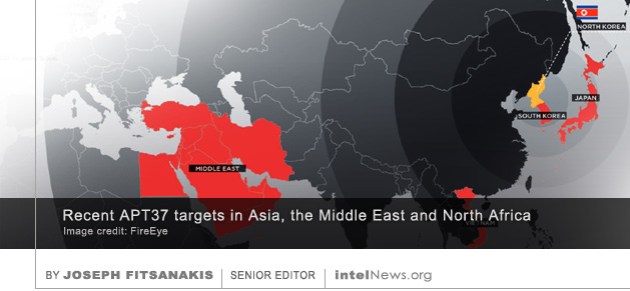 A little-known North Korean cyber espionage group has widened its scope and increased its sophistication in the past year, and now threatens targets worldwide, according to a new report by a leading cyber security firm. Since 2010, most cyber-attacks by North Korean hackers have been attributed to a group dubbed “Lazarus” by cyber security specialists. The Lazarus Group is thought to have perpetrated the infamous Sony Pictures attacks in 2014, and the worldwide wave or ransomware attacks dubbed WannaCry by experts in 2017. It is widely believed that the Lazarus Group operates on behalf of the government of North Korea. Most of its operations constitute destructive attacks —mostly cyber sabotage— and financial criminal activity.
 Dutch spies identified a notorious Russian hacker group that compromised computer servers belonging to the Democratic Party of the United States and notified American authorities of the attack, according to reports. In 2016, US intelligence agencies determined that a Russian hacker group known as Cozy Bear, or APT29, led a concerted effort to interfere in the US presidential election. The effort, which according to US intelligence agencies was sponsored by the Russian government, involved cyber-attacks against computer systems in the White House and the Department of State, among other targets. It also involved the theft of thousands of emails from computer servers belonging to the Democratic National Committee, which is the governing body of the Democratic Party. The stolen emails were eventually leaked to WikiLeaks, DCLeaks, and other online outlets. Prior descriptions of the Russian hacking in the media have hinted that US intelligence agencies were notified of the Russian cyber-attacks by foreign spy agencies. But there was no mention of where the initial clues came from.
 The Russian hacker group that targeted the United States presidential election in 2016 also attacked hundreds of reporters around the world, most of them Americans, an Associated Press investigation shows. The group is often referred to in cyber security circles as Fancy Bear, but is also known as Pawn Storm, Sednit, APT28, Sofacy, and STRONTIUM. It has been linked to a long-lasting series or coordinated attacks against at least 150 senior figures in the US Democratic Party. The attacks occurred in the run-up to last year’s presidential elections in the US, which resulted in a victory for Donald Trump. The hacker group’s targets included Democratic Party presidential candidate Hillary Clinton and her campaign chairman John Podesta. But its hackers also went after senior US diplomatic and intelligence officials, as well as foreign officials in countries like Canada and the Ukraine.
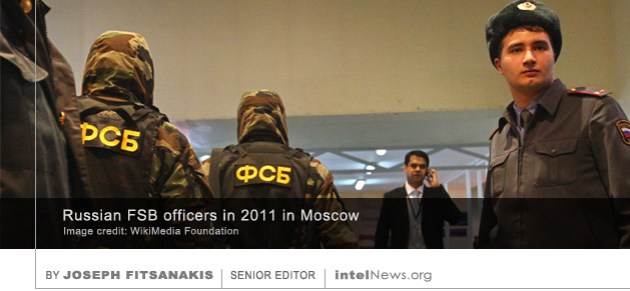 Two senior officers in the Russian intelligence services were charged with treason after they were found to have helped the United States catch two notorious Russian hackers, according to reports in the Russian media. Sergey Mikhailov was a career officer in the Federal Security Service —a descendant of the domestic section of the Soviet-era KGB— which is often referred to as Russia’s equivalent of the United States Federal Bureau of Investigation. Mikhailov had risen through the ranks of the FSB to eventually head the agency’s Center for Information Security. Known in Russia as CIB, the Center is tasked with investigating electronic crime in the Russian Federation.






 intelNews.org
Massive data dump identifies users of influential far-right website
November 12, 2019 by Joseph Fitsanakis 3 Comments
The discussions that took place on IronMarch’s message boards are believed to have led to the creation of several far-right groups in Europe, Australia, and the United States. Among them is the notorious Atomwaffen Division (pictured), an American neo-Nazi group that focuses on street-fighting and is known to train its members in the use of military-grade weapons and guerilla warfare tactics. Another group that organized and recruited heavily through IronMarch was Vanguard America, one of the organizers of the Unite the Right rally in Charlottesville, Virginia in 2017.
But the website abruptly shut down its operations in late 2017. No explanation was given. Users of far-right online forums are used to experiencing such sudden changes in hosting platforms, which are due to legal challenges, intervention by law enforcement, etc. So they did what they always do in such cases: they migrated to other far-right platforms where they continued to discuss and organize. IronMach never resurfaced, so it was eventually forgotten.
Last Wednesday, however, a user calling themselves “antifa-data” uploaded what appears to be the entire metadata and chat log archive of IronMarch on the website of the Internet Archive. The content was later removed, but not before it was downloaded by thousands of Internet Archive users, among them government agencies. The data dump reportedly includes the usernames of IronMarch members, as well as the emails associated with their individual accounts. It also contains the IP addresses of IronMarch members and even the contents of private messages that they exchanged with other members.
Some investigative websites have since reported that numerous IronMarch users were associated with email accounts belonging to American universities. Others stated in private messages that they were members of the armed forces of several countries in Europe and the Americas. At least one user appears to have run for Congress in the United States. On Friday, the American website Military Times said that United States authorities were concerned that many of IronMarch’s members said they were serving in the US Armed Forces or expressed a desire to join a military branch. A spokesman for the US Marine Corps told the Military Times that there was “no place for racial hatred or extremism in the Marine Corps”.
► Author: Joseph Fitsanakis | Date: 12 November 2019 | Permalink
Filed under Expert news and commentary on intelligence, espionage, spies and spying Tagged with American Vanguard, Atomwafen Division, computer hacking, Internet Archive, IronMarch, News, rightwing extremism