Soldier with far-right links becomes first convicted spy in New Zealand history

New Zealand ChristchurchA DISAFFECTED SOLDIER, WHO tried to commit espionage against New Zealand for a foreign government, has become the first convicted spy in the Pacific Island nation’s history. The only other time New Zealand prosecuted an individual for espionage was in 1974, when the government accused Bill Sutch, a prominent, English-born civil servant, of spying for the Soviet Union. Sutch was acquitted in 1975 and died soon afterwards.

According to reports, a member of the New Zealand Defence Force, who has not been named, drew the attention of the authorities in the aftermath of the 2019 Christchurch shooting. The attack was carried out by Australian white supremacist Brenton Tarrant, who stormed a mosque with an automatic weapon, killing 51 and injuring nearly 100 people. The terrorist attack sparked a widespread investigation into far-right militancy in the Australian and New Zealand armed forces, which continues to this day.

The soldier was found to have contacts with a number of local far-right groups, including the Dominion Movement and Action Zealandia. Government prosecutors said that, while observing the soldier’s activities, government agents found out that he had “made contact with a third party, indicating that he was a soldier” and signaling his desire to defect to a foreign country. They eventually approached the soldier using an undercover officer who pretended to be a representative of the country whose officials the soldier had previously contacted. The soldier told the undercover officer that he was prepared to “get a covert device into army headquarters” and offered to provide “mapping and photographs” of classified government facilities.

During his trial, the soldier pled guilty, admitting that he had tied to spy for a foreign government, and adding that his ultimate goal was to “leave New Zealand and get to what I thought was safety”. Following the soldier’s conviction, the three-judge military panel said it would announce the sentence later this week. The country for which the convicted soldier offered to spy has not been named.

Author: Joseph Fitsanakis | Date: 18 August 2025 | Permalink

Leaked counterintelligence document reveals Russian concerns about Chinese spying

FSB RussiaA LEAKED REPORT AUTHORED by Russia’s primary counterintelligence agency reveals deep concern in national security circles about the intensity of Chinese spying against Russian interests, according to The New York Times. The paper said last week that the leaked report, which was produced by Russia’s Federal Security Service (FSB) between 2023 and 2024, offers “the most detailed behind-the-scenes view” of Russia’s counterintelligence concerns about China.

Following the death of Soviet Premier Joseph Stalin, the two communist countries became sworn enemies and nearly went to all-out war against each other. But in recent years Moscow and Beijing put aside their differences, prompted by their mutual desire to challenge the geopolitical supremacy of the United States and bring about a multipolar world. Since 2022, when Moscow resumed its military invasion of Ukraine, Beijing has stood firmly by the Kremlin. China has become the largest importer of Russian energy and has provided the Russian military with much-needed advanced technology. The relationship between the two neighboring nations appears to be deeper than ever before.

But according to a recently leaked report, Russia’s national security establishment is deeply concerned about Chinese efforts to dominate its ally by spying against it. The eight-page report outlines “ENTENTE-4”, a counterintelligence program run by the 7th Service of the FSB’s Department for Counterintelligence Operations. The department is known by its Russian acronym, DKRO. The DKRO’s 7th Service is tasked with counterintelligence planning and operations against Asian countries, with China being its primary target.

According to The Times, the DKRO produced the report sometime between 2023 and 2024. The document appears to have been intended for distribution to the FSB’s field offices across Russia. It was acquired by ARES Leaks, a cyber criminal syndicate, which posted images of the document on the Telegram messenger application. The paper said it shared the leaked document with “six Western intelligence agencies”, all of which assessed it to be genuine. Read more of this post

Russian spies operated in Portugal using forged Brazilian papers, report claims

Porto PortugalTWO RUSSIAN SPIES USED forged documents acquired in Brazil in order to live in Portugal for years and use it as a base from where to conduct espionage, according to an investigation by Portuguese counterintelligence. The spies were husband-and-wife team Vladimir Aleksandrovich Danilov and Yekaterina Leonidovna Danilova, both in their 30s. According to The New York Times, they appeared in Portugal in 2018 using the names Manuel Francisco Steinbruck Pereira and Adriana Carolina Costa Silva Pereira.
Portuguese weekly newspaper Sol said on Saturday that Danilov used a Brazilian passport and supplied authorities with documentation showing his father was a Portuguese national. This allowed Danilov to eventually obtain Portuguese citizenship. Although Danilova did not apply for Portuguese citizenship, she was granted permanent residency by the European Union country. These credentials enabled the spies to move freely in the European Union’s 27 member-states without restriction.

In 2022 the Brazilian Federal Police, with the assistance of United States intelligence agencies, launched a lengthy investigation into the activities of several Russian spies who operated in Brazil in recent years. The spies appear to have used concocted Brazilian identities in order to operate around the world undetected. The investigation eventually incorporated counterintelligence services from as many as eight countries, including Portugal, according to Sol.

So far the Portuguese investigation has revealed that the Danilovs conducted a variety of espionage operations in the coastal city of Porto, which is Portugal’s second-largest urban center following the capital Lisbon. Using Porto as an operational base, the couple traveled extensively around the world using their Brazilian and Portuguese passports. Each time they were able to return to their home in Porto “without encountering any issues”, Sol reports. The two spies have vanished and their current whereabouts are unknown.

Author: Joseph Fitsanakis | Date: 26 May 2025 | Permalink

British soldier who spied for Iran found guilty of espionage and terrorism

Wandsworth prisonDANIEL KHALIFE, A BRITISH soldier who spied for Iran, has been found guilty of espionage and terrorism, in a case that has revealed serious vulnerabilities in the British security clearance-vetting system. The then-20-year-old Khalife was arrested in January 2022 while serving on active duty in Staffordshire, in Britain’s Midlands region. He was charged with violating the Official Secrets Act 1911 and the Terrorism Act 2000.

Prior to his arrest, Khalife was reportedly seen by his fellow soldiers and superiors as a promising soldier. Having joined the British Army at 16, he was quickly promoted to lance corporal (the lowest ranking of a non-commissioned officer) and cleared to work in the area of signals intelligence. He had also expressed a strong interest in joining the Special Air Service (SAS), which are the British Army’s special forces.

However, on November 9, 2021, Khalife voluntarily called the national security concerns hotline of the British Security Service (MI5). He told the operator on the other end of the line that he was a British soldier who had been spying for Iran for “more than two years”, but had now decided to become a double agent by cooperating with the British government. Khalife called again, and although he did not identify himself during the telephone conversations, MI5 was able to track him.

It has since become known that Khalife began spying for Iran when he was just 17 years old, shortly after joining the British Army. Over the next two years, Khalife provided his Iranian handlers with information about the identities of SAS personnel, military computer systems, as well as government surveillance programs and hardware, including unmanned aerial vehicles. Throughout that time, he communicated with his Iranian handlers via the Telegram instant messaging service, or via dead drops in Britain, as well as during trips abroad.

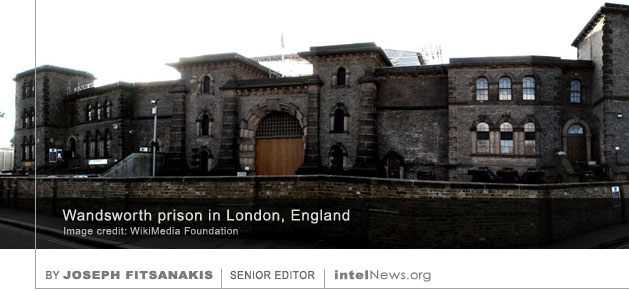
Shockingly, Khalife was temporarily able to escape justice twice following his arrest. In January 2023, he disappeared while on bail. He was found after nearly a month, living in a stolen van, which he had converted into a rudimentary camper. In September of that year, Khalife escaped from Wandsworth prison (pictured) in southwest London, by hiding beneath a delivery vehicle. He was captured three days later and eventually taken to court, where he was convicted and is now awaiting sentencing.

According to reports, British authorities are still unable to piece together the entirety of the information that Khalife shared with the Iranians. Consequently, the full extent of the damage he caused to British national security remains unknown. What is clear is that the Khalife case has exposed serious vulnerabilities in the security clearance-vetting process, which is “lacking in a lot of ways” —not least in the fact that it relies largely on self-reporting, as one expert told The Guardian newspaper on Saturday.

Author: Joseph Fitsanakis | Date: 02 December 2024 | Permalink

Israeli citizens arrested on suspicion of working for Iranian intelligence

Ronen Bar Israeli Security AgencyTHE ISRAELI SECURITY AGENCY (ISA) has announced the arrest of 18 Israeli citizens suspected of working for Iranian Intelligence. Among them are seven Israelis, who immigrated to Israel from Azerbaijan, and are suspected of having been in contact for two years with Iranian intelligence. Some of the seven were caught carrying out surveillance against a senior Israeli Air Force officer, whom they were reportedly planning to assassinate.
Israeli authorities accuse the suspects of photographing and collecting information on military bases and facilities, including Air Force bases, Iron Dome battery sites, a power plant, and other energy infrastructure facilities. The suspects are also accused of having received from their Iranian handlers a set of maps of Israeli strategic sites, including the Golani Brigade’s training base, where four Israeli soldiers were killed by a drone attack last week. In over two years, the suspects allegedly performed approximately 600 missions under the direction of two handlers from Iranian intelligence. They did so in return for hundreds of thousands of shekels, which were paid to them in cash and various crypto-currencies.

Another Israeli citizen, who was arrested on suspicion of spying for Iranian intelligence in return for payments, has been named as Vladimir Varehovsky, 35, from Tel Aviv. Among other tasks, Varehovsky is suspected of gathering information about an Israeli scientist, whom he agreed to murder in exchange for a $100,000 payment. The suspect had reportedly acquired weapons for the assigned task, but the ISA arrested him before he could carry it out.

In another counterintelligence operation, the ISA arrested seven young Palestinians from the east of Jerusalem, who have been charged with working for Iranian Intelligence. The main suspect recruited the other six to carry out tasks for a fee. Tasks included setting cars on fire, gathering information about a city mayor in Israel, and plotting to assassinate one of the country’s top scientists. The suspects used social media for recruitment purposes. They were reportedly arrested before they were able to execute their missions. Read more of this post

Profile of Tang Yuanjun, alleged asset for Chinese intelligence 2018-2023

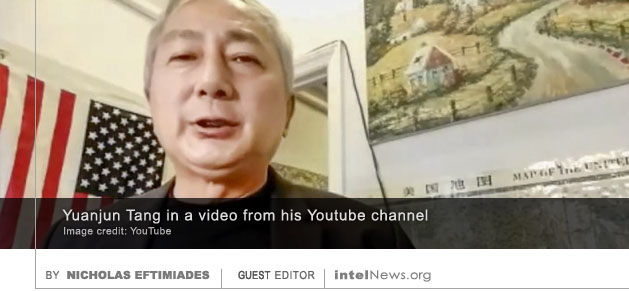
Yuanjun TangTANG YUANJUN WAS ARRESTED by the United States Federal Bureau of Investigation (FBI) in August 2024. He allegedly worked as a Chinese Ministry of State Security (MSS) asset between 2018 and 2023. He reported on the following categories of information that were of interest to the MSS:

  • Prominent U.S.-based Chinese democracy activists and dissidents.
  • US Chinese-American Member of Congress Xiong Yan, from New York.
  • Immigration claims from dissidents wanting to leave China for the US.

According to the US Department of Justice (DoJ), Tang expressed his desire to see his aging family in China. A prominent dissident such as Tang would not be able to travel to China without being arrested, unless his travel had been approved by authorities. An acquaintance helped him establish secure online contact with the MSS. After being recruited, Tang reported to the MSS using an email account, encrypted chats, text messages and audio and video calls. Tang helped the MSS infiltrate a group chat on WhatsApp; used by numerous People’s Republic of China (PRC) dissidents and pro-democracy activists to communicate about pro-democracy issues and express criticism of the PRC government. In fact, this was what users called a “super group”. It is a group that consists of many other groups. Members could not even identify who was the sponsor of the group chats [1].

In addition, Tang reportedly video-recorded a June 2020 Zoom discussion commemorating the anniversary of the Tiananmen Square massacre in the PRC. The Zoom online discussion was led by Zhou Fengsuo, Director of the June 4th Memorial Museum in New York City and a leading advocate for democracy in China. The Ministry of Public Security also infiltrated these discussions with the assistance of Zoom China and US based employees [2].

Tang was Secretary General of the overseas headquarters of the China Democratic Party United Headquarters in New York City. This non-profit organization assists mainland Chinese dissidents in immigration and asylum applications for the US. Tang allegedly provided information on these individuals to the MSS [3]. Tang also allegedly identified ten immigration attorneys to support MSS efforts to place assets in the US. Other dissident organizations in New York and Los Angeles provide similar visa application services to generate income.

In 2022, reportedly Tang met with the MSS in Changchun City, Jilin Province, China, where an officer installed a software on Tang’s phone which Tang believed to be a “bug” that caused all photographs and videos captured on the phone to be transmitted to the MSS. In his role as leading democracy advocate Tang encouraged dissidents to attend protests in Manhattan and Washington DC. He used the compromised phone to take photographs of the events. The Chinese Communist Party (CCP) then used the photographs as evidence against overseas dissidents. Read more of this post

Dutch prime minister bans wireless devices from meetings to ward off espionage

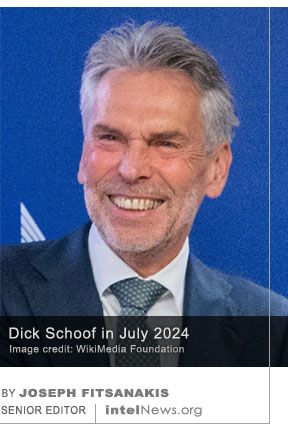
Dick SchoofTHE NETHERLANDS’ NEW PRIME minister has officially banned the use of all wireless devices from cabinet meetings, reportedly to defend against espionage operations from foreign actors. The move comes following warnings by Dutch intelligence services that the country is being targeted by Russian and Chinese spies with more intensity than at any time since the Cold War.

The current Dutch government, led by the far-right Freedom Party (PVV), was formed following the general election of November 2023. Although the PVV, headed by populist Geert Wilders, emerged as the leading political force in the Netherlands with 23% of the vote, it found it difficult to form a governing coalition. In June of this year, following lengthy negotiations, a rightwing coalition was formed between the PVV, the People’s Party for Freedom and Democracy (VVD), the Farmer-Citizen Movement (BBB), and the New Social Contract (NSC).

A key feature of the agreement was that none of the individual parties’ leaders, including Wilders, could serve as prime minister. Instead, the three parties settled on Dick Schoof as a form of compromise. The 67-year-old Schoof led the Netherlands’ Immigration and Naturalization Service from 1999 until he was appointed to head the Ministry of Security and Justice in 2010. From 2013 to 2018, he became the National Coordinator for Security and Counterterrorism —the Netherlands’ main counter-terrorism unit, which operates as part of the Ministry of Security and Justice.

In 2018, Schoof was appointed director-general of the General Intelligence and Security Service (AIVD), the nation’s primary intelligence agency. The AIVD is tasked with foreign and domestic duties, as well as signals intelligence. Prior to his prime ministerial post, the culmination in Schoof’s career as a public servant came with his appointment as secretary-general of the Ministry of Justice and Security, in 2020. In 2021, after 30 years of being a member, Schoof officially left the Labor Party (PvdA), the Netherlands’ mainstream social-democratic, left-of-center political party. In subsequent public comments he appeared to endorse the PVV, but never officially joined it.

Speaking to reporters last week, Schoof said he was “taking a different approach” to security at cabinet meetings, which was “based on his former job in the intelligence community”. He added, “maybe I have a bit more experience with that sort of thing” and stressed that banning wireless devices from cabinet meetings was “a completely natural measure” for him. Members of the Dutch cabinet “agreed immediately” with the new measure, said the new prime minister.

Author: Joseph Fitsanakis | Date: 02 September 2024 | Permalink

Denmark arrests Russian woman in connection with covert Kremlin legal fund

PET DenmarkA RUSSIAN WOMAN IS under arrest in Denmark, reportedly in connection with a surreptitious legal fund that is allegedly connected to intelligence operations conducted by the Kremlin. The Danish Security and Intelligence Service (PET) said on Tuesday that the Russian national had been detained south of the Danish capital Copenhagen on suspicion of “enabling a foreign intelligence service to operate in Denmark”.

Crucially, the PET press statement noted that the arrest relates to recent reports about a legal defense fund with covert links to the Kremlin, which was uncovered in the press. On June 3, the state-owned Danish Broadcasting Corporation (DR) published information from 40 leaked documents about an alleged sovereign wealth fund known as Fund for Support and Protection of the Rights of Compatriots Living Abroad (Pravfond).

According to the DR report, Pravfond was set up in secret by the Russian authorities in order to finance the Kremlin’s disinformation campaigns in nearly 50 countries around the world. Pravfond also operates as a legal defense fund for Russian intelligence operatives who have been captured abroad while carrying out intelligence operations. For example, it contributed funds for the legal defense of notorious Russian weapons merchant Viktor Bout and Vadim Krasikov, a Russian assassin who is currently being held in a German prison.

The PET said that the Russian woman would be released following questioning, adding that the investigation into the espionage case would continue. The agency did not name the woman. However, according to reports in the Danish media, she is “a central figure in the Russian community in Denmark”.

Author: Joseph Fitsanakis | Date: 12 June 2024 | Permalink

China accuses married couple of spying for Britain’s MI6

MSS China - IATHE SPY CONFLICT BETWEEN China and the United Kingdom escalated last week, as the Chinese government accused a married couple of carrying out espionage missions on behalf of British intelligence. In a rare statement to the press, China’s Ministry of State Security (MSS) said it was investigating the activities of a husband-and-wife team, whom it accused of working as assets for Britain’s Secret Intelligence Service, better known as MI6.
According to the MSS statement, the husband, whose last name is Wang, participated in a student exchange program in the United Kingdom in 2015. While there, he was surreptitiously accosted by MI6 and was invited to dinners and other outings. Eventually Wang was offered part-time employment as a consultant for a British firm that operated as a front for MI6. He was eventually approached by MI6 directly and was recruited as a spy in exchange for substantial monetary rewards.

Wang was allegedly trained in espionage tradecraft and returned to China to collect intelligence on the Chinese government on behalf of MI6. The MSS claims that Wang’s MI6 handlers asked him to recruit his wife, whose last name is Zhou, as a spy. Eventually both Wang and Zhou spied for MI6 in return for money. It is not known whether the alleged spies worked for the MSS or another intelligence-related government agency.

The MSS press statement was issued a few days after the agency unveiled a seemingly unconnected case of espionage involving “a former government employee who was lured by a foreign intelligence agency through the internet” and “stole secrets for money”. The MSS also said that the man’s handler, named Xiao Jing, had been arrested and charged with operating as “a spy working for a foreign intelligence agency”.

Author: Ian Allen | Date: 03 June 2024 | Permalink

Austria: Arrest raises broader questions about counterintelligence capabilities

BVT AustriaON GOOD FRIDAY, MARCH 29, Egisto Ott, a former member of Austria’s now-dissolved domestic intelligence agency, the Federal Office for the Protection of the Constitution and Counterterrorism (BVT), was arrested in his house in Carinthia, Austria’s southernmost state. Ott had frequently been at the center of media attention in the past year, in connection with the network surrounding the fugitive financier and alleged spy Jan Maršálek, as well as alleged misconduct relating to carrying out illegal investigations of persons. Ott also seems to have been involved in an alleged attempt to create an intelligence unit, or even an entire shadow intelligence service, embedded inside Austria’s foreign ministry. Now the veteran police and intelligence officer stands accused by the state attorney of abusing his authority and of being part of an “intelligence activity to the disadvantage of Austria” —the only form of spying that is illegal under § 256 of the Austrian criminal code.
Ott’s arrest came several years after intelligence was first shared with Austria by Western partner services —allegedly the Central Intelligence Agency— that reportedly date from as early as November 2017. Back then, Ott allegedly received classified material from his service’s email address to his personal Gmail account. However, Peter Gridling, director of the BVT from 2008 until its dissolution in 2021, stated in a recent interview that the ensuing investigations did not yield actionable results that could be used in criminal proceedings. This statement is highly interesting, as Gridling filed accusations about Ott with the State Prosecutor’s Office himself, and would hardly have done unless he had access to hard evidence. Ott was consequently removed from the BVT and placed in Police Academy Austria (SIAK), which is responsible for training police officers and conducts research related to police and domestic security.

Nevertheless, according to media reporting, Ott seems to have kept and illegally used certain forms of identification that presented him as a police officer. He is also alleged to have maintained access to several police databases and to have retained his network of trusted informants that provided him with intelligence. These included contacts in friendly foreign police services, whom Ott knew from his time as a liaison officer in Italy and Turkey. According to Gridling, these contacts were unaware that Ott had been removed from the BVT under suspicion of being unreliable and potentially even working for Russia. They therefore continued to help him when asked. Ott allegedly deceived his contacts by claiming that he needed information on cases relating to different kinds of extremism. As it turned out, according to the leaked arrest warrant, several of the individuals referred to by Ott as “suspects” in terrorism investigations were in fact Russian dissidents or intelligence defectors who were living as protected persons in Austria and elsewhere outside Russia.
It appears highly probable that Ott also had people inside the Austrian bureaucracy, including former colleagues in the BVT, who continued to provide him with information and assistance, even after the first allegations against him arose in 2017. As of now, at least one other officer from LVT Vienna (the state unit of the BVT) has been found to have illegally provided Ott with Information. It is likely, given the publicly available descriptions of Ott’s activities, that other individuals may be implicated. It also remains to be seen whether individuals involved in this case were able to join the BVT’s successor agency, the new Directorate of State Protection and Intelligence (DSN). Read more of this post

United States consistently underestimates Cuban intelligence, sources say

AGENTS OF THE CUBAN government have “penetrated virtually every segment of the United States national security structure,” enabling Havana to share actionable intelligence with Russia and China, according to a new report. Citing former United States and Cuban intelligence officers, The Wall Street Journal said on Saturday that Washington’s counter- intelligence efforts are no match for Cuba and its intelligence service, the Dirección de Inteligencia (DI). The DI is “the best damn intelligence service in the world” for cultivating agents, according to Brian Latell, a retired CIA analyst who served as the U.S. Intelligence Community’s National Intelligence Officer for Latin America. Latell told The Wall Street Journal that the Dirección de Inteligencia bears the imprint of Fidel Castro himself, who took a personal interest in running the service during his reign.
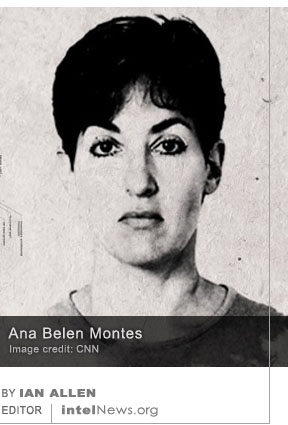
Among the strengths of the Cuban intelligence service is its ability to recruit Americans who are motivated by ideological reasons, rather than by financial gain. The Cubans have historically approached Americans at a young age, usually at universities in the United States or other countries in the Americas. They cultivate those relationships by employing strategic patience that pays off many years —even decades— later. By recruiting ideological sympathizers, the Cubans rarely need to pay their agents large amounts of money, as the cases of Defense Intelligence Agency analyst Ana Belén Montes and State Department diplomat Manuel Rocha suggest. Many Cuban agents enter military service in the United States, which means they acquire Secret or Top-Secret clearances. Others are instructed to penetrate anti-communist groups of Cuban-Americans in southern Florida, according to The Wall Street Journal.

The U.S. counterintelligence strategy prioritizes Russia and China, which means that Cuban intelligence operations are treated as “an afterthought,” claims the paper. The Federal Bureau of Investigation (FBI), America’s primary counterintelligence agency, dedicates relatively few resources to investigating Cuban intelligence. Its efforts are chronically “understaffed and outmatched” by Havana, according to former counterintelligence officers who spoke to The Wall Street Journal. The paper notes that the FBI is often aware of several dozen cases of “actual or potential” Cuban agents operating in the U.S. However, it routinely lacks the requisite resources to investigate them.

Author: Ian Allen | Date: 18 March 2024 | Permalink

Alleged Afghan-born Russian spy tries to regain revoked British citizenship

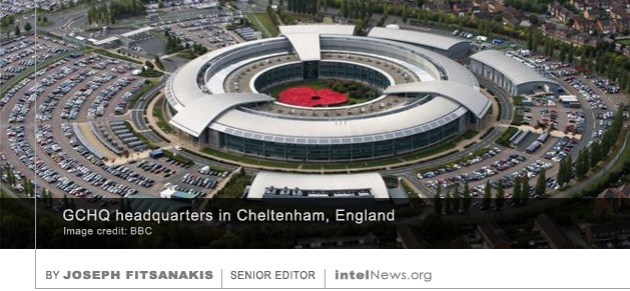
GCHQAN AFGHAN-BORN MAN, who became a naturalized British citizen and worked for British intelligence for over a decade, is attempting to regain his British citizenship, which was revoked after he was accused of being a Russian spy. The man, who is identified in court documents only as “C2”, was born in Afghanistan and grew up under the Soviet occupation in the 1980s. When the Soviets withdrew from Afghanistan he left the country alongside the Russian forces and resettled in Russia, where he attended university and married a Russian woman.
By 2000, when he entered the United Kingdom as an Afghan asylum seeker, he was in possession of Russian citizenship due to his marriage to a Russian citizen. He was eventually granted asylum in Britain and began to work as an interpreter for the Foreign Office and the Government Communications Headquarters (GCHQ), Britain’s signals intelligence agency. His fluency in Russian, Dari, and Pashto, made him invaluable to British intelligence as the United States-led ‘war on terrorism’ escalated in Afghanistan. In the late 2000s, the British Foreign Office sent C2 to Afghanistan, where he worked to build ties between the nascent post-Taliban Afghan government and the British diplomatic corps stationed in the country.

It was in Afghanistan, according to Britain’s Security Service (MI5), that C2 began to develop contacts with Russian intelligence officials. The agency claims that two Russian military attaches stationed in the Afghan capital Kabul, identified in court documents as “Boris” and “Dimitri”, recruited C2 on behalf of the Main Directorate of the Russian Armed Forces’ General Staff, which is commonly known as GRU. The British government claims that, following his recruitment by GRU, C2 traveled to Russia at least six times and once to Cyprus, where he continued to hold regular meetings with his Russian handlers.

On 2019, after he had left government service, MI5 began to question C2 about his alleged connection to Russian military intelligence. He consistently denied that he was a Russian spy. Eventually, MI5 took him “to the roof of a hotel” in London, where he was administered a polygraph examination. A few weeks later, by which time he had returned to his base in Kabul, C2 was informed that his British citizenship would be revoked due to his espionage work for the Russians.

Ironically, the British government evacuated C2 from Afghanistan in 2021 as part of Operation PITTING, during which 15,000 Afghan nationals were transported to the United Kingdom as the Taliban descended on Kabul. Upon arriving in the United Kingdom, C2 was arrested and eventually released on bail. Last week he formally appealed against the British government’s decision to strip him of his citizenship. His case was heard in secrecy at a special hearing of the United Kingdom’s Special Immigration Appeal Commission (SIAC). The SIAC is expected to rule in March or April.

Author: Joseph Fitsanakis | Date: 12 February 2024 | Permalink

China accuses ‘foreign governments’ of installing fake weather stations to collect data

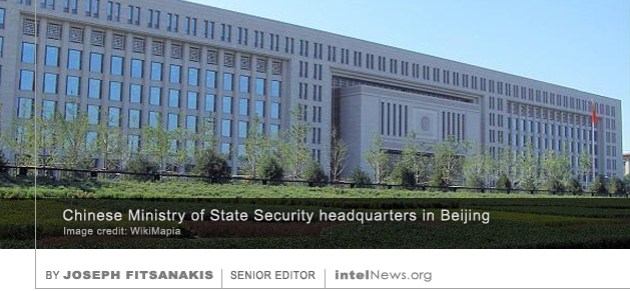
Chinese Ministry of State SecurityBEIJING HAS ACCUSED “FOREIGN governments” of collecting data on China through hundreds of fake meteorological stations that have been illegally installed throughout Chinese territory. The announcement appears to form part of a broader “people’s anti-espionage war” that the Communist Party of China launched in 2015 in order to create a “positive atmosphere of national security” across the nation.
On Tuesday of last week, China’s civilian spy agency, the Ministry of State Security (MSS), shared information about the alleged fake meteorological stations on its WeChat social media account. The agency said it had discovered hundreds of fake stations in over 20 Chinese provinces. The discovery resulted from an investigation of 10 firms that specialize in installing meteorological stations, which was broadened to include a probe of over 3,000 “foreign-linked” meteorological stations across China.

The MSS claims that some of the foreign companies involved in installing meteorological stations had not obtained the required administrative licenses. Furthermore, some of the stations had been placed in the vicinity of food-production hubs or defense-related installations, allegedly in order to record geolocational data. The latter were transmitted abroad in real time, the MSS said.

According to the spy agency, some of the fake meteorological stations were “directly funded by foreign governments”. However, there was no mention in the statement of the specific governments that allegedly funded these stations. Instead, the statement noted that “the illegal collection and cross-border transmission of meteorological data endangers China’s sovereignty, security, and development interests”.

It is rare for the reclusive and secrecy-prone MSS to make any public announcements relating to counter-espionage. In the past year, however, it has announced the arrests of several Chinese officials who allegedly spied on China for the United States Central Intelligence Agency. There is no information about whether the alleged fake meteorological stations are connected to prior arrests of Chinese officials for espionage.

Author: Joseph Fitsanakis | Date: 06 November 2023 | Permalink

UK charges three Bulgarians with spying for Russia in ‘major national security’ case

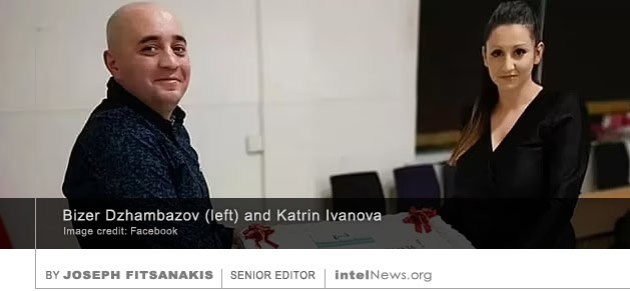
Bizer Dzhambazov and Katrin IvanovaAUTHORITIES IN BRITAIN HAVE charged three Bulgarian nationals with spying for Russia, as part of “a major national security investigation” that led to at least five arrests as early as last February. Two of the Bulgarians appear to be legally married. They have been identified as Bizer Dzhambazov, 41, and Katrin Ivanova, 31, who live in Harrow, a northwestern borrow of Greater London. The third Bulgarian, Orlin Roussev, 45, was arrested in Great Yarmouth, a seaside town in the east coast identity dof England. None of the suspect appears to have a formal diplomatic connection to either Bulgaria or Russia.
The Bulgarians were reportedly arrested in February of this year by the Counter-Terrorism Command of the Metropolitan Police, whose law enforcement mandate includes working on counterespionage cases. Two other individuals who were arrested at the time have not been charged or named. The three suspects have been charged under Section 4 of the United Kingdom’s Identity Documents Act 2010, which prohibits the possession of fake identity documents with “improper intention” and with the owner’s knowledge that they are fake. According to British government prosecutors, the suspects possessed forged passports and identity cards for Spain, France, the United Kingdom, Croatia, Italy, Greece, Bulgaria, the Czech Republic, and Slovenia.

Dzhambazov and Ivanova are believed to have moved to the United Kingdom as a couple in 2013. Both worked in the British healthcare sector —Ivanova as a laboratory assistant for a private company and Dzhambazov as a driver for a hospital. Roussev moved to the United Kingdom in 2009 and worked on the technical side of the financial services industry. He claims to have worked as an adviser for the Ministry of Energy of Bulgaria. He also claims to have previously owned a private company that operated in the area of signals intelligence (SIGINT), which involves the interception of electronic communications.

Bulgaria was one of the Soviet Union’s closest allies during the Cold War. Relations between Bulgaria and Russia plummeted in the 2000s, but pro-Russian sentiments continue to survive among some nationalist segments of the Bulgarian electorate. In June of this year, Kiril Petkov, the leader of Bulgaria’s We Continue the Change party, which today backs Bulgaria’s Prime Minister, Nikolai Denkov, spoke publicly about “Moscow-backed agents” operating inside Bulgaria’s intelligence services. Petkov proposed an ambitious plan to reform the Bulgarian intelligence services in order to “diminish the influence of Russia”. He proposed to do this through the administration of “integrity and ethical tests” to intelligence personnel.

Author: Joseph Fitsanakis | Date: 15 August 2023 | Permalink

Brazil launches investigation into illegal activities of Russian deep-cover spies

José Giammaria Mikhail MikushinAUTHORITIES IN BRAZIL HAVE launched a nationwide probe into the abuse of the country’s citizenship documentation system by Russian spies, who are allegedly using it to build forged identities. According to The Wall Street Journal, Brazil was placed “in an uncomfortable international profile” in the past year, after at least three alleged Russian deep-cover spies were outed by intelligence services in the Netherlands, Norway and Greece.

In June of 2022, authorities in the Netherlands expelled Sergey Cherkasov after he attempted to enter the country using a Brazilian-issued passport under the name of Victor Muller Ferreira. As intelNews explained at the time, Dutch and American counterintelligence outed Cherkasov as an intelligence officer of the Main Directorate of the Russian Armed Forces’ General Staff, which is commonly known as GRU. Cherkasov is alleged to have built his forged identity over several years, while operating in Brazil and the United States. Cherkasov is currently serving a 15-year prison sentence in Brazil for using forged identity documents. He is wanted in the United States for espionage. The alleged spy has reportedly admitted to the use of forged documents, but is denying he worked as a Russian intelligence officer.

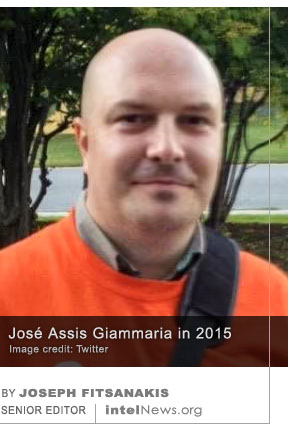
In October of last year, the Norwegian police arrested another Brazilian citizen, José Assis Giammaria (pictured), accusing him of operating under deep cover on behalf o the GRU. According to the Office of the Norwegian state prosecutor, the suspect’s actual name is Mikhail Mikushin. He is believed to have been operating as a deep-cover spy in Brazil, Canada and Norway since 2006. Mikushin is now facing charges of “aggravated intelligence-gathering activity targeting state secrets”, which carry a maximum prison term of 10 years.

In early 2023, Gerhard Daniel Campos Wittich, a resident of Rio de Janeiro, disappeared while traveling abroad. A few months later, he was connected to Irena Shmyrev, a Russian deep-cover spy who was living in Greece under an assumed Greek identity, until she disappeared without trace, reportedly leaving the country in a hurry. According to Greek counterintelligence investigations, Wittich was Irena A.S.’s Russian husband who, like her, worked as a deep-cover intelligence operative out of Brazil.

According to The Wall Street Journal, an official investigation is currently underway in Brazil into how many Russian deep-cover intelligence operatives may be using forged Brazilian citizenship documents to “lurk undetected within the country or around the world”. The paper says that Brazilian investigators have shared “few public details about their probe”. However, it cites “people familiar with the matter” in claiming that the probe centers on “security gaps within Brazil’s documentation system”, which appear to be exploited by undercover spies. Such security gaps allegedly include the ability to obtain a Brazilian identity card and a passport with the use of a single document, namely a birth record.

Author: Joseph Fitsanakis | Date: 03 July 2023 | Permalink