CIA knew of Colombian infiltration of Bogota embassies

DAS seal

DAS seal

By JOSEPH FITSANAKIS | intelNews.org |
A Colombian former intelligence official has testified in court that the CIA was aware of an aggressive intelligence collection program by Colombian spies, involving the infiltration of several foreign embassies in Colombian capital Bogota. German Albeiro Ospina, who until recently worked as an investigator for Colombia’s Administrative Department of Security (DAS), said the program was conceived and ordered by the agency’s former Director, Maria del Pilar Hurtado, and implemented by Jorge Alberto Lagos, former DAS Director of counterintelligence. The infiltration program was directed against “countries and persons that were of national interest” to Colombia, and involved techniques such as “surveillance, shadowing, infiltration and penetration of the embassies of [targeted] governments”. Read more of this post

News you may have missed #425 (US edition)

  • US Pentagon considering pre-emptive cyber-strikes? This is what The Washington Post is reporting, noting that military officials are “still wrestling with how to pursue the strategy legally”. If anyone in the DoD discovers a legal method of launching pre-emptive aggression, we’d sure like to know.
  • More changes in US FISA court. After a recent change of leadership, the US Foreign Intelligence Surveillance Act (FISA) court is considering new compliance rules for handling surveillance requests by US counterspy agencies. The court authorizes requests by agencies for surveillance of foreign suspects operating inside the US.
  • Why do US officials want to deport Chinese defector? Washington wants to deport Li Fengzhi, a Chinese ex-intelligence agent who defected to the US in 2004, back to China, where he could be executed for treason. There are rumors that Li may have “oversold” himself to the FBI and the CIA.

‘Lord of War’ weapons smuggler enjoys Russian protection

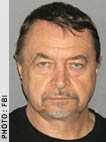
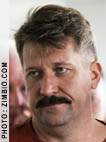
Viktor Bout

Viktor Bout

By JOSEPH FITSANAKIS | intelNews.org |
The case of notorious arms smuggler Viktor Bout is well known. Born in Dushanbe, Soviet Tajikistan, in 1967, Bout served in the GRU (Soviet military intelligence) until the collapse of the USSR, at which point he began supplying weapons to shady groups, ranging from Congolese rebels and Angolan paramilitaries to the Taliban and al-Qaeda. In March of 2008, Bout, known as ‘Lord of War’, was finally arrested by the Royal Thai Police, after a tip by US Drug Enforcement Administration (DEA) officers. The latter had managed to lure Bout to Thailand by pretending to be Colombian FARC arms procurers. Recently, Washington scored a second victory by convincing Thai authorities to extradite Bout to the United States on terrorism charges. Presumably, Bout will be tried as an arms smuggler acting on his own accord. But is this right? Read more of this post

Analysis: Russian-Czech spy scandals show new direction in Russian espionage

ÚZSI seal

ÚZSI seal

By JOSEPH FITSANAKIS | intelNews.org |
Last July saw the resignations of three Czech Generals, including the head of the president’s military office and the country’s representative to NATO, following revelations that one of their senior staffers had a relationship with a Russian spy.  Intelligence observers have become accustomed to frequent reports of Russian-Czech spy scandals in recent years. But, according to reports from Prague, recent Russian intelligence activity in the Czech Republic may indicate a change of direction by Moscow. Some say that Russia’s new espionage doctrine focuses less on military intelligence in the post-US-missile-shield strategic environment, and more on political and economic espionage. To be sure, Russia’s intelligence presence in the Czech capital remains substantial: Czech counterintelligence sources estimate that at least 60 –that is, one in three– Russian diplomats in Prague are engaged in intelligence-related activities. But the intensity of Russian espionage in Prague is not unique. Read more of this post

Swapped spy says he is not Russian, wants to move to Peru

Mikhail Vasenkov

Mikhail Vasenkov

By IAN ALLEN | intelNews.org |
One of the 11 Russian spies arrested in the US in June, and later swapped with CIA assets held in Russian prisons, claims he is not Russian, speaks no Russian, and wants to move to Peru, where he lived in the 1970s. Juan Lazaro was arrested by the FBI on June 27, along with 9 other (and later one more) Russian deep-cover operatives, who had lived in the United States under false identities for up to three decades. Lazaro, who lived in Yonkers, New York, had a doctorate in Political Science, worked as an adjunct professor, and was married to Peruvian-born journalist Vicky Pelaez. But FBI investigators unmasked Lazaro’s real name, which is Mikhail Vasenkov, before deporting him and his wife, who is also accused of working for the Russian secret services, to Moscow. According to FBI records, Vasenkov assumed the Juan Lazaro identity and ‘legend’ (biographical narrative and supporting documentation for intelligence purposes) while living in Latin America in the 1970s, using the papers of the real Juan Lazaro, an Uruguayan child who died at age 3. But now Vasenkov’s American lawyer, Genesis Peduto, claims her client is not from Russia, speaks no Russian, but is in fact the real Juan Lazaro, and wishes to leave Russia for Peru. Read more of this post

News you may have missed #407

Bookmark and Share

Comment: Is Lebanon Using US Assistance to Capture Israeli Agents?

Lebanon

Lebanon

By JOSEPH FITSANAKIS | intelNews.org |
A minor revolution has been taking place in Lebanon over the past 16 months. Since April of 2009, Lebanese authorities have arrested nearly 100 individuals on charges of spying for Israel, three of whom have been sentenced to death. Judging by numbers alone, this may be one of the most astonishing coups in the annals of counterintelligence. There are several reasons why this is happening.

Read more of this post

Lebanon releases German suspected of spying for Israel

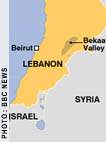
Bekaa Valley, Lebanon

Bekaa Valley

By JOSEPH FITSANAKIS | intelNews.org |
German officials have confirmed reports from Lebanon that a German citizen has been released after being questioned in connection with Israeli espionage activity in eastern Lebanon. Manfred Peter Mog, 58, who has lived in Lebanon since 1999, was detained on Monday by Lebanese counterintelligence officers, who suspected him of sharing “sensitive information” with Israeli intelligence operatives. It is believed that Mr. Mog, an engineer who has worked since 2009 at the Liban Lait dairy factory in Lebanon’s Bekaa Valley, was questioned in connection to “sophisticated transmitters” found in his possession. But the German Foreign Ministry on Wednesday firmly denied that the German citizen had had any charges brought against him by the Lebanese government. Soon afterwards, unnamed Lebanese officials confirmed that Mr. Mog had indeed been released without charges, following intense questioning by counterintelligence officers. It is worth noting that there have recently been several intelligence stories linking Israel and Germany. Read more of this post

Did fugitive spy Metsos lead to Russian spy arrests?

Christopher Metsos

C.R. Metsos

By JOSEPH FITSANAKIS | intelNews.org |
Soon after the June 27 arrests of 10 Russian non-official-cover (NOC) spies in several US cities, one name came to the attention of intelligence observers: Sergei Tretyakov. Tretyakov was a senior Russian Foreign Intelligence Service (SVR) officer who defected to the US in 2000, while second-in-command at the SVR station in Russia’s United Nations mission in New York –the same outfit that run the deep-cover operatives arrested in June by the FBI. The Bureau’s own admission that it began monitoring the operatives around 2001, has caused many to believe that Tretyakov, who died suddenly on June 13, at age 53, may have tipped off the FBI about the NOCs. But Russian investigative journalist Yulia Latynina has raised a second possibility, no less intriguing than the first. Namely that it was not Tretyakov who betrayed the deep-cover operatives to the FBI, but rather the mysterious so-called 11th spy, Christopher R. Metsos, a seasoned SVR operative who is said to have acted as a go-between and financier for all 10 Russian spies. Read more of this post

Russian ‘spy’ breaks silence, wants to leave UK for Russia

Igor Sutyagin

Igor Sutyagin

By IAN ALLEN | intelNews.org |
One of the four Russian alleged spies that were handed over to the West in return for 11 Russian intelligence officers arrested in the US last month, has issued a public statement for the first time since his July 9 release from prison. At the time of his release, Dr. Igor Sutyagin, a nuclear expert who headed the Russian Academy of Sciences’ USA and Canada Institute, had served 11 years of a 15-year sentence, for allegedly passing state secrets to Alternative Futures, a British company alleged to be a CIA front by the Russian government. Once Washington included his name on the top-secret exchange list, Sutyagin was transferred from his prison cell in Kholmogory prison, near Arkhangelsk in northern Russia, to the Lefortovo high-security jail in Moscow. It was there that, following a meeting with this family, he was told that he would receive a Presidential pardon in exchange for his unconditional admission of guilt. Minutes after he agreed to the deal, the Russian scientist was flown to London, still in his prison uniform. Read more of this post

News you may have missed #395 (Russia-US spy swap edition IV)

  • All children of Russian spies repatriated. All the children of the 10 Russian spies freed by the US in a dramatic swap with Moscow have been sent to Russia to rejoin their parents, US attorney general Eric Holder has said.
  • Moscow relieved that spy scandal is over. A sense of relief seemed to pervade the halls of the Russian government over the weekend that a potentially embarrassing spy scandal with the United States was over. But few Russian officials showed any enthusiasm about discussing the two-week affair.
  • Russia ‘gave spies hundreds of thousands of dollars’. US Attorney General Eric Holder says 10 Russian secret agents deported by US authorities as part of a spy swap had received hundreds of thousands of dollars from Moscow.

Bookmark and Share

News you may have missed #394 (Russia-US spy swap edition III)

  • Russian spy’s call to father triggered arrests. A telephone call from Russian spy Anna Chapman to her father in Moscow led US counterintelligence services to hasten the arrests of her and nine Russian agents in the United States, claims The Washington Post.
  • Non-Russian spy Pelaez to return to Peru in month. Vicky Pelaez, a journalist with dual US-Peruvian citizenship, who was deported from the United States to Russia on a spy swap, will return to Peru no sooner than in a month, Pelaez’s lawyer, Carlos Moreno, said on Monday.
  • Alleged CIA spy Sutyagin may return to Russia. Igor Sutyagin, a Russian arms expert convicted of espionage in 2004, may return home after he was deported to England in a spy swap with the US, according to his former colleague Pavel Podvig. “He has Russian citizenship, his wife and daughters are in Russia and he has been pardoned by the President”, said Podvig.

Bookmark and Share

News you may have missed #391 (Russia-US spy swap edition II)

  • Expelled spies to experience life in changed Russia. Like those before them, the sleeper spies who were deported to Russia last week in one of the biggest espionage exchanges in decades will probably miss the United States, picket fences and all. But what perhaps most distinguishes this affair from its cold war precursors is what awaits these Russians in their motherland.
  • Past Russian spies have found post-swap life gets a bit sticky. While life in Moscow may be duller than New York, Boston, New Jersey, Seattle and Washington, DC, where the 11 Russians charged last week allegedly lived as long-term, deep-penetration agents, it won’t be too bad, either, if their predecessors’ experience is any guide.
  • Life a nightmare for spies returning to Russia, says Soviet dissident. Vladimir Bukovsky, 67, a Soviet dissident exiled to Europe in a 1976 prisoner swap, says the Russian spies expelled from America to Russia last week “will go from living affluent lives with real freedom, to living under constant surveillance by the Russian secret services”.

Bookmark and Share

News you may have missed #390 (Russia-US spy swap edition I)

  • In spy swap, agents were pawns in a practiced game. The US arrests were not made to facilitate a swap, said a US official, speaking on condition of anonymity. Rather, they were precipitated, at least partly, by the plans of several of the Russians to leave this country this summer.
  • Russian spies get tepid reception in Moscow. The 10 spies who pleaded guilty to acting as foreign agents in the United States, including one Peruvian, were given a tepid, uneasy reception in Russia on Friday. State-controlled national television channels reported their return briefly, with no patriotic fervor. No national TV channels carried live coverage of the plane’s landing, even though it was available from international news agencies.
  • Russian, US spies start new lives but mystery swirls. The 14 spies swapped by Moscow and Washington were starting new lives in Russia and the West last weekend, but mystery shrouded their precise whereabouts. In one case, Igor Sutyagin, a Russian nuclear arms expert who allegedly spied for the US, found himself at a hotel somewhere in Britain, without a visa and still wearing his Russian prison clothes.

Bookmark and Share

Dead defector not connected to Russian spies, insists friend

Sergei Tretyakov

Sergei Tretyakov

By IAN ALLEN | intelNews.org |
On July 2, based on an excellent analysis by Stratfor of the 10 Russian deep-cover agents arrested in the US in June, we entertained the possibility that Sergei Tretyakov, a senior Russian SVR agent who defected to the US in 2000, may have helped the FBI identify the Russian spy ring. Last Friday, it emerged that 53-year-old Tretyakov had died at his home in Florida. When he defected to the US, along with his wife and daughter, Tretyakov was second-in-command at the SVR (Russian external intelligence) station operating out of Russia’s United Nations mission in New York. This is the same outfit that coordinated the 10 Russian deep-cover agents arrested by the FBI in June. Tretyakov’s death was announced by the late Russian spy’s friend and confidante Pete Earley, who in 2008 wrote a book about the defector. It is worth noting that Tretyakov actually died on June 13, but his wife, Helen Tretyakov, requested that his death not be publicly announced until the precise cause of death was determined. Read more of this post