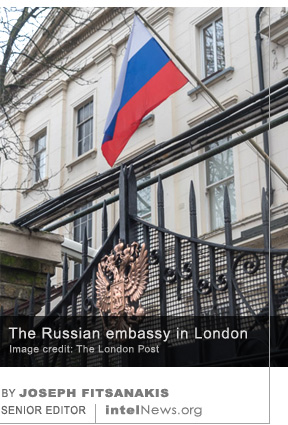
Switzerland overrun with foreign spies, Swiss intelligence service warns

Russian embassy SwitzerlandINTENSIFYING COMPETITION BETWEEN THE superpowers has turned Switzerland into an espionage battlefield, with more foreign spies being active there than in most other European countries, according to a new report. The report, published earlier this week by the Swiss Federal Intelligence Service (FIS), notes that Russian operatives are particularly active in the alpine country. Many Russian intelligence officers have relocated there after being expelled by a host of European countries in the past 18 months, according to the report.

Traditionally neutral Switzerland has not joined most other European countries in expelling Russian intelligence officers —posing as diplomats— following Russia’s full-scale invasion of Ukraine in 2022. Therefore, as Russia tries to rebuild its shattered intelligence-gathering networks in Europe, it is using Switzerland as a forward-operating base, according to the FIS. As of 2023, the number of Russian intelligence personnel stationed on Swiss soil, and the ensuing espionage activity, “is notably high”, states the report.

According to the FIS report, that the lion’s share of Russian intelligence officers —“several dozen”— are stationed “at the Russian diplomatic and consular missions in Geneva”. A major international diplomatic hub, Geneva is an “ideal operational environment” for foreign intelligence agencies. It hosts a significant number of international organizations —including one of the four major offices of the United Nations. Additionally, it is situated close to the largely unmonitored French border. This allows intelligence operatives to move seamlessly in and out of European Union soil.

Furthermore, as Western intelligence agencies increase their presence in Switzerland, in order to counter Russian intelligence activities there, “espionage levels […] are continuously rising”, according to the FIS report. This situation is unlikely to change in the coming year, as “intensifying competition between superpowers” is expected to continue to involve Switzerland as an espionage battlefield that draws in rival intelligence agencies, the FIS report concludes.

Author: Joseph Fitsanakis | Date: 28 June 2023 | Permalink

China sentences US citizen to life for espionage following closed-door trial

Hong KongA CHINESE COURT HAS sentenced a United States passport holder to life in prison on espionage charges, following a brief closed-door trial. However, no information has been made available about the precise charges against him. Closed-door trials are frequent occurrences in Chinese courts, especially in cases relating to national security, which include charges of espionage against the state. However, life sentences are exceedingly rare for espionage cases.

The individual convicted in this case has been named in media reports as John Shing-Wan Leung, 78. He is reportedly a permanent resident of Hong Kong, a special administrative region of China, over which Beijing has near-absolute control. It is not known if Leung was a Chinese citizen at any time in his life. China does not recognize joint citizenship and requires its citizens to drop their Chinese citizenship when swearing allegiance to another country. The Reuters news agency reported on Monday that Leung was at some point a member of two American-based Chinese expatriate groups, which it described as “pro-China”. These are the United States-China Friendship Promotion Association and the United States-China Friendship Association.

Leung is believed to have been arrested in Hong Kong in 2021 by local Chinese counterintelligence officers. He has been held in prison ever since his arrest. A press release issued on Monday by the Intermediate People’s Court in Suzhou, a city located in southern Jiangsu province, 700 north of Hong Kong, said Leung had been found “guilty of espionage”. The press release added that Leung had been “sentenced to life imprisonment and deprived of [his] political rights for life”. However, the statement provided no information about Leung’s alleged crimes, or the country he was found to have spied for.

According to the BBC, the United States embassy in Beijing refused to discuss the details of this case, stating only that the United States government was aware of Leung’s conviction. An embassy spokesperson told the BBC that “the Department of State has no greater priority than the safety and security of US citizens overseas”.

Author: Joseph Fitsanakis | Date: 15 May 2023 | Permalink
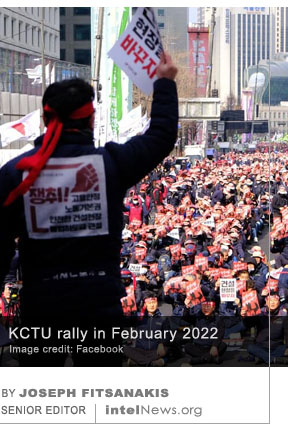
Senior members of South Korea’s largest trade union charged with espionage

KCTU South KoreaSOUTH KOREAN PROSECUTORS have charged four senior members of one of the country’s largest trade unions with espionage on behalf of North Korea. The move, which is seen as highly controversial by South Korea’s liberal opposition, has come a few months after the conservative administration of President Yoon Suk Yeol launched what some commentators have described as South Korea’s largest counter-espionage operation in over 30 years.
The operation came to light on January 18, when hundreds of police officers, led by officers of the National Intelligence Service (NIS), conducted search raids at a number of regional offices of the Korean Confederation of Trade Unions (KCTU). Founded in the mid-1990s, the KCTU represents over 1.1 million members. Most of its membership consists of supporters of the Democratic Party of Korea (DPK), a left-of-center liberal coalition that ruled South Korea until last year. Since its establishment in 2014, the DPK has been engaged in a bitter political rivalry with the People Power Party (PPP), a conservative coalition that currently governs South Korea.

On Wednesday, four KCTU officials, all of them men, between the ages of 48 and 54, were charged with several violations of South Korea’s National Security Act, including carrying out espionage on behalf of North Korea and meeting illegally with North Korean intelligence officers. South Korean government prosecutors accuse the four of meeting several times with their alleged North Korean handlers. The alleged meetings too place during overseas trips in Vietnam and Cambodia between 2017 and 2019.

While abroad, the four alleged spies were allegedly trained and given instructions to establish what prosecutors describe as “an underground organization [operating] under the guise of legal union activities”. The four men were allegedly tasked with steering the KCTU toward actions and rhetoric that were against the United States and Japan. They were also asked to helping organize worker rallies against the policies of the PPP. In other instances, the alleged spies photographed American military installations located in South Korea.

The opposition DPK has strongly condemned the charges, calling them politically motivated and describing them as a return to the days of rightwing military rule, which South Korea experienced until 1987. The NIS remains highly controversial among left-of-center South Koreans, many of whom view it as a corrupt state entity that is politically aligned with the conservative PPP. Between 2018 and 2022, the liberal DPK government spearheaded what it described as an “anti-corruption campaign” inside the NIS. As a result of that campaign, three former NIS directors were charged with —and eventually convicted of— secretly diverting funds from the agency’s clandestine budget. The funds were eventually used to aid the re-election campaign of the then-South Korean President, Park Geun-hye. Their apparent goal was to prevent the DPK from coming to power, fearing that the left-of-center party was too close to Pyongyang. President Park also went to prison for accepting financial bribes from the NIS.

Author: Joseph Fitsanakis | Date: 12 May 2023 | Permalink

Russia calls for UN Security Council meeting in response to Polish espionage claims

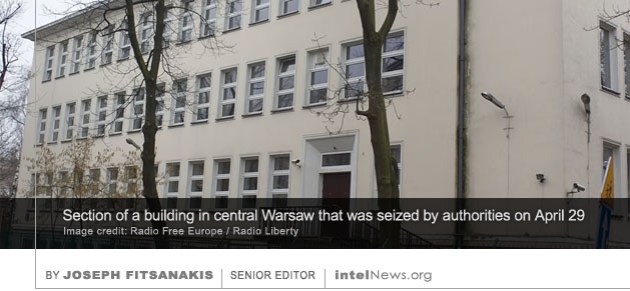
Warsaw PolandAUTHORITIES IN POLAND HAVE seized an abandoned school building in the Polish capital Warsaw, allegedly because it was being used as a base for espionage activities by the Russian government. Following the seizure  of the building complex, Russian officials issued stern but vague warnings, saying that action will be taken in response to what they termed as an “act of provocation” by the Polish government.

The controversial seizure was revealed on Saturday afternoon by Warsaw’s Deputy Mayor Tomasz Bratek, who announced that Warsaw city authorities had “taken possession” of the building. He was referring to a communist-era building complex in central Warsaw’s Ochota district, which, according to Moscow, belongs to the Russian government. The property was originally part of the Soviet embassy complex, but was later transformed into a high school and community center specializing in Russian language and culture. Many of its students were children of Russian diplomats who are stationed at the nearby Russian embassy. It has fallen into disuse in recent years.

Poland claims that the Russian government never officially bought or leased the property, and that it had been using it without permission for over three decades. Warsaw city officials maintain that the building belongs to the Warsaw city council and that they have repeatedly asked Russia to vacate the building, but to no avail. In recent years, the Polish government has been accusing Russia of using the high school as a cover for espionage activities, and claims that the use of the building by Moscow violates Polish sovereignty while also constituting a security threat.

Late on Saturday, the Russian government strongly denied the allegations and accused the Polish government of engaging in anti-Russian propaganda. It was later reported that Russia had called for an emergency meeting of the United Nations Security Council (which it currently chairs) to discuss the matter. The United States and other Western countries have not yet commented on the incident, but are likely to express support for Poland’s actions, given their own concerns about Russian intelligence activities in the region.

The seizure of the high school building is just the latest incident in a long list of espionage and counter-espionage incidents involving Russia and its neighbors in Europe. Since the Russian invasion of Crimea in 2014, such incidents have increased considerably. The seizure of the high school building in Warsaw highlights the continuing tensions between Russia and its neighbors in Europe, as well as the centrality of intelligence-gathering and counter-intelligence efforts in the region.

Author: Joseph Fitsanakis | Date: 01 May 2023 | Permalink

China-based Australian businessman charged with espionage

ASIO AustraliaAN AUSTRALIAN BUSINESSMAN, WHO has worked in China for over two decades, is facing up to 15 years in prison for allegedly selling secrets to two foreign intelligence officers. The businessman, Alexander Csergo, 55, grew up in Sydney, but moved to China in 2002 and currently works for a digital solutions firm in Shanghai. According to reports, Csergo describes himself on social media as a “business strategist” and an “operational transformation specialist”.
Csergo was arrested by the Australian Federal Police (AFP) on Friday afternoon at his family home in the eastern Sydney suburb of Bondi. According to a press release, Csergo’s arrest resulted from an investigation by the Counter Foreign Interference Taskforce (CFITF), aa joint counterintelligence body led by the AFP and the Australian Security Intelligence Organisation. Established in 2021, the CFITF brings together counterintelligence units from across Australia’s federal government sectors in order to discover, disrupt and investigate foreign interference activity.

Australian government prosecutors claim that representatives of a foreign think-tank approached Csergo on social media while he was overseas —presumably in China. The think-tank representatives arranged for Csergo to come in contact with two individuals, calling themselves “Evelyn” and “Ken”. They offered to pay Csergo in return for reports that contained “information about Australian defence, economic and national security arrangements, as well as matters relating to other countries”.

Csergo allegedly agreed to provide the requested services and proceeded to compile a number of reports for the think-tank between February 2021 and April 14 of this year. The Australian government alleges that “Evelyn” and “Ken” are in fact emploees of a foreign intelligence service, which has not yet been publicly identified in Australian government press releases. The Australian government also claims that these individuals may have tried to recruit other Australians, or foreign citizens living in Australia.

Author: Joseph Fitsanakis | Date: 17 April 2023 | Permalink

Alleged Russian spy and sabotage cell busted in Poland [updated]

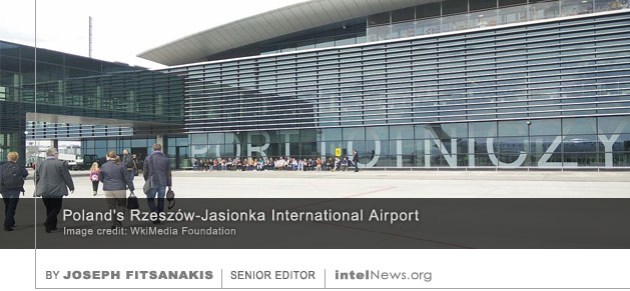
Rzeszów–Jasionka International Airport PolandSIX NINE MEMBERS OF AN alleged Russian saboteur cell have been arrested in Poland, according to media reports and official acknowledgements by Polish authorities. Early reports on Wednesday afternoon local time centered on the arrests of six nine individuals, who were detained on suspicion of conducting espionage and planning sabotage attacks against various elements of transportation infrastructure.

Radio station RMF24 FM reported that the six nine individuals were detained following a number of early-morning raids conducted by the Polish Internal Security Agency (ABW), which is the country’s primary counterintelligence and counterterrorism organization. At least some of the six nine individuals are reportedly Belarusian nationals who were active in Poland’s southeastern Podkarpackie Voivodeship, a largely rural province that borders Ukraine’s Lviv Oblast. Later on Wednesday, the RMF24 FM report was confirmed by Polish government officials, who spoke to the BBC.

Notably, the Podkarpackie Voivodeship is home to the Rzeszów–Jasionka International Airport, located near the village of Jasionka, which is approximately 60 miles, or 100 kilometers, from the Ukrainian border. Since the February 2022 Russian invasion of Ukraine, this provincial airport has been transformed into a major logistical gateway for the transportation of Western military and humanitarian aid to Ukraine. Dozens of Western aircraft land there every day, carrying supplies that are then loaded onto trucks or trains en route to Ukraine.

According to RMF24 FM, the six nine foreign nationals installed hidden miniature cameras at railway junctions and other strategic transportation hubs throughout the Podkarpackie Voivodeship. The cameras were allegedly used to collect information on the movement of trains and trucks that were being used to transport supplies from the Rzeszów–Jasionka International Airport to Ukraine. The radio station said that Polish authorities were scheduled to provide further information about the alleged spy cell at a press conference on Thursday.

[Updated to reflect arrest of nine individuals, as opposed to six, as initially reported]

Author: Joseph Fitsanakis | Date: 16 March 2023 | Permalink

Russia’s spy networks in Europe see greatest post-Cold War setback, experts claim

Russian embassy LondonRUSSIA’S ABILITY TO CONDUCT human intelligence operations in Europe has suffered greater damage in recent years than at any time since 1991, according to some experts. These setbacks have partly been caused by what The Washington Post refers to in a recent article as “a campaign to cripple Russian spy networks”, which is taking place across the continent. This Europe-wide campaign has grown in momentum since the Russian invasion of Ukraine and supplements boarder efforts to arm Ukraine in its war against the Kremlin.
The initial blow against the Kremlin’s spy network was delivered last year, when a wave of mass expulsions of Russian diplomats resulted in more than 400 suspected Russian intelligence officers being ordered to leave various European capitals. According to observes, the expelled Russian diplomats were in reality intelligence officers, who were active across Europe under diplomatic cover. Since that time, European counterintelligence agencies have launched a series of “precision strikes” against what remains of Russia’s human intelligence network across the continent.

The recent wave of expulsions of Russian intelligence personnel was not unprecedented. But it does suggest a degree of collaboration between Europe’s counterintelligence agencies that is difficult to match with historical examples. An interesting element in this collaboration is what The Washington Post describes as a “post-Ukraine shift in mind-set” in countries that had previously taken a softer approach toward the Kremlin. These include Germany, as well as Britain, which since 2018 has “refused on national security grounds over 100 Russian diplomatic visa applications”.

Russia’s response has been noticeably muted, and may mean that Moscow was caught off-guard by this Europe-wide counterintelligence campaign. The Post quotes Antti Pelttari, director of the Finnish Security and Intelligence Service (SUPO), who claims that the Russian capability to conduct human intelligence operations in Europe “has been degraded considerably”. This would imply that the Kremlin’s ability to carry out covert political action, such as political influence campaigns and related psychological operations, has been curtailed. Moreover, it is likely that the Russian intelligence services are unable to adequately assist the Kremlin’s decision-making capabilities with actionable information. Read more of this post

Tension mounts as South Korea launches largest anti-spying operation in 30 years

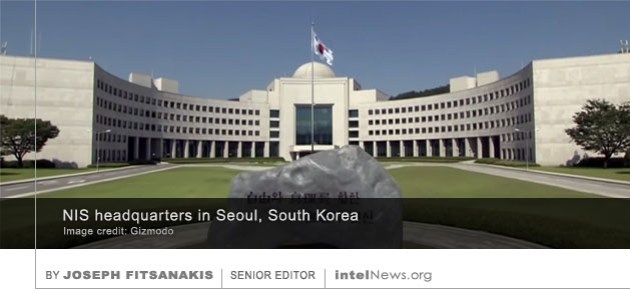
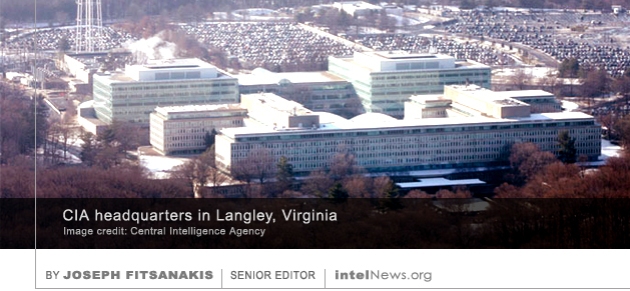
NIS South KoreaTENSION IS MOUNTING BETWEEN the government and opposition forces in South Korea, as the conservative administration of President Yoon Suk Yeol appears to be behind an effort to probe alleged links between senior liberal political figures and North Korean intelligence. The effort, which some commentators suggest could be the largest counter-espionage operation in the country’s history since 1992, is being led by the National Intelligence Service (NIS).
The operation came to light on January 18, when hundreds of police officers, led by NIS officers, conducted search raids at a number of regional offices of the Korean Confederation of Trade Unions (KCTU). Founded in the mid-1990s, the KCTU is South Korea’s second-largest labor coalition, representing over 1.1 million members. It is politically aligned with the Democratic Party of Korea (DPK), a left-of-center liberal coalition which was in government until last year. Since its establishment in 2014, the DPK has been engaged in a bitter political rivalry with the People Power Party (PPP), a conservative coalition that currently governs South Korea.

According to reports, the NIS is investigating charges that members of the KCTU formed “a clandestine organization” that engaged in protests against the United States and organized “various subversive campaigns under instructions from North Korea”. According to the NIS, the clandestine organization was led by a senior KCTU official, who was handled by clandestine operatives of North Korea’s ruling political party, the Workers’ Party of Korea (WPK). The NIS claims that the official met repeatedly with WPK operatives during trips to countries like Vietnam and Cambodia, between 2016 and last year.

On January 18, a large police force appeared to be trying to enter the KCTU headquarters in Seoul, in an attempt to arrest the trade union official, who has not been named. Video footage appeared on South Korean social media, which appeared to show a standoff between law enforcement and KCTU officials. The latter attempted to be trying to prevent the police and NIS representatives from entering the building. Eventually, the authorities were able to enter the building, while also attempting to prevent some individuals barricaded inside from leaving. Read more of this post

Espionage allegations prompt sharp exchanges between ex-CIA officials

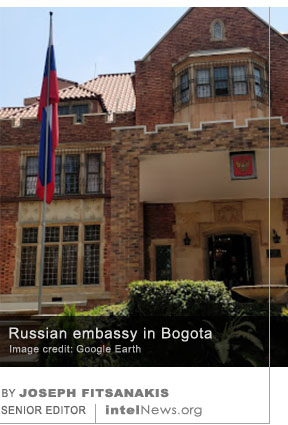
CIAA BOOK BY A former Central Intelligence Agency (CIA) case officer, which alleges that a senior Agency official sabotaged American counterintelligence efforts on orders from Moscow, has prompted a series of fiery exchanges by retired CIA personnel. The primary figures in the dispute are the book’s author, Robert Baer, and Paul J. Redmond, who served as the CIA’s Associate Deputy Director of Operations for Counterintelligence.
Baer’s book, The Fourth Man: The Hunt for a KGB Spy at the Top of the CIA and the Rise of Putin’s Russia (Hachette Books, May 2022), focuses on the period following the arrests of three American intelligence insiders, who were found to have spied for the Kremlin: Federal Bureau of Investigation (FBI) agent Robert Hanssen, and CIA officers Aldrich Ames and Edward Lee Howard. By 2002, Hanssen and Ames were serving life sentences for espionage, while Howard had died in Russia where he had fled while under investigation by the FBI. Collectively, these three had been responsible for some of the CIA’s gravest operational setbacks against the Soviet KGB and its Russian successor agencies.

Some in the CIA, however, remained convinced that not all of the CIA’s failures in the 1980s and 1990s could be explained away in this fashion. They held on to the suspicion that Moscow had been able to recruit a senior CIA executive, who —among other things— had sabotaged numerous probes by some of the Agency’s most committed spy-hunters. Baer’s book discusses how, in the mid-1990s, the CIA’s Directorate of Operations actively pursued those suspicions, by setting up a Special Investigations Unit (SIU). This new unit was led by one of the CIA’s most talented counterintelligence officers, Paul Redmond.

CONTROVERSY

This is precisely the point at which Baer’s book turns wildly controversial: it alleges that the missing spy, whom Baer refers to as “the fourth man”, is none other than Redmond himself. The retired CIA case officer further alleges that even the SIU eventually concluded that Redmond —i.e. its leading member— was a spy for Moscow. The author claims that the SIU presented those findings at a briefing with Redmond among the audience. The presentation prompted Redmond to storm out of the meeting, Baer alleges.

Importantly, Baer describes his case as “inconclusive”, and claims that he relies on information from some of his former CIA colleagues. He also admits that the very idea of a “fourth man” may be nothing more than a chimera. Nevertheless, the SIU probe did occur. It also appears that the FBI opened an investigation into the matter in 2006. Baer claims to have received a visit by two FBI agents in 2021, in which he was asked about what he knew about Raymond. This, he says, left him with the impression that some sort of counterintelligence effort to find the “fourth man” was “ongoing then and is continuing” now. Moreover, according to Baer, this counterintelligence investigation is no longer confined in-house at CIA; the FBI has now taken the lead.

REDMOND’S SIDE RESPONDS

Remarkably, Baer appears to have spoken to Redmond at least twice while preparing his book. On each occasion, the retired CIA senior executive fiercely rejected Baer’s claims that he was a spy for Moscow. In recent months, Redmond voiced his dismay at Baer’s claims publicly. As SpyTalk reports, the first time Redmond spoke publicly about Baer’s book was in November of last year, during an event held by the Association of Former Intelligence Officers. Read more of this post

Colombian intelligence spied on Russian and Cuban diplomats, reports claim

Russian embassy in Bogota, ColombiaCOLOMBIAN INTELLIGENCE CARRIED OUT surveillance operations against Russian and Cuban diplomats stationed in Colombia between 2016 and 2019, according to media reports that surfaced earlier this week. The reports claim that Colombia’s National Intelligence Directorate (DNI) was behind the operations, which involved physical, as well as electronic, surveillance.
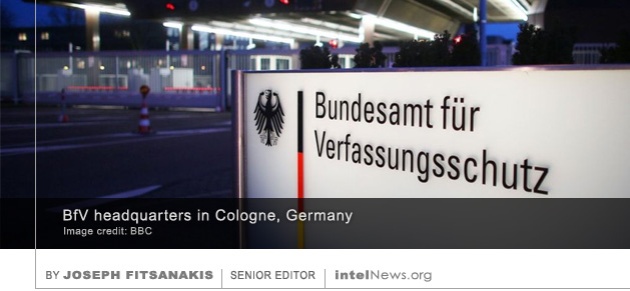
One of the operations was reportedly codenamed CATEDRA, and targeted three senior staff members of the Russian embassy in the Colombian capital Bogota. In addition to the diplomats themselves, DNI agents allegedly spied on the diplomats’ spouses and their children. In some cases, DNI agents disguised themselves as “street vendors” in order to spy on the homes of the diplomats. The agency also planted electronic devices in hotels around Colombia —notably in the resort town of Melgar in central Colombia, where over a dozen staff members of the Russian embassy holidayed in 2017.

Allegedly, Operation CATEDRA also involved the interception of communications of at least two Russian diplomats. These were identified as Denis Viktorovich Khromov, who served as the second secretary at the Russian embassy in Bogota, as well as Aleksandr Nikolayevich Belousov, who in late 2020 was declared persona non grata and expelled by the Colombian government on charges of espionage. Colombian media said at the time that Belousov had been outed as an intelligence officer, following a two-year DNI operation codenamed ENIGMA.

The DNI also spied on at least 10 Cuban diplomats and other members of the embassy of Cuba in Bogota, according to the same reports. The operation, codenamed MATIAS, investigated alleged “Cuban interference” in Colombia, and took place while the Cuban government was hosting peace talks between the Colombian government of then-president Juan Manuel Santos and leaders of the country’s largest militant groups, the Revolutionary Armed Forces of Colombia (FARC) and the National Liberation Army (ELN).

According to the reports, the DNI recruited a Cuban embassy worker, instructing her to “install [surveillance] devices and extract information from the building where control targets [were] located”. This eventually enabled the DNI to gain “access to security cameras and rooms throughout the building” of the Cuban embassy, the reports claim. Operations MATIAS and CATEDRA were reportedly concluded in 2019.

Author: Joseph Fitsanakis | Date: 18 January 2023 | Permalink

Germany is prepared for projected increase in Russian spy activity, says BfV director

BfV GermanyRUSSIAN FOREIGN INTELLIGENCE ACTIVITIES in Germany have increased exponentially since the start of the war in Ukraine, and are projected to further-increase in 2023, according to the head of German counterintelligence. In an interview on Monday with the German Press Agency (DPA), Thomas Haldenwang, director of the Federal Office for the Protection of the Constitution (BfV), also warned that China, Iran and Turkey are intensifying their intelligence activities inside Germany.
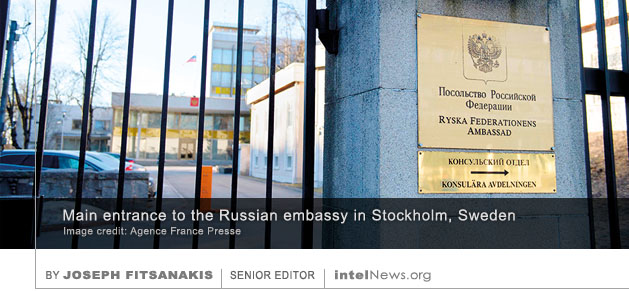
In April of last year, the German government expelled 40 members of the diplomatic staff from Russia’s embassy in Berlin. It is believed that the majority of those expelled were intelligence officers operating under official cover. According to Haldenwang, the Kremlin has taken steps to compensate for the loss of its intelligence presence in Germany. This is largely being done in two ways: first, with “traveling operatives”, i.e. intelligence officers who are stationed in third countries and travel to Germany to carry out specific operations; second, with non-official-cover officers, i.e. intelligence operatives who have no overt relations with the Russian government. Moreover, Russia has been mounting its cyber-attacks and foreign-influence operations against Germany, according to Haldenwang.

In response to the Kremlin’s actions, German counterintelligence is making “great efforts to prevent […] people who may be connected to Russian intelligence from entering Germany” with valid visas, Haldenwang said. The BfV has hired more personnel and has “organizationally redesigned” its defensive and offensive counterintelligence capabilities, as well as cyber-defense expertise. As a result, the BfV “feels sufficiently prepared for the current challenges”, Haldenwang said. He also disputed allegations in Western media that the BfV had been relatively passive in countering Russian intelligence operations prior to the war in Ukraine.

Finally, Haldenwang cautioned that Iran and Turkey maintained a significant intelligence presence in Germany, and that the stormy domestic politics in those countries would “have an impact in Germany”, as “internal political conflicts [in those countries] are fought here”. This also applies to China, whose intelligence collection targets are no longer primarily economic, but are moving into the political domain. According to Haldenwang, a “pan-European solution is needed to reverse this trend, at least for the European [Union] states”.

Author: Joseph Fitsanakis | Date: 03 January 2023 | Permalink

Mystery surrounds arrest of alleged Russian spy couple in Sweden

Russian Embassy SwedenNUMEROUS UNANSWERED QUESTIONS SURROUND the arrest of a Russian married couple in Sweden, on charges of espionage. The arrest took place in dramatic fashion in the early hours of Tuesday, November 22. According to the Swedish media, members of the security forces descended via tactical ropes from two Blackhawk helicopters, as startled residents in the typically quiet Stockholm suburb of Nacka looked on.
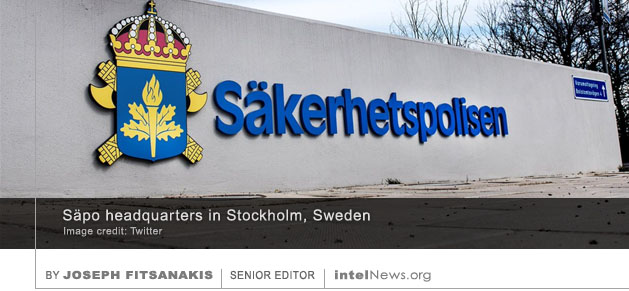
The raid was apparently conducted based on information received by Sweden’s counterintelligence agency, the Swedish Security Service (SAPO), coupled with tips from the United States Federal Bureau of Investigation (FBI). The targets of the operation were Sergei Nikolaevich Skvortsov and Elena Mikhailovna Kulkova, a Russian-born married couple, who moved to Sweden from Russia in 1999. According to their identity documents, Skvortsov was born in Perm on July 28, 1963, and Kulkova in Moscow on May 22, 1964.

Both Skvortsov and Kulkova are university-educated, with a background in science, mathematics and cybernetics. Upon settling in Sweden, they worked in the import-export technology sector. By 2013 they had become Swedish citizens and had a son. Kulkova also had a daughter from a previous marriage. The Russian investigative source The Insider reports that Kulkova’s daughter’s boyfriend worked for Swedish military intelligence.

Swedish authorities allege that the two suspects migrated to Stockholm on orders of the Main Directorate of the Russian Armed Forces General Staff, known as GRU. The GRU allegedly did not activate them until after they had acquired Swedish citizenship. According to the court indictment, Skvortsov and Kulkova began to actively spy against the United States in 2013 and against Sweden in 2014.

Some sources claim that the case of the Russian couple may be connected to the recent arrests of Payam and Peyman Kia, two Iranian-born Swedish brothers, who were arrested in 2021 and are now facing charges of engaging in espionage on behalf of the GRU. Payam Kia worked for SAPO and had access to classified information from a host of Swedish government agencies. SAPO reportedly launched the probe in 2017, following suspicions that it harbored a spy in its personnel ranks.

Author: Joseph Fitsanakis | Date: 05 December 2022 | Research credit: A.G. | Permalink

Sweden charges two brothers with spying for Russian military intelligence

Säpo swedenAUTHORITIES IN SWEDEN HAVE charged two brothers, one of whom worked in a highly secretive Swedish intelligence unit, with spying for Russian military intelligence for a decade, according to news reports. The charges resulted from a six-year investigation led by the Swedish Security Service (SAPO), which is the country’s counterintelligence agency. SAPO reportedly launched the probe in 2017, based on suspicions that it harbored a spy in its personnel ranks.
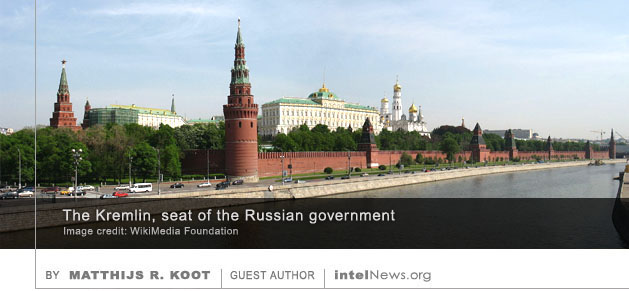
The two brothers have been named by Swedish media as Payam Kia, 35, and Peyman Kia, 42. They were reportedly born in Iran and became Swedish citizens in 1994. It is also reported that Payam Kia worked for SAPO and had access to classified information from a host of Swedish government agencies. SAPO accuses the two men of having worked “jointly” to pass information to the Main Directorate of the Russian Armed Forces’ General Staff, known broadly as GRU.

According to Swedish authorities, the two men began spying for Russia in September of 2011 and continued until the fall of 2021. Peyman Kia allegedly acted as a courier, passing information and payments between his brother and his Russian handlers. Per Lindqvist, chief prosecutor for Sweden’s National Security Unit, told the Associated Press news agency that the Kia brothers case involved “extremely sensitive topics”, but did not elaborate. Some reports claim that Payam Kia had access to the files of Swedish spies operating abroad.

The younger of the two brothers was reportedly arrested in September of 2021. His older brother was arrested in November of the same year. They face up to life imprisonment. They both deny the charges against them.

Author: Joseph Fitsanakis | Date: 14 November 2022 | Permalink

More on Russian alleged spies expelled from the Netherlands and Belgium

Kremlin KootAs intelNews reported earlier this week, a joint investigative effort by Dutch and Belgian media exposed details about a group of alleged Russian intelligence officers, who were expelled by Belgium and The Netherlands in March 2022. Dutch state broadcaster NOS and its flagship current affairs program, Nieuwsuur, aired the names, photos and backgrounds of 17 Russian intelligence officers, who were expelled from the Netherlands in March of this year. According to the Dutch government, the expelled diplomats were involved in counterintelligence and in espionage targeting the country’s high-tech sector.

According to the reports, at least 20 Russian official-cover officers were active in the Netherlands in early 2022. The reporters said they spoke with intelligence sources and the Dossier Center. That organization is financed by banned Russian oligarch and Putin critic Mikhail Khodorkovsky, and claims to have access to leaked databases that contain information about the education and background of Russian intelligence officers.

Eight of the expelled officers work for the Russian Foreign Intelligence Service (SVR), while the other nine work for the Main Directorate of the Russian Armed Forces’ General Staff (GRU). Some of them presented themselves as trade representatives in Amsterdam, as military attachés, or as diplomats at the Organisation for the Prohibition of Chemical Weapons. Read more of this post

Journalists reveal names of Russian diplomats expelled by Netherlands for espionage

SVR hq

AN INVESTIGATION BY A consortium of journalists from the Netherlands and Belgium has revealed the identities of 17 Russian diplomats, who were expelled in April by Dutch authorities for allegedly engaging in espionage. The expelled diplomats were among hundreds of members of the Russian diplomatic corps, who were expelled from all over Europe in March and April of this year, in response to Russia’s invasion of Ukraine.

As intelNews reported on April 4, the diplomats who were expelled from the Netherlands were serving at the Russian embassy in The Hague. Some of them also represented Russia at the Organization for the Prohibition of Chemical Weapons (OPCW) headquarters in The Hague. Russia responded on April 19, by announcing the expulsion of 15 Dutch diplomats from the embassy of the Netherlands in Moscow. As is customary in such cases, neither the Netherlands nor Russia revealed the names of the expelled diplomats.

Now, however, the identities of the expelled Russian diplomats have been revealed, thanks to an investigation by of a group of Dutch and Belgian journalists. The investigation was conducted under the auspices of the Dossier Center, a London-based Russian-language organization that specializes in investigative reporting. The conclusions of the invesgitation were first reported by Belgian newspaper De Tijd and by Netherlands public television, NOS.

According to the investigation, eight of the 17 expelled Russian diplomats were employees of the Russian Foreign Intelligence Service, known as SVR. The remaining nine were employed by the Main Directorate of the Russian Armed Forces’ General Staff, which is commonly known as GRU. At least six of the expelled diplomats worked as encryption specialists. They handled the communications systems that the Russian intelligence personnel who were stationed in the Netherlands used in order to exchange secret information with Moscow. A smaller number worked in counterintelligence, and were tasked with preventing efforts by adversary intelligence services to recruit Russian diplomatic personnel stationed in the Netherlands.

The report by the Dossier Center includes information about the identities of the Russian diplomats, as well as photographs and detailed biographical data about their background. According to the authors of the report, all information included in the report was collected from open sources, including from social media accounts that were maintained by the expelled Russian diplomats.

Author: Joseph Fitsanakis | Date: 17 October 2022 | Permalink