Extracts from Kim Philby’s espionage confession published today for the first time

Kim PhilbyExtensive extracts from the confession of Kim Philby, one of the Cold War’s most prolific double spies, are scheduled to be released today for the first time by Britain’s National Archives. While working as a senior member of British intelligence, Harold Adrian Russell Philby, known as ‘Kim’ to his friends, spied on behalf of the Soviet OGPU and NKVD, the intelligence services that later became known as the KGB. His espionage activities lasted from 1933 until 1963, when he secretly defected to the USSR from his home in Beirut, Lebanon. Philby’s defection sent ripples of shock across Western intelligence and is often seen as one of the most dramatic incidents of the Cold War. He was part of a spy ring of upper-class British communists who were known collectively as ‘the Cambridge spies’ because they were recruited by Soviet intelligence during their student days at the University of Cambridge in England.

Britain’s intelligence establishment has never released Philby’s confession, which he made to his friend Nicholas Elliott, an intelligence officer in the Secret Intelligence Service (MI6) in January 1963. The MI6 had sent Elliott to Beirut, where Philby was working as a journalist, to inform him that his espionage role for the Soviets had been established beyond doubt. The MI6 officer had been authorized to offer Philby immunity from prosecution in return for a full confession. Philby accepted the offer and began his confession while in Beirut. But a few days later he vanished and reemerged in Moscow in July of that year. He died there in 1988.

The file that is scheduled to be released today by the National Archives is marked “Secret” and comes from the Security Service (MI5), Britain’s primary counterintelligence agency. It contains details about Philby’s first assignments for Soviet intelligence, which included identifying other communist students at Cambridge who would be susceptible to recruitment. Philby’s list included the names of Donald Maclean and Guy Burgess, who later became members of the Cambridge spy ring. Philby states in his confession that he cautioned his Soviet handlers about recruiting Burgess due to “his unreliability and indiscretion”, but his objections were “overruled”, he says.

When asked by Elliott how he could have sided with Soviet intelligence at a time when the Soviet leader, Joseph Stalin, was slaughtering millions, Philby responds by comparing his service for the KGB to joining the armed forces. Following orders, he says, does not imply that a soldier unquestionably agrees to every action of the government he serves. He goes on to reveal that his Soviet handlers never attempted to win his “total acceptance on the technical level. In short”, Philby continues, “I joined [Soviet intelligence] as one joined the army [… I often] obeyed orders although convinced they were wrongly conceived”.

Author: Joseph Fitsanakis | Date: 24 September 2019 | Permalink

Threat from espionage is bigger than terrorism, says Australia’s spy chief

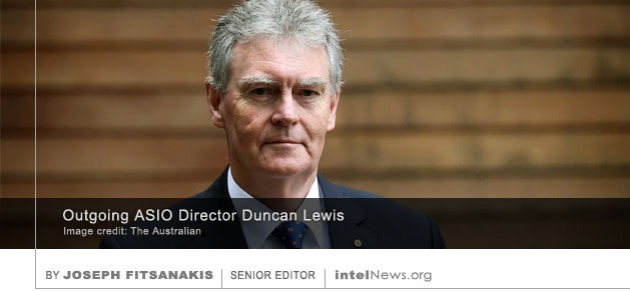
Duncan LewisThe director of Australia’s main national security agency has warned in a public speech that the threat from espionage —including cyber espionage— is greater than terrorism, and poses an “existential” danger to established states. Duncan Lewis was appointed director of the Australian Security Intelligence Organisation (ASIO) in 2014, having already served for more than four decades in the Australian military and civilian government sectors. On Wednesday, Lewis gave a rare public address at the Lowy Institute in Sydney, ahead of his retirement from government service later this month.

The ASIO director said in his speech that terrorism poses “a terrible risk” and should be seen as “a very serious matter”. On the other hand, “terrorism has never been an existential threat to established states”, said Lewis. Additionally the risk from the current wave of Salafi-Jihadist terrorism has “plateaued” and should not be expected to increase drastically, he noted. On the other hand, the threat of foreign espionage “is ultimately an existential threat to the state, or it can be an existential threat to the state”, added Lewis. The ASIO director described espionage and foreign-influence activities as “typically quiet, insidious and with a long tail”. Thus, “unlike the immediacy of terrorism incidents”, the harmful effects of espionage may not appear for many years or even decades after the initial activity has been carried out, he said.

Additionally, said Lewis, Australia’s “middle power status” and close alliances with Western countries make it a major target for state-sponsored human and cyber espionage attacks. Adversary nations see Australia as “a rich target”, he said, and launched espionage operations against it daily. As a result, foreign intelligence operations against Australia are “on a growth path” and are taking place on an “unprecedented” scale and scope, according to Lewis. Such operations include “covert attempts to influence and shape the views of the [Australian] public, media, government and diaspora communities, both within Australia and overseas”, said Lewis, adding that they take place “every day”.

The espionage threat to Australia does not come from “one particular nation”, said the AFIO director, although some nations tend to display more “intent, sophistication and commitment” than others. Australia is obligated to resist against these threats by continuing to develop its counter-espionage capabilities and finding innovative and effective ways to detect and defend against foreign interference, Lewis said at the conclusion of his talk.

Author: Joseph Fitsanakis | Date: 05 September 2019 | Permalink
Analysis: Did the US Central Intelligence Agency lose 17 spies in Iran?

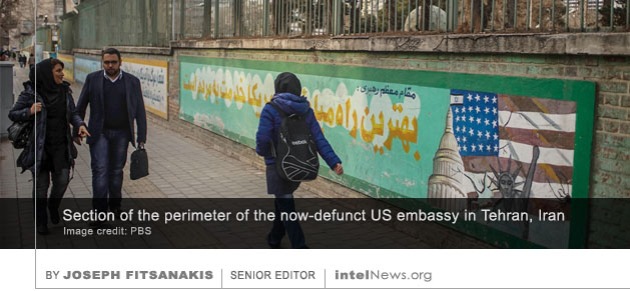
US embassy IranIf the announcements from Tehran are to be believed, the United States Central Intelligence Agency lost at least 17 spies in Iran in the months leading up to March 2019. According to Iran’s Ministry of Intelligence, the Islamic Republic busted an alleged “CIA network” operating in sensitive private sector companies and government agencies that relate to defense, aerospace and energy. At least some of the 17 alleged spies have reportedly been sentenced to death, though their exact number remains unknown.

Officials in Tehran said on Sunday that all of the purported spies are Iranian nationals and were lured by the CIA with promises of receiving visas to enter America. Others were already in possession of visas and were “blackmailed” to spy for the US in order to have them renewed by the US Department of State, according to Iranian media reports. Visa applicants were allegedly carefully selected based on their work in critical areas such as Iran’s nuclear program or defense procurement.

A government-sanctioned documentary, which aired on Iran’s state owned television on Monday, claimed that the 17 spies did not know each other, but all had been trained independently in clandestine tradecraft. This allegedly included setting up and using secret communications systems, as well as carrying out dead drops without being detected. Dead drops utilized containersQ Quote made to look like rocks, which were located “in parks and other mountainous areas” in Iran and elsewhere in the Middle East, according to Iranian officials. Some of the assets communicated with their handlers while attending science conferences through- out Europe, Africa and Asia.
The Iranian television documentary claimed that the 17 arrests had “dealt a lethal blow to US foreign intelligence”. But US President Donald Trump said in a tweet that Tehran’s allegations were “totally false” and contained “zero truth”, just “more lies and propaganda” from Tehran.

Who is right? To begin with, there is no question that the CIA recruits heavily in Iran, given that the Islamic Republic is one of America’s —indeed the world’s— primary intelligence targets. What is more, since 1979, when Washington lost its embassy in Iran, the CIA have found it more difficult to collect accurate information from inside the energy-rich country. Therefore, the need for dependable assets inside Iran has increased exponentially, and has become even more pressing now, given the importance placed on Iran by Donald Trump. Additionally, Read more of this post

Pakistan sentences two, including senior military officer, to death for espionage

Inter-Services Public Relations PakistanA military court in Pakistan has sentenced two men to death and one to 14 years in prison for espionage. The alleged spies, who have been named, include a lieutenant general and civilian employee of a security agency. In February, several Pakistani news outlets reported that “an international spying network” had been dismantled in the country following the arrests of at least five intelligence and security officials who were working for foreign interests. Soon afterwards, the online reports were taken down and nothing more was said about the arrests. But on Thursday, Pakistan’s Inter-Services Public Relations (ISPR), the media wing of the country’s Armed Forces, said in a statement that three men had been sentenced for “espionage/leakage of sensitive information to foreign agencies” which “prejudiced national security”.
The three men were identified as Lieutenant General Javed Iqbal, Brigadier (ret.) Raja Rizwan, and Dr. Wasim Akram, who was reportedly “employed at [an unidentified] sensitive organization”. Iqbal and Akram were sentenced to death, while Rizwan was sentenced to 14 years of “vigorous imprisonment”, according to ISPR. Reports in local media said that General Qamar Javed Bajwa, the Pakistani Army’s Chief of Staff, had approved the sentences handed to the men by the military judges. This means that the sentences will be carried out unless Pakistan’s President, Arif Alvi, pardons them. Interestingly, the ISPR statement noted that the three men were tried in separate military courts for separate cases. No further information was provided. As intelNews reported in February, Pakistani media claimed at the time that those arrested included a Pakistani official with diplomatic credentials who was serving in a Pakistani embassy “in a European capital”.

No information has emerged about the country or countries to which the alleged spies gave sensitive information. Back in February, Pakistan’s leading conservative daily, The News International, claimed that the spies’ handlers belonged to an intelligence agency of one of “the world’s most powerful countries”. The paper also hinted that the alleged spy network may have been working for the United States Central Intelligence Agency, but provided no information to support this claim. It added that the network had been “completely dismantled” following a counterintelligence operation that an unnamed source described to the paper as “remarkable”.

Author: Joseph Fitsanakis | Date: 31 May | Permalink

Family of alleged UAE spy who died in Turkish prison call for investigation

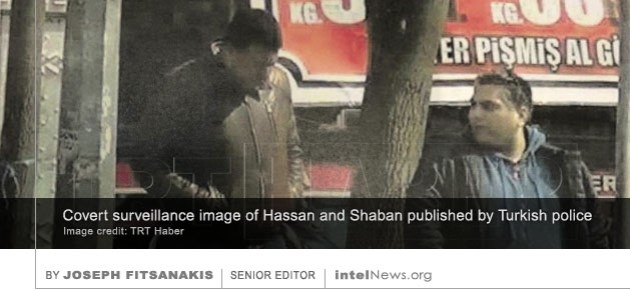
Zaki Mubarak Hassan and Samer ShabanThe family of a man who died in a Turkish prison on Sunday while awaiting trial for allegedly spying for the United Arab Emirates has called for an international investigation into this death. Zaki Mubarak Hassan and Samer Shaban —both Palestinians— were reportedly arrested by Turkish police on April 21 and charged with espionage. Turkish counterintelligence officials suspect that at least one of the suspects may have been involved in a spy operation that relates to the murder of Jamal Khashoggi, a Saudi journalist who was killed last October inside the Saudi Arabian consulate in Istanbul by a 15-member team of Saudi intelligence officers.
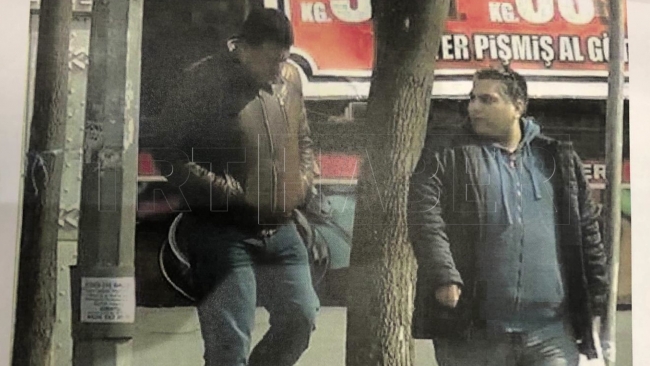
Shortly after the two men were arrested, the Reuters news agency cited an anonymous “senior Turkish official” who said that one of two men arrived in Turkey just days after Khashoggi’s murder. He was allegedly monitored by Turkish counterintelligence for a period of six months and his activities led investigators to the second man. The latter is believed to have traveled to Turkey in order “to help his colleague with the workload”, said Reuters. The source added that the two UAE nationals had undergone several hours of interrogation, during which they had confessed that they were employees of the UAE intelligence service. They had also admitted to recruiting local residents as informants. Their activities and targets were consistent with intelligence operations aimed at exiled Arab nationals and students living in Turkey, said the source. The unnamed Turkish official told Reuters that authorities had amassed “extensive evidence” on “covert activities on Turkish soil” by the two men, and described the case against them as “airtight”.

Yesterday, however, the Turkish government announced that one of the men, Zaki Mubarak Hassan, had been found dead in his prison cell in Istanbul. Press reports said that Hassan was found “Sunday morning hanging from a bathroom door” in his cell, and that prosecutors were investigating the formal cause of his death. Late on Monday, his family told the Saudi Arabian Arab News channel that they did not believe Hassan had killed himself. Speaking to Arab News from his home in Bulgaria, Hassan’s brother, Zakeria, said that agents of the Turkish government killed his brother because they realized he was not a spy for the UAE and “they didn’t want to show that they made a mistake”. He added that he had notified the Palestinian ambassador in Ankara of his brother’s arrest, but the ambassador did not seem interested in assisting the family. Meanwhile, the uncle of the second man, Samer Shaban, told another Saudi news channel, Al Arabiya, that his nephew had left the Gaza Strip in 2007 for Egypt. Zaki Mubarak said that Shaban, a Palestinian police officer, was a Fatah supporter and eventually moved from the Hamas-dominated Gaza Strip to the UAE, where he began working as an employee of the Palestinian Authority’s consulate in Dubai. His goal, said Mubarak, was to immigrate with his family to Turkey and from there to Europe.

Author: Joseph Fitsanakis | Date: 30 April 2019 | Permalink

Turkey announces arrests of two alleged UAE intelligence officers in Istanbul

UAE nationals arrested in Turkey on espionage charges

Covert surveillance photograph of two UAE nationals arrested in Turkey on espionage charges (TRT Haber)

Turkish authorities have announced the arrest of two men believed to be intelligence officers for the United Arab Emirates; the two have already confessed to recruiting local informants, according to Reuters. The news agency said Turkish counterintelligence officials suspect that at least one of the suspects may be involved in a spy operation that relates to the murder of Jamal Khashoggi, a Saudi journalist who was killed last October inside the Saudi Arabian consulate in Istanbul by a 15-member team of Saudi intelligence officers.

Last Friday, Reuters cited an anonymous “senior Turkish official” who said that both men are Emirati nationals and that one of them arrived in Turkey just days after Khashoggi’s murder. He was allegedly monitored by Turkish counterintelligence for a period of six months and his activities led investigators to the second man. The latter is believed to have traveled to Turkey in order “to help his colleague with the workload”, said Reuters. Turkey’s state-owned news agency, TRT Haber, published Turkish police photographs of the two men in custody, but did not name them. It also published covert surveillance photographs of the two men, presumably taken by Turkish counterintelligence. A source told Reuters that Turkish counterintelligence officials had entered an Istanbul apartment used by the two men as a safe house, where they found an encrypted computer “in a hidden compartment”. The source added that the two UAE nationals had undergone several hours of interrogation, during which they had confessed that they were employees of the UAE intelligence service. They had also admitted to recruiting local residents as informants. Their activities and targets were consistent with intelligence operations aimed at exiled Arab nationals and students living in Turkey, said the source.

The unnamed Turkish official told Reuters that authorities had amassed “extensive evidence” on “covert activities on Turkish soil” by the two men, and described the case against them as “airtight”. However, when contacted by Reuters, Turkey’s Ministry of Interior declined to comment on the arrests. A spokesman for Istanbul’s Police Department confirmed that a police operation against the two Emirati nationals was ongoing. Turkish media reports on Saturday said that the two men had appeared before a court in Istanbul and that they were being kept in custody on charges of espionage against the Turkish state.

Author: Joseph Fitsanakis | Date: 22 April 2019 | Permalink

Russian diplomat involved in espionage leaves Sweden after ‘unusual’ delay

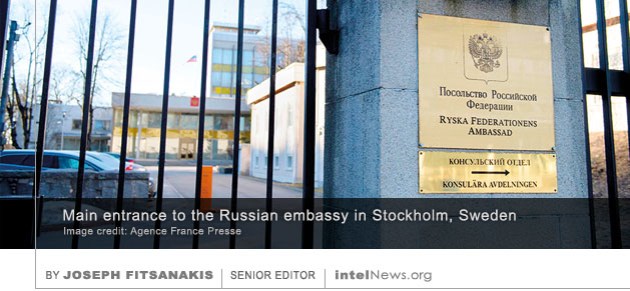
Russian Embassy SwedenRussia has recalled one of its diplomats from Sweden after he was caught receiving classified information from a computer expert at a nightclub in Stockholm. The computer expert was later identified as Kristian Dmitrievski, a 45-year-old naturalized Swede who was born in Russia. The Swedish government accuses him of having been recruited by Russian intelligence in 2017 or earlier. He allegedly met with his Russian handlers on a regular basis since his recruitment, passing them classified information of a technical nature.
Dmitrievski was reportedly arrested on the evening of February 26, while meeting his alleged Russian handler in a downtown area of the Swedish capital. Both Dmitrievski and his alleged handler were detained by officers of the Swedish Security Service, known as SÄPO. Swedish authorities later said that Dmitrievski’s alleged handler was a member of staff of the Russian embassy in Stockholm and had diplomatic immunity. SÄPO added that the Russian diplomat was believed to be a Russian intelligence officer who worked under diplomatic cover. The Russian man’s diplomatic status granted him immunity, so Swedish authorities were unable to file espionage charges against him. However, the Swedish Foreign Affairs Ministry summoned the Russian ambassador to file a protest, while the alleged intelligence officer was told to leave the country.

Surprisingly, however, Moscow did not recall the diplomat, as expected, and no further reports were issued about the incident. Then on March 28, the Swedish daily Dagens Nyheter named the Russian diplomat as Yevgeny Umerenko. Later that day, the Associated Press news agency said that it had seen “an intelligence report from a European service” that identified Dmitrievski’s Russian handler as Yevgeny Umerenko. The Associated Press described Umerenko as a “Line X officer” —a Soviet-era classification referring to case officers specializing in technological espionage. Western intelligence agencies had apparently been monitoring Umerenko’s activities ever since he had a similar role at the Russian embassy in Berlin, immediately before being transferred to Stockholm.

In its report, the Associated Press said that Moscow had finally recalled Umerenko from its embassy in Sweden, and that he was back in Russia. The news agency added it spoke to Anna Lundbladh, a spokeswoman for Sweden’s Ministry for Foreign Affairs, who confirmed that Umerenko had left Sweden, but went on to say that the Swedish government would “not discuss this matter in further detail”.

Author: Joseph Fitsanakis | Date: 01 April 2019 | Permalink

Sweden confirms arrest of second person on spying charges

Säpo swedenThe Swedish public prosecutor’s office has confirmed media reports that a second espionage-related arrest took place in Stockholm this week. The latest arrest came just 24 hours after a man was arrested in the Swedish capital on Tuesday, allegedly for spying on behalf of Russia. As intelNews reported yesterday, a man was apprehended on Tuesday while meeting with a foreign diplomat in central Stockholm. The diplomat is allegedly a member of staff at the Russian embassy in Sweden. He is believed to be a Russian intelligence officer operating under official cover. A representative of the Swedish Security Service, known as SÄPO, later said that the man who was meeting with the Russian diplomat had been recruited by Russian intelligence in 2017 or earlier, and had been in regular contact with his Russian handlers. His name has not been revealed to the media, but he is believed to be working for an unnamed technology company in Sweden.
On Thursday, the Stockholm-based newspaper Dagens Nyheter said that it had seen court papers involving the arrest of a second individual on Wednesday, reportedly in connection with espionage for a foreign power. The paper said that the arrest took place in the Swedish capital and the individual in question remained in detention. It added that Hans-Jorgen Hanstrom, of the public prosecutor’s office, had confirmed the arrest and that the main suspect had been charged with spying against Swedish interests for a foreign power. Hanstrom added that the suspect had been found to engage in espionage from April 10 until September 30, 2018. But he did not disclose the person’s name or nationality. SÄPO spokesman Karl Melin also confirmed the espionage-related arrest, but did not comment on whether it was related to Tuesday’s arrest.

Earlier in the week, officials from SÄPO’s counterespionage directorate said that Tuesday’s arrest was the result of a lengthy operation that took “a substantial period of time” and involved “intensive intelligence and investigation work”. The alleged spy was scheduled to be placed in pre-trial detention on Thursday, but his hearing was postponed for Friday. The Russian embassy in Stockholm has not commented on the reports.

Author: Joseph Fitsanakis | Date: 01 March 2019 | Permalink

Sweden arrests man for spying for Russia; diplomatic expulsions expected soon

Russian Embassy SwedenAuthorities in Sweden have announced the arrest of a man who is accused of spying for Russia. The man was reportedly apprehended while meeting with a Russian diplomat in central Stockholm. The alleged spy, who has not been identified in media reports, is believed to be working for an unnamed technology company in Sweden. A report by Swedish police said that the man is working “in a field that is known to be of interest to the intelligence services of foreign powers”.

The unnamed man is suspected of having been recruited by intelligence officers of Russia in 2017 or earlier. He is believed to have met with his Russian handlers on a regular basis since his recruitment, and to have passed classified information to the Russian government. He was reportedly arrested on Tuesday evening as he was meeting his alleged Russian handler in a downtown area of the Swedish capital. Both he and his alleged handler were detained by officers of the Swedish Security Service, known as SÄPO. The alleged handler was a member of staff of the Russian embassy in Stockholm and has diplomatic immunity. SÄPO said that the Russian embassy officer is believed to be a Russian intelligence officer who works under diplomatic cover. Swedish media said on Tuesday that the diplomat’s expulsion from the country was imminent.

However, SÄPO declined to provide information on the identity of the alleged spy, who is not believed to have diplomatic immunity and is therefore liable to prosecution. Daniel Stenling, head of SÄPO’s counterespionage directorate, said that Tuesday’s arrest was the result of a prolonged probe that took “a substantial period of time” and involved “intensive intelligence and investigation work”. SÄPO spokesman Gabriel Wernstedt said on Wednesday that the agency did not believe that the alleged spy is a member of a ring involving other suspects. He warned, however, that espionage threats against Sweden “are now more far reaching than [they have] been for many years”.

The alleged spy is scheduled to be placed in pre-trial detention on Thursday or Friday at the latest. British newspaper The Daily Telegraph, which reported Tuesday’s arrest, said it reached out to the Russian embassy in Stockholm but received no response.

Author: Joseph Fitsanakis | Date: 28 February 2019 | Permalink

Lithuania widens espionage probe, several now in custody for spying for Russia

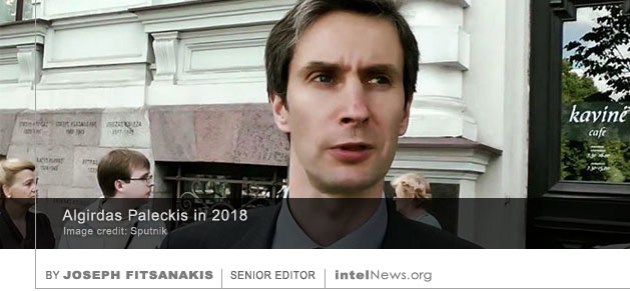
Algirdas PaleckisA growing number of individuals are in custody in Lithuania, as the Baltic state continues a probe into an alleged Russian espionage ring whose members reportedly included a former diplomat and member of one of the country’s most revered political families. On Tuesday, government prosecutors asked for an eight-year prison sentence for Roman Sheshel, who stands accused for giving Moscow classified information on Lithuania’s naval forces. Sheshel, a Russian-born Lithuanian citizen, is also believed to have given his Russian handlers intelligence regarding warships belonging to the North Atlantic Treaty Organization, of which Lithuania is a member. He is accused of having worked for the Russians from early 2015 until his capture by Lithuanian authorities in December of 2017. His trial has been taking place behind closed doors in order to protect state secrets.
Government prosecutors allege that Sheshel was part of a sizeable spy network of Lithuanians who were recruited by Russia in the past five years and whose “activities threatened Lithuanian national security”. Among them is allegedly Alģirds Paleckis, a former parliamentarian and diplomat, Paleckis was born in 1971 in Switzerland, where his father, Justas Vincas, served as a Soviet diplomat. His grandfather, Justas Paleckis, was a towering figure in the Communist Party of Lithuania, which in 1940 spearheaded Lithuania’s amalgamation into the Soviet Union. But his son, Paleckis’ father, broke ranks with the family’s communist past and became a leading nationalist parliamentarian in 1990, when the country seceded from the USSR. Paleckis followed in his father’s footsteps and joined the diplomatic service before entering parliament. But in 2008, after a successful career as a pro-Western reformist politician, Paleckis began to veer to the left, eventually founding the Lithuanian Socialist People’s Front, a small leftist party that is often accused of being too close to Moscow. The party is a vocal opponent of Lithuania’s membership in the European Union and NATO. Paleckis’ critics also note that he is married to a Russian woman whose father is reportedly a Russian intelligence officer.

The German news agency Deutsche Welle reported last week that Paleckis attracted the attention of Lithuanian counterintelligence investigators after he “fully paid back the mortgage on a house too quickly”. He is now accused of giving his Russian handlers information about a Lithuanian government investigation into Soviet-era informant networks in the small Baltic country. He has been in custody since last October, along with an undisclosed number of other alleged members of a purported Russian spy ring. Earlier this week, Lithuanian authorities said that evidence collected from the unnamed detainees are helping them broaden their probe into alleged Russian espionage.

Author: Joseph Fitsanakis | Date: 20 February 2019 | Permalink

Senior Belgian counterintelligence officer arrested on suspicion of spying for Russia

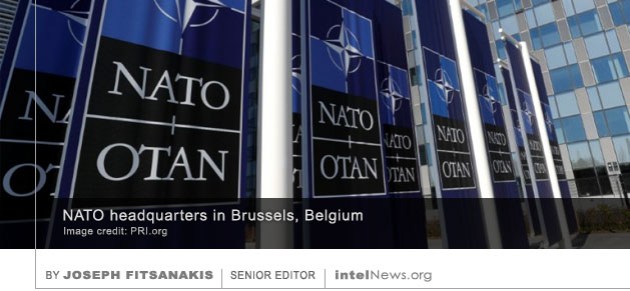
NATO HQ BrusselsA senior counterintelligence official in Belgium’s external intelligence service is under house arrest on suspicion of sharing classified documents with Russian spies, according to a Belgian newspaper. Additionally, the chief of the agency’s counterintelligence directorate has been barred from his office while an internal investigation is underway on allegations that he illegally destroyed government documents. These allegations surfaced last Thursday in a leading article in De Morgen, a Flemish-language daily based in Brussels.
Citing anonymous sources from the General Information and Security Service —Belgium’s military intelligence agency— the paper said that the arrestee has the equivalent rank of major in the General Intelligence and Security Service. Known as GISS, the agency operates as the Belgian equivalent of the United States Central Intelligence Agency or Britain’s Secret Intelligence Service —better known as MI6. GISS officers collect information abroad and are not permitted to operate within Belgium’s borders. The man, a career counterintelligence official, is suspected of having passed secrets to Russia with the help of a woman who claims to be Serbian, but who is in fact believed to be an operative for Russian intelligence. It is not known whether the compromised information included secrets involving the North Atlantic Treaty Organization, of which Belgium is a founding member. In the same article, De Morgen also said that Clement Vandenborre, who serves as chief of GISS’s counterintelligence directorate, has been barred from his office while an investigation is taking place into allegations of mismanagement. He is also accused of having shredded classified government documents without permission. It is not believed that this case is connected with the alleged Russian penetration.

De Morgen quoted a spokesperson for Belgium’s Ministry of Defense, who confirmed that an investigation into alleged foreign espionage targeting a GISS employee was underway, but added that “no comment” would be made on the subject so as “not to hinder” the probe. Ironically, German newspaper Die Welt am Sonntag reported last week that the European Union’s diplomatic agency warned officials in Belgium to watch out for “hundreds of spies” from various foreign countries, including from Russia and China. The warning, issued by the European Union’s diplomatic agency, the European External Action Service (EEAS), said that “approximately 250 Chinese and 200 Russian spies” were operating in Brussels.

Author: Joseph Fitsanakis | Date: 18 February 2019 | Permalink

FBI seeks arrest of US counterintelligence officer who defected to Iran

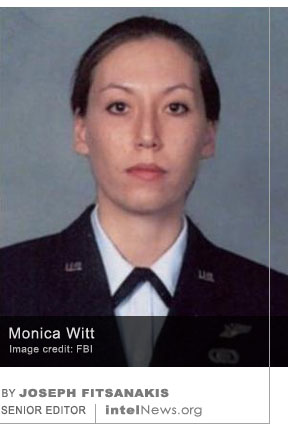
Monica WittAn American intelligence officer, who held the highest level of security clearance for over a decade, defected to Iran in 2012 and has been spying against the United States ever since, it was revealed yesterday. Monica Witt, 39, was a counterintelligence officer for the United States Air Force from 1997 until 2008, specializing in the Middle East. Throughout her career, she was deployed by the US military to the Middle East on several occasions, in order to carry out counterintelligence missions the details of which remain classified to this day.
According to the US government, one of these missions involved her attendance of an international conference organized by New Horizon Organization. The group is believed to operate as a public relations arm of the Quds Force —the intelligence and paramilitary wing of Iran’s Islamic Revolutionary Guards, whose mission is to spread the ideals of the Islamic Revolution around the world. Witt’s mission was allegedly to monitor the conference proceedings and collect information on attendees. It was while attending that conference that, according to US government documents, Witt started to become attracted to the Iranian government’s world view. She left the US Air Force in 2008 and moved to Central Asia, initially teaching English in Afghanistan and later in Tajikistan. A year later, she vanished. She allegedly reemerged in Iran in 2013, where she appeared on several television programs in which she renounced United States policy on the Middle East and publicly espoused Shi’a Islam. According to the Federal Bureau of Investigation, soon after she defected to Iran, Witt used social media to identify and then compile lists of the whereabouts of several of her colleagues in US Air Force counterintelligence. She then gave this information to the Iranian intelligence services, which used it to launch a series of operations targeting current and former US intelligence personnel.

At a press conference held yesterday in Washington, DC, officials from the FBI, the Department of State and the Department of Treasury announced criminal charges against Witt and New Horizon Organization, which they accused of conducting espionage against the US. They also announced charges against employees of the Iranian-registered Net Peygard Samavat Company, which they said used Witt’s information to launch targeted information operations against American government personnel. Witt remains at large and is believed to reside in Iran.

Author: Joseph Fitsanakis | Date: 14 February 2019 | Permalink

Hundreds of foreign spies in Brussels, European diplomatic agency warns

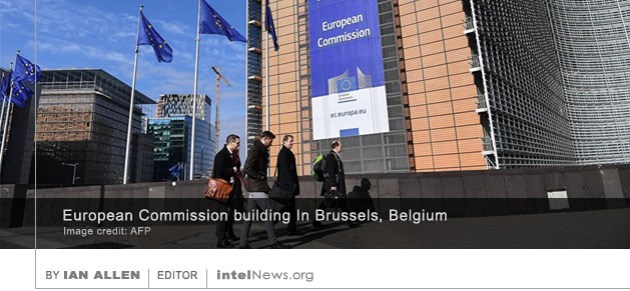
European Commission buildingThe European Union’s diplomatic agency has warned officials who are active in Belgium to watch out for “hundreds of spies” from various foreign countries, according to a German news report. The report appeared last weekend in Germany’s Welt am Sonntag newspaper, which cited a report from the European External Action Service (EEAS). Based in Brussels, the EEAS operates as the European Union’s diplomatic agency and is headed by Federica Mogherini, an Italian former government minister who has been serving as the European Union’s High Representative for Foreign Affairs and Security Policy since 2014.

According to Die Welt, the EEAS estimates that “approximately 250 Chinese and 200 Russian spies” are operating in Brussels. Most of these intelligence officers are allegedly embedded in their countries’ embassies, trade missions, cultural centers and other outreach facilities in the Belgian capital. There are also many intelligence operatives from Western agencies, including those of the United States, as well as from Iran, Turkey and Morocco, among other foreign nations. The report in Die Welt adds that the EEAS advised European Union diplomats to avoid certain establishments in the European Quarter of Brussels, which are believed to be heavily frequented by international spies. Among them are “a popular steakhouse and café” that are “within walking distance of the Berlaymont building” —the headquarters of the European Commission. The same building houses the offices of the EEAS.

Such warnings are not new. In June of last year, Peter Gridling, head of Austria’s main counterintelligence agency, said during a rare public appearance that Vienna —the spy capital of the world— no longer topped the list of preferred destinations for the world’s spies. He said that the Austrian capital had been overtaken by Brussels as the spy capital of Europe and added that, according to his agency’s calculations, there was a greater density of spies in Brussels than in any other European capital. When asked to specify the number of foreign intelligence operatives that are active in Vienna, Gridling said it was “in the neighborhood of hundreds of people, but certainly fewer than 1,000”. In 2012, Alain Winants, former Director of Belgium’s State Security Service (SV/SE), claimed that Brussels was home to more spies than any other city in the world.

Author: Ian Allen | Date: 12 February 2019 | Permalink

Pakistan dismantled ‘major international spy network’, say media reports [updated]

Pakistan Federal Investigation AgencyMedia reports in Pakistan claimed yesterday that “an international spying network” had been dismantled in the country following the arrests of at least five intelligence officials who were working for foreign interests. According to The News International, Pakistan’s largest English-language newspaper, the arrests were carried out earlier this week by the Federal Investigation Agency, the country’s primary counterintelligence agency. Those arrested were allegedly members of Pakistan’s intelligence and security forces, it said. They reportedly include a Pakistani official with diplomatic credentials who was serving in a Pakistani embassy “in a European capital”. [Update: by 1700 EST on Friday, the article on The News International website had been taken down; but an English-language summary of the article can still be found on this website].

The report did not specify the foreign intelligence agency for which the Pakistani officials were allegedly working. But it said that it belonged to one of “the world’s most powerful countries”. It added that the network had been “completely dismantled” following a counterintelligence operation that an unnamed source described to the paper as “remarkable”. As a result, the adversary spy network in Pakistan had been “crippled […] completely”, added The News International.

The conservative-leaning paper, which supports Pakistan’s new center-right Prime Minister Imran Khan, hinted that the alleged spy network may have been working for the United States Central Intelligence Agency. It said that the agency that was involved in running the spy ring had been allowed by the government of Pakistan to “roam free” inside Pakistan after the attacks of September 11, 2001. Its case officers had been allowed to recruit agents in Pakistan’s Federally Administered Tribal Areas, a region in the northwest of the country that is seen as a Taliban stronghold. The paper also protested against prior arrangements that permitted the foreign agency’s case officers to enter and leave Pakistan “with no scrutiny of their luggage”. It added that the government of Prime Minister Khan decided to move against this and other spy networks run by the foreign intelligence agency after it determined that these networks were “working for the interests of that agency in Pakistan and not for Pakistan’s national interests”.

Author: Joseph Fitsanakis | Date: 01 February 2019 | Permalink

US government plans background checks on Chinese students over espionage fears

Chinese students in USAThe United States government plan to impose tighter visa restrictions and wider background checks on Chinese nationals studying at American universities, over espionage concerns. The news follows reports earlier this year that the administration of US President Donald Trump considered banning all Chinese nationals from studying at American universities. In October of this year, The Financial Times reported that the White House came close to imposing the ban, after it was allegedly proposed by Stephen Miller, speechwriter and senior advisor to Trump. Miller became known as the main architect of Executive Order 13769 —the travel ban imposed on citizens of several countries, most of them predominantly Muslim. According to The Financial Times, Trump was eventually dissuaded from imposing the Chinese student ban by Terry Branstad, US ambassador to China.

Now, however, the Trump administration is reportedly considering the possibility of imposing deeper background checks and additional vetting on all Chinese nationals wishing to study in the US. Citing “a US official and three congressional and university sources”, Reuters said on Thursday that the measures would apply to all Chinese students wishing to register in undergraduate and graduate academic programs in the US. The news agency quoted a “senior US official” as saying that “no Chinese student who’s coming [to the US] is untethered from the state […. They all have] to go through a party and government approval process”. Reuters reported that the proposed plan includes a comprehensive examination of the applicants’ phone records and their presence on social media platforms. The goal would be to verify that the applicants are not connected with Chinese government agencies. As part of the proposed plan, US law enforcement and intelligence agencies would provide counterintelligence training to university officials.

However, the plan has many American universities —including elite Ivy League schools— worried that they may be losing up to $14 billion in tuition and other fees spent annually by more than 350,000 Chinese nationals studying in the US. The fear is that the latter may be looking to study elsewhere, in countries such as Canada, Australia and the United Kingdom. Reuters said that many of America’s top universities are “regularly sharing strategies to thwart” plans by the Trump administration to make it more difficult for Chinese nationals to study in the US. The news agency said it contacted the Chinese ambassador to Washington, who called the White House’s fears of espionage by Chinese students “groundless” and “very indecent”.

Author: Joseph Fitsanakis | Date: 30 November 2018 | Permalink