US arrests Mexican man for spying for Russia in mystery case involving informant
February 20, 2020 2 Comments
 The United States Federal Bureau of Investigation has arrested a Mexican man, who is accused of spying in the city of Miami on behalf of the Russian government. Local media reports suggest that the target of the man’s spying was a Russian defector who gave American authorities information about Russian espionage activities on US soil.
In a news release issued on Tuesday, the US Department of Justice identified the man as Hector Alejandro Cabrera Fuentes, a Mexican citizen residing in Singapore. The statement said that Fuentes was arrested on Monday and was charged with “conspiracy” and “acting within the United States on behalf of a foreign government”.
According to the statement, Fuentes was recruited in April of 2019 by an unnamed Russian government official. His first assignment was to rent an apartment in Miami-Dade County using fake identification. One he carried out the assignment, Fuentes allegedly traveled to Russia, where he briefed his handler. He was then asked to return to Miami and drive to an apartment complex, where he was to observe a vehicle belonging to an individual that the Department of Justice statement describes as a “US government source”. Fuentes was tasked with providing his Russian handler with the vehicle’s license plate number.
Having been given a detailed physical description of the vehicle by his Russian handler, Fuentes drove to the apartment complex in Miami, but was stopped at the entrance to the complex by a security guard. While Fuentes was speaking with the security guard, Fuentes’ wife allegedly exited the car and took a photograph of the vehicle in question. According to the FBI, she later shared the photograph with Fuentes’ Russian handler on the mobile phone application WhatsApp. The photograph was discovered by US Customs and Border Protection agents on the smartphone of Fuentes’ wife on Sunday, as the pair tried to board a flight to Mexico City.
The US Department of Justice news release does not identify Fuentes’ alleged espionage target. But an article in The Miami Herald claims that the target is an FBI informant who has provided the Bureau’s counterintelligence division with critical information about Russian espionage operations in the Miami area. Fuentes is scheduled to appear in court for a pretrial detention hearing this coming Friday. His arraignment has been scheduled for March 3. The press release does not explain why Fuentes’ wife was not arrested.
► Author: Joseph Fitsanakis | Date: 20 February 2020 | Permalink
 The United States Federal Bureau of Investigation says it is examining possible counterintelligence threats in connection with the popular online application FaceApp, which is headquartered in Russia. The application first made its appearance in January of 2017 and quickly became popular among smartphone users around the world. It allows users to upload a photograph of their face and then edit it with the help of artificial-intelligence software. The software can change the user’s photograph to make it look younger or older, or make it look as if it is from the opposite gender. The result can be impressively realistic and life-like.
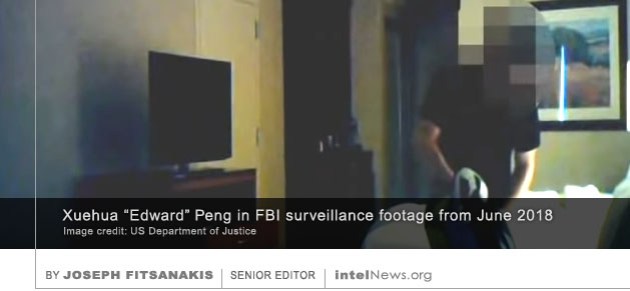 The United States has pressed espionage charges against a naturalized American citizen who operated as a courier for Chinese intelligence while working as a tour operator in California. On Monday federal prosecutors in San Francisco filed espionage charges against Xuehua “Edward” Peng, a 56-year-old Chinese-born American citizen. Peng, a trained mechanical engineer, reportedly entered the United States in June 2001 on a temporary visa. In 2012 he became a naturalized American citizen. By that time he was working for US Tour and Travel, an independent tour operator in California.
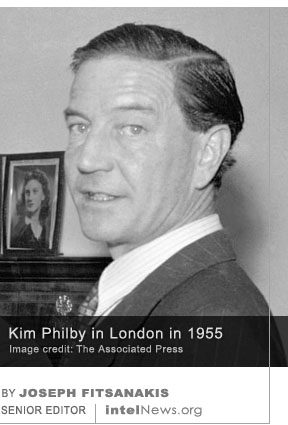 Extensive extracts from the confession of Kim Philby, one of the Cold War’s most prolific double spies, are scheduled to be released today for the first time by Britain’s
 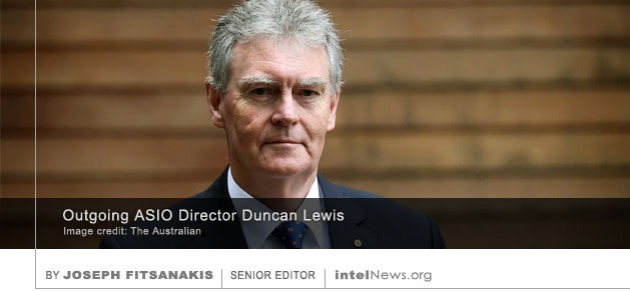 The director of Australia’s main national security agency has warned in a public speech that the threat from espionage —including cyber espionage— is greater than terrorism, and poses an “existential” danger to established states. Duncan Lewis was appointed director of the Australian Security Intelligence Organisation (ASIO) in 2014, having already served for more than four decades in the Australian military and civilian government sectors. On Wednesday, Lewis gave a rare
 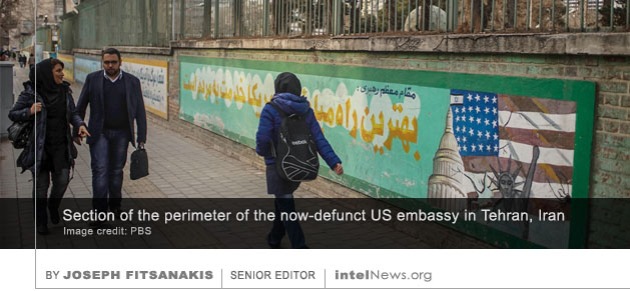 If the announcements from Tehran are to be believed, the United States Central Intelligence Agency lost at least 17 spies in Iran in the months leading up to March 2019. According to Iran’s Ministry of Intelligence, the Islamic Republic busted an alleged “CIA network” operating in sensitive private sector companies and government agencies that relate to defense, aerospace and energy. At least some of the 17 alleged spies have reportedly been sentenced to death, though their exact number remains unknown.
 made to look like rocks, which were located “in parks and other mountainous areas” in Iran and elsewhere in the Middle East, according to Iranian officials. Some of the assets communicated with their handlers while attending science conferences through- out Europe, Africa and Asia.
 A military court in Pakistan has sentenced two men to death and one to 14 years in prison for espionage. The alleged spies, who have been named, include a lieutenant general and civilian employee of a security agency. In February, several Pakistani news outlets
 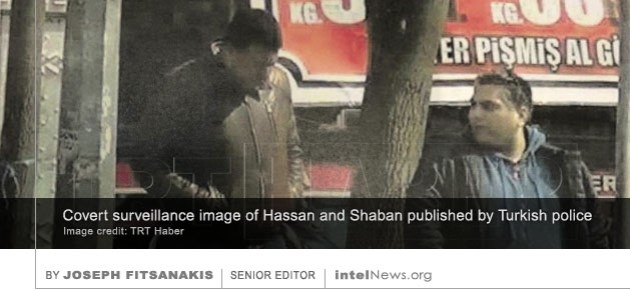 The family of a man who died in a Turkish prison on Sunday while awaiting trial for allegedly spying for the United Arab Emirates has called for an international investigation into this death. Zaki Mubarak Hassan and Samer Shaban —both Palestinians— were reportedly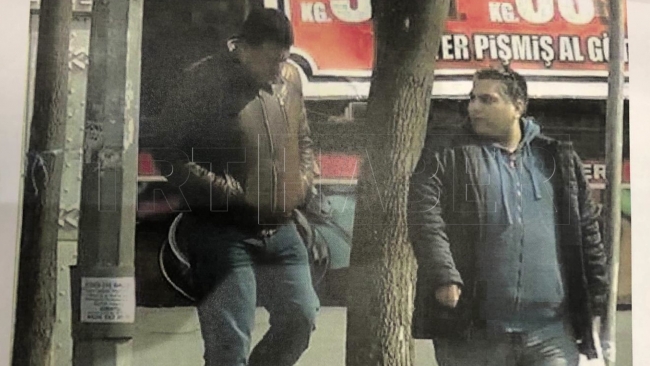
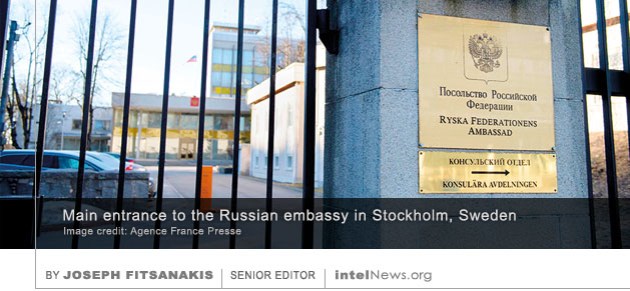 Russia has recalled one of its diplomats from Sweden after he was caught receiving classified information from a computer expert at a nightclub in Stockholm. The computer expert was later identified as Kristian Dmitrievski, a 45-year-old naturalized Swede who was born in Russia. The Swedish government accuses him of having been recruited by Russian intelligence in 2017 or earlier. He allegedly met with his Russian handlers on a regular basis since his recruitment, passing them classified information of a technical nature.
 The Swedish public prosecutor’s office has confirmed media reports that a second espionage-related arrest took place in Stockholm this week. The latest arrest came just 24 hours after a man was arrested in the Swedish capital on Tuesday, allegedly for spying on behalf of Russia. As intelNews
 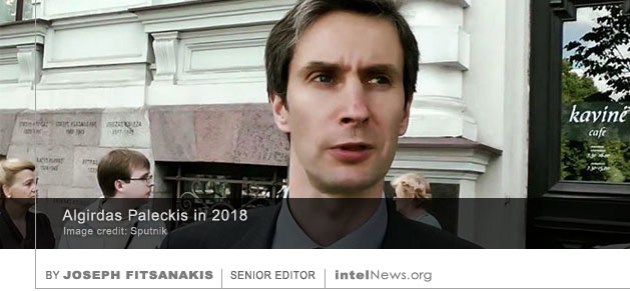 A growing number of individuals are in custody in Lithuania, as the Baltic state continues a probe into an alleged Russian espionage ring whose members reportedly included a former diplomat and member of one of the country’s most revered political families. On Tuesday, government prosecutors
  A senior counterintelligence official in Belgium’s external intelligence service is under house arrest on suspicion of sharing classified documents with Russian spies, according to a Belgian newspaper. Additionally, the chief of the agency’s counterintelligence directorate has been barred from his office while an internal investigation is underway on allegations that he illegally destroyed government documents. These allegations surfaced last Thursday in a leading article in De Morgen, a Flemish-language daily based in Brussels.








More spies today in Australia than at the height of the Cold War, says intel chief
February 25, 2020 by Joseph Fitsanakis 2 Comments
Burgess made these comments during the AFIO’s Annual Threat Assessment, a new project that aims to inform Australians about counterintelligence activities against their country and highlight AFIO’s response. The agency’s director said that Australia is being targeted by “sophisticated and persistent espionage and foreign interference activities” from “a range of nations”, which “are affecting parts of the community that they did not touch during the Cold War”.
Additionally, the instigators of espionage operations against Australia have “the requisite level of capability, the intent and the persistence to cause significant harm” to Australia’s national security, said Burgess. The country is being targeted due to its strategic position and its close alliances with the leading Western countries, he said, and added that Australia’s advanced science and technology posture also attracts foreign espionage.
Burgess illustrated his presentation using the example of an unnamed “foreign intelligence service” that allegedly sent what he described as “a sleeper agent” to Australia. The agent, said Burgess, remained dormant for a number of years, quietly building links with the business community. During that time, the agent remained in contact with his foreign handlers and provided “on-the-ground logistical support” for foreign spies who visited Australia to carry out espionage.
The ASIO director did not identify the alleged “sleeper agent”, or the foreign countries that he alleged are spying against Australia. When asked about Burgess’ claims, Australian Prime Minister Scott Morrison said that the government would not name the countries behind the alleged espionage activities. Doing so, said Morrison, would not be in Australia’s national interest. Instead, “we’ll deal with this in Australia’s national interest, in the way we believe that’s best done”, he added.
► Author: Joseph Fitsanakis | Date: 25 February 2020 | Permalink
Filed under Expert news and commentary on intelligence, espionage, spies and spying Tagged with ASIO, Australia, counterintelligence, Mike Burgess, News