French senior civil servant arrested on suspicion of spying for North Korea

Benoît QuennedeyA senior civil servant in the upper house of the French parliament has been arrested on suspicion of spying for North Korea, according to prosecutors. The news of the suspected spy’s arrest was first reported on Monday by Quotidien, a daily politics and culture show on the Monaco-based television channel TMC. The show cited “a judicial source in Paris” and said that France’s domestic security and counterintelligence agency, the General Directorate for Internal Security (DGSI), was in charge of the espionage case.

The senior administrator has been identified as Benoit Quennedey, a civil servant who liaises between the French Senate and the Department of Architecture and Heritage, which operates under France’s Ministry of Culture. Quennedey was reportedly detained on Sunday morning and his office in the French Senate was raided by DGSI officers on the same day. Quotidien said that he was arrested on suspicion of “collecting and delivering to a foreign power information likely to subvert core national interests”. The report did not provide specific information about the type of information that Quennedey is believed to have passed to North Korea. It did state, however, that a counterintelligence investigation into his activities began in March of this year.

Quennedey is believed to be the president of the Franco-Korean Friendship Association, the French branch of a Spanish-based organization that lobbies in favor of international support for North Korea. Korea Friendship Association branches exist in over 30 countries and are believed to be officially sanctioned by Pyongyang. They operate as something akin to the pre-World War II Comintern (Communist International), a Moscow-sanctioned international pressure group that advocated in favor of Soviet-style communism around the world. French media reported on Monday that Quennedey traveled extensively to the Korean Peninsula in the past decade and has written a French-language book on North Korea. News reports said that the French President Emmanuel Macron had been made aware of Quennedey’s arrest. The senior civil servant faces up to 30 years in prison if found guilty of espionage.

Author: Joseph Fitsanakis | Date: 27 November 2018 | Permalink

CIA suffered ‘catastrophic’ compromise of its spy communication system

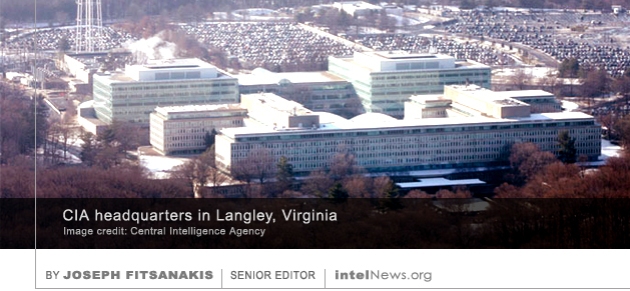
CIAThe United States Central Intelligence Agency suffered a “catastrophic” compromise of the system it uses to communicate with spies, which caused the death of “dozens of people around the world” according to sources. This is alleged in a major report published on Friday by Yahoo News, which cites “conversations with eleven former US intelligence and government officials directly familiar with the matter”. The report by the online news service describes the compromise of an Internet-based covert platform used by the CIA to facilitate the clandestine communication between CIA officers and their sources —known as agents or spies— around the world.

According to Yahoo News, the online communication system had been developed in the years after 9/11 by the US Intelligence Community for use in warzones in the Middle East and Central Asia. It was eventually adopted for extensive use by the CIA, which saw it as a practical method for exchanging sensitive information between CIA case officers and their assets in so-called ‘denied areas’. The term refers to regions of the world where face-to-face communication between CIA case officers and their assets is difficult and dangerous due to the presence of ultra-hostile intelligence services or non-state adversaries like the Taliban or al-Qaeda. However, it appears that the system was flawed: it was too elementary to withstand sustained scrutiny by Internet-savvy counterintelligence experts working for state actors like Iran, China or Russia.

In September of 2009, Washington made a series of impressively detailed revelations about the advanced status of Iran’s nuclear program. These angered Tehran, which redoubled its efforts to stop the US and others from acquiring intelligence information about the status of its nuclear program. Some sources told Yahoo News that one of the CIA assets inside Iran’s nuclear program was convinced by the Iranians to become a double spy. He proceeded to give Tehran crucial information about the CIA’s online communication system. Based on these initial clues, the Iranians allegedly used Google-based techniques “that one official described as rudimentary” to identify an entire network of CIA-maintained websites that were used to communicate with assets in Iran and elsewhere. The Iranians then kept tabs on these websites and located their users in order to gradually unravel an entire network of CIA agents inside their country. Around that time, Iranian media announced that the Islamic Republic’s counterintelligence agencies had broken up an extensive CIA spy ring consisting of more than 30 informants.

The Yahoo News report says that the CIA was able to successfully exfiltrate some of its assets from Iran before the authorities were able to apprehend them. The agency also had to recall a number of undercover officers, after they were identified by the Iranians. The effects of the compromise, however, persisted on a global scale, according to former US intelligence officials. In 2011 and 2012, another network of CIA spies was busted in China, leading to the arrest and execution of as many as three dozen assets working for the US. Many, says Yahoo News, believe that the Iranians coached the Chinese on how to use the CIA’s online communication system to identify clandestine methods and sources used by the agency.

Along with other specialist websites, IntelNews monitored these developments as they took place separately in Iran and China. However, the Yahoo News report is the first to piece together these seemingly disparate developments and suggest that they were likely triggered by the same root cause. What is more, the report suggests that the CIA had been warned about the potential shortcomings of its online communication system before 2009, when the first penetrations began to occur. In response to the compromise, the CIA has reportedly modified, and at times completely abandoned, its online communication system. However, the implications of the system’s compromise continue to “unwind worldwide” and the CIA is “still dealing with the fallout”, according to sources. The effects on the agency’s operational work are likely to persist for years, said Yahoo News.

Author: Joseph Fitsanakis | Date: 05 November 2018 | Permalink
Czech spy agency says it neutralized Hezbollah cyberespionage network

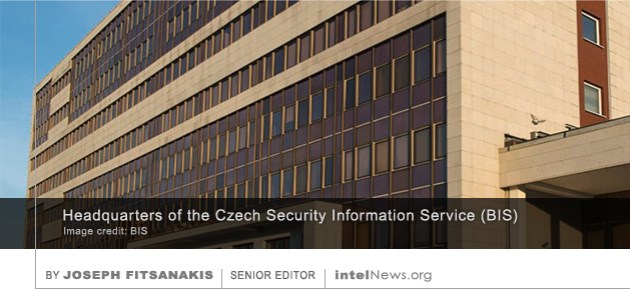
Czech Security Information ServiceOfficials in the Czech Republic have announced that the country’s spy agency headed an operation in several countries, aimed at neutralizing a cyberespionage network operated by the Lebanese militant group Hezbollah. Early last week, the Security Information Service (BIS), the primary domestic national intelligence agency of the Czech Republic, issued a short statement saying that it “played a big part in helping to identify and disconnect Hezbollah servers in the Czech Republic, other EU member states and the US”. But it did not elaborate. On Tuesday, however, ZDNet’s Zero Day security blog published more information from the Czechs about the BIS operation.
According to the BIS, its cyber security force discovered a number of servers located on Czech soil, which were “almost certainly” used by Hezbollah, the Shiite militant group that controls large swathes of territory in Lebanon. The servers were allegedly used in a wide-range cyberespionage operation that began in 2017 by a group of Hezbollah hackers based in Lebanon. It was there, said the BIS, where the command-and-control facilities of the operation were located. The servers located on Czech soil were used to download phone apps that contained malicious software. The hackers targeted individual phone users located mainly in the Middle East, according to the BIS, but other targets were in eastern and central Europe. It is believed that the majority of targets were Israeli citizens. Invariably, targeted individuals were approached online, mostly through fake Facebook profiles. Most of the targets were men, and the fake Facebook profiles featured pictures of attractive young women. After initial messages were exchanged via Facebook, the targets were convinced to download phone applications that would allow them to continue communicating with the ‘women’. These applications would install spyware on their phones, thus allowing Hezbollah hackers to capture the content of messages and calls made on the phones. The latter could also be used as eavesdropping devices.

According to BIS Director Michal Koudelka, the spy agency “played a significant role in identifying and uncovering the hackers’ system. We identified the victims and traced the attack to its source facilities. Hacker servers have been shut down”, he said. Koudelka added that some of the servers used by Hezbollah were located in other European Union countries and in the United States. These were shut down following a joint cyber operation by BIS and “partners”, said Koudelka, though he did not identify them.

Author: Joseph Fitsanakis | Date: 17 October 2018 | Permalink

US intelligence reevaluates safety of Russian defectors in light of Skripal poisoning

CIAIntelligence officials in the United States are feverishly reassessing the physical safety of dozens of Russian defectors, in light of the case of Russian double spy Sergei Skripal, who was poisoned in England last March. Skripal, a former military intelligence officer who spied for Britain, was resettled in the English town of Salisbury in 2010 by the British Secret Intelligence Service (MI6). But he and his daughter Yulia made international headlines in March, after they were poisoned by a powerful nerve agent that nearly killed them. The attack has been widely blamed on the Russian government, though the Kremlin denies that it had a role in it.

Like MI6, the US Central Intelligence Agency also has a protection program for foreign nationals whose life may be at risk because they spied for the US. The CIA’s protection division, called the National Resettlement Operations Center, helps resettle and sometimes hide and protect dozens of foreign agents, or assets, as they are known in CIA lingo. But following the Skripal case, some CIA resettlement officials have expressed concern that protection levels for some foreign assets may need to be significantly raised. The New York Times, which published the story last week, said that it spoke to “current and former American intelligence officials”, which it did not name. In light of those concerns, US counterintelligence officials have been carrying out what The Times described as “a wide-reaching review” of every Russian asset who has been resettled in the US. The purpose of the review is to assess the ease with which these former assets can be traced through their digital footprint on social media and other publicly available information.

According to the paper, several Russians who defected to the US after working for the CIA and other US intelligence agencies were tracked down by the Kremlin in recent years. In the mid-1990s, says The Times, the CIA actually found an explosive device placed under the car of a Russian defector living in the US. More recently, US intelligence traced the movements of a suspected Russian assassin who visited the neighborhood of a resettled Russian defector in Florida. In the past, Russian CIA assets who have been resettled in the US have voluntarily revealed their whereabouts by reaching out to relatives back in Russia out of homesickness. In some cases, they have left the US in order to meet a lover who may have been planted by the Russian spy services —with sometimes fatal consequences.

In addition to the US, at least one more country has initiated a thorough review of the way it protects former Russian assets living in its territory in light of the Skripal case. As intelNews reported in March, the British secret services tightened the physical security of dozens of Russian defectors living in Britain only a week after the attempted murder of Skripal. Britain’s security services reportedly viewed the attack on Skripal as an intelligence failure and launched a comprehensive review of the risk to British-based Russian double spies and defectors from “unconventional threats”. The latter included attacks with chemical and radiological weapons.

Author: Joseph Fitsanakis | Date: 18 September 2018 | Permalink

CIA informants inside Russia are going silent, say US sources

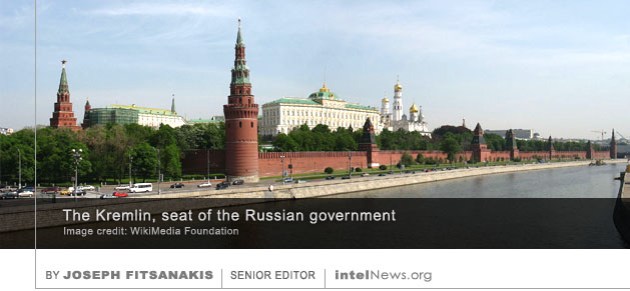
Kremlin, RussiaSecret informants inside the Russian government, which the United States has relied on in recent years for tips about Moscow’s strategy and tactics, have gone silent in recent months, according to sources. Over many years, US intelligence agencies have built networks of Russian informants. These consist of officials placed in senior positions inside the Kremlin and other Russian government institutions, who can help shed light on Russia’s political maneuvers. These informants were crucial in enabling the US Intelligence Community to issue warnings of possible Russian meddling in the American presidential elections of November 2016. Since then, US spy agencies have largely relied on these informants to produce detailed assessments of Russian intelligence activities targeting the US, and propose measures against those involved.
But on Friday, The New York Times said in an article that these vital sources of information in Moscow have been going silent in recent months. Citing “current and former officials”, the paper said that US officials did not believe that the informants have been captured or killed. Instead, they have voluntarily “gone underground” because of “more aggressive counterintelligence” practiced by Russian security agencies. Moscow has stepped up attempts to detect spies operating inside Russia since the Sergei Skripal incident, when relations between it and most Western countries sank to their lowest point since the Cold War. In turn, Western informants operating in Russia have “decided it is too dangerous to pass information” and have gone “silent for their own protection”, said The Times.

This situation, however, has left the Central Intelligence Agency and other US spy agencies “in the dark” about the intentions of Russian President Vladimir Putin, just as America is nearing its mid-term elections. The lack of information has been exacerbated by the expulsion of dozens of American diplomats from Russia in March of this year. Moscow announced the expulsions in response to Washington’s decision to expel 60 Russian diplomats in protest against the attempt —allegedly by Russia— to kill Sergei Skripal in England. Many of the diplomats who were expelled from Russia were in fact intelligence officers operating under diplomatic cover. Few of those are now left on Russian soil and, according to The Times, “are under incredible surveillance” by Russian counterintelligence agencies. Washington is still collecting information from Russia through other channels, including communication intercepts, which, according to The Times, “remain strong”. But the paper cited anonymous American officials who “acknowledged the degradation in the [overall flow of] information collected from Russia.

Author: Joseph Fitsanakis | Date: 27 August 2018 | Permalink

US fired Moscow embassy employee who may have spied for Russia

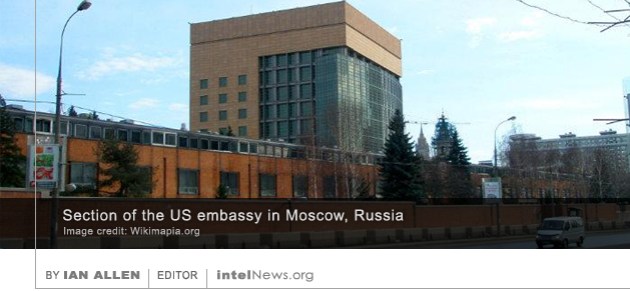
US embassy in RussiaA female Russian national who worked for the United States Secret Service in Moscow was quietly dismissed in 2017, amidst concerns that she was spying for Russia. British newspaper The Guardian, which broke the story last week, did not name the Russian woman. But it said that she had worked at the US Embassy in Moscow “for more than a decade”, most recently for the Secret Service –a federal law enforcement agency that operates within the Department of Homeland Security. The Secret Service has several missions, the most important of which is to ensure the physical safety of America’s senior political leadership.

Throughout her Secret Service career, the Russian woman is thought to have had access to the agency’s email system and intranet network, said The Guardian, citing “an intelligence source”. She could also potentially have had access to “highly confidential material”, said the paper, including the daily schedules of America’s past and current presidents and vice presidents, as well as their family members’ schedules.

The unnamed Russian national first came under suspicion in 2016, said The Guardian, during a routine security review conducted by two counterintelligence staff members at one of the Department of State’s Regional Security Offices (RSO). These reviews usually take place every five years and scan the background and activities of employees at American embassies abroad. The review showed that the unnamed Russian national was holding regular meetings with officers of the Federal Security Service (FSB), Russia’s domestic intelligence service. In January of 2017, the Department of State reportedly shared its findings with the Secret Service. But the latter waited until several months later to fire the Russian woman, having decided to do so quietly, said The Guardian.

According to the paper, instead of launching a major investigation into the State Department’s findings, the Secret Service simply dismissed the woman by revoking her security clearance. The paper said that the Russian national’s dismissal took place shortly before the US embassy in Moscow was forced to remove or fire over 750 employees as part of Russia’s retaliation against economic sanctions imposed on it by Washington. That coincidence helped the Secret Service “contain any potential embarrassment” arising from claims of espionage, said The Guardian. The paper contacted the Secret Service and was told that “all Foreign Service nationals” working for the agency “are managed accordingly to ensure that […US] government interests are protected at all times”. Their duties, therefore, are “limited to translation, interpretation, cultural guidance, liaison and administrative support. This is of particular emphasis in Russia”, said a Secret Service spokesman, who refused to discuss specific cases.

Author: Joseph Fitsanakis | Date: 07 August 2018 | Research credit: S.F. | Permalink

France arrests two intelligence officers on charges of spying for China

dgse franceFrance has confirmed the arrest of two French intelligence officers who are accused of spying for the Chinese government. It appears that the two officers were captured and charged in December. However, their arrests were not publicized at the time, because French counterintelligence officials wanted to avoid alerting more members of a possible spy ring, which some say may include up to five French citizens. It was only last Friday, a day after French media published leaked reports of the arrests, that the French government spoke publicly about the case.
France’s Minister of the Armed Forces, Florence Parly, told France’s CNews television on Friday that two French intelligence officers were “accused of extremely serious acts of treason” against the French state. The two officers had been charged with delivering classified information to a foreign power”, she said. Parly added that the spouse of one of the officers was also being investigated for participating in acts of espionage on behalf of a foreign country. When asked to identify the country that the two officers are accused of spying for, the minister refused to respond. But the Agence France Presse news agency cited an anonymous “security source”, who said that the two intelligence officers were being suspected of spying for China and that they had been captured following a sting operation by French counterintelligence officers.

French television station TFI1 said on Friday that both spy suspects are officers in the General Directorate of External Security (DGSE), France’s primary external intelligence agency. The station added that at least one of the two suspects was stationed at the embassy of France in Beijing when French counterintelligence became aware of the alleged espionage. According to some reports, the two suspects had retired from the DGSE by the time they were arrested, but committed their alleged espionage while still in the service of the spy agency. French government officials have refused to provide information about the length of the alleged espionage or the nature of the classified information believed to have been compromised. Additionally, no information is available about whether the two alleged spies were working in cooperation with each other. The BBC asked China last week about the arrests in France, but the Chinese Ministry of Foreign Affairs said it was not aware of the incident.

Author: Joseph Fitsanakis | Date: 28 May 2018 | Research credit: E.W. and P.C.  | Permalink

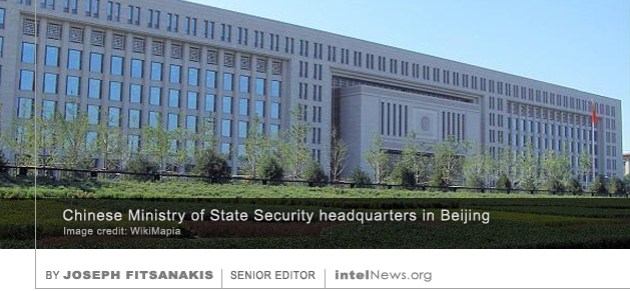
China gave ex-CIA officer “hundreds of thousands of dollars in cash” to spy on US

 Chinese Ministry of State SecurityChinese intelligence operatives gave a former officer of the United States Central Intelligence Agency “hundreds of thousands of dollars in cash” in exchange for carrying out espionage, according to court papers. The Federal Bureau of Investigation arrested Jerry Chun Shing Lee, 53, on January 15, accusing him of possessing classified information that included lists of real names of foreign assets and addresses of CIA safe houses. Lee, 53, was reportedly arrested after a lengthy FBI sting operation, which included creating a fictional job in the US in order to entice Lee to travel to New York from Hong Kong, where he had been living after leaving the CIA in 2007.

Lee is now scheduled to appear before a US circuit court judge on Friday morning, in order to be officially charged with one count of conspiracy to deliver national defense information to aid a foreign government and two counts of unlawfully retaining information pertaining to national defense. According to the indictment, in April of 2010 Lee met two officers of China’s Ministry of State Security. The meeting allegedly took place in Shenzhen, a city in southern China that borders Hong Kong. During that encounter, the indictment claims that Lee was offered “a gift of $100,000 in cash” in exchange of providing the Ministry of State Security with information about his career in the CIA. He was also told by the two Chinese intelligence officers that China would “take care of him for life” if he continued to cooperate with them.

In May of 2010, Lee deposited about $17,000 into one of his HSBC accounts in Hong Kong. Court documents allege that the deposit was the first of many that followed, and that they amounted to “hundreds of thousands of dollars”. These deposits continued to occurr until the end of 2013, when Lee made his last substantial cash deposit in Hong Kong. Throughout that time, Lee received regular written instructions from the Ministry of State Security, asking him to provide information about CIA operations. Lee did so at least 21 times, says the indictment. In one instance, he drew the floorplan of a CIA facility abroad and gave it to the Chinese, according to the indictment. Lee is expected to plead not guilty on Friday.

Author: Joseph Fitsanakis | Date: 16 May 2018 | Permalink

Russia tried to kill ex-double spy because he trained Eastern European agencies

Sergei SkripalRussia may have made the decision to kill former double spy Sergei Skripal because he continued to provide counterintelligence assistance to Eastern European governments, according to media reports from Prague. Skripal, 66, a veteran military intelligence operative who spied for Britain in the early 2000s, has been living in England since 2010. He was recently released from hospital after he was poisoned with what London claims was a military-grade nerve agent. As soon as Skripal and his daughter, Yulia, fell critically ill in March of this year, some observers expressed skepticism at the suggestion that Moscow may have tried to assassinate the former double spy. Their argument was that Skripal was pardoned by the Kremlin in a spy-swap deal, in which ten Russian intelligence operatives were handed over to Moscow in exchange for four agents of United States and British intelligence organizations.

Typically a spy who has been pardoned as part of an authorized spy-swap will not need to worry about being targeted by the agency that he betrayed. If it indeed tried to kill Skripal, Russia may therefore have broken the unwritten rules of the espionage game, some argued. But according to the reputable Czech investigative newsmagazine Respekt, the Kremlin tried to kill Skripal because he broke the rules of his release, namely that he would not participate in any intelligence-related activities against Russia. Specifically, Respekt claimed on Sunday that Skripal traveled extensively in Eastern Europe, where he advised local intelligence agencies on how to defend against Russian espionage. According to the Prague-based newsmagazine, Skripal’s travels to countries like the Czech Republic and Estonia were facilitated by the British Secret Intelligence Service (known commonly as MI6). The British agency thus killed two birds with one stone, said Respect: on the one hand it cultivated friendly relations with Eastern European spy agencies, while at the same time it provided the out-of-work Russian defector with a steady income.

Skripal’s information was at times dated, said Respekt, but it was deemed valuable enough to entice intelligence officers from Estonia, the Czech Republic, and possibly other European intelligence agencies, to regularly travel to the United Kingdom and further-consult with Skripal. Skripal’s contacts with Eastern European intelligence personnel were kept strictly secret in order to protect him from the ire of the Kremlin. But Moscow found out about Skripal’s activities somehow, and decided to kill the former double spy, said Respekt. The Russian government has vehemently denied all allegations that it was behind an attempt to kill Skripal and his daughter.

Author: Joseph Fitsanakis | Date: 15 May 2018 | Permalink

US government prosecutors confirm CIA officer passed information to China

CIAA case officer in the United States Central Intelligence Agency, who was arrested in January of this year for violating the Espionage Act, shared classified information with China, according to an official indictment. The Federal Bureau of Investigation arrested Jerry Chun Shing Lee, 53, on January 15, accusing him of possessing classified information that included lists of real names of foreign assets and addresses of CIA safe houses. Lee, 53, was reportedly arrested after a lengthy FBI sting operation, which included creating a fictional job in the US in order to entice Lee to travel to New York from Hong Kong, where he had been living after leaving the CIA in 2007. However, the initial FBI complaint did not indict Lee for passing the top-secret information to anyone. There was speculation at the time that this was because the FBI had not been able to conclusively prove that Lee carried out espionage.

On Tuesday, however, Lee was formally indicted on conspiracy to gather and deliver national defense information to aid a foreign government. That charge came in addition to a previously stated charge of unlawfully retaining material related to American national defense. The indictment repeats earlier allegations that Lee was found to be in possession of classified documents that included the real names of CIA assets (foreign citizens who are recruited by CIA case officers to spy for the United States abroad) and the locations of “covert facilities” –safe houses that are typically used by CIA personnel to meet with assets in privacy. In what can be described as the most descriptive allegations that have surfaced against Lee, the indictment proceeds to claim that he was approached by two Chinese intelligence officers in 2010, three years after he left the CIA. The officers allegedly offered to give Lee a substantial amount of money in exchange for access to classified information. Additionally, according to the court documents, Lee was provided by his Chinese handlers with email addresses that he could use to communicate with them covertly, and did as instructed “until at least 2011”.

The documents further state that Lee made “numerous […] cash deposits”, which he struggled to explain when questioned by American counterintelligence officials. On several instances, Lee lied during questioning in order to cover up his financial activities, according to the indictment. Lee’s defense lawyer, Edward MacMahon, told the court on Tuesday that his client was “not a Chinese spy”, but “a loyal American who loves his country”. He also pointed out that Lee served in the US military and the CIA. The Chinese government has made no comment about the case.

Author: Joseph Fitsanakis | Date: 10 May 2018 | Permalink

Norwegian retiree jailed in Russia says he was ‘misused’ by Norway spy agency

Frode BergA Norwegian retiree, who was arrested in northern Russia late last year on charges of spying, acted as a courier for the Norwegian Intelligence Service (NIS), according to his lawyer. Last December, intelNews reported on the arrest of Frode Berg, 62, from Kirkenes, a small town in Norway’s far north, located near the Russian border. Berg retired in 2014 after nearly 25 years of service in the Office of the Norwegian Border Commissioner, a government agency that operates under Norway’s Ministry of Justice and Public Security. Following his retirement, Berg traveled regularly to Russia and helped organize a number of joint Norwegian-Russian community events, including athletic competitions and art festivals. But he is currently in a Russian jail and faces a long prison sentence if convicted on espionage charges.
On Tuesday, however, The Washington Post said it spoke to Berg’s lawyer, Brynjulf Risnes. On a telephone line from Oslo, Risnes told the paper that his client had come to believe that he had been “misused” by the NIS, and that he said so during a court session in Moscow earlier this year. “We are quite convinced”, said Risnes, “that this is a real Norwegian spy story”. The lawyer told The Post’s Anton Troianovski that his client had met a man named “Jorgen”, who worked for the NIS. He asked Berg to carry some envelopes during his frequent trips to Russia. Berg eventually came to realize that the envelopes contained operational instructions for Norwegian intelligence assets inside Russia, and sometimes money —up to €3,000 at times. He did as he was told “between two and five times”, said Risnes, in full knowledge that he was operating as a courier for the NIS.

However, when Berg began to have second thoughts about his activities, fearing arrest, “Jorgen” pressured him to continue, according to Risnes. At one point, the NIS representative asked Berg: “Don’t you want to be a good Norwegian?”. In doing so, the NIS effectively pressured Berg to continue acting as a courier by dismissing his hesitations as groundless and failed to inform him about the real risks involved in acting as an intelligence courier inside Russia. Risnes told The Post that no charges have yet been filed against Berg by Moscow, and that the 62-year-old retiree’s supporters back in Kirkenes hope that he could be exchanged for Russian spies held in Norway. But such persons are not known to exist at the moment and, according to Torbjorn Brox Webber, a Kirkenes resident and supporter of Berg, a spy swap is unlikely to “happen for a lot of time — for many years”.

Author: Joseph Fitsanakis | Date: 25 April 2018 | Permalink

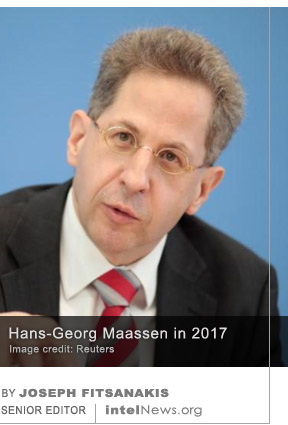
German spy chief warns against Chinese investment in German hi-tech firms

Hans-Georg MaassenThe head of Germany’s domestic intelligence agency has warned of security risks resulting from Chinese direct investment in high-technology German and other European companies. Since 2012, Hans-Georg Maassen has served as director of the Federal Office for the Protection of the Constitution, Germany’s domestic security and counterintelligence agency. Speaking to reporters on Wednesday, Maassen said his agency had noticed an inverse correlation between cyber-espionage attacks on Germany by Chinese actors and the acquisition of German technology firms by Chinese companies. German counter-intelligence officials were puzzled, he said, about a dramatic reduction in Chinese cyber-espionage activities in 2016. But they eventually realized that cyber-espionage operations had been replaced by “lawful methods”, he said, such as direct takeovers of German hi-tech firms by Chinese companies.
The purpose of these takeovers was “to gain access to German technical know-how”, added Maassen. He went on to say that “industrial cyberespionage is no longer needed if an actor can simply exploit liberal economic regulations to buy companies, and then proceed to disembowel them, essentially cannibalize them, to gain access to their know-how”. The spy chief noted that Germany did not object to foreign investment and the free flow of capital from all countries, including China. However, he added, “certain direct investments in specific technologies can compromise domestic security”. Maassen mentioned several examples in his presentation, including the takeover of Kuka, a German robotics firm, by a Chinese investor in 2016. He said that in the past few months alone, Chinese companies have attempted to purchase stakes in 50Hertz, a German energy grid operator, German car manufacturer Daimler, and Cotesa, a German aerospace contractor.

In response to a question from a journalist about policy coordination between Germany and the European Union, Maassen said that Germany, France and Italy have been pressuring Brussels to update and modernize its screening procedures against foreign takeovers of companies that are involved in manufacturing and selling “sensitive technologies”. He noted that a new EU-wide screening mechanism should be in place by the end of 2018.

Author: Joseph Fitsanakis | Date: 12 April 2018 | Permalink

Surge in Russian spy activity prompts US agencies to bring back retired officers

FBIA surge in the activity of Russian intelligence personnel on United States soil has caused American spy agencies to rehire retired Russia specialists, according to Newsweek. Additionally, Russian defectors living in the US are reevaluating their personal safety in light of the poisoning of Russian spy Sergei Skripal in England last month, said Newsweek’s intelligence correspondent Jeff Stein in an article published on Sunday. Writing from Washington, Stein said that US counterintelligence agencies —notably the Federal Bureau of Investigation— are “on edge” over the attack on Skripal, which the British government said was carried out with a military-grade nerve agent on orders of the Kremlin.

Soviet spy agencies have a long history of assassinating defectors, called ‘wet operations’ in Russian spy parlance. But such activities were considerably scaled back after the 1970s. However, many claim that the rise of Vladimir Putin to power brought back these tactics, and that Moscow may now be investing more time and money in ‘wet operations’ training. Stein quoted one anonymous Russian defector living in the US as saying that it would be “easy [for Russian spy services] to find us if they are really determined”. It usually takes an email, text or phone call to friends or relatives back in Russia for Moscow to start tracking the physical whereabouts of defectors. In other cases, family members of defectors may be followed by Russian intelligence personnel while visiting the US to reunite with relatives, said the US-based defector.

The same source told Stein that suspected Russian intelligence personnel had been spotted by US counterintelligence teams surveilling the neighborhoods where Russian defectors reside. To address what they see as an “uptick in Russian activity […] over the past two years”, the FBI and the Central Intelligence Agency “have been bringing people out of retirement” with expertise on Russian intelligence operations, Stein reports. The veteran intelligence correspondent also spoke to retired CIA officers, who did not rule out an attempt by Russian intelligence to carry out a ‘wet operation’ on American soil. Stein contacted the CIA and the FBI, asking them to respond to these concerns. He said the CIA declined to comment, while the FBI did not return his messages.

Author: Joseph Fitsanakis | Date: 01 April 2018 | Permalink

Latvian citizen arrested for allegedly spying for Russia

Latvian Security PoliceThe Latvian Security Police have announced the arrest of a man who is suspected of spying for a foreign country, with some reports claiming it is Russia. The Latvian state-owned news agency, LETA, said late last month that the man, who has not been named, was arrested by Security Police officers on Tuesday, December 19, 2017. However, the arrest was not announced by Latvian authorities until recently. A statement issued by government authorities in Riga said that the man’s arrest had been followed by searches at several different properties in the Latvian capital.

The detainee, who is reportedly a Latvian national, is being investigated for espionage and has already been charged with illegally possessing a firearm. A court in the Latvian capital ruled last week that the suspect should be remanded in custody. Initially, the Security Police refused to identify the detainee or reveal the name of the country that he allegedly spied for. But some private Latvian news outlets, who are believed to be close to the government, said on the morning of February 7 that the detainee worked for the Russian state. One report claimed that the man was tasked with collecting military-related information from the region of Latvia that borders Russia. He would then share the information with his Russian handlers, according to the report. On February 8, the Security Police confirmed that the detainee was indeed suspected of working for Russia. According to the agency, he gave his Russian handlers information about the National Armed Forces, Latvia’s military force.

Also on February 8, Latvian authorities warned the country’s citizens that they should remain vigilant. A government statement said that Moscow was intensely interested in collecting classified information about Latvia and that the Russian secret services preferred to recruit Latvians when the latter visited Russia. Reports late last week said that, if found guilty of spying, the detained man could face up to 14 years in prison.

Author: Joseph Fitsanakis | Date: 12 February 2018 | Permalink

Ex-CIA case officer was arrested after being lured back to US at least once

FBIA former case officer in the Central Intelligence Agency, who was arrested this week for violating the United States Espionage Act, was lured back to America from Hong Kong at least once by counterintelligence investigators, according to reports. Jerry Chun Shing Lee, 53, served in the CIA from 1994 to 2007. He was arrested by Federal Bureau of Investigation officers on Monday, as soon as he arrived in the US from Hong Kong. He is accused of carrying with him top-secret information about CIA agents and operations, which he was not authorized to possess. It now appears that the FBI had been investigating Lee since 2010, and that he was lured to the US in 2012 so that he could be investigated. It is also possible that he was lured back to the US from his home in Hong Kong on Monday, so that he could be arrested by the FBI.

The New York Times said on Wednesday that a consortium of FBI agents and CIA officers identified Lee as a suspect in a counterintelligence case involving the loss of over a dozen CIA assets in China between 2010 and 2012. By that time, Lee had left his job as a case officer —essentially a spy handler— in the CIA and was living in Hong Kong. According to NBC, the FBI decided to lure Lee back to American soil by creating a job for him in the nation’s capital. That was the reason why Lee traveled with his family back to the US in August of 2012. The family stopped in Hawaii, where, according to court documents, the FBI surreptitiously searched Lee’s possessions in a Honolulu hotel. FBI officers also searched Lee’s belongings in a hotel in Virginia a few days later. Lee was found to have with him two notebooks containing “operational notes from asset meetings”, “operational phone numbers” and even “the addresses of CIA covert facilities” —safe houses where CIA case officers meet their assets in privacy.

According to The Times, the FBI confronted Lee five times in subsequent months, but did not inform him that his belongings had been surreptitiously searched or that he had been found to possess classified information without authorization. But the FBI did not press charges against Lee, nor did it prevent him from returning to Hong Kong with his family in the summer of 2013. Instead, it focused on establishing a connection between Lee and the catastrophic loss of CIA assets in China. It was only this week, when Lee returned to the US, that authorities decided to arrest him. The reason why Lee decided to return to the US remains unknown. The possibility that he may have been lured back to the US by the FBI, just as he was in 2012, should not be excluded.

It appears that investigators have not at this point connected Lee with the more serious charge of conveying the classified information to foreign agents. Instead, the former CIA officer is charged simply with possessing top-secret information, but not with communicating it. The charge is believed to be “the same single charge that could have been brought years ago”, namely when Lee was found to be carrying classified information with him in Hawaii.

Author: Joseph Fitsanakis | Date: 18 January 2018 | Permalink