Obama delegation switches hotels allegedly due to espionage fears

Waldorf AstoriaThe president of the United States and his delegation will be housed at a different hotel during a United Nations General Assembly meeting later this month, allegedly due to concerns over Chinese espionage activity. Since the late 1940s, the American president and his diplomatic entourage have resided at the Waldorf Astoria for several days in September, while attending the annual UN General Assembly in New York. The luxury hotel, which is located on Park Avenue on the island of Manhattan, has also served since 1947 as the residence of the US ambassador to the UN. That is also why the American delegation is usually hosted there, courtesy of the ambassador. This year, however, President Barack Obama and his sizeable delegation will be staying at the New York Palace Hotel, located at the corner of Manhattan’s 50th Street and Madison Avenue. The announcement was made last week by the White House and the US Department of State.

According to The Associated Press and The New York Times, the decision to relocate the American high-level delegation is primarily due to security concerns. The reports cited well-placed sources in the US government as stating that the relocation was prompted by the sale last year of the Waldorf Astoria to the Chinese firm Anbang Insurance Group. The McLean, VA-headquartered Hilton Worldwide Holdings, Inc., which sold the hotel to the Chinese firm, pocketed nearly $2 billion from the transaction. Based on the terms of the agreement, the American company will continue to operate the Waldorf Astoria until 2114. But Anbang announced last spring that the hotel would be undergoing a massive renovation program, which, according to media reports, has alarmed American counterintelligence officials. The latter are concerned that Chinese intelligence technicians may use the renovation to install eavesdropping equipment in Waldorf Astoria’s rooms and compromise the hotel’s Internet network.

The US diplomatic exit from the Waldorf Astoria was first reported back in mid-June, but was not confirmed by the White House or the Department of State. Since that time, no American cabinet official, including Secretary of State John Kerry and Vice President Joe Biden, has stayed at the Waldorf. But President Obama’s upcoming trip renewed the media’s interest in the change of hotels, and US government officials finally confirmed that the Chinese-owned hotel had been dropped based “on several considerations, including space, costs and security”. A State Department official told reporters last week that the change took “into account changing circumstances”. The Times also reported that the US government is examining whether its ambassador to the UN will continue to be headquartered at the Waldorf.

Author: Joseph Fitsanakis | Date: 14 September 2015 | Permalink

Dual US-Russian citizen pleads guilty to spying for Russia

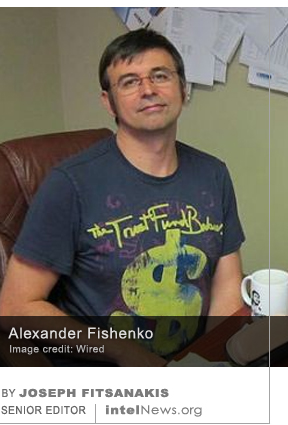
Alexander FishenkoA resident of Texas, who is accused by United States authorities of setting up a front company in order to illegally acquire American technology on behalf of Russia’s intelligence services, has pleaded guilty to espionage charges. Alexander Fishenko, 49, was one of 11 people arrested in October 2012 by the Federal Bureau of Investigation. The arrests came during several raids in locations around Houston, Texas, which included the headquarters of Arc Electronics, Inc. The FBI accused the export firm of having shipped over $50 million-worth of military-grade micro-electronics since 2008. The supplies were received in Moscow, Russia, by a mysterious procurement company called Apex System LLC. Counter-intelligence investigators in the US claim that both firms are part of an elaborate scheme set up by Russian military intelligence, aimed at stealing dual-use electronics hardware created by American firms.

According to the indictment, Arc Electronics told its US suppliers that the microelectronics technologies were intended for use in various types of streetlights. But in reality, said the FBI, the company gave the hi-tech supplies to the Russian Ministry of Defense for use in airborne surveillance systems, as well as in remote weapons guidance systems, among other military applications. Federal prosecutors said that, for over four years, Arc Electronics engaged in a prolonged “surreptitious and systematic” scheme to circumvent US government export controls, thus seriously damaging US national security. Following the early-morning raids, the FBI unsealed indictments against 11 Arc Electronics employees, most of whom were charged with “acting as unregistered agents of the Russian Federation in the United States” —legal jargon for espionage.

Fishenko, who is originally from Kazakhstan, was scheduled to face trial on September 21 in New York. But on Wednesday he chose to plead guilty to the charges leveled against him. He is the fifth member of the 11 Apex System employees arrested back in 2012 to plead guilty to espionage. A government spokesman said the Fishenko’s plea did not result from an agreement to cooperate with the FBI. He now faces up to 15 years in prison. His lawyer, Richard Levitt, declined comment when he was contacted on Wednesday. The Russian government has denied that it had any involvement with Fishenko’s operations.

Author: Joseph Fitsanakis | Date: 08 September 2015 | Permalink
Germany and Holland investigated Russian physicist for espionage

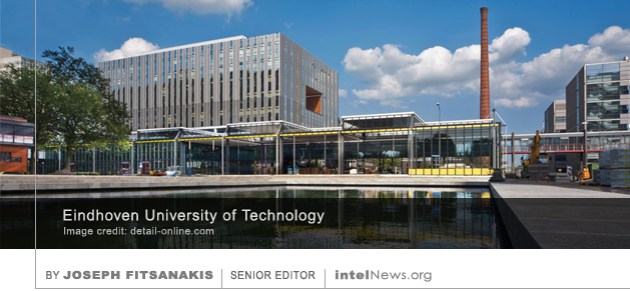
Eindhoven University of TechnologyThe German and Dutch governments allegedly joined forces to investigate a Russian supercomputer specialist, who studied in Germany and Holland, suspecting him of passing technical information to Russian intelligence. German weekly newsmagazine Der Spiegel, which published the report in its current issue, identified the physicist only as “Ivan A.” and said that the 28-year-old man was a member of a physics laboratory affiliated with the Max Planck Institute in the western German city of Bonn. According to Spiegel, Ivan A. studied in Bonn between 2009 and 2011, conducting research on quantum physics and nanophotonics, an area of study that examines the behavior of light on the nanometer scale. Much of the research in this specialized field relates to supercomputers and cutting-edge quantum computing applications.
Citing unnamed government sources, Spiegel said that Germany’s Office for the Protection of the Constitution, which is the country’s top counterintelligence agency, started to monitor the scientist once he began meeting regularly with a Russian diplomat. The diplomat, who was stationed at the consulate of the Russian Federation in Bonn, had been identified by German intelligence as a member of the Russian secret services. German counterintelligence officials thus began suspecting Ivan A. of channeling restricted technical information to Moscow via the Russian diplomat.

However, in 2013 Ivan A. relocated to the Dutch city of Eindhoven to study at the Eindhoven University of Technology, at which point German counterintelligence officers reached out to their Dutch colleagues. During one of his trips from Germany to Holland, Ivan A. was detained for several hours along with this wife at the Düsseldorf International Airport. He was questioned and his personal electronic devices were confiscated. Upon his release Germany and Holland jointly launched against him a formal investigation for espionage. Eventually his European Union residence visa was cancelled and he was expelled by the Dutch government as a danger to national security. Der Spiegel said Ivan A. returned to Russia and today denies that he was a spy.

Espionage scandals frequently rock German-Russian relations. In 2013, a German court convicted a married couple, Andreas and Heidrun Anschlag, of having spied for the Soviet Union and Russia since at least 1990. The two had used forged Austrian passports to enter West Germany from Mexico in 1988 and 1990.

Author: Joseph Fitsanakis | Date: 28 July 2015 | Permalink: https://intelnews.org/2015/07/28/01-1744/

Key testimony from Rosenberg spy case released after 64 years

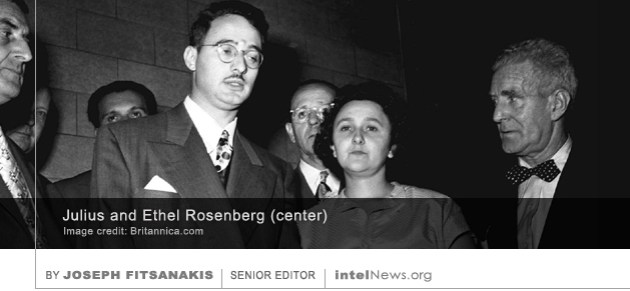
Julius and Ethel RosenbergThe final piece of sealed testimony in one of the most important espionage cases of the Cold War has been released, 64 years after it was given. The case led to the execution in 1953 of Julius and Ethel Rosenberg, an American couple who were convicted of spying for the Soviet Union. The Rosenbergs were arrested in 1950 for being members of a larger Soviet-handled spy ring, which included Ethel’s brother, David Greenglass. Greenglass agreed to testify for the US government in order to save his life, as well as the life of his wife, Ruth, who was also involved in the spy ring. He subsequently fingered Julius Rosenberg as a courier and recruiter for the Soviets, and Ethel as the person who retyped the content of classified documents before they were surrendered to their handlers. That piece of testimony from Greenglass the primary evidence used to convict and execute the Rosenbergs.
However, although historians are confident that Julius Rosenberg was indeed an active member of the Soviet spy ring, there are doubts about Ethel. Many suggest that her involvement with her husband’s espionage activities was fragmentary at best, and that she refused to cooperate with the Federal Bureau of Investigation in an ill-judged attempt to protect her husband. The argument goes that Ethel was put to death as a warning to Moscow, as well as to intimidate other American spies, rather than on the basis of actual evidence of her involvement in espionage. Many years after the Rosenbergs’ execution, Greenglass claimed he had lied about Ethel’s role in the spy affair in order to protect his wife, who was the actual typist of the espionage ring.

The debate over Ethel Rosenberg’s fate was rekindled by US District Judge Alvin Hellerstein’s decision in May of this year to unseal Greenglass’ testimony. The documents could not be made public while Greenglass was alive, because he objected to their release. But he died last year in a nursing home in New York, so Judge Hellerstein said his testimony could now legally be made available to the public as a “critical piece of an important moment in our nation’s history”.

Greenglass’ grand jury testimony, made under oath in 1950, six months before he implicated his sister in nuclear espionage for the Soviets, was posted online on Wednesday by George Washington University’s National Security Archive. Speaking at a press conference about the release, several experts said the new information directly contradicts Greenglass’ later testimony in which he accused his sister of being a spy. In the press conference of his grand jury testimony, Greenglass emphatically denies that Ethel had a role in the atom spy ring. When asked whether she was involved in espionage, Greenglass responds: “my sister has never spoken to me about this subject”. Later on he recounts how Julius tried to convince him to prolong his US Army service in order to continue to have access to classified information. When asked whether Ethel also tried to convince him to continue to spy for the Soviets, he responds: “I said before, and say it again, honestly, this is a fact: I never spoke to my sister about this at all”.

National Security Archive Director Tom Blanton said at the press conference that the evidence made it clear that Julius Rosenberg led an active spy ring; but Ethel was not an active spy, he said, even though witting.

Author: Joseph Fitsanakis | Date: 17 July 2015 | Permalink: https://intelnews.org/2015/07/17/01-1737/

Judge orders release of key testimony from Rosenberg spy case

Julius and Ethel RosenbergA United States district judge has ordered the release of the last major piece of sealed evidence in one of the most important espionage cases of the Cold War. The case led to the execution in 1953 of an American couple, Julius and Ethel Rosenberg, who were convicted of conspiring to spy for the Soviet Union. The Rosenbergs were arrested in 1950 for being members of a larger Soviet-handled spy ring, which included Ethel’s brother, David Greenglass. Greenglass later told a US court that he firmly believed the USSR should have access to nuclear technology and actively tried to give Moscow information on the Manhattan Project. Greenglass agreed to testify for the US government in order to save his life, as well as the life of his wife, Ruth, who was also involved in the spy ring. He subsequently fingered Julius Rosenberg as a courier and recruiter for the Soviets, and Ethel as the person who retyped the content of classified documents before they were surrendered to their handlers. This piece of testimony from Greenglass was used as the primary evidence to convict and execute the Rosenbergs.
However, although historians are confident that Julius Rosenberg was indeed an active member of the Soviet spy ring, there are doubts about Ethel. Many suggest that her involvement with her husband’s espionage activities was fragmentary at best, and that she refused to cooperate with the Federal Bureau of Investigation in an ill-judged attempt to protect her husband. The argument goes that Ethel was put to death as a warning to Moscow, as well as to intimidate other American spies, rather than on the basis of actual evidence of her involvement in espionage. Many years after the Rosenbergs’ execution, Greenglass claimed he had lied about Ethel’s role in the spy affair in order to protect his wife, who was the actual typist of the espionage ring.

The debate over Ethel Rosenberg’s fate will undoubtedly by rekindled by US District Judge Alvin Hellerstein’s decision last week to unseal Greenglass’ testimony. The documents could not be made public while Greenglass was alive, because he objected to their release. But he died last year in a nursing home in New York, so his testimony can now legally be made available to the public. In making his decision known, Judge Hellerstein said Greenglass’ testimony was a “critical piece of an important moment in our nation’s history”. The United States government is legally permitted to block the release of the documents should it decide to do so. But when a White House spokesperson was asked about the subject by the Associated Press, she decline to comment.

Author: Joseph Fitsanakis | Date: 26 May 2015 | Permalink: https://intelnews.org/2015/05/26/01-1703/

A third of Russian diplomats are spies, says Swedish security service

Wilhelm UngeBy JOSEPH FITSANAKIS | intelNews.org
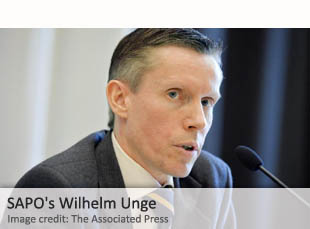
Approximately a third of all Russian diplomats stationed in Sweden are in reality intelligence officers, according to Sweden’s intelligence service. The Scandinavian country’s primary intelligence agency, the Swedish Security Service, known as SAPO, told reporters on Wednesday that around one in three accredited officials stationed in Russia’s embassy and consulate in Gothenburg routinely engage in various forms of espionage. The claim was made at SAPO’s headquarters in Solna, in the suburbs of Stockholm, during the unveiling of the agency’s annual counterintelligence report. The main presenter at the press conference, SAPO chief analyst Wilhelm Unge, told reporters that Russia constitutes “the biggest intelligence threat against Sweden” at present.

Unge told the audience that SAPO had prevented “several attempts” by Russian diplomatic personnel to steal Swedish-made technology last year, especially related to weapons systems and other military technologies. Especially notable, said Ugne, was that the new, post-Soviet generation of Russian intelligence officers stationed in Sweden are younger in age than their Soviet-era counterparts. He added that they are also well-educated, very driven, goal-oriented and socially competent —something that Soviet intelligence officers were admittedly not known for. Unge noted that Iranian and Chinese intelligence operatives were also markedly active on Swedish soil, but refused to provide details.

The Swedish Ministry of Foreign Affairs, which is responsible for accrediting foreign diplomats stationed in Sweden, declined comment on whether it had expelled any Russian diplomats in recent months. In a brief statement, the Ministry’s spokeswoman Anna Ekberg said simply that the Swedish government expected the Russian Federation “to respect the Vienna Convention and that their diplomats [in Sweden] are actually diplomats”. The Associated Press contacted the Russian embassy in Stockholm for a response, but officials there refused to provide one. IntelNews regulars will recall that Swedish authorities shut down airspace over Stockholm last October, while conducting an extensive search for an alleged Russian submarine, which was believed to be lurking in the port of Stockholm. The incident caused tension between the two countries, prompting calls for more stringent Swedish counterintelligence measures against Russia.

More on Russian citizens charged with espionage by the FBI

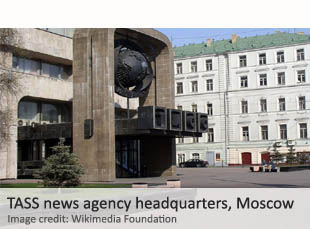
TASS news agency headquartersBy JOSEPH FITSANAKIS | intelNews.org
A criminal complaint unsealed Monday in a Manhattan court has revealed more details about a complex counterintelligence operation by American authorities against three Russian citizens in New York. The Federal Bureau of Investigation filed charges against two Russian diplomats, Igor Sporyshev and Victor Podobnyy, as well as Evgeny Buryakov, an employee of a major Russian bank in Manhattan. All three are believed to be officers of the SVR, Russia’s Foreign Intelligence Service, one of the direct institutional descendants of the Soviet-era KGB. According to the criminal complaint, the two diplomats met Buryakov nearly fifty times between March 2012 and September 2014. FBI counterintelligence agents witnessed the Russians pass “small objects or notes” between each other in public, said the indictment. As intelNews reported yesterday, the three Russians were in regular contact with individuals “associated with a leading Russian state-owned news organization” in the US. According to The Daily Beast, the news organization in question is the Moscow-based TASS news agency, which is owned by the Russian government. The court documents also reveal that Sporyshev and Podobnyy broke basic rules of intelligence tradecraft, by contacting Buryakov using an unencrypted telephone line and addressing him by his real name, rather than his cover name. These conversations, which occurred in April 2013, turned out to be monitored by the FBI’s counterintelligence division, which promptly recorded them. In subsequent telephone conversations, Sporyshev and Podobnyy exchanged views on how to recruit female assets in New York. According to the transcripts provided by the FBI, Sporyshev expressed the view that female assets posed problems, in that they would not let male SVR case officers “get close enough” unless they entered a sexual relationship, which made recruitment of assets complicated. Eventually, the FBI set up a sting operation targeting Buryakov. He was approached by an undercover FBI agent posing as an American investor, offering to provide the Russian with classified documents from the US Treasury. In exchange for the documents, he wanted assistance from the Kremlin to build a chain of casinos in Russia. Buryakov spoke with Sporyshev on the phone about the investor’s offer, and was advised by the diplomat that it could be “some sort of a set up —a trap of some kind”. When Sporyshev told Buryakov to proceed cautiously, the latter received from the undercover FBI agent documents purporting to be from a US Treasury source. The Russian was promptly arrested and now faces up to 20 years in prison on charges of operating as an unregistered agent of a foreign power.

US busts Russian spy ring, charges three with espionage

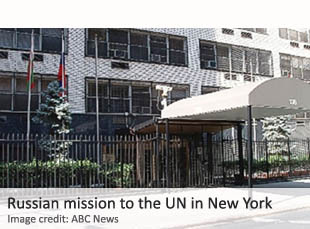
Russian mission to the UNBy JOSEPH FITSANAKIS | intelNews.org
Authorities in the United States have charged three Russian citizens, two of them diplomats, with operating a New York-based spy ring on orders from Moscow. Early on Monday, the Federal Bureau of Investigation named the diplomats as Igor Sporyshev, 40, and Victor Podobnyy, 27. It said the two were employees of the trade office of the Russian permanent mission to the United Nations in New York. But the FBI had apparently been monitoring the two accredited diplomats since March of 2012. Its agents eventually uncovered that Sporyshev and Podobnyy were in fact employees of the SVR, Russia’s Foreign Intelligence Service, one of the direct institutional descendants of the Soviet-era KGB. According to their indictment, the two were employed by the SVR’s ‘ER’ Directorate, which focuses on economics and finance. The two SVR employees, operating under diplomatic guises, regularly met with a third member of the alleged spy ring, Evgeny Buryakov, 39, also an SVR officer. However, unlike Sporyshev and Podobnyy, Buryakov was operating under non-official cover, posing as an employee in the Manhattan office of a major Russian bank. Non-official-cover operatives, or NOCs, as they are known in the US Intelligence Community, are typically high-level principal agents or officers of an intelligence agency, who operate without official connection to the diplomatic authorities of the country that is employing them. They typically pose as business executives, students, academics, journalists, or non-profit agency workers, among other covers. Unlike official-cover officers, who are protected by diplomatic immunity, NOCs have no such protection. If arrested by authorities of their host country, they can be tried and convicted for conducting espionage. US government prosecutors suggested on Monday that the three alleged SVR operatives were also in regular contact with individuals “associated with a leading Russian state-owned news organization”, presumably in the US. They also tried to recruit American citizens to spy for Moscow, including employees of “major companies” and “several young women with ties to a major university in New York”, according to the indictment. It is believed that the three Russians were primarily interested in information relating to potential US government sanctions against Russian financial institutions, as well as Washington’s efforts to promote the development of alternative resources of energy. The FBI said Sporyshev and Podobnyy, who are protected by diplomatic immunity, “no longer reside in the US”. Presumably they were expelled. Buryakov, however, appeared in a Manhattan court on Monday.

German who spied for CIA stole list of 3,500 German spies’ names

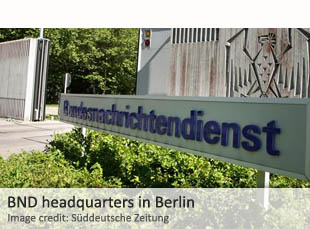
BND headquarters in BerlinBy JOSEPH FITSANAKIS | intelNews.org
A German intelligence officer, who was arrested last summer for spying for the United States, may have given his American handlers information on the real identities, as well as operational aliases, of nearly 3,500 German intelligence operatives. In July, Germany expelled the Central Intelligence Agency station chief in Berlin, following the arrest of Marcus R., a 31-year-old, low-level clerk at the Bundesnachrichtendienst, or BND, Germany’s external intelligence agency. He was believed at the time to have spied for the CIA for approximately two years, and to have supplied the American spy agency with around 200 classified German government documents in exchange for around €25,000 —approximately $30,000. It is thought that Markus R. contacted the CIA by sending an email over an encrypted connection to the American embassy in Berlin. From then on, his communication with his American handlers appears to have taken place mostly via the Internet. Sources suggest that he conferred with them via a secure link that was included in a specially-designed weather application that he had been instructed install on his computer. Now German authorities, who have been investigating the 31-year-old double spy’s computers ever since his arrest, say they found in one of them a stolen digital document containing a list of the real and cover identities of thousands of BND employees stationed abroad. According to German publications Bild and Spiegel, which reported the alleged discovery, the employees whose names are contained in the document are members of the BND’s Foreign Relations department, also known as Foreign Theater Operations department. The department is tasked with stationing intelligence operatives abroad in German embassies and consulates, as well as with embedding them with German military missions in places such as Sudan, Lebanon, Afghanistan and Mali. German investigators say they are not yet certain whether Markus R. passed the names of the BND operatives on to his CIA handlers.

High-profile US diplomat probed by FBI counterintelligence

Robin L. RaphelBy IAN ALLEN | intelNews.org
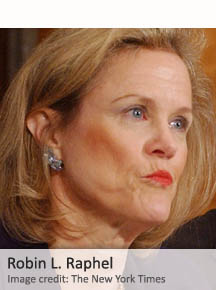
A highly experienced American diplomat, who is commonly described as “a fixture in Washington foreign policy circles”, is reportedly being investigated by counterintelligence agents of the Federal Bureau of Investigation. The Washington Post named the diplomat last week as Robin L. Raphel, who served as United States ambassador to Tunisia before being appointed as assistant secretary of state for South Asian affairs, during the administration of US President Bill Clinton. The New York Times described Ms. Raphel as one of the US Department of State’s highest-ranking female diplomats. She is considered an expert on Pakistan and until recently served as an adviser to the Department of State’s special representative for Afghanistan and Pakistan. Ms. Raphel officially retired from the Foreign Service in 2005 and joined the ranks of Cassidy & Associates, a high-powered government-relations firm based in Washington, DC, which is known to have performed lobbying assignments on behalf of the government of Pakistan. In reporting the alleged investigation of Ms. Raphel by the FBI, The Washington Post said last week that the nature of the probe was “unclear”. But it stated that FBI counterintelligence agents had searched the former diplomat’s house and office. Citing unnamed government sources, The New York Times reported that the FBI was trying to determine why Ms. Raphel had taken classified information to her house, and whether she had shared it, or planned to share it, with a foreign government. There was no mention in the article of the identity of the foreign government that may have been privy to classified information allegedly taken home by Ms. Raphel. Media reports suggested that the former diplomat had been placed on leave and stripped of all her government security clearances as part of the ongoing FBI investigation. Insiders note that it is extremely rare for such a prominent figure in Washington to become the subject of an FBI counterintelligence investigation.

Czechs say number of Russian spies in Prague “extremely high”

PragueBy JOSEPH FITSANAKIS | intelNews.org
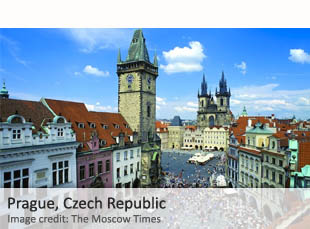
The number of active Russian intelligence operatives in the Czech Republic increased notably in the past year, according to an official report by the country’s counterintelligence service. In its annual report released on Monday, the Czech Security Information Service (BIS) said the number of Russian intelligence personnel stationed in the central European country had risen dramatically since the start of the crisis in Ukraine. The crisis, which brought Russian troops in Ukraine and resulted in the annexation of Crimea by Russia, has prompted the most serious crisis in the West’s relations with Russia since the end of the Cold War. The BIS report did not reveal the precise number of alleged Russian intelligence personnel on Czech soil, but it noted that the majority of them posed as diplomats in Russia’s embassy in Czech capital Prague. It stated that “when it comes to Russia’s diplomatic mission, in 2013 the number of intelligence officers working undercover as diplomats was extremely high”. It added that significant numbers of Russian intelligence operatives were in the Czech Republic in a non-official-cover (NOC) capacity, meaning there were not officially connected with the Russian embassy there and had no diplomatic immunity. These officers “travel to the Czech Republic as individuals, posing as tourists, experts, academics and entrepreneurs”, said the report, “or settled down in the country through purchasing property”. Nearly 50,000 Russian citizens live in the Czech Republic as long-term legal residents. Relations between Moscow and Prague have been frosty in the post-communist era, and have deteriorated significantly following the Czech Republic’s entry into the North Atlantic Treaty Organization (NATO). In the summer of 2010, three Czech generals, including the head of the president’s military office and the country’s representative to NATO, resigned following revelations that one of their senior staffers had a romantic relationship with a Russian spy. Read more of this post

Historian names wartime British spy who fooled Nazi sympathizers

Eric RobertsBy JOSEPH FITSANAKIS | intelNews.org
A British counterintelligence agent, who managed to neutralize an extensive wartime network of Nazi sympathizers in the United Kingdom by pretending to represent the German government, has been named. Regular intelNews readers might remember our post about a wartime agent identified only as “Jack King” in files released by the British National Archives in February. “Jack King” was the operational codename given to the agent by his handlers in the British Security Service, commonly known as MI5, which is tasked with counterintelligence duties. Senior officials at the agency described “King” as “a genius” at luring Nazi sympathizers in the UK. The files show that “King’s” work helped MI5 identify hundreds of residents in Britain —most of them British citizens— as committed Nazis who were prepared to pass national secrets to Berlin. “King” reportedly utilized his pro-German contacts in the southeast of England and was able to infiltrate pro-Nazi circles operating in and around London. He did so by posing as an agent of the Gestapo, Nazi Germany’s secret police. He quickly gained the trust of some of the most fervent pro-German activists operating in the British Isles. These included Edgar Whitehead, Hilda Leech, and Marita Perigoe, a Swedish resident of the UK who was so fervently pro-Nazi that she once dismissed Oswald Mosley’s British Union of Fascists as “insufficiently extreme”. When the “Jack King” files were declassified, some intelligence historians suggested that the operational codename referred to John Bingham, a legendary MI5 office and fluent German speaker who is said to have inspired John le Carré’s fictional character George Smiley. But Cambridge University historian Christopher Andrew, who in 2009 authored In Defense of the Realm, an officially-commissioned history of MI5, has revealed the name of “Jack King” as Eric Roberts. Professor Andrew told The Daily Telegraph newspaper that Roberts was an unassuming suburban bank clerk who lived in a small market town called Epsom in Surrey. Roberts was born in nearby Sussex, in southeastern England, in 1907, married at a young age and had three children —two sons and a daughter. His MI5 files document that, by the time World War II started, he was “thoroughly familiar” with networks of Nazi sympathizers in the south of England, though just how he had managed to do that remains a mystery. Roberts eventually attracted the attention of Maxwell Knight, a legendary MI5 spymaster who headed the organization’s Section B5(b), tasked with infiltrating subversive political groups in Britain. Read more of this post

More information emerges on Poles who ‘spied for Russia’

Zbigniew J.By JOSEPH FITSANAKIS | intelNews.org
More information has emerged on two Polish citizens who were arrested earlier this month in Warsaw on charges of spying for a foreign intelligence agency. Polish media reported last week that a colonel in the Polish Army had been arrested by security personnel for operating as an unregistered agent of a foreign country. Subsequent media reports said a second man, a lawyer with dual Polish-Russian citizenship, had also been arrested. According to Polish media reports, the two men had been recruited by the GRU, Russia’s military intelligence agency. The organization is believed to have over a dozen officers stationed at the Russian embassy in the Polish capital, posing as diplomats, as well as an unknown number of non-official-cover operatives, who are not officially connected to the Russian diplomatic mission. One of the two arrestees has been identified simply as Zbigniew J., and is said to be a lieutenant colonel serving in Poland’s Ministry of National Defense. Polish newsmagazine Wprost said last weekend that Z.J. worked in the Ministry’s “enlightenment and morale” department, a post that required him to visit military units around the country as part of a team of experts. He would then impart the information gained from his travels to his GRU handler, an officer serving under diplomatic cover in Russia’s Warsaw embassy, during biweekly meetings. Wprost said Z.J. would receive small amounts for cash in exchange for his services, which are believed to have amounted to approximately $30,000 over the course of several years. The newsmagazine suggested that Z.J.’s motivations were primarily financial and were related to unspecified “personal troubles”. The second alleged spy arrested last week has been named as Stanisław Szypowski. He is a lawyer-turned-political-lobbyist who worked for Stopczyk & Mikulski, a prestigious law firm involved in a government-funded project to build facilities able to import liquefied natural gas into Poland. Read more of this post

Poles who ‘spied for Russia’ worked on strategic natural gas project

Polish Ministry of National DefenseBy JOSEPH FITSANAKIS | intelNews.org
At least one of the two men arrested in Poland last week for spying for a “foreign entity” was working on a project of strategic significance, aimed at reducing Poland’s dependency on Russian natural gas. Polish media reported last Wednesday that a colonel in the Polish Army had been arrested by security personnel for acting as an unregistered agent of a foreign country. Subsequent media reports said a second man, a lawyer with dual Polish-Russian citizenship, had also been arrested. Later in the day, an official statement from the office of the Senior Military Prosecutor said simply that Poland’s Ministry of National Defense had “detained a Polish Army officer on suspicion of being a member of a foreign intelligence service”. But there was no mention of the country for which the detained men allegedly spied for. This past Saturday, Reuters revealed that the two men were suspected of spying for Russia. The news agency cited Marek Biernacki, a Polish parliamentarian, who is also a member of the Polish Parliament’s Committee on Intelligence and had allegedly been briefed by Polish intelligence officials about last week’s arrests. Biernacki told journalists that the actions relating to the two detainees had been “taken in respect of two agents of the Russian state”. In accordance with Polish law, the public prosecutor named the civilian detainee as Stanislaw Sz., using only his first name and the first two letters of his last name. Reuters said the man had been employed at the well-connected law firm of Stopczyk & Mikulski, whose website listed him until recently as an employee. Stanislaw Sz. was allegedly involved in a project to construct a coastal terminal in Swinoujscie, located on Poland’s Baltic Sea coast, for importing liquefied natural gas. The import terminal, which is scheduled to become operational in 2015, will allow Poland to import gas from the Persian Gulf. That will in turn reduce the country’s heavy dependence on imported Russian natural gas at a time when Warsaw’s relations with Moscow continue to deteriorate. Reuters said that the precise nature and timing of Stanislaw Sz.’s involvement with the Swinoujscie terminal is unclear, but it characterized the project as being of strategic importance for both Poland and Russia. Read more of this post

Senior Polish defense official detained for ‘spying for Russia’

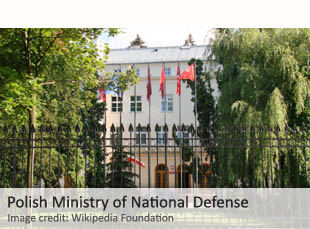
Polish Ministry of National DefenseBy JOSEPH FITSANAKIS | intelNews.org
A high-ranking official in Poland’s Ministry of National Defense has reportedly been arrested on suspicion of spying for Russia. Poland’s Dziennik Gazeta Prawna said early on Wednesday that a man had been detained by Polish security personnel because it was thought he had been acting as an unregistered agent of a foreign country. Another source, Poland’s commercial news Radio Zet, reported that two men had been arrested, a colonel in the Polish Army and a lawyer with dual Polish-Russian citizenship. Later in the day, an official statement from the office of the Senior Military Prosecutor said simply that Poland’s “Ministry of National Defense detained a Polish Army officer on suspicion of being a member of a foreign intelligence service”. But it made no mention of the country for which the detained officer allegedly spied for. A spokesman for the Defense Ministry, Lieut. Col. Janusz Wojcik, said he could not disclose any details at the moment, adding only that the arrests were based on evidence complied by the counterintelligence service of the Polish Army. Another Polish official, Lieut. Col. Paul Durka, said the arrests had been coordinated by Poland’s Military Police and the Polish Army’s Internal Security Agency (ABW). But Polish media alleged that the defense official was apprehended for spying for Russia and suggested that his arrest was carried out in dramatic fashion by ABW forces inside the headquarters of the Ministry of National Defense, centrally located on Polish capital Warsaw’s Independence Avenue. This claim, which was later confirmed by ABW spokesman Lieut. Col. Maciej Karczyński, likely signifies that the spy suspect was captured in the act of espionage, following an extensive surveillance operation. Relations between Poland and Russia have been tense since the end of the Cold War, with several intelligence-related incidents making news headlines. In early 2010, the Polish government announced the arrest of a Russian resident of Warsaw, who was accused of working as a non-official-cover operative for Russia’s Main Intelligence Directory (GRU). Later that year, Polish media claimed that Stefan Zielonka, a senior SIGINT officer with Poland’s Military Intelligence Services (SWW), who disappeared without trace in early May of 2009, had defected to Russia. Read more of this post