News you may have missed #0190

Bookmark and Share

News you may have missed #0125

  • US officials deny deal with Russia on missile shield. Officials from the US Department of Defense have denied persistent rumors that Washington’s decision to scrap the controversial missile defense shield was part of a secret deal with Moscow. They also continue to insist that “[t]his is not about Russia. It never has been about Russia”, according to US defense undersecretary Michele Flournoy.
  • US DHS is hiring cyber experts. The Obama Administration has approved a request by the US Department of Homeland Security to hire of up to 1,000 cyber experts over the next three years. The recruits will include “cyber analysts, developers and engineers”. One hopes the move will also patch the countless holes in the Department’s cyber defense posture, which were revealed last month in an internal report, to little media attention.
  • MI6 is also hiring. Britain’s Secret Intelligence Service –also known as MI6– is hiring and has uploaded a snap test (called “selection tool”) on its website to test whether those interested have what it takes to be a spy. The test, which evaluates how well potential candidates can lie, is located here.

Bookmark and Share

News you may have missed #0112

  • Obama refuses to halt CIA probe. Arguing that “nobody’s above the law”, the US President has rejected a request by seven former heads of the CIA to end the inquiry into abuse of suspects held by the Agency.
  • Naval intel agent caught spying on famous Philippine artist. Philippine prizewinning poet, critic and dramatist Bienvenido Lumbera says he will file a complaint against the Philippines armed forces over the apprehension of a Naval Intelligence Security Force agent, who was caught spying outside his home. The country’s government is supposedly concentrating (with US logistical, intelligence and combat assistance) on fighting the Muslim separatist Moro ethnic group (including the Abu Sayyaf Group) in the south, but it is apparently spying on artists and intellectuals on the side.

Bookmark and Share

News you may have missed #0098

Bookmark and Share

News you may have missed #0059

  • Torture report says UK government ministers shielded MI5, MI6. A new report from Britain’s parliamentary human rights committee accuses senior cabinet ministers of “hiding behind a wall of secrecy” to avoid being held to account over allegations of British intelligence agents’ collusion in torture.
  • US cyber czar resigns. Senior intelligence official Melissa Hathaway, who was US President Barack Obama’s choice to monitor America’s online security, said in an interview that she is leaving “for personal reasons”.
  • South Korean opposition skeptical of request for new intelligence powers. Opposition parties in South Korea are critical of the National Intelligence Service’s (NIS) recent request to gain access to information on financial transactions amounting to 20 million won or more without a warrant.

Bookmark and Share

Expert warns of generational gap in Western intelligence services

By IAN ALLEN | intelNews.org |
Security expert Kevin O’Brien has given an interview to Reuters news agency, in which he warns of “serious generational differences and disparities between [intelligence] managers’ and analysts’ cognitive outlooks”. The gap between older, “Generation Y” intelligence employees and the “digital generation”, is rapidly becoming apparent, as twenty-something spies and analysts are entering the intelligence job market in large numbers. O’Brien says the new generation of recruits features strong cyber skills and thinking habits shaped online. What is more, the way these new recruits process information poses “a generational test” for Western espionage organizations, which are desperately trying to deepen their knowledge and understanding of online-savvy and progressively more transnational militant groups. O’Brien’s interview, and his latest paper on the subject, can be accessed here.

Bookmark and Share

News you may have missed #0051

  • Instigator of Church committee hearings speaks about domestic intelligence. Christopher Pyle, the American whistleblower who in the 1970s sparked the Church Committee hearings on intelligence activities, has spoken about the recent revelations of US Army personnel spying on activist groups in Washington state. Pyle provided interesting historical context linking domestic espionage in the 1960s and 1970s with current developments in the so-called “war on terrorism”.
  • Declassified US President’s Daily Brief is reclassified. The CIA says that extracts of the President’s Daily Briefing (PDB) that were declassified in 2006, during the prosecution of former vice presidential aide Scooter Libby, are “currently and properly classified”. PDB declassifications occur extremely rarely.
  • Australian intelligence to focus on cybersecurity. David Irvine, the recently appointed director of the Australian Security Intelligence Organisation, has identified cyberespionage as “a growing national security risk”.

Bookmark and Share

News you may have missed #0036

  • Hungary’s security head resigns in wake of spying scandal. Sandor Laborc has resigned as head of Hungary’s National Security Office (NBH) after NBH agents were caught spying on politicians.
  • Austria to try Kazakh spy for kidnap attempt. Austrian officials say they will put a suspected Kazakh spy, identified only “Ildar A.”, on trial for attempting to kidnap from Austria former Kazakh National Security Committee (KNB) chief Alnur Musaev last September. See previous intelNews reporting on the ongoing Austrian-Kazakh intelligence imbroglio.
  • Obama’s unwilling cyber czars. Barack Obama is expected to soon appoint a national cybersecurity adviser. But Andy Greenberg argues that the appointee’s name may not be as important as the names of those who have “politely declined” the role.

Bookmark and Share

Comment: Not So Fast, Cyberwarriors! [updated]

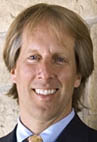
Hoekstra

Hoekstra

By JOSEPH FITSANAKIS | intelNews.org |
Rep. Peter Hoekstra wants to launch a cyberwar against North Korea. The Republican from Michigan, who heads his party’s delegation on the US House Permanent Select Committee on Intelligence, urged the US government last Thursday to “launch a cyber attack” or at least increase international sanctions on Pyongyang. Hoekstra urged this in response to a series of mysterious cyber-attacks that paralyzed major South Korean and US government websites for three days earlier this month. And he’s not alone. Last Friday, ABC News technology pundit Michael Malone effectively echoed Hoekstra and warned that “enemies of freedom everywhere” could use cyberterrorism to kill untold numbers of Americans by remotely controlling “fetal monitoring systems, surgical equipment, robotic bomb demolition equipment and ICBMs”. But South Korean cybersecurity specialists, who intensely monitor North Korean information systems, and were the ones who actually informed their US counterparts of the unfolding cyber-attacks on July 4, are not so sure that Pyongyang was behind the attacks. Read more of this post

News you may have missed #0008

  • Moderate Virginia Republican is Obama’s leading cybersecurity czar. Time magazine identifies Tom Davis as a leading candidate for the newly created position, citing “sources familiar with the White House’s deliberations on the subject”. Davis served in the House of Representatives for seven terms before retiring last fall. But Ryan Singel, of Wired, points out that Davis is “no friend of privacy”. While in the House of Representatives, “Davis voted repeatedly to expand the government’s internet wiretapping powers, and helped author the now-troubled national identification law known as REAL ID”, reminds Singel.
  • New Zealand spooks spied on high school students. Last February, intelNews reported on revelations that the New Zealand Security Intelligence Service (NZSIS) has been keeping a file on an elected Green Party parliament Member, Keith Locke, since he was 11 years old. New information shows that NZSIS has been monitoring two other Green parliamentarians, Sue Bradford and Catherine Delahunty, since they were in high school. Moreover, their files remained active until 1999 and 2002, respectively. 
  • US Supreme Court refuses Plame CIA case. The Court declined to take up the case of Valerie Plame, a former CIA agent, who sought compensation after she was publicly revealed to be a secret operative. Plame and her husband, former ambassador Joseph Wilson, wanted to sue several Bush administration officials, including former vice president Dick Cheney, over the 2003 revelation. 
  • US Homeland Security said to kill domestic spy satellite plan. A senior Homeland Security official has said that Homeland Security Secretary Janet Napolitano has decided to kill a controversial Bush administration plan to use satellites for domestic surveillance in the US. The plan first surfaced in 2007, but it has been delayed due to concerns by privacy and civil liberties advocates that it would intrude on the lives of Americans. 
  • US National Security Advisor to visit India. Jim Jones will visit New Delhi at the request of President Obama, in order “to further deepen and strengthen our key bilateral partnership with India” says the White House. He will also be visiting Pakistan and Afghanistan. 
  • Researcher unearths declassified documents on NSA’s history. The documents, obtained by Matthew M. Aid for his new book, The Secret Sentry, confirm that prior to the launch of the first spy satellites into orbit by the National Reconnaissance Office (NRO) in the early 1960s, the Signals Intelligence collected by the National Security Agency and its predecessor organizations was virtually the only viable means of gathering intelligence information about what was going on inside the Soviet Union, China, North Korea, North Vietnam, and other communist nations.  However, the NSA and its foreign partners could collect bits and pieces of huge numbers of low-level, unencoded, plaintext messages.

French energy giant denies it spied on Greenpeace

ÉDF's Paris HQ

ÉDF's Paris HQ

By IAN ALLEN | intelNews.org |
Earlier this month, intelNews reported that senior security officials at France’s state-owned electricity service provider were among several people charged by French authorities with spying on Greenpeace and other environmental groups. Now, several days after the launch of an official investigation into the matter, the company, Électricité de France (ÉDF), continues to blame the scandal on renegade and overzealous security personnel. Speaking to French newspaper Le Monde on April 21, ÉDF’s director of security, Jean-Marc Sabathé, insisted that the company’s senior management had not been consulted about the spying operation. ÉDF has already suspended two security officials, Pierre Durieux and Pierre Francois, who hired private investigations firm Kargus Consultant to infiltrate environmental organizations that oppose the expansion of ÉDF’s nuclear energy reactor plants throughout France. Read more of this post

Intelligence sources say US electric grid hacked by foreign spies

By IAN ALLEN | intelNews.org |
In yesterday’s edition, The Wall Street Journal quoted senior US intelligence sources, including former Homeland Security Department officials, who said that foreign spies have penetrated the electronic infrastructure of America’s electrical supply grid. The officials said the hackers, who have reportedly been traced to Russia and China, among other countries, do not currently appear intent on disrupting the system. Instead, they seem to be “on a mission to navigate [and map] the US electrical system and its controls”, allegedly so that they can sabotage it “during a crisis or war”. Interestingly, the discovery was reportedly made not by utility company technicians, but by US intelligence agents engaged in monitoring cyber-intrusions into the nation’s electronic infrastructure. Read more of this post

French energy giant spying on Greenpeace?

ÉDF's Paris HQ

ÉDF's Paris HQ

By IAN ALLEN | intelNews.org |
Two senior security officials at France’s state-owned electricity service provider are among several people charged by French authorities with spying on Greenpeace. News emerged last Tuesday that the heads of security at Électricité de France (ÉDF), Pierre Durieux and Pierre Francois, have had their offices raided and computers confiscated by French police, who are searching for the culprits of an extensive spying operation against the environmental organization. Three other people have been charged with membership in the spy ring, including Thierry Lorho, director of private investigations firm Kargus Consultant, as well as two unnamed individuals, one of whom is reportedly a “computer expert”. It appears that the five collaborated in efforts to remotely hack into computer servers and networks operated by Greenpeace France. Read more of this post

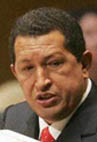
CIA expert claims Chávez rigged 2004 Venezuela vote

Hugo Chávez

Hugo Chávez

By IAN ALLEN | intelNews.org |
In a development that will undoubtedly worsen relations between Washington and Caracas, a CIA expert has accused Venezuelan president Hugo Chávez of rigging the 2004 recall referendum. Speaking before the US Election Assistance Commission in Orlando, Florida, CIA cybersecurity specialist Steve Stigall said that all networked election systems are inherently insecure, and gave the 2004 Venezuelan referendum as an example. Stigall claimed that president Chávez fixed the referendum results through the Venezuelan government’s control of the electronic ballot systems firm that oversaw the voting. He also pointed to a programming analysis of the voting systems by a group of anti-Chávez mathematicians, who allegedly discovered “a very subtle algorithm that appeared to adjust the vote in Chavez’s favor”. Read more of this post

Comment: Post-9/11 Intelligence Turf Wars Continue

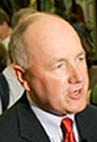
Rod Beckstrom

Rod Beckstrom

By IAN ALLEN* | intelNews.org |
The stern assurances given to Americans after 9/11, that destructive turf wars between US intelligence agencies would stop, appear to be evaporating. Earlier this week, Rod Beckstrom, who headed the National Cyber Security Center (NCSC) at the US Department of Homeland Security (DHS), announced his resignation amidst a bitter row between the DHS and the National Security Agency (NSA) over the oversight of American cybersecurity. In a letter (.pdf) addressed to DHS Secretary Janet Napolitano, and carbon-copied to nearly every senior US intelligence and defense official, Beckstrom blasted the lack of “appropriate support [for NCSC] during the last administration”, as well as having to wrestle with “various roadblocks engineered within [DHS] by the Office of Management and Budget”. Most of all, Beckstrom, an industry entrepreneur who remained in his NCSC post for less than a year, accused the NSA of subverting NCSC’s cybersecurity role by trying to “subjugate” and “control” NCSC. 

Read more of this post