Russian intelligence services intensify efforts to ‘liquidate’ defectors: report
March 4, 2024 3 Comments
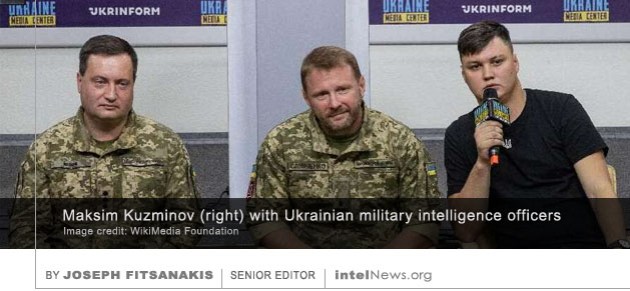 THE RUSSIAN INTELLIGENCE SERVICES have been “bolstering the[ir] architecture” aimed at stopping potential defectors and “liquidating” those who have already defected and are living in exile, according to a new report. In a leading article published on Sunday, The Wall Street Journal said that the list of “unsolved deaths” of the Kremlin’s Russian critics is “lengthening” and may have surpassed 50, according to some accounts.
Since the current phase of the invasion of Ukraine, which began in February 2022, Russian defectors and other critics of Russia’s ongoing war have “died in unusual circumstances on three continents”, according to the New York-based newspaper. Most deaths have occurred inside Russia, but several have occurred in countries such as India, France, and Spain. In the most recent case, Maksim Kuzminov, a Russian helicopter pilot, who defected to Ukraine in August 2023, was gunned down in Villajoyosa, Spain, last month, in what The Journal described as a “mafia-style assassination”.
The paper notes that very few of these killings or suspicious deaths can be directly attributed to the Kremlin. It adds, however, that the Russian government has ordered a redoubling of coordinated anti-defector operations by the country’s three main intelligence agencies —the Federal Security Service (FSB), the Foreign Intelligence Service (SVR), and the Main Intelligence Directorate of the General Staff of the Russian Armed Forces (GRU). In their effort to prevent defections and punish defectors, these agencies have blurred their operational boundaries, “making it more difficult to know which is responsible” for anti-defector operations, says The Journal.
Russian anti-defector operations are also increasingly involving third-country nationals —operatives who have no official connection with Russia, or with the country in which they are operating on behalf of Russian intelligence. In one recent example from last August, authorities in Britain arrested three Bulgarian citizens with spying for Russia. According to British government prosecutors, the suspects possessed forged passports and identity cards for Spain, France, the United Kingdom, Croatia, Italy, Greece, Bulgaria, the Czech Republic, and Slovenia.
► Author: Joseph Fitsanakis | Date: 04 March 2024 | Permalink
 A FORMER SOVIET KGB officer, who now lives in the United Kingdom under witness protection, can sue the British state for revealing his identity to Latvian authorities, which may have put his life in danger, a judge has ruled.
  RUSSIANS ARE AWARE OF the phrase “there is no such thing as a former chekist”. The term “chekist” dates from the Bolshevik-era All-Russian Extraordinary Commission (VChK, pronounced “cheka”), which was formed in 1917 as the first Soviet-era state security agency. By the 1940s, intelligence posts had come to be seen as life-long relationships between chekists and the Soviet government, which continued even after one’s retirement. In
 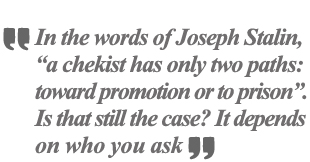 with reference to three Russian intelligence agencies, all of which trace their origins to the Soviet-era Cheka —namely the Foreign Intelligence Service (SVR), the Federal Security Service (FSB), and the Federal Protective Service (FSO).

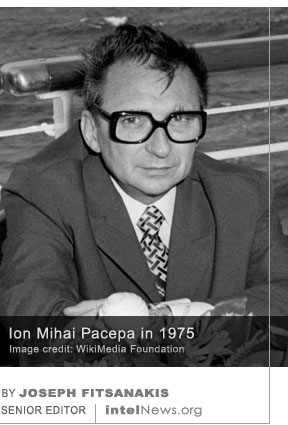 ION MIHAI PACEPA, WHO defected to the West as acting head of the Romanian intelligence service, making him the Cold War’s highest-ranking defector from the Soviet Bloc , has reportedly died in the United States of COVID-19. There has been no official announcement of Pacepa’s passing. However, a number of American and Romanian news outlets have
  A NORTH KOREAN ACTING ambassador, who is believed to be the son of one of the most senior officials of the ruling Workers’ Party of Korea (WPK), reportedly defected with his family to South Korea, according to sources. Two South Korean news outlets, the Yonhap News Agency and the Maeil Business Newspaper, reported the alleged defection on Monday. They both cited sources in the South Korean government.
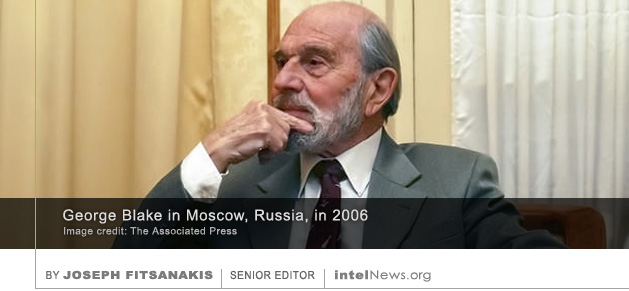 GEORGE BLAKE, A DUTCH-born British intelligence officer, whose espionage for the Soviet Union gained him notoriety in the West and hero status in Moscow, has died aged 98. His death was
  A SYRIAN INTELLIGENCE OFFICIAL, who was denied political asylum in France due to claims he committed serious war crimes, received protection from Austria with assistance from Israel, according to a report. This was
 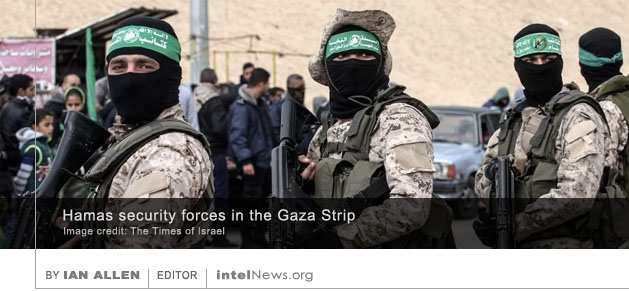 • Analysis: The outstanding issue of the Libyan intelligence services. The post of Chief of the Libyan Intelligence Service of Tripoli’s Government of National Accord (GNA) is still vacant. Therefore, this is an optimal situation for the Head of Tripoli’s government, who is currently pro tempore Director of the GNA agencies, while the struggle for the next Intelligence Service director is
 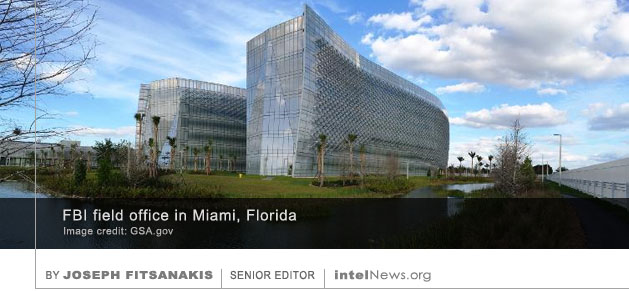 The United States Federal Bureau of Investigation has arrested a Mexican man, who is accused of spying in the city of Miami on behalf of the Russian government. Local media reports suggest that the target of the man’s spying was a Russian defector who gave American authorities information about Russian espionage activities on US soil.
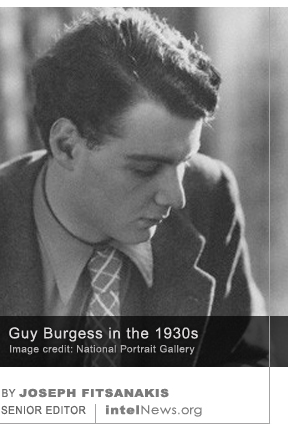 The intelligence service of Russia has openly honored two British members of the so-called Cambridge Five spy ring, who caused great controversy during the Cold War by defecting to Moscow. The intelligence services of the Soviet Union recruited five Enlishmen, H.A.R. ‘Kim’ Philby, John Cairncross, Donald Maclean, Anthony Blunt, as well as an unnamed fifth person, to spy for them in the 1930s. All five were recruited while they were promising young students at Britain’s elite Cambridge University, and entered the diplomatic and security services in order to supply Moscow with classified information about Britain and its allies.
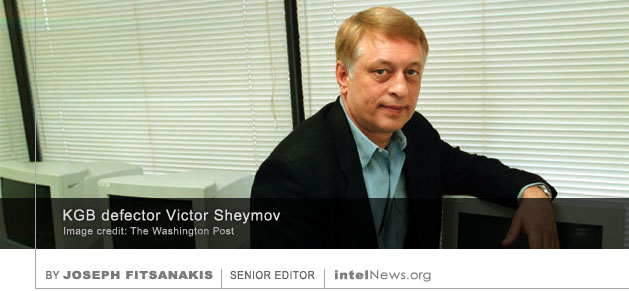 Victor Ivanovich Sheymov, who is often referred to as one of the most important intelligence defectors of the Cold War, has reportedly died in the American state of Virginia. He was one of the most senior officials in the Soviet Union’s Committee for State Security (KGB) to ever defect to the West, and revealed important KGB secrets to the United States.






 intelNews.org
Death of Soviet defector Gordievsky not seen as suspicious, British police say
March 24, 2025 by Joseph Fitsanakis 8 Comments
By 1974, Gordievsky had established contact with Danish and British intelligence and was regularly providing information to Britain’s Secret Intelligence Service (MI6). After 1982, when Gordievsky was posted to the Soviet embassy in London, MI6 deliberately subverted his superiors at the embassy by expelling them. This effectively enabled Gordievsky to take their place and rise to the position of resident-designate of the KGB station in London.
Intelligence historians credit Gordievsky’s intelligence with having shaped the strategic thinking of British and American decision-makers in relation to the Soviet Union. Crucially, Gordievsky’s warnings to MI6 that the Kremlin was genuinely concerned about a possible nuclear attack by the West prompted British and American leaders to temper their public rhetoric against the Soviet Union in the mid-1980s. Some even credit Gordievsky with having helped the West avoid a nuclear confrontation with the Soviet Union.
In 1985, while undergoing interrogation by the Soviet authorities, Gordievsky was smuggled out of Russia by British intelligence, hidden inside a car that made its way to Finnish territory. He was subsequently sentenced in absentia to death for treason against the Soviet Union. In 1991, following an agreement between British and Soviet authorities, Gordievsky’s wife and daughters were allowed to join him in England.
According to Surrey Police, officers were called to a residential address in the city of Godalming on Tuesday March 4, where they found 86-year-old Gordievsky’s body, surrounded by members of his family. Godalming is a small market town in southeastern England, located around 30 miles from London. Surrey Police noted in a statement that the investigation into Gordievsky’s death was led by counterterrorism officers. However, his death was “not being treated as suspicious”.
Gordievsky spent nearly 40 hours in a coma in 2007, from which he eventually recovered. He subsequently claimed that he had been poisoned after taking sleeping pills tainted with a lethal toxin, which had been supplied to him by a man he referred to as a “business associate” with a Russian background.
► Author: Joseph Fitsanakis | Date: 24 March 2025 | Permalink
Filed under Expert news and commentary on intelligence, espionage, spies and spying Tagged with Cold War, defectors, KGB, MI6, Oleg Gordievsky, UK