US charges 49 Russian diplomats with fraud, says some were spies

Russian consulate in NYBy JOSEPH FITSANAKIS | intelNews.org
The United States has filed charges against dozens of current and former Russian diplomats, accusing them of defrauding American taxpayers of over a million dollars. Meanwhile, sources have told CNN that some of the accused also engaged in espionage against the US. Last week, the US Department of Justice charged 49 Russian citizens with participating in a nine-year fraud scheme, through which they pocketed approximately $1.5 million from Medicaid. Created in 1965, Medicaid is a US government insurance program for persons of all ages whose income and resources are insufficient to pay for health care. Twenty-five of those accused of fraud are current and former Russian diplomats, while 24 are spouses of diplomats. Eleven of them are currently in the US, ten of whom work at the Russian consular mission in New York. The remaining diplomat is stationed at the embassy of Russia in Washington, DC. The members of the fraud ring are accused of falsifying applications for Medicaid benefits by systematically under-reporting or completely concealing their incomes. While receiving thousands of dollars in benefits from the American government, the diplomats and their spouses lived a frivolous lifestyle, purchasing luxury goods in some of America’s most expensive department stores, like Tiffany’s and Bloomingdale’s. On Monday, however, CNN’s Security Clearance blog reported that some of the 49 Russian diplomats involved in the fraud scheme are also believed to have engaged in espionage against the United States. The spies were in fact investigated “for quite some time” by Federal Bureau of Investigation counterintelligence agents in Washington and New York, said CNN. At the end, however, federal prosecutors decided they had insufficient evidence to file espionage charges, and passed the case on to the Department of Justice, which brought fraud charges against the Russians. Read more of this post

US surveillance or Merkel’s phone prompts angry German reaction

Philipp Rösler and Angela MerkelBy JOSEPH FITSANAKIS | intelNews.org
News of an invasive intelligence-gathering operation by the United States, which allegedly targeted the official communications of German chancellor Angela Merkel, has prompted angry responses from the European Union. The news prompted the French government to request that US surveillance of European heads of state be discussed during an upcoming EU summit, while The New York Times warned yesterday that “invasive American intelligence gathering” against Europe could “severely damage […] decades of hard-won trans-Atlantic trust”. The latest row between Washington and Brussels was sparked by a report aired on ARD, Germany’s state television station. It said that the National Security Agency (NSA), America’s foremost communications interception agency, had monitored the official cellular telephone of German Chancellor Angela Merkel. A spokesperson for the German government told journalists yesterday that the German leader had “angrily” called US President Barack Obama and demanded assurances that her communications were “not the target of an American intelligence tap”. The German leader reportedly told Mr. Obama that there should be “no such surveillance of the communications of a head of government” belonging to a “friend and partner of the US”. The Times reported that Washington’s responded by assuring Chancellor Merkel that her communications were “not the target of current surveillance and would not be in the future”. But the White House is said to have refused to enter into a discussion of past interception activities. Mrs. Merkel’s telephone call was the second time in less than two days that Mr. Obama had to provide assurances of privacy to a European head of state. Read more of this post
News you may have missed #849 (analysis edition)

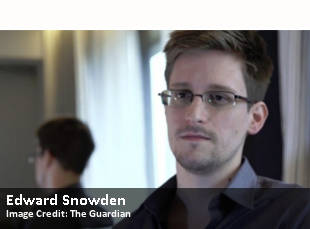
Edward SnowdenBy IAN ALLEN | intelNews.org |
►►Are American spies the next victims of the Internet age? The furor over the NSA’s data collection and surveillance programs has been fierce. But Daniel Prieto, of the Center for Strategic and International Studies, argues that the debate should be focusing on the US intelligence apparatus, transformed in the dozen years since 9/11, can meet the challenges and that the US faces today and into the future. He asks whether the “business model” of US intelligence –how intelligence is gathered, analyzed, and used– is sufficient and sustainable, or whether it needs to evolve to “something different or something more”.
►►What did Edward Snowden get wrong? Everything. Andrew Liepman, senior analyst at RAND Corporation, former career officer at the CIA, and former deputy director of the US National Counterterrorism Center, offers an insider’s view on the Edward Snowden case. He argues that those following the Snowden saga fail to understand that the US government “truly does make strenuous efforts not to violate privacy”. This is not simply because it respects privacy on principle, he says, but also because “it simply doesn’t have the time” to access irrelevant information that is not closely connected to possible espionage or terrorist plots against Americans.
►►Why US diplomatic missions became fortresses. Even during the Cold War, American diplomatic facilities were designed to be welcoming and to project the American values of openness and individual liberty. No more, argues John Campbell, former US Ambassador to Nigeria and Ralph Bunche Senior Fellow for Africa Policy Studies at the Council on Foreign Relations. Nowadays, US diplomatic facilities increasingly showcase “Fortress America”, he argues. And he concludes that, “the need to subordinate so much to security diminishes US soft power by undermining its traditional message of openness and welcome”.

Ex-CIA analyst says North Korea will launch strikes against South

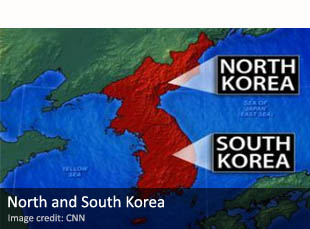
North and South KoreaBy IAN ALLEN | intelNews.org |
A former senior analyst on North Korea at the United States Central Intelligence Agency believes that the communist state will launch limited strikes against the South before moving to de-escalate the ongoing crisis in the Korean peninsula. On March 27, Pyongyang announced it was withdrawing from  the Korean Armistice Agreement, which it signed along with the United Nations and China at the end of the Korean War, in 1953. Shortly afterwards, North Korea closed all border connections with the South and disconnected the direct telephone line linking it with Seoul. It subsequently declared that it would not hesitate to launch a preemptive nuclear strike against South Korea and the United States. Pyongyang heightened its rhetoric in response to Key Resolve/Foal Eagle, a two-month-long military exercise involving US and South Koran armed forces, which includes the deployment of nuclear-armed airplanes and ships. Although some expert observers are worried, few believe that the rhetorical boxing-match between the two Koreas will result in an outbreak of hostilities. But Columbia University Professor Sue Mi Terry, who headed the CIA’s North Korea analysis unit from 2001 to 2008, believes that Pyongyang will launch military strikes against Seoul before de-escalating the tension. Speaking to Wired magazine’s Danger Room blog, Terry noted that the attack will not be nuclear, nor will it involve mass use of military force. Instead, it will be “a relative small attack” that “won’t leave many people dead”, she said. Read more of this post

Spy claims against diplomat cast shadow over Anglo-Russian relations

Denis KeefeBy JOSEPH FITSANAKIS | intelNews.org |
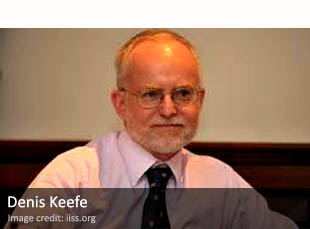
Widespread allegations of espionage against Britain’s deputy ambassador to Russia threaten to derail the ongoing diplomatic rapprochement between Russia and the United Kingdom, according to a leading British newspaper. Painstaking efforts to rebuild Anglo-Russian relations, which crumbled after the 2006 assassination of Russian defector Alexander Litvinenko in London, are scheduled to culminate later this week, when senior Russian cabinet officials will be visiting London for a “strategic dialogue” with their British counterparts. But British newspaper The Sunday Telegraph reports that Whitehall is increasingly annoyed by persistent attacks in the Russian media against Denis Keefe, the UK’s deputy ambassador to Moscow. Keefe, a career diplomat with over 30 years in the Foreign Office, much of it during the Cold War, is a Cambridge University graduate who speaks six languages, including fluent Russian. Prior to arriving in Moscow, he served as British ambassador to Georgia, where he was stationed during the 2008 Russia-Georgia war. Almost as soon as he arrived in Russia, Keefe found himself at the center of persistent allegations in the Russian media that he is “an undercover spy, with his diplomatic position serving as a smokescreen”. Several Russian news reports have indirectly accused him of contacting dissident groups inside Russia in an effort to undermine the government of Russian President Vladimir Putin. The Telegraph, which published for the first time an account of the Russian media claims in the West, said that Russian reporters appear to hound Keefe every time he makes a public appearance in the country. In one recent instance, two journalists asked him whether he was “a spy for MI6”, Britain’s primary external intelligence agency, insisting that he give a “straightforward answer to this question”. Keefe reportedly responded that this was “not a serious question” and had “nothing to do” with him. Read more of this post

News you may have missed #809 (Obama-Iran edition)

Iran and its regionBy IAN ALLEN | intelNews.org |
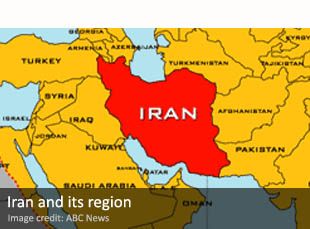
►►Will re-elected Obama take a new line on Iran? Barack Obama returns to office after an election campaign in which Iran’s nuclear program often dominated foreign-policy debates. Mitt Romney frequently accused him of taking too soft a line toward Tehran. Now, as Obama begins a second term, the question is how much he has been stung by such criticism. Will Obama retain confidence in his dual strategy of squeezing Iran with economic sanctions while also extending offers of rapprochement? Or will the fact that Iran keeps building centrifuges and enriching uranium despite Obama’s efforts persuade the White House it needs to try something new?
►►Obama’s victory vindicates his Iran policy. President Barack Obama’s re-election victory represents an important vindication of his approach to Iran and its potential nuclear ambitions —and, for the world, a new face of American policy in the Middle East that will relegate the aggressive policies of George W. Bush into the distant past. The election confirmed what polls have clearly shown, that while Americans are deeply concerned about the prospect of an Iranian nuclear weapon, they also view addressing the problem through vigorous diplomatic engagement and sanctions as the most appropriate exercise of American power and leadership.
►►Iranians see reduced risk of war in Obama’s reelection. In Iran, there is a sense of relief these days, as concerns of a military attack by US and Israeli forces over Iran’s nuclear energy program if Mitt Romney were elected, had become widespread. While there continues to be no official response from Iran’s leadership about US election results, Iranian media is still heavily focused on covering American polls. Commenting on one of Iran’s most popular political Web sites, Asriran, one reader wrote, “At least we know we won’t be going to war during the next four years”. And Iran’s state-run English language television channel, Press TV, carried a live and uninterrupted broadcast of President Barack Obama’s acceptance speech.

News you may have missed #808 (Obama-Netanyahu edition)

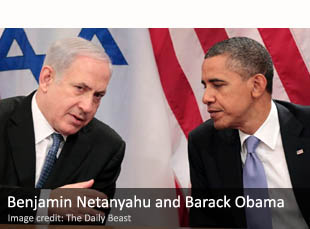
Benjamin Netanyahu and Barack ObamaBy IAN ALLEN | intelNews.org |
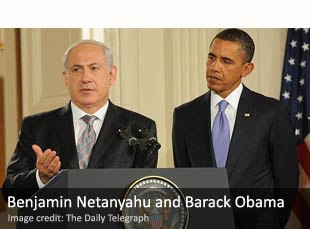
►►The other concession speech: Netanyahu congratulates Obama. At least there was no pretending. In the language of diplomacy, the greeting Israeli Prime Minister Benjamin Netanyahu extended to Barack Obama on the occasion of his re-election was “correct” and nothing more. “Prime Minister Netanyahu congratulates US President Barack Obama on his election victory,” read the public statement issued early Wednesday in Jerusalem. The next word out of Balfour Street, where Netanyahu mulled the returns, was a warning to members of his Likud party to shut up about how they figure the premier might really feel. By then, the deputy speaker of the Knesset had already called Obama “naïve” and vowed Israel would not “surrender” to him.
►►Netanyahu rushes to repair damage with US President. Over the past several years, Prime Minister Benjamin Netanyahu has on several occasions confronted or even undercut US President Barack Obama, taking his message directly to the Israel-friendly United States Congress, challenging Mr. Obama’s appeal to the Arab world, and seeming this fall to support his opponent, Mitt Romney. Mr. Netanyahu woke up Wednesday to find not only that his Republican friend had lost, but also that many Israelis were questioning whether he had risked their collective relationship with Washington.
►►Barack Obama victory spells trouble for Israel’s Netanyahu. Israeli Prime Minister Benjamin Netanyahu faces an even more awkward time with Washington and re-energized critics at home who accused him on Wednesday of backing the loser in the US presidential election. With Iran topping his conservative agenda, Netanyahu will have to contend with a strengthened second-term Democratic president after four years of frosty dealings with Barack Obama and a rift over how to curb Tehran’s nuclear program.

Canadian diplomats spied for the CIA in Cuba, claims new book

Embassy of Canada in Havana, CubaBy JOSEPH FITSANAKIS | intelNews.org |
Several accredited Canadian diplomats were recruited by the United States Central Intelligence Agency to spy on Cuba in the aftermath of the 1962 missile crisis, according to a new book. Authored by Canadian retired diplomat John Graham, the book, entitled Whose Man in Havana? Adventures from the Far Side of Diplomacy, is to be published this week by Penumbra Press. In it, Graham claims that he was among a number of Canadian diplomats stationed in Cuba, who were secretly recruited by the CIA. The US agency had been essentially forced out of the island after Washington and Havana terminated diplomatic relations in 1961, soon after the government of Fidel Castro declared itself a proponent of Marxism. The closure of the US embassy meant that the CIA had no base from which to operate in the Caribbean island. Two years later, in May 1963, US President John F. Kennedy personally asked Canadian Prime Minister Lester Pearson for assistance in intelligence-gathering efforts in Cuba. The Canadian leader consented and, according to Graham, Canadian diplomatic officials actively assisted the CIA until at least 1970. The author states in his book that he himself operated in Cuba for two years, from 1962 until 1964, under the official cover of Political Officer at the Canadian embassy in Havana. Prior to that, he says, he was provided with rudimentary training by the CIA, which consisted of spending “just a few days” at the Agency’s headquarters in Langley, VA. He was then tasked with conducting physical surveillance of Soviet military bases on Cuba and, if possible, identifying weapons and electronic security measures, and noting troop movements. Read more of this post

Belgium suspends senior diplomat on suspicion of spying for Russia

Belgian embassy in CopenhagenBy JOSEPH FITSANAKIS | intelNews.org |
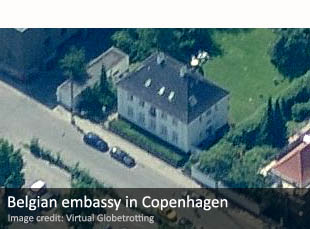
The Belgian government has admitted suspending one of its senior diplomats following allegations in the press that he had spied for the Soviet Union and Russia for over two decades. According to Flemish-language Belgian magazine MO, the diplomat, identified only as “O.G.”, has been “suspended in the interest of the [Belgian diplomatic] service” and is currently under investigation by the Office of the Federal Prosecutor. Citing “sources in the Belgian State Security Service”, the SV/SE, the article said the subject was stationed at the Belgian embassy in Danish capital Copenhagen when he was recalled to Brussels late last year. The man is said to have spent nearly three decades as an employee of the Belgian Ministry of Foreign Affairs, having served in several Belgian embassies and consulates in Japan, India, Algeria, Nigeria, Portugal, and the United States, prior to arriving in Denmark. However, according to the MO article, he was accosted by the Soviet KGB in the late 1980s, shortly after he arrived at the Belgian embassy in Tokyo, Japan, for his first-ever diplomatic posting. Since that time, said the magazine, “O.G.” has spied for the KGB and its successor, the SVR, having stayed in contact with “several different Russian handlers”. Prior to 2011, when he ceased contact with Russian intelligence, the Belgian diplomat was allegedly tasked with providing the FSB with information that could be used to concoct false identities belonging to deceased Belgian citizens. The Russians would then use these identities to supply their intelligence operatives with high-quality Belgian identity papers and travel documentation. Late last week, another Belgian publication, The EU Observer, contacted the Belgian Foreign Ministry to inquire about “O.G.”. A Ministry spokesperson told the paper: “we can confirm that an official from our ministry was suspended from his functions a bit over one year ago, following indications of a security breach”. Read more of this post

Israeli PM had ‘sharp exchange’ with US Ambassador over Iran

Benjamin Netanyahu and Barack ObamaBy JOSEPH FITSANAKIS | intelNews.org |
A United States Congressman, who chairs the US House of Representatives Intelligence Committee, says he witnessed a “sharp exchange” between the Israeli Prime Minister and the American Ambassador to Israel, over the Iranian nuclear program.  Earlier this week we reported that Representative Mike Rogers (R-MI), who visited Israel in an official capacity last week, said that he did not believe Israel would attack Iran before the US Presidential elections in November. But in a radio interview with the Detroit-based WJR station on Thursday, Rogers said he thought Israeli leaders were “at wits’ end” over what he described as indecisiveness by the Barack Obama administration in responding to the Iranian nuclear program. The Republican politician said that the meeting he attended at the Israeli Prime Minister’s office was supposed to be a “discussion on intelligence and technical issues”. But it quickly “spun out of control”, he said, when the Israeli leader allegedly criticized the US Ambassador to the country, Dan Shapiro, over the US government’s perceived unwillingness to go beyond imposing diplomatic sanctions on Iran. Rogers described the situation as “a very tense […], very sharp exchange” between the two men, which revealed “elevated concerns on behalf of the Israelis” about the unfolding Iranian nuclear stalemate. Responding to a question from the interviewer, Rogers added that he did not think he had ever witnessed “such a high-level confrontation” between a representative of the American government and a foreign official. Read more of this post

Turkey expelled Dutch spy posing as diplomat, says newspaper

AIVD headquarters in AmsterdamBy JOSEPH FITSANAKIS | intelNews.org |
The government of Turkey secretly deported a Dutch intelligence officer posing as a diplomat, according to a leading Dutch newspaper. According to Amsterdam-based De Volkskrant, the unnamed Dutch spy held a diplomatic post at the embassy of the Netherlands in Turkish capital Ankara. In reality, however, he was an intelligence officer in the General Intelligence and Security Service (AIVD), Holland’s domestic intelligence agency. He was quietly expelled last year, says the paper, and is currently serving at another Dutch embassy in the Middle East. De Volkskrant notes that the reason why the Turkish government decided to expel the AIVD officer remains unclear. The paper quotes one unnamed member of the Dutch Ministry of Foreign Affairs who, when questioned about the expulsion, said simply: “sorry but that’s a no go zone […]; I love my career and my family”. However, the article hints that the intelligence spat may have been sparked by differences between Ankara and Amsterdam over Turkey’s Kurdish minority and its nationalist organizations, including the Kurdistan Workers Party (PKK). Founded in the 1970s, the PKK leads Kurdish secessionist aspirations for a Kurdish homeland incorporating parts of Turkey’s far-eastern Anatolia region, as well as parts of Iraq and Syria. According to De Volkskrant, in 2006 the AIVD stationed for the first time a liaison officer at the Dutch embassy in Ankara, whose mission was to collaborate with Turkey’s MİT intelligence service in collecting intelligence on Kurdish secessionist groups. However, the collaboration appears to have turned sour after Turkey accused the Dutch government of allowing many Kurdish activists, which it accuses of inciting terrorism, to claim political asylum in Holland. Moreover, Ankara has accused Dutch authorities of turning a blind eye to PKK recruiting and fundraising operations in Holland, organized by the sizeable Kurdish expatriate community in the country. Read more of this post

Newspaper reveals name of Russian ‘spy’ expelled from Britain

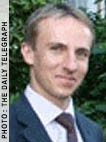
Mikhail Repin

Mikhail Repin

By JOSEPH FITSANAKIS | intelNews.org |
In December of 2010, the British government quietly ordered the expulsion of a diplomat from the Russian embassy in London, whom it accused of “activities incompatible with his diplomatic status” —technical terminology implying espionage. Moscow quickly responded with an expulsion of a British diplomat stationed in the Russian capital. The tit-for-tat incident saw no publicity, and neither man was named, as is customary in such cases. But, in its Saturday edition, British newspaper The Daily Telegraph identified the expelled Russian diplomat as Mikhail Viktorovich Repin, Third Secretary in the Political Section at the Russian embassy in London. The paper said that Repin, a fluent English speaker, was a junior officer of the political directorate of the SVR, Russia’s Foreign Intelligence Service, operating under standard diplomatic cover. Repin arrived in London in late 2007, shortly after the British government expelled four Russian diplomats in connection with the fatal poisoning of former KGB officer Alexander Litvinenko, who had defected to Britain. A “tall, suave, urbane young man”, “Michael”, as he identified himself, quickly became a permanent fixture on the embassy reception circuit and the various events hosted by London-based organizations and think tanks. He specifically joined —and regularly attended meetings of— the Royal United Services Institute, the International Institute of Strategic Studies, and Chatham House —formerly known as the Royal Institute of International Affairs. Most people that met him in those gatherings took him for “a fast-track civil servant, defense industry high flier or political adviser”, says The Telegraph. Read more of this post

News you may have missed #618

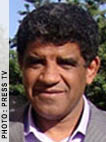
Abdullah al-Senoussi

Al-Senussi

►►US Congressman urges expulsion of ‘Iranian spies’ at the UN. New York Congressman Peter King says the US should kick out Iranian officials at the UN in New York and in Washington because many of them are spies. Speaking at a hearing Wednesday, the Democrat said such a move would send a clear signal after the recent alleged Iranian plot to assassinate the Saudi ambassador in Washington.
►►Colombia’s intelligence chief denies knowledge of illegal wiretapping. Felipe Muñoz, the director of Colombia’s intelligence agency DAS has denied knowledge of illegal interception of unionists’ emails and phone calls by DAS employees, following the announcement that the Inspector General’s Office will be investigating these allegations. According to the allegations, Muñoz and other leading DAS officials were aware of the illegal interception.
►►Gaddafi intelligence chief now in Niger. Moammar Gadhafi’s intelligence chief, Abdullah al-Senussi (pictured), who is wanted by the International Criminal Court, has slipped into the desert nation of Niger and is hiding in the expanse of dunes at the Niger-Algeria border, a Niger presidential adviser said last week. Meanwhile, Gaddafi’s former spy chief, Moussa Koussa, has denied claims made in a BBC documentary that he tortured prisoners.

News you may have missed #606

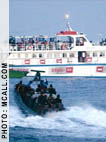
Gaza Freedom Flotilla raid

2010 Flotilla raid

►►N. Korea planned to trade nukes for full ties with US. North Korea in 2008 indicated it would retain its nuclear bombs until the end of the six-party talks as a final bargaining chip for attaining full diplomatic relations with the United States, according to US diplomatic cables leaked recently by the anti-secrecy group WikiLeaks.
►►Judge refuses to sanction CIA for destroying torture tapes. A federal judge won’t hold the CIA in contempt for destroying videotapes of detainee interrogations that included the use of a torture technique known as waterboarding, ruling instead that the spy agency merely committed “transgressions” for its failure to abide by his court order. The Obama administration has kept its promise to the CIA.
►►Turkey says NATO members will not share intelligence with Israel. Turkey has says it is certain that NATO member states will keep their promise of not sharing the Alliance’s intelligence within with Israel. Turkish-Israeli relations badly damaged last year, after Israeli naval commandos stormed a Turkish ship carrying humanitarian aid to Gaza to breach the naval blockade, killing nine Turkish civilians.

Germany releases Mongolian spy master wanted for abduction, torture

Bat Khurts

Bat Khurts

By JOSEPH FITSANAKIS | intelNews.org |
On May 15, 2003, Mongolian refugee and political-asylum seeker Enkhbat Damiran was kidnapped outside a McDonald’s restaurant in Le Havre, France. According to Amnesty International, Damiran was apprehended by a team of officers of the General Intelligence Agency of Mongolia (GIAM), who kicked him, drugged him and beat him with electric batons, before ushering him to the Mongolian embassy. From there, Damiran was illegally smuggled into Germany, where he stayed for a few days, before being transported to Mongolia, through Belgium. Once back in his homeland, Damiran effectively ‘disappeared’ in the custody of GIAM, where he was allegedly subjected to systematic torture by his captors. The latter believe him to be connected with the 1998 assassination of Zorig Sanjaasürengiin, Mongolia’s former Minister of Infrastructure. Following complaints about the abduction from the European Union, the Mongolian government apologized to the governments of France, Germany and Belgium. But Damiran’s abduction has continued to be at the root of a diplomatic rift between Europe and Mongolia, which has widened in recent years. Things became even more heated in September 2010, when British intelligence, acting on a Europe-wide arrest warrant, captured Bat Khurts, former Director of GIAM, who is believed to be responsible for Damiran’s abduction and torture. Khurts was arrested in London, after being lured there in a carefully planned and executed intelligence operation. This past July, the British government decided to extradite Khurts to Germany, where was scheduled to be tried on abduction charges on October 24. So it was a bit of a surprise to say the least, when, yesterday, the Mongolian former spymaster was unexpectedly released by German authorities, after having all charges against him dropped. Read more of this post