News you may have missed #642

Predator drone

Predator drone

►►Australia concerned China using civilian satellites to spy. Concerns that China may use civilian satellite tracking stations to monitor Australian military operations have been dismissed by the Swedish Space Corporation. The company owns and operates two satellite tracking stations 400 km north of the West Australian capital, Perth. One was used by the China Satellite Launch Company last month in China’s first space docking operation.
►►Did Iran capture US stealth drone intact? For the second time this year, the Iranian government is claiming it forced down a stealthy US Air Force spy drone. Only this time, it says it bagged the RQ-170 “with little damage” by jamming its control signal —a potentially worrying development for American forces heavily reliant on remote-controlled aircraft. A US official, who asked not to be named, told Reuters that “there is absolutely no indication up to this point that Iranians shot down this drone”.
►►Canadian Mounties spied on native protest groups. Canada’s federal government created a vast surveillance network in early 2007 to monitor protests by First Nations, including those that would attract national attention or target “critical infrastructure” like highways, railways and pipelines, according to RCMP documents. The RCMP intelligence unit reported weekly to approximately 450 recipients in law enforcement, government, and unnamed “industry partners” in the energy and private sector. The news follows revelations last month of the RCMP’s largest-ever domestic intelligence operation, aimed against G8 and G20 protesters.

Analysis: India’s spies keep tabs on political opponents, not terrorism

IB seal

IB seal

By JOSEPH FITSANAKIS | intelNews.org |
She is America’s rising ally in South Asia and is widely regarded as the world’s largest democracy. But India’s political system is highly chaotic and often repressive. This is aptly reflected in the operations of the Intelligence Bureau, India’s foremost domestic intelligence agency. One would think that the IB has its hands full with India’s countless domestic security concerns, which include increasingly popular and active Maoist insurgents, as well as mounting religious and political tensions in the predominantly Muslim states of Jammu and Kashmir, located in the country’s north. But one of India’s most respected English-language newspapers, The Hindu, cites “highly placed intelligence sources” who allege that most of the IB’s intelligence collection activities are targeted against the Indian government’s political opponents, not terrorism. According to the unnamed sources, “less than a third of the IB’s estimated 25,000-strong manpower [sic] is dedicated to what might be described as national security tasks”. Conversely, over two-thirds of the organization’s staff is reportedly tasked with “providing the government raw information and assessments on its increasingly bleak political prospects”, claims the paper. Examples of political policing by the IB include monitoring public meetings led by Rahul Gandhi, parliamentarian and leader of the National Congress, which is India’s main political opposition group. Another target of the IB’s alleged political policing campaign is anti-corruption activist Anna Hazare, who has become internationally known for spearheading popular protests against government sleaze in New Delhi and elsewhere. According to The Hindu, intelligence on political figures is collected by the IB’s state-of-the-art communications interception systems, which were purchased from Western hardware manufacturers following the sophisticated 2009 Mumbai Attacks by the Pakistani militant group Lashkar-e-Taiba. Read more of this post
News you may have missed #637

Dmitri Bystrolyotov

D.A. Bystrolyotov

►►South African spy boss to quit. Director General of the State Security Agency Jeff Maqetuka, who has been entangled in a never-ending war with Minister Siyabonga Cwele, is expected to step down this week, according to South Africa’s Sunday Independent. The paper claims that that plans are afoot to expedite Maqetuka’s departure from the country’s intelligence infrastructure by placing him on summer leave and then making sure he would not return to work in 2012.
►►Slovakian defense minister resigns over wiretap scandal. The interception of journalists’ telephone calls by the Slovakian Defense Ministry’s counterintelligence arm has cost the country’s Defense Minister, Lubomír Galko, his job. The scandal involved Slovakia’s Military Defense Intelligence (VOS). It has also emerged that the VOS operation involved wiretapping of the head of TV news channel TA3 and two senior Defense Ministry employees, according to leaked documents obtained by Slovak media outlets.
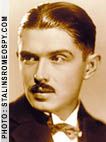
►►Book on Soviet spy Dmitri Bystrolyotov. Excerpt from Emil Draitser’s book Stalin’s Romeo Spy: The Remarkable Rise and Fall of the KGB Most Daring Operative (Northwestern University Press, 2010), about one of the 20th century’s most outstanding undercover operatives. Bystrolyotov acted in Western Europe in the interwar period, recruiting and running several important agents in Great Britain, France, Germany, and Italy.

News you may have missed #636

Lebanon

Lebanon

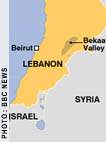
►►Careless codeword may have cost CIA its Lebanon network. Hezbollah have reportedly just rolled up the CIA’s network of spies in Lebanon. If so, it’s because of one of the stupidest, least secure code words in history. According to ABC News, Hezbollah operatives figured out that CIA informants, who had infiltrated the Iranian proxy group, were meeting with their agency handlers at a Beirut Pizza Hut. How could Hezbollah deduce that location? “The CIA used the codeword ‘PIZZA’ when discussing where to meet with the agents,” ABC reports.
►►UK spy chiefs to be publicly questioned for first time. The heads of British intelligence agencies are set to be questioned for the first time in public, under plans to make spies more accountable. The directors of MI5, MI6 and GCHQ will face Parliamentarians on the Intelligence and Security Committee. Although, they have recently begun to make rare public appearances, and deliver speeches, it will be the first time the intelligence agency heads will face public cross-examination over their activities.
►►Documents reveal largest domestic spy operation in Canadian history. Police organizations across Canada co-operated to spy on community organizations and activists in what the Royal Canadian Mounted Police called one of the largest domestic intelligence operations in Canadian history, documents reveal. Information about the extensive police surveillance in advance of last year’s G8 and G20 meetings in southern Ontario comes from evidence presented in the case of 17 people accused of orchestrating street turmoil during the summits.

News you may have missed #631

Tommy Douglas

Tommy Douglas

►►Some spy files on Canadian prominent politician released. Newly declassified records from the early 1960s show that the Royal Canadian Mounted Police spied on Saskatchewan Premier Tommy Douglas (pictured), suspecting him of communist sympathies. Douglas, a popular leftwing politician, led the first social democratic government in North America.
►►Aussie diplomats urged to welcome defectors in 1980s. The Australian government urged its spies and diplomats to encourage foreign officials to defect to Australia and welcome intelligence they might bring with them, according to internal documents from the 1980s, released this week. The directives noted that applications from defectors were not expected to be numerous “but failure on our part to handle them deftly could result in the loss of intelligence relevant to Australia’s security and other interests”. One observer notes that the 1980s policy towards defectors still applies today in Australia’s diplomatic community.
►►Iran arrests two Kuwaitis on suspicion of espionage. Iran’s semiofficial Fars news agency says Iranian security has detained two Kuwaiti citizens in southwestern Iran for suspected espionage activities. Fars quoted Bahram Ilkhaszadeh, governor of Abadan, a town close to Kuwait, as saying that Iran’s security agents detained the two on possession of “spying equipment”. Kuwait has denied the charges.

News you may have missed #618

Abdullah al-Senoussi

Al-Senussi

►►US Congressman urges expulsion of ‘Iranian spies’ at the UN. New York Congressman Peter King says the US should kick out Iranian officials at the UN in New York and in Washington because many of them are spies. Speaking at a hearing Wednesday, the Democrat said such a move would send a clear signal after the recent alleged Iranian plot to assassinate the Saudi ambassador in Washington.
►►Colombia’s intelligence chief denies knowledge of illegal wiretapping. Felipe Muñoz, the director of Colombia’s intelligence agency DAS has denied knowledge of illegal interception of unionists’ emails and phone calls by DAS employees, following the announcement that the Inspector General’s Office will be investigating these allegations. According to the allegations, Muñoz and other leading DAS officials were aware of the illegal interception.
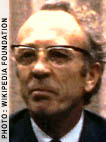
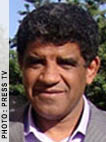
►►Gaddafi intelligence chief now in Niger. Moammar Gadhafi’s intelligence chief, Abdullah al-Senussi (pictured), who is wanted by the International Criminal Court, has slipped into the desert nation of Niger and is hiding in the expanse of dunes at the Niger-Algeria border, a Niger presidential adviser said last week. Meanwhile, Gaddafi’s former spy chief, Moussa Koussa, has denied claims made in a BBC documentary that he tortured prisoners.

News you may have missed #612 (analysis edition)

Cevat Ones

Cevat Ones

►►What is a senior CIA clandestine officer doing at NYPD? Three months ago, one of the CIA’s most experienced clandestine operatives started work inside the New York Police Department. His title is special assistant to the deputy commissioner of intelligence. On that much, everyone agrees. Exactly what he’s doing there, however, is much less clear.
►►Iranian plot shows even super spies have bad days. The alleged Iranian plot to assassinate the Saudi ambassador to the United States may have revealed the biggest secret of all –intelligence agencies mess up and do not always live up to the James Bond ideal.
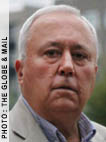
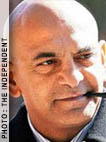
►►Former spy makes plea for peace in Turkey. Cevat Ones, former deputy chief of MİT, Turkey’s leading spy agency, speaks candidly to Canada’s Globe & Mail newspaper about the state of Turkey’s internal security and foreign policy.

News you may have missed #605

Hamid Karzai

Hamid Karzai

►►French intelligence ‘spied on Socialist politician’. Hand-picked” French intelligence agents allegedly spied on the private life of François Hollande, the Socialist whom polls predict is best-placed to beat Nicolas Sarkozy in next year’s presidential elections. They are also said to have spied on Hollande’s partner, Valérie Trierweiler –-potentially France’s future first lady.
►►US to release Cuban spy under supervision. Rene Gonzalez, the first of five Cubans imprisoned in the United States as spies since 1998 will regain his freedom Friday but won’t be able to go home for three more years because of a court order requiring he remain under US supervision.
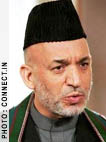
►►Afghan intelligence says it stopped plot to kill Karzai. A plot to kill Afghan President Hamid Karzai has been foiled by Afghan intelligence agents in Kabul who arrested six men with links to al-Qaeda and the Haqqani network. The discovery of the plot comes just two days before the 10th anniversary of the invasion of Afghanistan in retaliation for the September 11 attacks in the US and, had it been successful, would have plunged the country further into chaos.

South African spy chiefs fired as political turmoil deepens

Moe Shaik

Moe Shaik

By JOSEPH FITSANAKIS | intelNews.org |
The heads of South Africa’s three major intelligence departments have become the latest casualties in a major political battle waging within the ruling African National Congress (ANC), which threatens to engulf the entire country. Several South African news outlets report that Siyabonga Cwele, the country’s Minister for State Security, summarily fired the three senior intelligence officials late last week, after a major row over providing government protection for his wife, who has been convicted of drugs smuggling. The three officials, who have stepped down, are Jeff Maqetuka, Director of the State Security Agency (SSA), and Gibson Njenje and Moe Shaik, respective heads of the SSA’s domestic and external intelligence services. According to press reports, the three officials unanimously objected to Cwele’s order to provide his wife Sheryl with secret service protection during her May 2011 trial for drugs smuggling, in which she was sentenced to 12 years in prison. But there are signs that Sheryl Cwele’s case was simply the last drop, which came on top a series of turf wars and bureaucratic conflicts between various factions of the ANC. Specifically, there is speculation in South African intelligence circles that Gibson Njenje resigned partly in protest against so-called “unauthorized operations”, namely telecommunications and physical surveillance of ANC cabinet ministers. The surveillance operations are reportedly being conducted in preparation for a showdown between rival ANC factions in December of 2013. At that time, ANC President Jacob Zuma is expected to face off the party’s Youth League leader, Julius Malema. The latter, favored by an increasingly disaffected segment of the ANC’s working class supporters, is seen as representing the radical populist wing of the party. Read more of this post

News you may have missed #584

Nicky Hager

Nicky Hager

►►Billing dispute reveals details of secret CIA flights. On August 12, 2003, a conracted Gulfstream IV aircraft carrying six passengers took off from Dulles International Airport for Bangkok. When it returned four days later, it carried Indonesian terrorist Riduan Isamuddin, who had been captured in Thailand and would spend the next three years in various secret CIA prisons. The Gulfstream IV’s itinerary, as well as the $339,228 price tag for the journey, are among the details of shadowy CIA flights that have emerged in a New York courthouse, in a billing dispute between contractors. Incidentally, even the airplanes’ owners didn’t always know that the CIA was using them.
►►French admit secret service spied on reporter. French interior minister Claude Guéant has admitted that the secret service spied on investigative reporter Gérard Davet, from the newspaper Le Monde, in order to trace the source of a leak about the so-called “Bettencourt party funding scandal“, which has been a source of embarrassment for President Nicolas Sarkozy’s party.
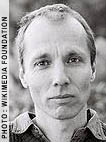
►►NZ let Israeli spies go free in return for passports. Another revelation from Nicky Hager’s book Other People’s Wars (see previous intelNews coverage here). The investigative reporter claims that New Zealand’s Security Intelligence Service released captured Mossad spies Eli Cara and Uriel Zoshe Kelman, in return for Read more of this post

News you may have missed #577

Waihopai base

Waihopai base

►►Interview with Michael Hayden. The former director of the CIA and the NSA gave a lengthy interview in preparation for his keynote speech at the Raleigh Spy Conference. Among other things, he says that he does “not immediately conclude that senior levels of the Pakistani government knew about” Osama bin Laden’s whereabouts.
►►CIA denies helping police spy on NY Muslims. The Central Intelligence Agency is denying a news report that it helped the New York Police Department conduct covert surveillance on Muslims. The agency said suggestions that it engaged in domestic spying were “simply wrong” and that the report “mischaracterized the nature and scope” of the CIA’s support for the New York police.
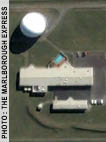
►►Spy base reservoir not a pool after all... A journalist at New Zealand’s Marlborough Express newspaper noticed what looked suspiciously like a swimming pool on a satellite photo (pictured) of the super-secret Waihopai listening base near Blenheim. Do spies go swimming on the base, he asked? It turns out they don’t. According to Government Communications Security Bureau Waihopai station chief Chris Farrow, the landmark is in fact a water reservoir, to be used in case of fire.

News you may have missed #575

IARPA logo

IARPA logo

►►Inquest into death of MI6 spy to go ahead. The inquest into the bizarre death of MI6 and GCHQ officer Gareth Williams will go ahead before Christmas without a jury, according to London-based newspaper The Express. The paper says that “12 spy chiefs will attend [the inquest] to explain the background to the case”.
►►Colombia’s ex-president denies role in spy scandal. Alvaro Uribe has denied, during a 3½-hour appearance before a Colombian congressional committee, that he ordered the country’s domestic intelligence agency to spy on judges, journalists and political foes. More than 20 agents of the DAS intelligence agency have been imprisoned for alleged roles in the spying. Two more have pleaded guilty in exchange for reduced sentences.
►►US spy research firm eyes stock market. IARPA, the US intelligence community’s research arm, plans to introduce a new program to develop tools to help analysts “quickly and accurately assess petabytes of complex anonymized financial data”. According to a conference presentation, the program would help spies “analyze massive amounts of data to spot indicators of market behavior, find relationships between seemingly unrelated transactions across hundreds of global markets, and provide insight into specific events and general financial trends”.

News you may have missed #568

Gareth Williams

Gareth Williams

►►Lebanon intercepts covert arms shipment bound for Syria. It looks like anti-Syrian Lebanese groups, allied with former Lebanese Prime Minister Saad Hariri, are smuggling Kalashnikovs and M-16s across the border to anti-government rebels in Banyas and other Syrian towns. The question is, where are these arms coming from? It is also worth noting that the Syrian army claimed last week that it has detained hundreds of Salafi fighters –including Afghans– with Lebanese documents.
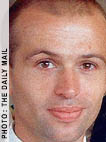
►►Russian embassy cars seen near murdered MI6 officer’s flat. British paper The Daily Mail quotes an unnamed “former KGB agent who fled to London 12 years ago”, who says that he “logged two cars with Russian diplomatic number plates […] parked or driving close” to the central London apartment of MI6 and GCHQ officer Gareth Williams. The unnamed former agent says he noticed the vehicles around the time when Williams is believed to have been murdered in his apartment.
►►Indonesian intel reports on West Papua leaked. Hundreds of intelligence briefs from Indonesia’s elite special forces unit, Kopassus, have been obtained by Australian newspaper The Age. They include a detailed analysis of the separatist movement in oil-rich Western Papua. According to the Australian press, the reports “illustrate the level of paranoia in Jakarta about its hold over the resource-rich region”.

News you may have missed #565 (United States edition)

DHS seal

DHS seal

►►Secret watch-list proposal causes US privacy groups protests. The US Department of Homeland Security (DHS) is planning to duplicate the FBI’s Terrorist Screening Database to expand an extensive database called Watchlist Service. The proposed database will include names, birthdays, photos and biometrics of targeted individuals. But the DHS has proposed to exempt the database from Privacy Act provisions, which means that a person can never know if they are on it.
►►US blacklists Syrian banks over WMD ties. The Obama administration unveiled punitive measures on Wednesday against two Syrian financial institutions for their alleged ties to nuclear proliferation in Syria and North Korea. The government-run Commercial Bank of Syria and a subsidiary, the Syrian-Lebanese Commercial Bank, are now prohibited from engaging in transactions with US individuals and from accessing any assets under US control. The US Department of the Treasury alleges that the banks have carried out transactions on behalf of the Scientific Studies and Research Center in Syria and the Tanchon Commercial Bank in North Korea, both of which the US blacklisted several years ago for supporting “WMD proliferation activities”.
►►FBI revises surveillance exam after cheating revelations. About a year ago, the US Federal Bureau of Investigation revealed that hundreds of its agents were caught having cheated on an examination about new surveillance guidelines (known as Read more of this post

News you may have missed #555

IARPA logo

IARPA logo

►►US spy agencies want to use photos to trace people. In announcement for its new Finder research program, IARPA, the US intelligence community’s research arm, says that it is looking for ways to “geolocate images” by extracting data and metadata from the images themselves and using this to make guesses about where they were taken.
►►Norway to reassess domestic intelligence gathering. Norway’s main domestic intelligence agency, the Police Security Service (PST), is facing questions over whether its focus on Islamic radicalism caused it to miss a rising threat from far-right extremists, such as Anders Behring Breivik, who killed 77 people on July 22. But PST Director Janne Kristiansen says it would have been hard to stop Breivik even if more attention had been focused on far-right groups.
►►CIA pulls second station chief from Pakistan. For the second time in seven months, the CIA is replacing its station chief in the Pakistani capital of Islamabad, citing “medical reasons” for the move. Last time this happened, Read more of this post