Revealed: British prime minister was not told about fourth Cambridge spy ring member

Anthony BluntThe Prime Minister of Britain, Sir Alec Douglas-Home, was kept in the dark by his own home secretary about the discovery of a fourth member of the infamous Cambridge Spy Ring in 1964, according to newly released files. The Cambridge Spies were a group of British diplomats and intelligence officials who worked secretly for the Soviet Union from their student days in the 1930s until the 1960s. They included Guy Burgess, Donald Maclean and H.A.R. “Kim” Philby, all of whom eventually defected to the Soviet Union. In 1964, Sir Anthony Blunt, an art history professor who in 1945 became Surveyor of the King’s Pictures and was knighted in 1954, admitted under interrogation by the British Security Service (MI5) that he had operated as the fourth member of the spy ring.
Despite his allegedly full confession, Blunt was never seriously disciplined for his espionage activities against Britain. In return for revealing his spy activities and naming others who had assisted him, he was granted immunity from prosecution. He was also allowed to remain in his academic post and retained his title of Surveyor of the Queen’s Pictures –effectively the curator of Queen Elizabeth II’s art collection. It wasn’t until 1979 when British Prime Minister Margaret Thatcher revealed in a statement to the British House of Commons that Blunt had been the fourth member of the Cambridge Spy Ring. Minutes after the prime minister’s statement entered the public record, Buckingham Palace (which had been made aware of Blunt’s espionage role back in 1964, but had been asked by Britain’s Interior Ministry to not draw attention to the scandal) stripped him of his 1954 knighthood.

It has now been revealed known that, in the days following her House of Commons statement about Blunt, Prime Minister Thatcher received several letters by Henry Brooke, who was serving as home secretary in 1964, when Blunt’s treachery was discovered. In his letters, Brooke (by then Lord Brooke of Cumnoor) expressed his support for the prime minister’s revelation. But the letters, which were previously classified but were published on Tuesday by Britain’s National Archives, also reveal that Brooke kept Blunt’s 1964 confession hidden from the then Prime Minister Sir Alec Douglas-Home. In his 1979 letter to Thatcher, Brooke states that he did not inform the prime minister in 1964 in his “well-meant effort not to add to [Douglas-Home’s] burdens”. But he adds that “I may, with hindsight, have expressed my discretion wrongly”. By that time, Blunt had voluntarily withdrawn from public life and was rarely heard of. Upon his death in 1984, his unfinished memoir was given to the British Library by the executor of his will, under the stipulation that it be kept sealed for 25 years. It was released to the public in 2009.

Author: Joseph Fitsanakis | Date: 24 July 2018 | Permalink

More spies now in Brussels than Vienna, Austrian intelligence chief says

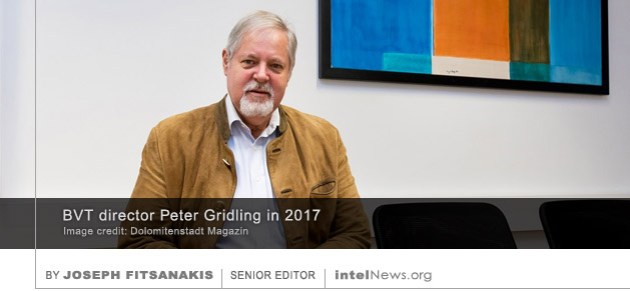
Peter GridlingThe head of Austria’s counterintelligence agency has said that Brussels has now replaced Vienna as Europe’s spy capital. For nearly a decade, this blog has published expert commentary that points to the Austrian capital being the world’s busiest spy den. In 2009, German broadsheet Die Welt explained that Vienna had “the highest density of [foreign intelligence] agents in the world”. The reasons for this are partly historic: during the Cold War, the center of Vienna was located less than an hour’s drive from the Iron Curtain, making it a central location for East-West spy intrigue. Additionally, Austria boasted then, and boasts today, an efficient transportation network that connects it to both Western and Eastern Europe.
Furthermore, Vienna hosts the headquarters of several important international agencies, including the Organization of Petroleum Exporting Countries (OPEC), the International Atomic Energy Agency (IAEA), and the Organization for Security and Co-Operation in Europe (OSCE). This gives dozens of countries the opportunity to station in Vienna large numbers of diplomats, in addition to those who staff their embassies there. Consequently, it is estimated that the Austrian capital today hosts nearly 20,000 foreign diplomats, which is a substantial number for such a small country with a permanent population of less than 9 million. Experts believe that around half of these foreign diplomats are in fact connected to a foreign intelligence agency.

But in a rare public appearance on Thursday, Peter Gridling, head of Austria’s main counterintelligence agency, said that Vienna no longer topped the list of preferred destinations for the world’s spies. Gridling heads the Vienna-based Federal Office for the Protection of the Constitution and Counterterrorism, known as BVT. He was speaking during the official presentation of the BVT’s annual Constitutional Protection Report for 2017, which was held at the headquarters of the Ministry of the Interior. Gridling told reporters that the number of foreign intelligence operatives pretending to be diplomats posted in the Austrian capital remained significant, and that Austria as a whole was still “a favored area of operations” by the world’s intelligence agencies. However, he added that Vienna had now been overtaken by the Belgian capital Brussels as the spy capital of Europe. Gridling said that, according to his agency’s calculations, there was now a greater density of spies in Brussels than in any other European capital.

Gridling thus appears to concur with numerous intelligence experts and practitioners, among them Alain Winants, former Director of Belgium’s State Security Service (SV/SE), who have claimed since 2009 that Brussels is home to more spies than any other city in the world. When asked to specify the number of foreign intelligence operatives that are active in Vienna, Gridling said it was “in the neighborhood of hundreds of people, but certainly fewer than 1,000”. The Austrian counterintelligence chief declined calls to provide further elaboration on the mater.

Author: Joseph Fitsanakis | Date: 29 June 2018 | Permalink

Ukraine, Russia, spied on Dutch investigators of MH17 plane disaster, TV report claims

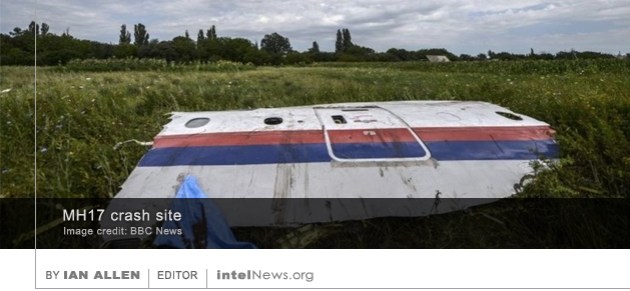
MH17 crashDozens of Dutch security officers, legal experts, diplomats and other civil servants were systematically spied on by Ukrainian and Russian intelligence services while probing the aftermath of the MH17 disaster, according to a report on Dutch television. Malaysia Airlines Flight 17, a scheduled passenger flight from Amsterdam to Kuala Lumpur, was shot down over eastern Ukraine on July 17, 2014. All 283 passengers and 15 crew on board, 196 of them Dutch citizens, were killed. In the aftermath of the disaster, the Dutch Safety Board spearheaded the establishment of the multinational Joint Investigation Team (JIT), which is still engaged in a criminal probe aimed at identifying, arresting and convicting the culprits behind the unprovoked attack on Flight MH17. As part of the JIT, dozens of Dutch officials traveled to Ukraine to initiate the investigation into the plane crash and repatriate victims’ bodies and belongings. Their activities were conducted with the support of the Ukrainian government, which is party to the JIT.
But on Tuesday, Holland’s RTL Niews broadcaster said that members of the Dutch JIT delegation were subjected to systematic and persistent spying by both Ukrainian and Russian government operatives. According to RTL, Dutch investigators found sophisticated eavesdropping devices in their hotel rooms in Ukraine, and believed that their electronic devices had been compromised. Citing “inside sources” from the Dutch government, the broadcaster said that, during their stay in Ukraine, members of the Dutch JIT delegation noticed that the microphones and cameras on their wireless electronic devices would turn on without being prompted. They also noticed that the devices would constantly try to connect to public WiFi networks without being prompted. Upon their return to Holland, Dutch officials had their wireless devices examined by Dutch government security experts. They were told that numerous malware were discovered on the devices.

RTL Niews said that the question of whether valuable information relating to the MH17 investigation was stolen by foreign spies remains unanswered. But it noted that the members of the Dutch JIT delegation were warned about possible espionage by foreign powers prior to traveling to Ukraine. During their stay there, they were not allowed to send messages in unencrypted format and were only permitted to hold sensitive conversations in especially designated rooms inside the Dutch embassy in Kiev. The Dutch government did not respond to questions submitted to it by RTL Niews. But it issued a statement saying that its security experts had briefed and trained the Dutch JIT delegation prior to its trip to Ukraine. Members of the delegation were told that foreign parties would seek to collect intelligence, because the MH17 investigation was taking place in a “conflict area with significant geopolitical interest” for many parties. They were therefore advised to “assume that they were being spied on [and] adjust [their] behavior accordingly” while in Ukraine, the Dutch government’s statement said.

Author: Ian Allen | Date: 28 June 2018 | Permalink

Singapore officials reject rumors of spy devices used at Trump-Kim summit

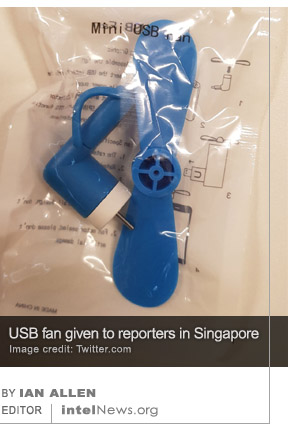
USB fan espionageSingaporean officials have dismissed reports that a promotional item given away for free during the June 12 summit between the leaders of the United States and North Korea contained an espionage device. Over 2500 reporters from nearly every country covered the meeting between US President Donald Trump and North Korean Supreme Leader Kim Jong-un. Upon arriving in Singapore’s Sentosa Island, where the summit took place, journalists were given a free promotional packet that included novelty items such as pens, notepads, a water bottle, and a USB fan. The USB fan consisted of blades connected to a miniature electric motor, which was in turn connected to a USB cable. The cable allowed the device to be powered by a computer or other electronic device with a built-in USB port.
But rumors soon emerged in the media that the free USB fans, which were made in China, contained malware. As soon as the fans were plugged into an electronic device, the malware penetrated its operating system, allowing hackers to access its contents remotely, said the reports. The allegations were first aired on Radio France Internationale, the French government’s international broadcaster. They were then picked up by the BBC, which said that many reporters covering the historic summit had been warned “not to plug [the USB fans] in to their laptops”. According to the reports, the malware installed on the USB fans was able to steal computer files and turn a laptop’s built-in camera and microphone into remotely-controlled eavesdropping devices.

But the government of Singapore has strongly rejected these reports. In a statement issued in English, Singapore’s Ministry of Communications and Information said that the USB fans had been a gift of the Sentosa Development Corporation, a Singapore government body tasked with promoting tourism in Sentosa Island, where the Trump-Kim summit took place. The ministry added that the USB fans had been produced long before Trump and Kim decided to meet in Singapore and that they had been originally manufactured as gifts for tourists visiting the island. The statement issued by the ministry also said that reporters appreciated the fans, given the tropical climate on Sentosa Island, where the temperature reached 33C (91F) on the day of the summit.

Author: Ian Allen | Date:  25 June 2018 | Permalink

Chinese shipbuilding boss gave CIA aircraft carrier secrets, reports claim

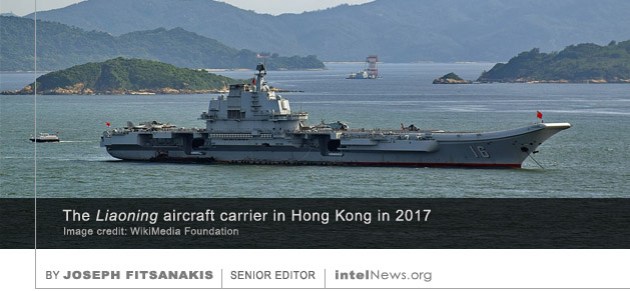
Liaoning aircraft carrier ChinaOne of China’s most senior shipbuilding executives, who has not been seen in public for nearly two weeks, has been charged with giving secrets about China’s aircraft carriers to the United States. Sun Bo, 57, is general manager of the China Shipbuilding Industry Corporation (CSIC), China’s largest state-owned maritime manufacturer, which leads nearly every major shipbuilding project of the Chinese navy. Most notably, Sun headed the decade-long retrofitting of the Liaoning, a Soviet-built aircraft carrier that was commissioned to the Chinese Navy’s Surface Force after the collapse of the Soviet Union.
The ship arrived at the CSIC’s Dalian shipyard in northeastern China in 2002. Work on the vessel was completed in 2012. Today CSIC heads the construction of so-called Type 001A, China’s first home-built aircraft carrier, which is said to be modeled largely on the Liaoning. The company is also spearheading the construction of numerous Chinese Navy frigates, latest-generation destroyers, and numerous other vessels. Earlier this year, it was announced the CSIC would build the Chinese Navy’s first nuclear-powered aircraft carrier.

As the second most senior official of China’s largest and most important shipbuilder, Sun has supervised all of the company’s projects during the past two decades. But Sun effectively disappeared after June 11, when he made his last known public appearance at a CSIC event. On June 17, a brief notice posted on the company’s website stated that Sun had been placed under investigation for “gross violation of laws and [Communist] Party [of China] discipline”. The brief notice said that the probe of Sun’s activities was led by China’s National Supervision Commission and the Communist Party of China’s Central Commissariat for Discipline Inspection, but provided no further details.

It has now been reported by multiple Chinese news websites that Sun is under investigation not simply for graft, but for far more serious activities involving espionage. Specifically, it is claimed that Sun was recruited by the United States Central Intelligence Agency because of his supervisory role in China’s aircraft carrier building programs. He is believed to have provided the CIA with information about the decade-long retrofitting of the Liaoning. More importantly, there are reports that Sun gave the CIA blueprints and other technical specifications of the Type 001A, which is currently under construction at a top-secret facility. The Hong Kong-based English-language news website Asia Times said on Thursday that, given the sensitive nature of the charges against Sun, it is unlikely that the Chinese government would reveal the outcome of the investigation of the CSIC executive.

Author: Joseph Fitsanakis | Date: 22 June 2018 | Permalink

Israel charges former cabinet minister with spying for Iran

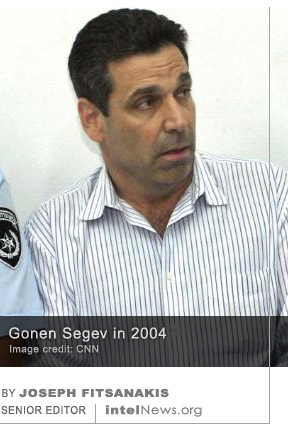
Gonen SegevIsrael has charged Gonen Segev, who served as the Jewish state’s Minister of Energy and Infrastructure, with spying for its archenemy, Iran. Segev, 62, was reportedly detained last month during a trip to Equatorial Guinea following a request by Israeli officials. He was then extradited to Israel and arrested as soon as he arrived in Tel Aviv last month, according to a statement by the Shin Bet, Israel’s domestic security service. On Monday it emerged that Israeli authorities had imposed a gag order on the case, forbidding Israeli media from reporting any information about it. The order appears to have now been lifted.

In 1992, when he was 35, Segev was elected as one of the Knesset’s youngest members, representing the conservative Tzomet party. Initially an opposition Knesset member, Segev eventually left Tzomet and joined a governing coalition with the Labor Party, in which he served as Minister of Energy and Infrastructure. After exiting politics, Segev, who is a medical doctor by training, became a businessman and traveled frequently abroad. But in 2004 he was arrested on a flight from Holland, while reportedly trying to smuggle several thousand ecstasy pills into Israel. He was jailed for five years but was released from prison in 2007, after a commendation for good conduct. Shortly after his release, Segev moved to the Nigerian city of Abuja, where he practiced medicine. It was there, the Shin Bet claims, that he was recruited by Iranian intelligence.

In a statement released on Monday, the Shin Bet said that Segev had admitted being in regular contact with Iranian intelligence agents in Nigeria and other countries around the world. He is reported to have said that he was given a fake passport by his handlers, which he used to visit Iran on two separate occasions in order to hold secret meetings with Iranian intelligence officers. He also traveled to several other countries in order to meet with his Iranian handlers and hand them information about Israel’s energy sector and the location of energy-related security sites in the country. The Shin Bet statement added that Segev introduced his Iranian handlers —who posed as foreign businessmen— to Israeli security officials on several occasions.

It is believed that Segev appeared before a court in Jerusalem on Friday. He was charged with “assisting an enemy in wartime” and with “carrying out espionage against the State of Israel”. The judge also charged him with numerous instances of transmitting classified information to a foreign power.

Author: Joseph Fitsanakis | Date: 19 June 2018 | Permalink

Belgium to probe alleged Spanish espionage against separatist Catalan leader

Carles PuigdemontBelgium will investigate whether Spanish intelligence spied on Carles Puigdemont, the separatist Catalan leader who escaped to Brussels after launching an unsuccessful independence bid last year. Puigdemont, 56, served as president of the Spanish region of Catalonia from January 2016 until October 2017. He was forcibly removed from office by the Spanish government, after he led the government of Catalonia in a unilateral declaration of independence from Spain. As soon as the Catalan Parliament declared that the region was independent, Madrid dissolved it, imposed direct rule on the country’s easternmost province, and declared fresh elections.
Amidst the chaos that ensued, Puigdemont, along with several other leading Catalan separatists, fled to Belgium where he requested political asylum. When it emerged that Puigdemont had fled abroad, Spanish authorities issued a European Arrest Warrant against him, on charges of sedition, rebellion against the state and misusing public funds. Fearing that the Belgian authorities might extradite him to Madrid, Puigdemont soon left for Germany, where he was detained by local police on March 25, 2018. He currently remains in Germany, while German authorities are deciding whether to grant Madrid’s request for his extradition.

Now authorities in Belgium are preparing to launch an investigation into whether Spain’s intelligence services carried out espionage against Puigdemont while he remained on Belgian soil. The investigation will most likely be carried out by the country’s Standing Intelligence Agencies Review Committee. Known broadly as Comité permanent R, the committee is an independent body that oversees the activities of Belgium’s security and intelligence apparatus. The investigation is to be launched as a result of an official parliamentary request submitted by the New Flemish Alliance, Belgium’s largest separatist party, which represents the country’s Dutch-speaking minority. The party has come out in support of Catalan independence and of Puigdemont in particular, and has urged Brussels to grant political asylum to the Catalan separatist leader.

Peter Buysrogge, a leading member of the New Flemish Alliance, said that his party wanted to know whether Spanish intelligence operated in Belgium with or without the knowledge of the Belgian government and intelligence services. He added that his party was especially interested in investigating allegations made in Catalan media that Spanish intelligence operatives followed Puigdemont and even installed a Global Positioning System (GPS) device under his car.

Author: Joseph Fitsanakis | Date: 14 June 2018 | Permalink

France arrests two intelligence officers on charges of spying for China

dgse franceFrance has confirmed the arrest of two French intelligence officers who are accused of spying for the Chinese government. It appears that the two officers were captured and charged in December. However, their arrests were not publicized at the time, because French counterintelligence officials wanted to avoid alerting more members of a possible spy ring, which some say may include up to five French citizens. It was only last Friday, a day after French media published leaked reports of the arrests, that the French government spoke publicly about the case.
France’s Minister of the Armed Forces, Florence Parly, told France’s CNews television on Friday that two French intelligence officers were “accused of extremely serious acts of treason” against the French state. The two officers had been charged with delivering classified information to a foreign power”, she said. Parly added that the spouse of one of the officers was also being investigated for participating in acts of espionage on behalf of a foreign country. When asked to identify the country that the two officers are accused of spying for, the minister refused to respond. But the Agence France Presse news agency cited an anonymous “security source”, who said that the two intelligence officers were being suspected of spying for China and that they had been captured following a sting operation by French counterintelligence officers.

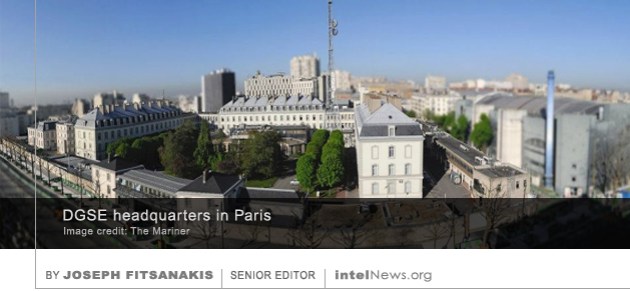
French television station TFI1 said on Friday that both spy suspects are officers in the General Directorate of External Security (DGSE), France’s primary external intelligence agency. The station added that at least one of the two suspects was stationed at the embassy of France in Beijing when French counterintelligence became aware of the alleged espionage. According to some reports, the two suspects had retired from the DGSE by the time they were arrested, but committed their alleged espionage while still in the service of the spy agency. French government officials have refused to provide information about the length of the alleged espionage or the nature of the classified information believed to have been compromised. Additionally, no information is available about whether the two alleged spies were working in cooperation with each other. The BBC asked China last week about the arrests in France, but the Chinese Ministry of Foreign Affairs said it was not aware of the incident.

Author: Joseph Fitsanakis | Date: 28 May 2018 | Research credit: E.W. and P.C.  | Permalink

High-level MI6 spy inside al-Qaeda writes book detailing his work

Aimen Dean, a.k.a. Ramzi

Aimen Dean, a.k.a. Ramzi

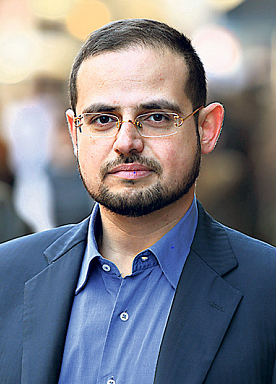
A Saudi-born man, who some refer to as the most valuable British-run spy inside al-Qaeda, has authored a soon-to-be-published book about his experiences. Aimen Dean, known in al-Qaeda circles simply as ‘Ramzi’, became radicalized in the first half of the 1990s in response to the Bosnian War. At that time, he traveled from his home country of Saudi Arabia to Bosnia, where he joined large numbers of foreign Muslim fighters who fought in support of Bosnian-Muslim forces. In subsequent interviews, Dean has said that he continues to view his participation in the Bosnian War as an “ethical and moral” act in defense of a “defenseless population”. Following the end of the Bosnian War, Dean joined many foreign-born fighters who followed al-Qaeda co-founder Osama bin Laden to Afghanistan. While there, he pledged allegiance to bin Laden and gained his trust.

Dean’s task in Afghanistan was to train new al-Qaeda recruits in Islamic theology and history. But he was also tasked with combat duties, which included bomb-making. He witnessed the drastic shift in al-Qaeda’s raison d’être from a group ostensibly fighting to defend Muslims under attack, to a center of a violent campaign against the West. Dean has stated that during his first period in Afghanistan, he sincerely believed that the West was involved in a systematic campaign to destroy Islam and Muslims. Gradually, however, Dean’s views began to conflict with those of al-Qaeda’s leaders. He especially objected to the use of suicide bombers and the deliberate targeting of civilians by al-Qaeda fighters. His disillusionment with al-Qaeda peaked in August of 1998, when the organization targeted the United States embassies in Kenya and Tanzania in coordinated strikes.

During a leave of absence from al-Qaeda’s Afghanistan stronghold, Dean was approached by the United Kingdom’s Secret Intelligence Service, more commonly known as MI6. He says that he quickly agreed to work as a spy for the British agency and did so from 1998 until 2007, when he claims that his cover was blown. Dean has now written a book, co-authored with two CNN reporters, Paul Cruickshank and Tim Lister. Entitled Nine Lives: My Time As MI6’s Top Spy Inside al-Qaeda, the book is due to appear in stores on June 7.

Author: Ian Allen | Date: 25 May 2018 | Permalink

Norwegian retiree jailed in Russia says he was ‘misused’ by Norway spy agency

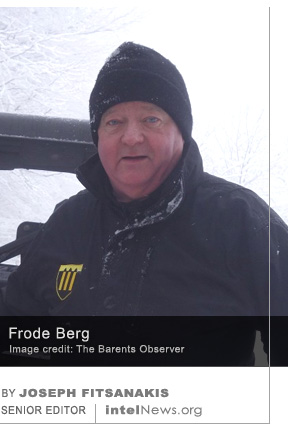
Frode BergA Norwegian retiree, who was arrested in northern Russia late last year on charges of spying, acted as a courier for the Norwegian Intelligence Service (NIS), according to his lawyer. Last December, intelNews reported on the arrest of Frode Berg, 62, from Kirkenes, a small town in Norway’s far north, located near the Russian border. Berg retired in 2014 after nearly 25 years of service in the Office of the Norwegian Border Commissioner, a government agency that operates under Norway’s Ministry of Justice and Public Security. Following his retirement, Berg traveled regularly to Russia and helped organize a number of joint Norwegian-Russian community events, including athletic competitions and art festivals. But he is currently in a Russian jail and faces a long prison sentence if convicted on espionage charges.
On Tuesday, however, The Washington Post said it spoke to Berg’s lawyer, Brynjulf Risnes. On a telephone line from Oslo, Risnes told the paper that his client had come to believe that he had been “misused” by the NIS, and that he said so during a court session in Moscow earlier this year. “We are quite convinced”, said Risnes, “that this is a real Norwegian spy story”. The lawyer told The Post’s Anton Troianovski that his client had met a man named “Jorgen”, who worked for the NIS. He asked Berg to carry some envelopes during his frequent trips to Russia. Berg eventually came to realize that the envelopes contained operational instructions for Norwegian intelligence assets inside Russia, and sometimes money —up to €3,000 at times. He did as he was told “between two and five times”, said Risnes, in full knowledge that he was operating as a courier for the NIS.

However, when Berg began to have second thoughts about his activities, fearing arrest, “Jorgen” pressured him to continue, according to Risnes. At one point, the NIS representative asked Berg: “Don’t you want to be a good Norwegian?”. In doing so, the NIS effectively pressured Berg to continue acting as a courier by dismissing his hesitations as groundless and failed to inform him about the real risks involved in acting as an intelligence courier inside Russia. Risnes told The Post that no charges have yet been filed against Berg by Moscow, and that the 62-year-old retiree’s supporters back in Kirkenes hope that he could be exchanged for Russian spies held in Norway. But such persons are not known to exist at the moment and, according to Torbjorn Brox Webber, a Kirkenes resident and supporter of Berg, a spy swap is unlikely to “happen for a lot of time — for many years”.

Author: Joseph Fitsanakis | Date: 25 April 2018 | Permalink

Taiwan admits for the first time that Chinese general Liu Liankun was one of its spies

Taiwan MIBThe government of Taiwan has acknowledged publicly for the first time that a Chinese major general, who was executed by Beijing in 1999 for espionage, was indeed one of its spies. The military officer was Liu Liankun, a logistician for the Chinese People’s Liberation Army, who headed its Department of General Logistics. However, China arrested Liu for espionage in 1999, and accused him of having spied for Taiwan for five years, in exchange for money. At the time, Taiwan denied that Liu spied on its behalf and refused to acknowledge that it had any role in the major general’s alleged espionage activities.
According to his Chinese government accusers, Liu passed information to Taiwan during the so-called 1996 missile crisis —known in Taiwan as the 1996 Taiwan Strait crisis. The crisis was prompted by a series of missile tests conducted by Beijing in the waters around the island of Taiwan. The crisis lasted several months, from July of 1995 to March of 1996. Many in Taiwan were convinced that China’s missile tests were the precursors of a military advance by Beijing, aimed at conquering the island one and for all. However, Taiwan’s Ministry of Defense eventually issued a press statement saying it was aware that the Chinese missiles were not equipped with armed warheads. The information was correct, but it made China realize that Taiwan was receiving information from a highly placed source inside its military. After an extensive counterintelligence investigation, the Chinese arrested Liu and accused him of having spied for Taiwan in exchange for nearly $2 million in bribes. Liu was eventually executed by lethal injection in a Beijing prison. He was 58. At the time of his conviction, Liu was the most senior Chinese military officer to have ever been convicted of spying for Taiwan.

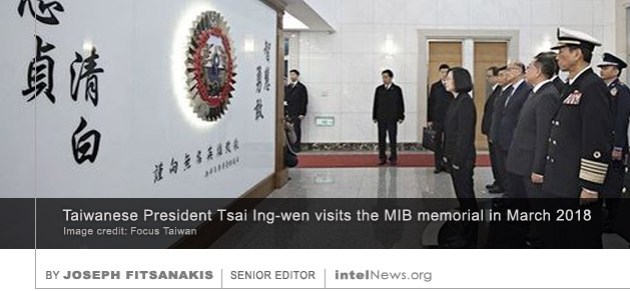
But Taiwan continued to deny any involvement in Liu’s case. That changed last week, however, when Taiwan’s Military Information Bureau unveiled its renovated memorial, which is housed at its headquarters in Taipei City. The memorial features plaques commemorating 75 individuals who have died while carrying out MIB intelligence operations. Those featured include both intelligence officers and their assets —foreign people recruited by intelligence officers to spy for Taiwan. Among the plaques, visitors to the memorial saw one dedicated to Liu for the first time. A note beneath the plaque acknowledges Liu’s contributions during the 1996 missile crisis. But it also states that the Chinese military official also provided assistance to Taiwan during earlier crises with China in the 1990s, as well as inside information about the death of Chinese Premier Deng Xiaoping in 1997.

Author: Joseph Fitsanakis | Date: 6 April 2018 | Permalink

Iranian military official says West used lizards to spy on Iran’s nuclear program

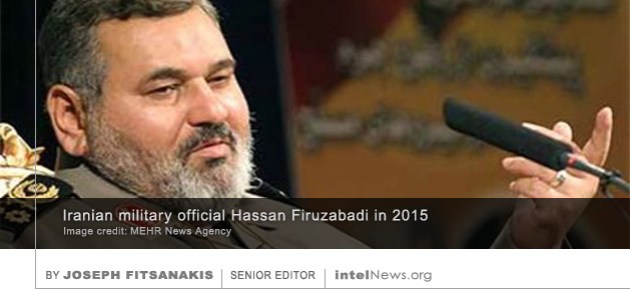
Hassan FiruzabadiThe former chief of staff of Iran’s Armed Forces has said that foreign governments used different species of lizards, including chameleons, to spy on the Iranian nuclear program. The claim was made by Hassan Firuzabadi, a veteran Iranian military official, who from 1989 to 2016 served as the chief of staff of the Iranian Armed Forces —the most senior military post in the Islamic Republic. Since his retirement in 2016, Firuzabadi has served in a number of key consultancy roles and is currently a senior military advisor to Ayatollah Ali Khamenei, Iran’s reform-minded supreme leader.
On Tuesday, the Iranian Labor News Agency (ILNA), a pro-reformist news and analysis outlet, published a lengthy interview with Firuzabadi. The former military strongman was speaking in response to reports earlier this week that a prominent Iranian-Canadian environmental campaigner had died in prison, allegedly of suicide. Kavous Seyed Emami, 63, was a professor of sociology, director of the Persian Wildlife Heritage Foundation, and political activist. He was arrested with seven of his colleagues on January 24 and charged with espionage. On February 9, Emami’s family said that they had been informed by authorities of his death in prison, reportedly as a result of suicide. The news was later confirmed by Iran’s chief prosecutor. Emami’s family, as well as numerous environmental campaigners and activists, dispute the government’s claims of suicide as a cause of his death.

But in his interview published on ILNA’s website, Firuzabadi claimed that environmental activists with links to foreign countries have in the past been found to engage in espionage against the Islamic Republic. He told the news outlet that some years ago Iranian authorities arrested a group of foreigners who were visiting Iran to raise funds for Palestinian political prisoners. He added that among the foreigners’ possessions authorities found “a species of desert reptile, like a chameleon”, which puzzled them. Firuzabadi then said that, “following studies” on the lizards, Iranian authorities concluded that their skin “attracts atomic waves”. They therefore concluded that the foreigners were in fact “nuclear spies” who had entered Iran in order to “find out where [in the country] are uranium mines and where the government is engaged in nuclear-related activities”. Firuzabadi also said that many foreigners who are engaged in environmental activism “are not even aware of the fact that they are actually spying” on Iran.

But Western scientists and science reporters dismissed Firuzabadi’s claims as fantastical. On Tuesday, John Timmer, science editor for the United States-based technology and science website Ars Technica, called the Iranian military official’s claims “insane” and added that there was “no scientific evidence that reptiles […] are effective as Geiger counters”.

Author: Joseph Fitsanakis | Date: 16 February 2018 | Research credit: C.F. | Permalink

Swiss trying to change image as Europe’s spy hub, say officials

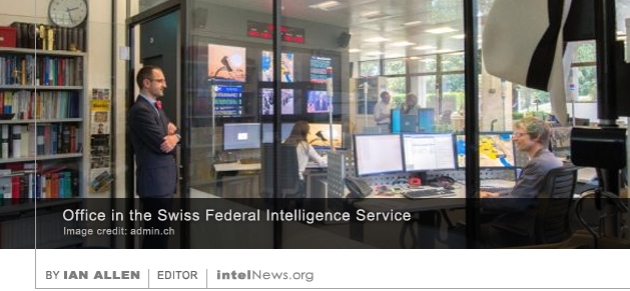
Federal Intelligence Service SwitzerlandOfficials in Switzerland say new laws enacted in recent months will help them change their country’s image as one of Europe’s most active spy venues. For decades, the small alpine country has been a destination of choice for intelligence officers from all over the world, who use it as a place to meet assets from third countries. For example, a case officer from Britain’s Secret Intelligence Service (MI6) will travel to Switzerland to meet her Algerian agent. She will exchange money and documents with him before she returns to Britain and he to Algeria, presumably after depositing his earnings into a Swiss bank account.


There are multiple reasons that explain Switzerland’s preferred status as a meeting place for spies and their handlers. The country is suitably located in the center of Europe and is a member of the European Union’s Schengen Treaty, which means that a passport is not required to enter it when arriving there from European Union member-states. Additionally, the country features an efficient transportation and telecommunication infrastructure, and its stable political system offers predictability and security, despite the limited size and strength of its law enforcement and security agencies. Perhaps most important of all, the Swiss have learned not to ask questions of visitors, many of whom flock to the country to entrust their cash to its privacy-conscious banking sector.

But, according to the Swiss Federal Intelligence Service (FIS), foreign spies and their handlers should find another venue to meet in secret. Speaking to the Sunday edition of Switzerland’s NZZ newspaper, FIS spokeswoman Isabelle Graber said she and her colleagues were aware that their country is a venue for meetings between intelligence operatives from third countries. Such meetings have “continued to rise in the last few years” and include “everyone from security agency employees to freelancers”, as “the market in trading secrets has exploded”, she said. That trend, added Graber, has led to a corresponding rise in meetings aimed at exchanging information for money. Many such meetings take place throughout Switzerland, she noted, and are “in violation of Swiss sovereignty and can lead to operations against the interests of the nation”.

In the past, said Graber, FIS was unable to prevent such activities on Swiss soil, due to pro-privacy legislation, which meant that the agency’s ability to combat foreign espionage in Switzerland was “far more limited than in other countries”. However, said the intelligence agency spokeswoman, the law recently changed to permit FIS to break into homes and hotels, hack into computers, wiretap phones, and implement surveillance on individuals believed to be spies or intelligence officers of foreign countries. Armed with the new legislation, the FIS is now “working hard to clear up third-country meetings [and] to prevent these from happening or at least disrupt them”, said Graber. Several times this year alone, FIS had forward information about “third-country meetings” to judicial authorities in Switzerland, she said.

Author: Ian Allen | Date: 06 February 2018 | Permalink

Espionage threat is greater now than in Cold War, Australian agency warns

ASIO AustraliaForeign intelligence collection and espionage threats against Australia are greater today than at any time during the Cold War, according to a senior Australian intelligence official. The claim was made on Wednesday by Peter Vickery, deputy director general of the Australian Security Intelligence Organisation (ASIO), the country’s primary counterintelligence agency. He was speaking before a parliamentary committee that is considering aspects of a proposed bill, which aims to combat foreign influence on Australian political and economic life. If enacted, the bill would require anyone who is professionally advocating or campaigning in favor of “foreign entities” to register with the government. Several opposition parties and groups, including the Catholic Church, have expressed concern, saying that the bill is too broad and could curtail the political and religious freedoms of Australians.

But ASIO has come out strongly in favor of the proposed bill. Speaking in parliament on Wednesday, Vickery warned that Australia is today facing more threats from espionage than during the Cold War. “Whilst [the Cold War] was obviously a very busy time” for ASIO, said Vickery, his agency’s assessment is that Cold War espionage was “not on the scale we are experiencing today” in Australia. During the Cold War, ASIO was cognizant and aware of the major adversaries, he added. But today, the espionage landscape features “a raft of unknown players”, many of whom operate on behalf of non-state actors, said Vickery. The phenomenon of globalization further-complicates counterintelligence efforts, he added, because foreign espionage can be conducted from afar with little effort. Vickery noted that espionage and foreign influence in Australia “is not something that we think might happen, or possibly could happen. It is happening now against Australian interests in Australia and Australian interests abroad”. He also warned that the public knows little about the extent of espionage and foreign-influence operations taking place “at a local, state and federal level” throughout the country.

Earlier this week, the Catholic Church of Australia came out in opposition to the proposed legislation, which it sees as too broad. The religious denomination, which represents approximately 20 percent of the country’s population, said that the bill was too broad and could force Australian Catholics to register as agents of a foreign power. Technically, the Catholic Church is headquartered at the Vatican, which would make the organization a foreign entity under the proposed bill, the Church said in a statement.

Author: Joseph Fitsanakis | Date: 01 February 2018 | Permalink

China hacked African Union computer servers for five years, report claims

African UnionChinese spies hacked the computer servers of the African Union headquarters in the Ethiopian capital Addis Ababa, which the Chinese government funded and built as a gift to the organization, a French newspaper has claimed. Beijing donated $200 million toward the project and hired the state-owned China State Construction Engineering Corporation to build the tower, which was completed in 2012. Since then, the impressive 330 feet, 19-storey skyscraper, with its reflective glass and brown stone exterior, has become the most recognizable feature of Addis Ababa’s skyline. The majority of the building material used to construct the tower was brought to Ethiopia from China. Beijing even paid for the cost of the furniture used in the impressive-looking building.

However, according to the Paris-based Le Monde Afrique newspaper, African Union technical staff found that the computer servers housed in the organization’s headquarters were secretly communicating with a server facility in Shanghai, China. The secret communications reportedly took place at the same time every night, namely between midnight and 2 in the morning. According to Le Monde Afrique, the African Union servers forwarded data to the servers in Shanghai from 2012, when the building opened its doors, until early 2017.

Interestingly, even though the organization was allegedly notified about the breach by its technical staff in January of 2017, there has been no public reaction on record. However, according to Le Monde Afrique, African Union officials took immediate steps to terminate the breach. These included replacing the Chinese-made servers with new servers purchased with African Union funds, without Beijing’s mediation. Additionally, new encryption was installed on the servers, and a service contract with Ethio Telecom, Ethiopia’s state-owned telecommu- nications service provider, which uses Chinese hardware, has been terminated.

On Monday, China’s Ministry of Foreign Affairs dismissed the French newspaper’s allegations as “baseless” and “complete nonsense”. A statement issued by the ministry said that Beijing would “in no way interfere with the internal policies of African countries or do anything that would hurt their interests”.

Author: Joseph Fitsanakis | Date: 30 January 2018 | Permalink