January 3, 2018
by intelNews
 Since 2008, when we launched intelNews, it has been our end-of-year tradition to take a look back and highlight what we see as the most important intelligence-related stories of the past 12 months. In anticipation of what 2018 may bring in this highly volatile field, we give you our selection of the top spy stories of 2017. They are listed below in reverse order of significance. This is the last part in a three-part series. Part one is available here. Part two is available here.
 04. Unprecedented security changes are taking place in Saudi Arabia. Analysts agree that the Kingdom of Saudi Arabia is undergoing its most important political changes in generations. On November 4, 2017, nearly 50 senior Saudi officials, including at least 11 princes, some of them among the world’s wealthiest people, were suddenly fired or arrested. A royal decree issued on that same evening said that the arrests were carried out by a new “anti-corruption committee” led by Crown Prince Mohammed bin Salman, the king’s 32-year-old son, who is first in line to the throne. The king and his son appear to be in the process of removing their last remaining critics from the ranks of the Kingdom’s security services, which they now control almost completely. Earlier in the year, the BBC alleged that Saudi security services were secretly abducting Saudi dissidents from abroad and jailing them in Saudi Arabia. Also in November, Saudi Arabia was seen to be behind a failed attempt by Lebanon’s Prime Minister Saad al-Hariri —a dual Lebanese-Saudi citizen— to resign while on a trip to Saudi Arabia. There were allegations that Hariri was under arrest by the Saudis, who objected to the presence of Hezbollah members in his cabinet. But Hariri later returned to Lebanon and rescinded his resignation.
03. Extraordinary transformation of the intelligence landscape in South Korea. Developments in North Korea have been at the forefront of security reporting in recent months. But reports from the Korean Peninsula have largely ignored the dramatic changes 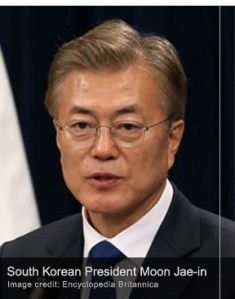 taking place in the intelligence infrastructure of South Korea, which are arguably as important as developments north of the 38th parallel. In June, the new center-left government of President Moon Jae-in banned the powerful National Intelligence Service (NIS) from engaging in domestic intelligence gathering. The move came after a lengthy investigation concluded that the NIS interfered in the 2012 presidential elections and tried to alter the outcome in favor of the conservative candidate, Park Geun-hye, using 30 dedicated teams of officers for that purpose. In November, three former NIS directors were charged with secretly diverting funds from the agency’s clandestine budget to aid Park, who has since been impeached and is now facing a lengthy prison sentence.
02. Turkey’s fallout with the West is affecting spy relations. Turkey has been a NATO member since 1952. However, rising tensions in the country’s domestic political scene are negatively affecting Ankara’s relations with its Western allies, particularly with Germany and the United States. Last month, Turkey issued an arrest warrant for Graham Fuller, an 80-year-old former analyst in the CIA, who Ankara says helped orchestrate the failed July 2016 military coup against the government of President Recep Tayyip Erdoğan. Washington flatly denies these allegations. In May, the Turkish Minister of Foreign Affairs Mevlüt Çavuşoğlu accused “the secret services of [Western] countries” of “using journalists and also bloggers [as spies] in Turkey”. Earlier in the year, a German report claimed that the Turkish state had asked its diplomats stationed all over Europe to spy on Turkish expatriate communities there, in order t to identify those opposed to the government of President Erdoğan. In some cases, Turkish spies have asked their Western European counterparts to help them monitor the activities Turkish expatriates, but such requests have been turned down. Nevertheless, there is increasing unease in Western Europe as Turkey intensifies its unilateral intelligence activities aimed at monitoring political dissent among Turkish communities abroad.
01. With America divided, Russian spies make dramatic post-Cold War comeback. The collapse of the Soviet Union was a traumatic experience for the once all-powerful Russian spy agencies. But, if CIA and FBI assessments are correct, the bitterly divisive state of American politics gave Russian spooks a chance for a dramatic comeback. Using a mixture of human and online intelligence operations, Russian spies helped drive a wedge between the White House and the US Intelligence Community. American intelligence agencies are tasked with providing information to  assist policy-makers, including the president. So when the CIA and the FBI conclude that the Russian government launched an extensive and sophisticated campaign to undermine the 2016 US presidential election, one expects the president to take that advisement under serious consideration. However, the US leader has openly dismissed the conclusions of his own Intelligence Community and has publicly stated that he believes President Vladimir Putin’s assurances that his country did not meddle in the US election.
What we have here, therefore, is a US president who sees the Kremlin as more trustworthy than his own Intelligence Community. This is a remarkable, unprecedented state of affairs in Washington, so much so that some CIA officials have reportedly questioned whether it is safe for them to share information about Russia to President Trump. Throughout that time, the FBI has been conducting an extensive counterintelligence investigation into alleged ties between the president’s campaign team and the Kremlin. As intelNews has noted before, the FBI probe adds yet another layer of complexity in an already intricate affair, from which the country’s institutions will find it difficult to recover for years to come, regardless of the outcome of the investigation. The state of Russian politics may be uncertain, and the country’s economy in bad shape. But Russian spooks can look back to 2017 as the year in which they made an unexpected comeback, scoring a dramatic victory against their decades-old rival.
This is the last part in a three-part series. Part one is available here. Part two is available here.
► Authors: Joseph Fitsanakis and Ian Allen | Date: 03 January 2018 | Permalink
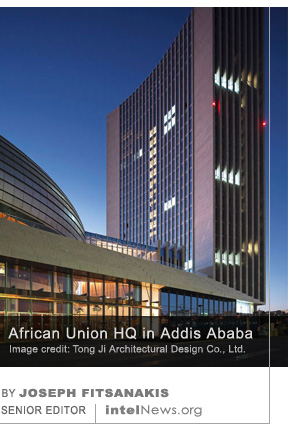 Chinese spies hacked the computer servers of the African Union headquarters in the Ethiopian capital Addis Ababa, which the Chinese government funded and built as a gift to the organization, a French newspaper has claimed. Beijing donated $200 million toward the project and hired the state-owned China State Construction Engineering Corporation to build the tower, which was completed in 2012. Since then, the impressive 330 feet, 19-storey skyscraper, with its reflective glass and brown stone exterior, has become the most recognizable feature of Addis Ababa’s skyline. The majority of the building material used to construct the tower was brought to Ethiopia from China. Beijing even paid for the cost of the furniture used in the impressive-looking building.
 Since 2008, when we launched intelNews, it has been our
  as a result of “acute poisoning from an undefined substance”, according to his doctors. Also in February, Kim Jong-nam, half-brother of North Korean Supreme Leader Kim Jong-un, was killed in an
  support for the rebels could backfire by causing the suddenly unemployed fighters to join jihadist organizations. In August, there were reports that US troops
  Since 2008, when we launched intelNews, it has been our
  10.
10. 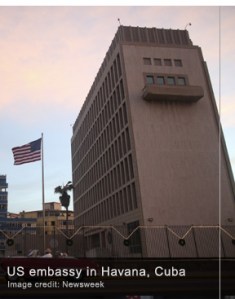 the alleged device may have been deployed by an intelligence service of a third country —possibly Russia— without the knowledge of the Cuban authorities. In October, the White House expelled 15 Cuban diplomats from the US in response to the incident. But the question of what harmed the health of at least 20 employees at the US embassy in Havana remains largely unanswered.
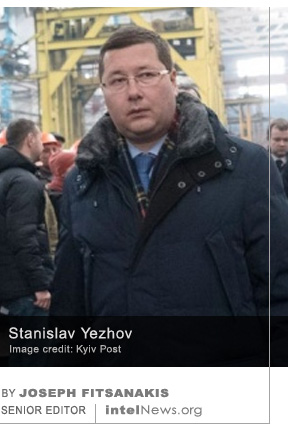 Ukraine’s counterintelligence agency has arrested the principal translator of the country’s prime minister, accusing him of spying for Russia. The translator has been identified as Stanislav Yezhov, who has served as a translator for two consecutive Ukrainian prime ministers. As part of his job, Yezhov has been present at nearly all high-level meetings between Ukraine’s Prime Minister, Volodymyr Groysman, and foreign leaders since 2016, when Groysman assumed his executive post. In the last year alone, Yezhov accompanied the Ukrainian prime minister during official trips to Washington, London and Berlin. Before translating for Groysman, Yezhov is thought to have served as an interpreter for Viktor Yanukovych, Ukraine’s former President. Yanukovych, a pro-Russian politician, occupied that office from 2010 until his ousting from power in 2014, as a result of the 2014 Ukrainian revolution.
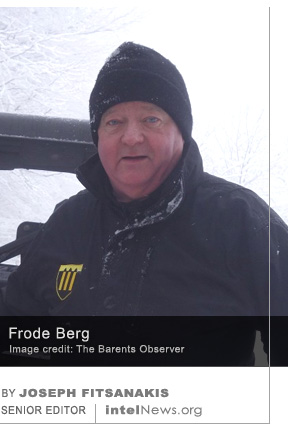 Authorities in Russia have announced the arrest of a Norwegian citizen, whom they accuse of receiving classified information relating to Russia’s Armed Forces. The detainee has been named as Frode Berg, 62, from Kirkenes, a small town in Norway’s far north, located 100 miles from the Russian city of Murmansk. According to articles in the Russian press, Berg is a 24-year veteran of the Office of the Norwegian Border Commissioner, an obscure government agency that operates under Norway’s Ministry of Justice and Public Security. Among other tasks, the Office of the Norwegian Border Commissioner is responsible for enforcing and monitoring bilateral compliance with the Soviet (now Russian)-Norwegian Border Agreement of 1949. Berg, who worked closely with Norway’s National Police Directorate as part of his job, retired from the Office in 2014.
 A Russian court has sentenced an Estonian aircraft business executive to 12 years at a maximum security prison, allegedly for having spied on Russia a decade ago. Little is known about the case of Raivo Susi, who co-owns two companies that are involved in the sale and maintenance of non-commercial aircraft. The Estonian businessman’s activities include the partial ownership of Aerohooldus OU, which provides training jet aircraft for use by the Air Force of Estonia –a member state of the North Atlantic Treaty Organization (NATO).
 Ukraine fired its deputy-head of foreign intelligence and expelled a Belarussian diplomat a day after the government of Belarus claimed that it busted a Ukrainian spy ring that recruited local agents. The chain of events began on October 25, when the Belarussian Committee for State Security (KGB) arrested a Ukrainian journalist. The journalist, Pavlo Sharoyko, is based in the Belarussian capital Minsk and works as the Belarus correspondent for the National Radio Company of Ukraine —the country’s public broadcaster. Even though Sharoyko was arrested in October, his imprisonment was not publicly announced by Belarus until last Saturday. On Tuesday, November 21, at a press conference held at the KGB headquarters in Minsk, KGB spokesman Dmitry Pobyarzhin
 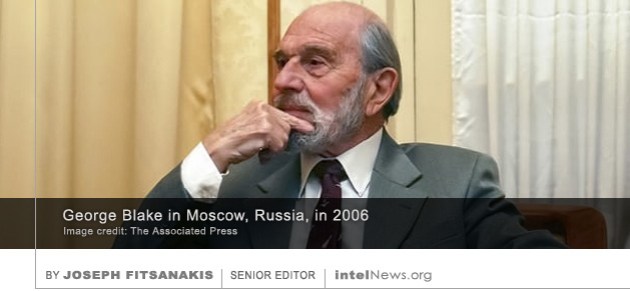 One of the Cold War’s most recognizable spy figures, George Blake, who escaped to the Soviet Union after betraying British intelligence, issued a rare statement last week, praising the successor agency to Soviet-era KGB. Blake was born George Behar in Rotterdam, Holland, to a Dutch mother and a British father. Having fought with the Dutch resistance against the Nazis, he escaped to Britain, where he joined the Secret Intelligence Service, known as MI6, in 1944. He was serving in a British diplomatic post in Korea in 1950, when he was captured by advancing North Korean troops and spent time in a prisoner of war camp. He was eventually freed, but, unbeknownst to MI6, had become a communist and come in contact with the Soviet KGB while in captivity. Blake remained in the service of the KGB as a defector-in-place until 1961, when he was arrested and tried for espionage.
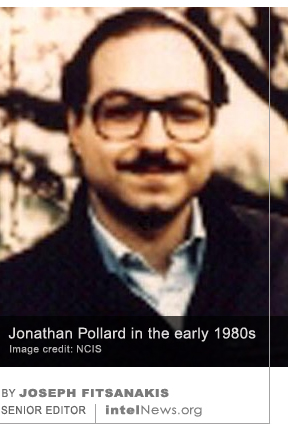 Israeli Prime Minister Benjamin Netanyahu reportedly asked the United States President Donald Trump to allow Jonathan Pollard, an American who spied on his country for Israel in the 1980s, to immigrate to Tel Aviv. Pollard, a former intelligence analyst for the US Navy, was released from an American prison in 2015, after serving 30 years for selling US government secrets to Israel. Throughout Pollard’s time in prison, the government of Israel
 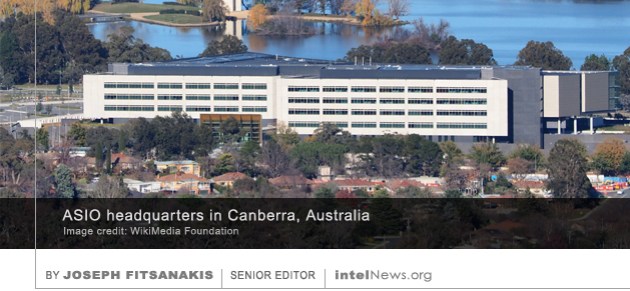 The primary intelligence agency of Australia says its resources are overextended as the country faces “espionage and foreign interference [of an] unprecedented” scale. In its annual report to the Australian houses of parliament, which was produced on Tuesday, the Australian Security Intelligence Organisation (ASIO) says it lacks resources to counter “harmful espionage” and “malicious activity” against the country. The unclassified report is published every year as a summary of a much longer classified report, which is shared with senior government officials and senior civil servants. It is endorsed by ASIO Director Duncan Lewis, who serves as Australia’s Director-General of Security.
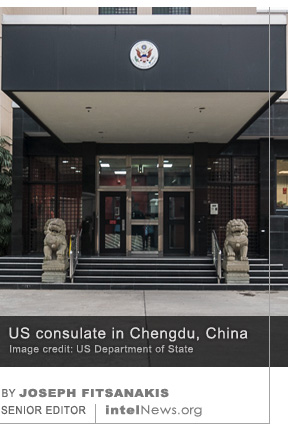 An American diplomat stationed in China was abducted and interrogated for several hours by Chinese authorities, who believed him to be an officer of the Central Intelligence Agency working under official cover. The alleged abduction took place in early 2016 but was revealed this week by the online news outlet Politico. The website said that the diplomat, who has not been named, was stationed at the United States consulate general in Chengdu, a city of 14 million that is the administrative capital of western China’s Sichuan province. Founded in 1985, the US consulate in Chengdu is one of Washington’s seven diplomatic and consular posts in China. It is staffed by 130 people, approximately 30 of whom are Americans and 100 are locally hired Chinese citizens. The facility’s consular district includes several Chinese provinces, including the politically sensitive Tibet Autonomous Region.
 A symposium about the life, activities and legacy of World War I-era double spy Mata Hari is to take place in London this month, on the 100th anniversary of her death by execution. Mata Hari was born Margaretha Geertruida Zelle in Holland in 1876. In 1895 she married Rudolf MacLeod, a Dutch Army Captain of Scottish descent serving the Dutch colonial administration of what is now Indonesia. She eventually divorced the alcoholic and abusive MacLeod, who was 20 years her senior, and joined the circus in Paris. Eventually she became wildly popular as an exotic dancer, a position that placed her in direct and close contact with several influential men in France, including the millionaire industrialist Émile Étienne Guimet, who became her longtime lover. Several of her male devotees came from military backgrounds from various European countries. Most historians agree that by 1916 Mata Hari was working for French intelligence, gathering information from her German lovers. However, in February of the following year she was arrested by French counterintelligence officers in Paris and accused of spying on behalf of the German Empire. French prosecutors accused her of having provided Germany with tactical intelligence that cost the Triple Entente the lives of over 50,000 soldiers.
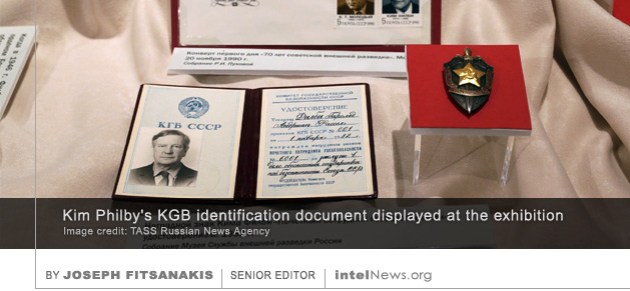 The life of Kim Philby, one of the Cold War’s most recognizable espionage figures, is the subject of a new exhibition that opened last week in Moscow. Items displayed at the exhibition include secret documents stolen by Philby and passed to his Soviet handlers during his three decades in the service of Soviet intelligence. While working as a senior member of British intelligence, Harold Adrian Russell Philby, known as ‘Kim’ to his friends, spied on behalf of the Soviet NKVD and KGB. His espionage lasted from about 1933 until 1963, when he secretly defected to the USSR from his home in Beirut, Lebanon. Philby’s defection sent ripples of shock across Western intelligence and is often seen as one of the most dramatic incidents of the Cold War.








Espionage threat is greater now than in Cold War, Australian agency warns
February 1, 2018 by Joseph Fitsanakis Leave a comment
But ASIO has come out strongly in favor of the proposed bill. Speaking in parliament on Wednesday, Vickery warned that Australia is today facing more threats from espionage than during the Cold War. “Whilst [the Cold War] was obviously a very busy time” for ASIO, said Vickery, his agency’s assessment is that Cold War espionage was “not on the scale we are experiencing today” in Australia. During the Cold War, ASIO was cognizant and aware of the major adversaries, he added. But today, the espionage landscape features “a raft of unknown players”, many of whom operate on behalf of non-state actors, said Vickery. The phenomenon of globalization further-complicates counterintelligence efforts, he added, because foreign espionage can be conducted from afar with little effort. Vickery noted that espionage and foreign influence in Australia “is not something that we think might happen, or possibly could happen. It is happening now against Australian interests in Australia and Australian interests abroad”. He also warned that the public knows little about the extent of espionage and foreign-influence operations taking place “at a local, state and federal level” throughout the country.
Earlier this week, the Catholic Church of Australia came out in opposition to the proposed legislation, which it sees as too broad. The religious denomination, which represents approximately 20 percent of the country’s population, said that the bill was too broad and could force Australian Catholics to register as agents of a foreign power. Technically, the Catholic Church is headquartered at the Vatican, which would make the organization a foreign entity under the proposed bill, the Church said in a statement.
► Author: Joseph Fitsanakis | Date: 01 February 2018 | Permalink
Filed under Expert news and commentary on intelligence, espionage, spies and spying Tagged with ASIO, Australia, Australian Security Intelligence Organisation, Catholic Church, espionage, intelligence legislation, News, Peter Vickery