MI6 spy chief outlines ‘fourth generation espionage’ in rare public speech
December 4, 2018 1 Comment
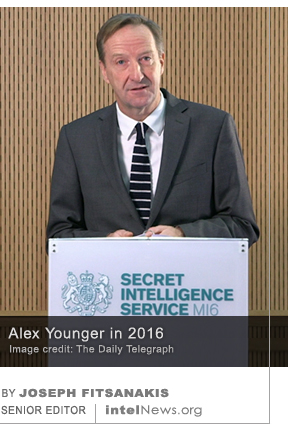 The director of Britain’s Secret Intelligence Service —known as MI6— has outlined the parameters of a new, “fourth generation of espionage”, which he said is needed to combat the “threats of the hybrid age”. Alex Younger, 55, is a career intelligence officer who joined MI6 in 1991, after serving in the British Army. He served as chief of global operations —considered the number two position at MI6— before being appointed director of the spy agency in October 2014. He previously served in the Middle East, Europe, and Afghanistan, where he represented MI6 as its most senior officer in the country following the US-led military invasion of 2001. Until this week, Younger had given a single public address since becoming director of MI6. But on Monday he spoke again, this time at the University of St. Andrews in Scotland, from where he graduated with a degree in economics.
After cautioning his audience that MI6’s methods, operations and people —some of whom “have paid the ultimate price”— must remain secret, Younger said that technological progress has “profoundly changed [MI6’s] operating environment”. Technological change, as well as the degree of interconnectedness, he said, has made the world “dramatically more complicated”. He went on to add that the resulting ambiguity is referred to by MI6 as a constant stream of “hybrid threats”, namely challenges posed by nation-states operating “in the gray spaces of the hybrid era”. They do so in order to probe the West’s “institutions and defenses in ways that fall short of traditional warfare”, said Younger. The British spy chief added that MI6, as “one of the few truly global intelligence agencies” is well positioned to respond to hybrid threats, mostly by augmenting its human intelligence role —using human spies to collect information.
Human intelligence, which is MI6’s core task, “will never change fundamentally”, said Younger, adding that “in fact it will become even more important in a more complex world”. However, it will need to evolve to meet the challenges of the hybrid age. Younger said that MI6 was pioneering a “fourth generation of espionage”, which is the product of the fusion of traditional human skills with “accelerated [technological] innovation”. This new generation of espionage said Younger, relies not on individual work but on operations that are carried out by dynamic teams within and across state agencies. Additionally, the ultimate task of these operations is not simply to know the actions of one’s adversaries, but “to change their behavior”, said the British spy chief. Furthermore, in order to successfully develop fourth generation espionage capabilities, MI6 will have to “ensure that technology is on our side, not that of our opponents”, noted Younger. The spy chief gave an example by referring to the case of the near-fatal poisoning of Sergei Skripal, the Russian former double spy who was allegedly attacked by two Russian military intelligence officers in Salisbury, England, last March. It was “bulk data combined with modern analytics” that exposed the culprits of the operation, he said. But the same methods, which make the modern world more transparent, can posed “a serious challenge if used against us”, warned the MI6 chief.
► Author: Joseph Fitsanakis | Date: 04 December 2018 | Permalink
 A senior civil servant in the upper house of the French parliament has been arrested on suspicion of spying for North Korea, according to prosecutors. The news of the suspected spy’s arrest was first
  Norway’s supreme legislature body is considering a bill that would offer immunity from prosecution to intelligence officers and informants who are authorized by the country’s spy service to conduct espionage. The bill has been proposed on behalf of the Royal Norwegian Ministry of Defense, which supervises the operations of the Norwegian Intelligence Service (NIS), Norway’s primary intelligence agency. The NIS operates primarily abroad and is the only institution of the Norwegian state that can be authorized by the government to break laws in foreign countries. However, supporters of the new bill point out that NIS overseas operations can also break Norwegian law. That is something that the proposed bill addresses, they argue.
 Authorities in Austria have arrested a second alleged spy for Russia in a week, according to media reports. Several Austrian news outlets reported on Monday that police had arrested an Austrian counterintelligence officer on suspicion of passing classified information to Russian intelligence. The news follows reports late last week of the arrest of an unnamed retired colonel in the Austrian Army, who is believed to have spied for Russia since 1988. As intelNews
 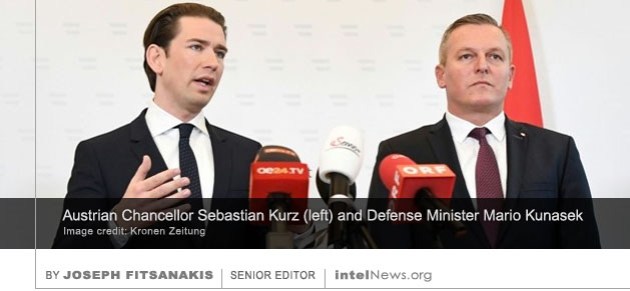 The Austrian Ministry of Foreign Affairs summoned the Russian ambassador to Vienna on Friday, following the arrest of a retired Austrian Army colonel who allegedly spied for Moscow for more than two decades. The news was announced on Friday by Austrian Chancellor Sebastian Kurz at an emergency news conference in Vienna. He did not reveal the alleged spy’s identity, but said that he had been taken into custody as Austrian counterintelligence were investigating the extent of the security breach he caused.
 A new book reveals for the first time the name of a former intelligence officer of the Soviet KGB who helped American authorities arrest Robert Hanssen, an American spy for the Soviet Union and Russia. The son of a Chicago police officer, Hanssen joined the Federal Bureau of Investigation in 1976 and was eventually transferred to the Bureau’s Soviet analytical unit, where he held senior counterintelligence posts. It wasn’t until 2000, however, that the FBI realized Hanssen had spied for Moscow since 1979. Following Hanssen’s arrest in 2001, it emerged that he had betrayed the names of 50 FBI and CIA assets or informants, many of whom perished in the hands of the Russian intelligence services.
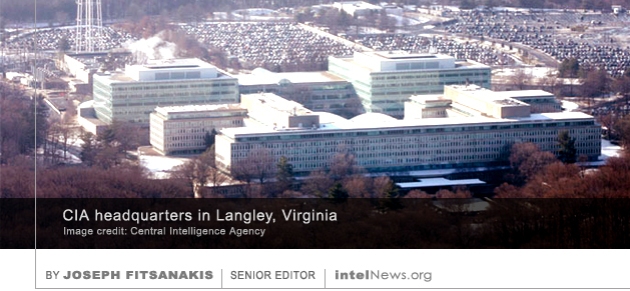 The United States Central Intelligence Agency suffered a “catastrophic” compromise of the system it uses to communicate with spies, which caused the death of “dozens of people around the world” according to sources. This is alleged in a
  A French government report warns of an “unprecedented threat” to security after nearly 4,000 leading French civil servants, scientists and senior executives were found to have been accosted by Chinese spies using the popular social media network LinkedIn. The report was authored by France’s main intelligence agencies, the General Directorate for Internal Security (DGSI) and the General Directorate for External Security (DGSE). According to the Paris-based Le Figaro newspaper, which
  Russian espionage activities in Switzerland are increasing and are crossing long-established “red lines”, according to senior Swiss defense and intelligence officials who spoke at a news conference last week. The claims were made by Guy Parmelin, head of Switzerland’s Federal Department of Defense, and Jean-Philippe Gaudin, director of the Swiss Federal Intelligence Service (NDB). The two men spoke on Friday before reporters in Bern. Following the news conference, Gaudin spoke with reporters from the Reuters news agency.
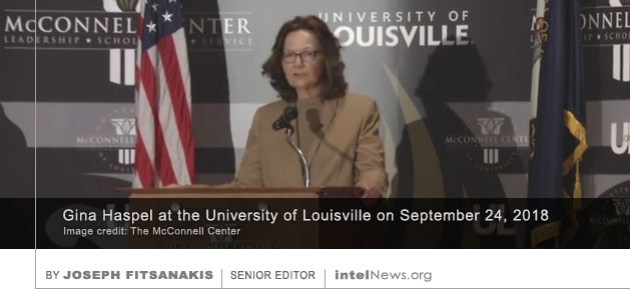 The United States Central Intelligence Agency will return to traditional espionage against foreign states and focus less on counterterrorism against non-state actors, said its new director in her first public appearance. Gina Haspel joined the CIA in 1985 as a reports officer and completed several undercover tours overseas before serving as chief of station. She rose through the ranks to become deputy director of the National Clandestine Service and was appointed deputy director of the CIA in 2017. In May of this year, she became the Agency’s first female director, despite some controversy that arose from her role as chief of a CIA undercover facility (so-called “black site”) in Thailand. Critics
  Germany has dropped a criminal case against the second-in-command of Switzerland’s intelligence agency, who was accused by Berlin of authorizing an espionage operation against the German tax collection service. A year ago, Germany launched an
 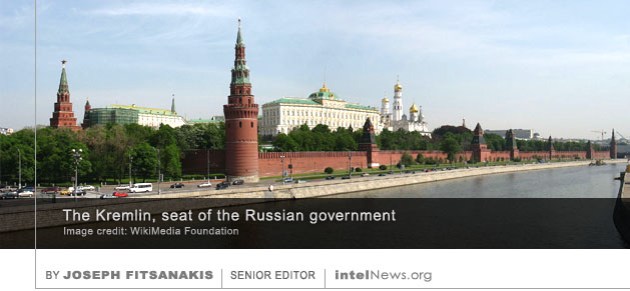 Secret informants inside the Russian government, which the United States has relied on in recent years for tips about Moscow’s strategy and tactics, have gone silent in recent months, according to sources. Over many years, US intelligence agencies have built networks of Russian informants. These consist of officials placed in senior positions inside the Kremlin and other Russian government institutions, who can help shed light on Russia’s political maneuvers. These informants were crucial in enabling the US Intelligence Community to issue warnings of possible Russian meddling in the American presidential elections of November 2016. Since then, US spy agencies have largely relied on these informants to produce detailed assessments of Russian intelligence activities targeting the US, and propose
 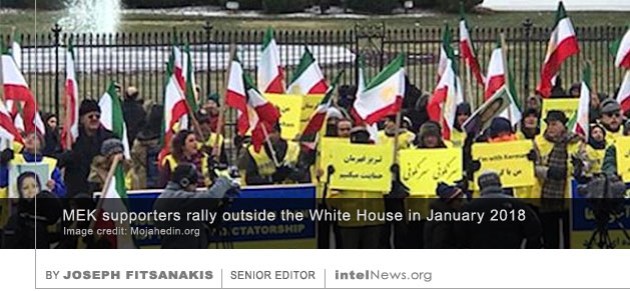 Authorities in the United States have announced the arrests of two men who have been charged with spying on American soil on behalf of the Islamic Republic of Iran. The men were reportedly arrested on August 9, but information about them was only released on Monday by the US Department of Justice. In a
 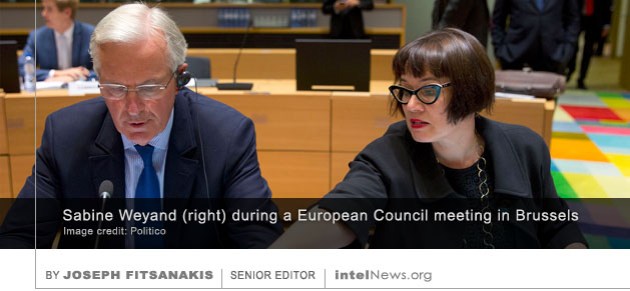 Relations between the European Union and the United Kingdom hit a new low on Thursday, as the European Council refused to comment on claims that British spy agencies have spied on Brexit negotiators in Brussels. Consultations between the two sides have progressed at an alarmingly slow pace ever since June 23, 2016, when voters in the island nation elected to leave the EU during a nationwide referendum. In March of 2017, London officially invoked Article 50 of the EU Treaty, which requires that Britain’s withdrawal from the multinational body be completed within two calendar years. But there are many who think that a mutual agreement will not be reached between the two sides.







China seeks clarification over alleged spy equipment ordered by US embassies
December 25, 2018 by Ian Allen 1 Comment
Most procurement requests included in the WikiLeaks database appear to be for commonplace items or services, such as passenger transportation, heating oil, outdoor freezers, or garage gates maintenance and repair. But there are some requests for so-called “tactical spy equipment”, such as those ordered by the US embassies in Colombia and El Salvador. These appear to be for miniature surveillance cameras hidden into everyday objects, such as buttons, baseball caps, watches and ties. Nearly 100 such items were requested for procurement by the US embassy in San Salvador. Several embassies ordered hardware and software for forensic examination of mobile phones. For example, the US embassy in Yerevan, Armenia, ordered a “Cell Phone Analyzer”, which allows users to access data from cell phones while bypassing security measures such as passwords. Similar devices were ordered by the US embassies in Berlin (pictured), and Kiev, capital of Ukraine, where fears were expressed on Monday about a possible military action by Russian troops during the holidays.
On Monday, China’s Ministry of Foreign Affairs said it was seeking “clarifications” from Washington about the documents made public by WikiLeaks. Speaking to reporters in Beijing, Ministry spokesman Hua Chunying said that the US owed “the rest of the world an explanation […] for what has recently been revealed by WikiLeaks”. Chunying also spoke about prior WikiLeaks revelations, including the so-called “PRISM-gate” in 2013, which revealed extensive intelligence-collection activities by the US on numerous countries, including some if its allies, such as Germany and France. She went on to ask, “why do American embassies buy so much secret surveillance equipment?”. Authorities in Washington had made no comment on the WikiLeaks revelation as of Tuesday morning.
► Author: Ian Allen | Date: 25 December 2018 | Permalink
Filed under Expert news and commentary on intelligence, espionage, spies and spying Tagged with China, diplomacy, espionage, Hua Chunying, News, Wikileaks