Soviet documents ‘identify New Zealand diplomat as KGB spy’
August 11, 2014 3 Comments
 By JOSEPH FITSANAKIS | intelNews.org
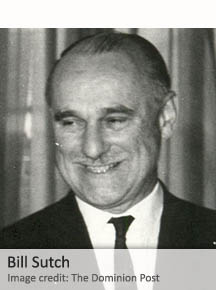
A batch of documents from the so-called ‘Mitrokhin archive’, which were made public late last week, have reportedly identified a former New Zealand senior diplomat as a Soviet spy. William Ball Sutch was born in 1907 and received a PhD in economics from Columbia University in the United States in 1932. Shortly afterwards, he returned to his native New Zealand in the midst of the Great Depression. At around that time he traveled to the Soviet Union, but showed no outward interest in communism. He entered government service, working for several departments, including the Ministry of Supply and the Department of Industries and Commerce, where he rose to the post of secretary in 1958. Prior to that, he had represented Wellington at the United Nations headquarters in New York in the early 1950s. He retired in 1965 as head of New Zealand’s Department of Industries and Commerce, and died in 1975. A year before his death, however, Sutch was the main subject in the most sensational spy scandal in New Zealand during the Cold War. He was arrested in a counterintelligence operation in Wellington while secretly meeting Dimitri Razgovorov, an officer of the Soviet KGB. Sutch, who had been monitored by the New Zealand Security Intelligence Service (NZSIS) for quite some time prior to his arrest, was charged under the country’s Official Secrets Act. But eventually he was found not guilty after an eventful five-day trial, which took place amidst a media blitz in the Kiwi capital. Now, however, the Wellington-based Dominion Post newspaper says it has acquired copies of internal KGB documents that identify Sutch as a KGB recruit. The Australian-owned newspaper says the documents are part of the massive archive transported to the United Kingdom in 1992 by the late Vasili Mitrokhin. Mitrokhin was a Soviet archivist for the KGB, who painstakingly copied tens of thousands of pages of the spy agency’s files prior to defecting to Britain following the dissolution of the USSR. The latest batch of papers, which were made public at Cambridge University’s Churchill College, indicate that the New Zealand diplomat worked for the KGB for 24 years prior to his 1974 arrest. Read more of this post











 intelNews.org
Germany wants foreign embassies to declare their spy employees
August 12, 2014 by Joseph Fitsanakis 2 Comments
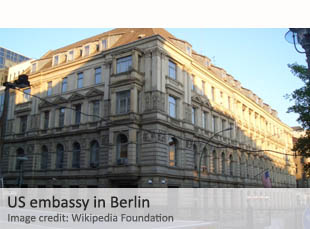
German authorities have asked that foreign embassies and consulates on German soil officially disclose the names of their personnel involved in intelligence work. German newsmagazine Der Spiegel said that the German Foreign Office has been systematically contacting consular authorities from every foreign nation located in Germany. In each case, the foreign consular representatives have been issued formal requests to release “through official diplomatic channels” an exhaustive list of names of their intelligence operatives operating in Germany under diplomatic cover. All foreign embassies and consulates had been contacted by last Wednesday, said the report. The requests stipulate that the lists must include all personnel working out of a foreign nation’s embassy or consulate, as well cultural institutes, military installations, commercial entities, or other institutions associated with a foreign country. It is generally assumed that a significant number of employees in embassies and consulates are intelligence personnel, working under diplomatic cover; they invariably hold titles such as “military attaché”, or “political officer”, and are generally protected with diplomatic immunity. A small number of these intelligence officers voluntarily make their presence known to the corresponding intelligence agency of their host country, and are thus officially declared and accredited with the government of the host nation. They typically act as points-of-contact between the embassy and the intelligence agency of the host nation on issues of common concern requiring cross-country collaboration or coordination. But the vast majority of intelligence personnel stationed at a foreign embassy or consulate operate without the official knowledge or consent of the host country. Governments generally accept this as a tacit rule in international intelligence work, which is why Berlin’s move is seen as highly unusual. Der Spiegel described it as an effort “towards more transparency”, aimed at “increasing the pressure on foreign intelligence services to disclose their activities in Germany”. Frank-Walter Steinmeier, Germany’s Minister of Foreign Affairs, described the move as a diplomatic effort to establish trust between Berlin and its foreign partners. Read more of this post
Filed under Expert news and commentary on intelligence, espionage, spies and spying Tagged with counterintelligence, espionage, Frank-Walter Steinmeier, German Ministry of Foreign Affairs, Germany, intelligence cooperation, News