News you may have missed #837

Alexander LitvinenkoBy IAN ALLEN | intelNews.org |
►►Russian ex-spy ‘would testify’ in Litvinenko inquiry. The 2006 murder of former Russian spy Alexander Litvinenko has never been solved and remains the subject of conflicting narratives and still-deepening intrigue over who may have killed him and why. Now a key witness, a US-based former Russian spy who worked with Litvinenko in the months leading up to his death, says he is willing to give evidence at a public inquiry. British police considered him such a vital witness that they visited the US three times to persuade him to give evidence at the inquest.
►►Assange reveals GCHQ messages discussing extradition. Authorities at GCHQ, Britain’s eavesdropping agency, face embarrassing revelations about internal correspondence in which WikiLeaks founder Julian Assange is discussed, apparently including speculation that he is being framed by Swedish authorities seeking his extradition on rape allegations. The records were revealed by Assange himself in a Sunday night interview with Spanish television. A message from September 2012, apparently says: “They are trying to arrest him on suspicion of XYZ. It is definitely a fit-up. Their timings are too convenient right after Cablegate“.
►►North Korean defector accused of spying by his sister. Earlier this year, Yoo Woo-sung, one of the most prominent North Korean defectors living in South Korea, was arrested on charges of espionage. Now court documents have shown that Yoo was arrested after testimony from his sister, who said he had been sent on a mission by North Korea’s secret police to infiltrate the defector community and pass back information about the people he met. The Washington Post reports that defectors from the North are increasingly facing the brunt of this suspicion.
►►Iran hangs two men for spying for Israel and US. Mohammad Heydari was found guilty of passing intelligence on “security issues and national secrets” to Israeli Mossad agents in exchange for cash. Kourosh Ahmadi was convicted of providing intelligence to the CIA, Tehran’s prosecutor’s office said. It is not clear when Heydari and Ahmadi were arrested or where they were tried. Their execution was handed down by Tehran’s Revolutionary Court and confirmed by the Supreme Court, Iran’s Fars news agency reported.

Russian news agency reveals name of CIA station chief in Moscow

US embassy in MoscowBy JOSEPH FITSANAKIS | intelNews.org |
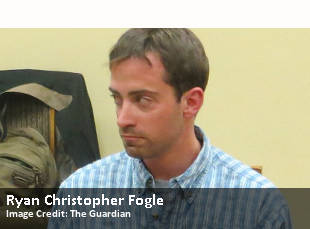
A Russian news agency revealed the name of the alleged station chief of the United States Central Intelligence Agency (CIA) in Moscow, but then deleted the information from its website. Russia Today, a multilingual Moscow-based television network funded by the Russian government, hosted an interview on May 17 with an anonymous representative of the FSB, the Russian Federal Security Service. The FSB official was commenting on the case of Ryan Fogle, an alleged CIA case officer who was detained in downtown Moscow by the FSB on the evening of Monday, April 13. The Russians claim that Fogle, who held the post of Third Secretary of the Political Department of the United States embassy in Moscow, was trying to recruit a Russian intelligence officer. Russia Today quoted the FSB official as saying that Fogle’s operations “crossed the red line and [the FSB] had no choice but to react [by] observing official procedures”. He added that Fogle had been detected trying to recruit Russian government employees in as early as 2011. At that time, the anonymous source told Russia Today the FSB had “decided to warn [its] American colleagues and ask them to stop these activities”. The warning, he said, had been delivered by the FSB directly to the CIA station chief in Moscow; the article then proceeded to name the American official. International media are not bound by the 1982 US Intelligence Identities Protection Act, which makes it a federal crime to intentionally reveal the identity of individuals engaged in covert roles with US intelligence agencies. However, publicly revealing the identity of senior intelligence officials during peacetime is highly irregular and frowned upon, even among adversaries. The BBC, which reported on the revelation, described the move as a “breach of diplomatic protocol”. Read more of this post
Analysis: Is US diplomat arrested in Russia a CIA case officer?

Ryan Christopher FogleBy JOSEPH FITSANAKIS | intelNews.org |
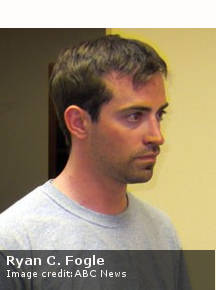
The Russian Ministry of Foreign Affairs lodged an official complaint yesterday with the United States Ambassador to Russia over the alleged espionage activities of Ryan Christopher Fogle. The Third Secretary in the Political Section of the US embassy was arrested with great media fanfare on Monday night, allegedly as he was trying to recruit a Russian intelligence officer. As can be expected, the Russian media had a field day with Fogle’s arrest; after all, it has been nearly a decade since the last time an American intelligence operative was publicly uncovered on Russian soil. Many Western observers, however, have questioned if Fogle could really be an officer of the Central Intelligence Agency, and whether the Russian Federal Security Service (FSB) simply framed an unsuspecting junior American diplomat. Much of the skepticism expressed by Western commentators focuses on the articles that were allegedly found by the FSB in Fogle’s backpack. They included several pairs of sunglasses, recording devices, as well as two wigs. Would a CIA officer be foolish enough to be carrying with him surreptitious recording devices in downtown Moscow? And do modern case officers still employ wigs when walking the streets of foreign capitals recruiting spies? The answer is, of course, yes. Read more of this post

Alleged CIA officer arrested in Moscow in Russian sting operation

Ryan Christopher FogleBy JOSEPH FITSANAKIS | intelNews.org |
Russia has accused an American diplomat of secretly working for the Central Intelligence Agency (CIA) following his arrest during a sting operation in Moscow. The diplomat, who was expelled from Russia on Tuesday, is Ryan Christopher Fogle; he held the post of Third Secretary of the Political Department of the United States embassy in the Russian capital. He was detained on Monday evening by counterintelligence officers of Russia’s Federal Security Service (FSB). Fogle’s arrest marked the first time in nearly a decade that espionage charges were leveled against an American government employee in Russia. Fogle, a 29-year-old native of St. Lous, Missouri, who graduated from Colgate University in New York in 2006, was arrested by the FSB in Moscow’s Akademika Pilyugina Street, allegedly right in front of an apartment complex reserved for foreign diplomatic personnel. He is accused by the FSB of conspiring to recruit a member of the Russian intelligence services, who is allegedly an antiterrorist expert working in Russia’s North Caucasus region. The FSB told Russian media that Fogle had communicated with his would-be recruit on the phone at least twice in the days prior to the sting operation. The FSB even took the extremely unusual step of airing footage of Fogle’s arrest on Russian state-run television. The American diplomat was shown pinned on the ground, wearing a blonde wig and baseball cap, while FSB officers handcuffed him. A second video released by the FSB, shows Fogle sitting quietly in a government office, in the presence of three other American government officials, including Michael Klecheski, Chief Political Officer at the US embassy in Moscow. All four of them are shown staring in silence, while an FSB official is expressing his strong displeasure over Fogle’s alleged espionage activities. According to the FSB, when Fogle was arrested, he was found to be carrying a backpack containing —among other things— his diplomatic identification card, two wigs, three pairs of sunglasses, recording devices, an RFID shield, a compass and a knife. He was also carrying three Ziploc bags filled with $100,000 in €500 notes, as well as a letter, written in Russian, addressed to his would-be recruit. Read more of this post

News you may have missed #835 (Americas edition)

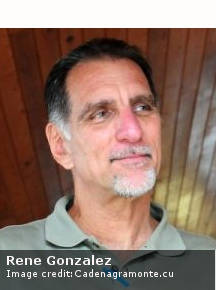
Rene GonzalezBy IAN ALLEN | intelNews.org |
►►‘Cuban Five’ spy member renounces US citizenship. Cuban intelligence officer Rene Gonzalez, who was a member of the “Cuban Five” spy group in South Florida, was released from a US prison in 2011, after serving 10 years for espionage. He was required to serve three years’ probation in the US. But on Friday US District Judge Joan Lenard ruled that Gonzalez, who had already been allowed to temporarily return to Cuba for his father’s funeral, could stay there if he renounced his US citizenship. Gonzalez is the first of the Cuban Five to return to the island. The other four men continue to serve lengthy sentences in US federal prisons.
►►US Defense Intelligence Agency contemplates austerity. Since 2001, intelligence agencies have had just about all money they wanted, but not anymore, as the cuts mandated by the Budget Control Act are hitting even previously inviolable spook accounts. In a reflection of this new reality, the Defense Intelligence Agency plans a conference with industry at its headquarters on June 27, 2013. Agency leaders will focus on “current and emerging challenges in the context of an increasingly austere fiscal posture”.
►►Report says Canada spies caught off guard by Arab Spring. The 2011 Arab Spring uprising in the Middle East came as a surprise to the Canadian government, which risks getting caught off-guard again without a new approach to gathering intelligence. This is according to a new report by Canada’s Intelligence Assessment Secretariat, a unit of the Privy Council’s Office, the bureaucratic arm of the Office of the Canadian Prime Minister. On the other hand, the report states, “there is no reason to believe that [Canadian intelligence agencies] did any worse than other allied agencies in its analysis of the Arab Spring, and in a few areas it appears to have done somewhat better”.

News you may have missed #834

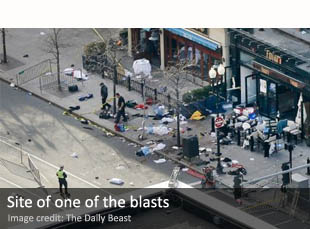
Site of one of the Boston Marathon blastsBy IAN ALLEN | intelNews.org |

►►Why FBI and CIA didn’t connect the dots on Boston bombers.  The FBI and the CIA are being criticized for not keeping better track of Tamerlan Tsarnaev in the months before the Boston Marathon bombings. How could they have ignored such a dangerous person? How do we reform the intelligence community to ensure this kind of failure doesn’t happen again? Legendary security expert Bruce Schneier says the idea of connecting the dots is a bad metaphor, and focusing on it makes us more likely to implement useless reforms.
►►Korean spy’s deportation reveals web of intrigue. Relations between Australia and South Korea have been strained after the East Asian economic powerhouse was caught soliciting sensitive information from public servants, and the deportation of a South Korean spy for espionage in 2009 was disclosed. New details of South Korean espionage in Australia were revealed in an unfair dismissal case before the Fair Work Commission brought by a former intelligence officer with the Australian Federal Police, Bo-Rim “Bryan” Kim.
►►Secret US court approved all domestic spying requests in 2012. The United States Foreign Intelligence Surveillance Court (also known as FISA court) quietly rubber-stamped nearly 2,000 government requests to search or electronically monitor people in the United States last year, according to a Justice Department report. The agency, which oversees requests for surveillance warrants against suspected foreign intelligence agents on US soil, released the report to Senate majority leader Harry Reid (D-Nevada), showing that by approving the 1,856 inquiries “for foreign intelligence purposes”, it had granted every single government request in 2012.

Second US government official indicted in Cuba espionage case

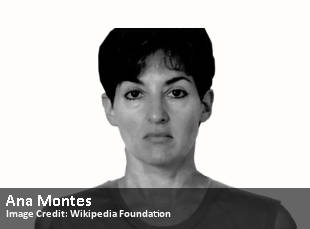
Ana Belen MontesBy IAN ALLEN | intelNews.org |

The United States has publicly unsealed for the first time the indictment of an American government official accused of spying for Cuba, in connection with former senior US military intelligence analyst Ana Belen Montes, who was jailed in 2002 for spying for Havana. Marta Rita Velazquez, a Puerto Rican-born American citizen, was originally indicted in 2004 for conspiracy to commit espionage as an unregistered agent of a foreign power. A graduate of Princeton University and Georgetown University Law School, Velazquez first met Montes while they were both studying at the Johns Hopkins University’s School of Advanced International Studies in Washington, DC. In 2002, when the Federal Bureau of Investigation ended Montes’ 17-year espionage career on behalf of Cuba, it was told that Velazquez helped the Cuban Intelligence Directorate recruit Montes. The military analyst told her FBI interrogators that Velazquez introduced her to a Cuban intelligence officer in New York; she then traveled with her to Cuba, where Montes received “operational training”, before helping her obtain a job with the US Defense Intelligence Agency. At the time, Velazquez was already working with for the US Department of State as a legal officer attached to the US Agency for International Development. In that position, which she held for over a decade, Velazquez had a top-secret security clearance; she also completed tours at the US embassies in Guatemala and Nicaragua. In 2004, a grand jury in Washington, DC, indicted Velazquez for espionage, accusing her of exchanging encrypted information with Cuban intelligence officers and traveling abroad to receive operational training while secretly in the service of Cuba. Read more of this post

Diplomat jailed in biggest Dutch spy affair in recent times

Raymond PoeterayBy JOSEPH FITSANAKIS | intelNews.org |
A court in the Netherlands has sentenced a diplomat to 12 years in prison for spying for Russia, in what security observers have called one of the worst espionage scandals in recent Dutch history. Raymond Poeteray, who had worked for Holland’s Ministry of Foreign Affairs since 1978, was convicted on Tuesday of spying for the Russian Foreign Intelligence Service (SVR). Poeteray was arrested in June of 2012 at Amsterdam’s Schiphol International Airport, following an extensive investigation by German counterintelligence. The diplomat was captured as he was boarding a flight to Vienna, Austria, the first leg in a return journey to Bangkok, Thailand. Dutch prosecutors claimed during Poeteray’s trial that he had arranged to meet his Russian handlers in Bangkok and give them three USB drives loaded with classified information, which were found on in his possessions upon his arrest at Schiphol. The three-judge panel that sentenced Poeteray at The Hague said he had spied on Holland “for years [while] on assignment from the Russian Foreign Intelligence Service”, in the course of which he damaged the interests of his home country in a “substantial” way. The Dutch prosecutor’s office said Poeteray had provided Moscow with sensitive information, including military and political intelligence on the European Union, inside material on the North Atlantic Treaty Organization, as well as documents belonging to the Dutch Foreign Affairs Ministry. The court heard that, in recent years, the diplomat had given the SVR information about Dutch involvement in the Libyan Civil War, classified data from European-Union-sponsored fact-finding missions in the Republic of Georgia, as well as intelligence on Dutch peacekeeping operations in Afghanistan, Kosovo, and elsewhere. Read more of this post

Is Ana Montes ‘the most important spy you’ve never heard of’?

Ana Belen MontesBy IAN ALLEN | intelNews.org |

An extensive article published today in The Washington Post Magazine revisits the largely forgotten case of Ana Belen Montes, a senior United States military intelligence analyst who was convicted in 2002 of spying for Cuba. Montes, who was arrested by the Federal Bureau of Investigation in Washington, DC, on September 20, 2001, underwent trial and sentencing in the shadow of 9/11, which might help explain the relative obscurity of her case. Still, as The Post article by Jim Popkin states, many intelligence observers view her as one of the most damaging double spies in recent American history. She entered government work as a clerk typist at the Department of Justice, and quickly received top-security clearance. It was from there that she moved to the Defense Intelligence Agency, America’s premier military intelligence organization, in September 1985. She rose meteorically through the ranks of the DIA, eventually becoming the Agency’s top Cuba analyst. Montes’ former colleagues report that she was known as “the Queen of Cuba”, a witty label that rested on her indisputable reputation as one of America’s most capable intelligence analysts on Cuba. She also came from a family with strong conservative credentials and strong connections with the US counterintelligence community. Her brother and sister were both FBI agents, and her former long-term boyfriend was a Cuban intelligence specialist for the Department of Defense. Read more of this post

Saudi Arabia accuses Iran of running 18-member spy ring

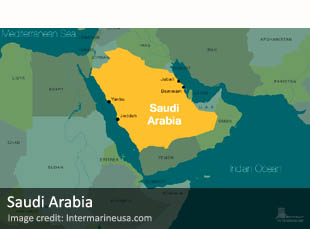
Saudi ArabiaBy IAN ALLEN | intelNews.org |
The government of Saudi Arabia has publicly accused Iran of setting up an espionage ring consisting of 18 members, in order to spy on “vital sites and installations in the Kingdom”. On March 19, Saudi authorities announced the arrest of 18 men on suspicion of operating an extensive “spy network working for a foreign entity”. The men were reportedly arrested in coordinated raids in four different regions of the country, which included locations in Mecca, Medina, and Saudi capital Riyadh. Sixteen of the arrestees are Saudi citizens, while one is Lebanese and one is Iranian. At the time of the initial announcement, Saudi officials refused to name the “foreign entity” behind the alleged espionage ring. But intelNews noted that most of the arrests took place in Saudi Arabia’s Eastern Province, which is home to much of the country’s Shiite Muslim minority. This, in association with the two foreign detainees, led us to speculate that there could possibly be an Iranian connection to the alleged spy affair. On Tuesday, Major General Mansour Al-Turki, spokesman for the Kingdom’s Ministry of the Interior, said that there was “a direct link between members of this cell and Iran’s intelligence apparatus”. Speaking to reporters in Riyadh, Al-Turki claimed that the government of Iran had provided members of the ring “regularly [with] sums of money in return for information and documents on important installations during the spy operation in the interest of [Iranian] agencies”. He added that the alleged link with Iran had been established during “preliminary investigations, physical evidence which has been collected, and statements from the accused in the case”. Read more of this post

Israel’s Prisoner X ‘gave Mossad secrets to Hezbollah’: German report

Ben ZygierBy JOSEPH FITSANAKIS | intelNews.org |
An Australian-born Israeli spy, who killed himself while being held in an Israeli prison in 2010, had been arrested for sharing Israeli secrets with the Lebanese militant group Hezbollah, according to a German report.  Ben Zygier was an officer in Israel’s covert-action agency Mossad for several years before he was placed in solitary confinement following his arrest in Israel, in February 2010. Known to the outside world only as ‘Prisoner X’, he allegedly killed himself in his cell a few months later. In February of this year, when an Australian television program identified ‘Prisoner X’ as Zygier, the Australian government admitted it had been aware of its citizen’s incarceration and death, but chose not to extend to him diplomatic support. One of the burning questions in the Zygier case relates to the precise reasons for his detention. On Sunday, German newsmagazine Der Spiegel said that the Australian-born Zygier was arrested by Israeli intelligence after contacting —on his own initiative and without permission— an individual with links to militant Shiite group Hezbollah. According to the Spiegel report, Zygier had been demoted from an operations officer to a desk clerk, having failed to produce actionable results after several years of fieldwork in Europe. Seeing his demotion as a major obstacle to his career, the Australian-born spy allegedly embarked on a ‘rogue’ mission, in an attempt to impress his Mossad superiors. In 2008, when the Israeli government allowed Zygier to return to Australia to pursue graduate studies, he secretly traveled to Europe and established contact with a man from a Balkan country known to have close links with Hezbollah, considered by Tel Aviv as one of Israel’s mortal enemies. Read more of this post

Saudi Arabia arrests 18 on espionage charges

Saudi ArabiaBy IAN ALLEN | intelNews.org |
Authorities in Saudi Arabia announced the arrest yesterday of 18 people accused of conducting “espionage activities for the benefit of a foreign country”. Speaking on Saudi state television, Interior Ministry spokesman Mansour al-Turki said the men were arrested on suspicion of being members of an extensive “spy network working for a foreign entity”, which he refused to name. He added that the arrestees had been “gathering information about installations and vital areas” in Saudi Arabia, and were “providing intelligence agencies of that state with it”. He told reporters that the arrests were made five days ago, after Saudi security agencies received information of a foreign-instigated spy ring operating in the oil-rich kingdom. The alleged members of the ring were reportedly arrested during several coordinated raids in four different regions of the country, which included locations in Mecca, Medina, and capital Riyadh. Sixteen of those arrested are said to be Saudi citizens, while one is reportedly Lebanese and one is Iranian. It is worth noting that many of the suspected spy ring members were arrested in Saudi Arabia’s Eastern Province, which is home to much of the country’s Shiite Muslim minority. In association with the two foreign detainees, this detail may point to a possible Iranian connection to the alleged spy affair. Relations between Saudi Arabia and Iran have been essentially non-existent ever since the Islamic Revolution of 1979, when the Shiite-dominated Iranian government accused the Saudis of being puppets of the United States and called for the overthrow of the Saudi royal family. Read more of this post

Israel to push U.S. for Pollard’s release as Obama visit nears

Jonathan PollardBy JOSEPH FITSANAKIS | intelNews.org |
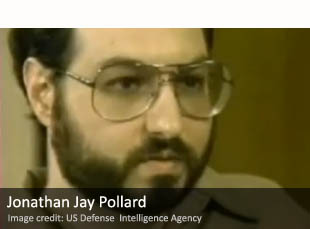
As United States President Barack Obama is preparing to visit Israel this week, several public figures are joining the Israeli government in lobbying for the release of a convicted spy, who betrayed American secrets to Israel in the 1980s. The pressure campaign reportedly includes a symbolic hunger strike and a public petition in favor of clemency, which contains nearly 200,000 signatures. Jonathan Jay Pollard was a US Navy intelligence analyst who spied for Israel in exchange for money from 1984 until his arrest in 1986. Many in US counterintelligence consider him one of the most damaging double spies in American history. But he is widely viewed as a hero in Israel, where many conservative Israelis, as well as pro-Israel Americans, are actively pressuring the US administration of President Barack Obama to release him. In 1998, after many years of official denials, Israel publicly admitted that Pollard had operated as an Israeli agent in the United States. Pollard, who acquired Israeli citizenship in 1995, has so far served 28 years of a life sentence in a US prison. The New York Times reports that many Israelis see Obama’s visit to Israel on Wednesday —the first in his presidency— as “the perfect opportunity” to pressure the US President for clemency for Pollard. In addition to a high-profile hunger strike in Tel Aviv, several notable Israeli citizens have signed an extended petition urging Pollard’s release. They include Israeli President Shimon Peres, as well as several retired generals and Nobel Prize-winning academics. Notable American signatories include former Assistant Secretary for Defense Lawrence Korb, former Director of the Central Intelligence Agency James Woolsey, as well as former Secretaries of State George Shultz and Henry Kissinger. Read more of this post

Year in Review: The 10 Biggest Spy-Related Stories of 2012

Happy New YearBy J. FITSANAKIS and I. ALLEN | intelNews.org |
Ever since we launched this website in 2008, we have been monitoring daily developments in the highly secretive world of intelligence and espionage, striving to provide an expert viewpoint removed from sensationalism and conspiratorial undertones. In the past year, we witnessed our fair share of significant intelligence-related stories, some of which made mainstream headlines, while others failed inexplicably to attract the attention of the news media industry. In anticipation of what 2013 may bring, we decided to take a look back to the year that just ended by compiling a list of what we think are the ten most important security- and intelligence-related developments of the past 12 months. The stories below are listed in reverse order of importance. Do you agree with our choices? Have we missed something important? Share your thoughts.

10. South African spy officials faked threats to increase budget. The historical tendency of spy agencies to overstate security threats in order to secure governmental funds is hardly novel. But officials in the South African Secret Service appear to have gone a step further: they allegedly paid some of their informants to make bogus threats against the government, in order to prompt an increase in counterterrorist funding. The bogus threats were allegedly aimed at creating “a false impression of imminent, unprecedented attacks on black people and African National Congress (ANC) members”. Incredibly, or perhaps predictably, nobody from the Secret Service has been fired in connection with this scandal.

Read more of this post

Jailed US spy gave Israel information on Pakistan nuclear program

Jonathan Jay PollardBy JOSEPH FITSANAKIS | intelNews.org |
An American intelligence analyst, who was jailed in 1987 for spying for Israel, gave his spy handlers information on Pakistan’s nuclear weapons program, according to declassified documents. Former United States Navy intelligence analyst Jonathan Jay Pollard is currently serving a life sentence for selling classified information to the Israeli government between 1985 and 1987. On December 14, the Central Intelligence Agency declassified its official damage assessment of Pollard’s espionage, who some counterintelligence officials believe was the most prolific mole that ever spied on the US government for a foreign country. This was the second time that the CIA declassified the document, titled The Jonathan Jay Pollard Espionage Case: A Damage Assessment, following an appeal by George Washington University’s National Security Archive. Even though this latest version of the declassified document is still heavily redacted, it contains some new information. One new revelation is that Pollard’s Israeli handlers specifically asked him to acquire intelligence collected by the US government on the Pakistani nuclear weapons program. In a section titled “Implications of Compromises: What Israel Gained from Pollard’s Espionage”, the CIA assessment states that Pollard focused on “Arab and Pakistani nuclear intelligence” and gave his Israeli handlers information on a secret Pakistani “plutonium reprocessing facility near Islamabad”. Further information in the declassified report about this subject is completely redacted. The question is, what kind of information on Pakistan’s nuclear weapons program did Tel Aviv acquire from Pollard?  According to A.Q. Khan, the so-called father of the Pakistani nuclear bomb, Islamabad was able to detonate a nuclear device “within a week’s notice” by as early as 1984. Read more of this post