Leading German university suspends Chinese state-funded researchers

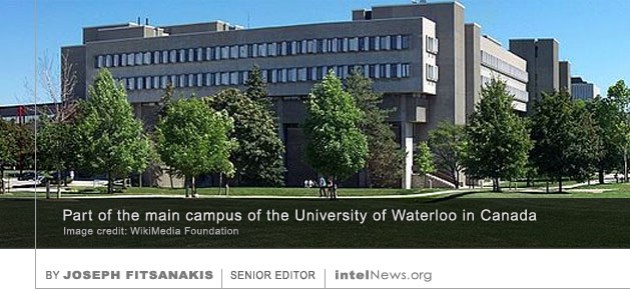
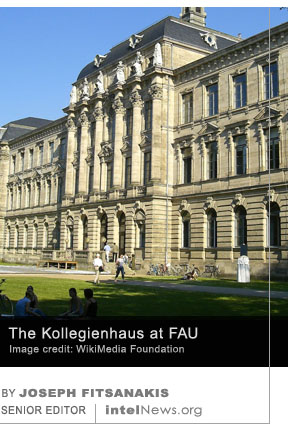
FAU UniversityONE OF GERMANY’S LEADING universities has suspended researchers funded by the Chinese government, citing concerns about academic freedom and industrial espionage. The Friedrich Alexander University of Erlangen-Nuremberg (FAU) announced the suspension of Chinese government-funded researchers in June of this year. In announcing the measure, the university stated that the move was designed to protect academic freedom and freedom of expression among its faculty and staff. Earlier this week, however, German media reported the contents of an internal FAU email, which expressed concerns that the Chinese state could be utilizing government-funded researches as spies.
Founded in Bavaria in 1743, FAU is among Germany’s leading universities. On June 1, it became the first university in Germany to suspend researchers funded by the China Scholarship Council (CSC). The CSC is an outreach unit of the Chinese Ministry of Education, which funds the work of Chinese researchers in foreign universities, while also providing scholarships to foreign citizens who apply to study in China. In January 2023, Swedish daily Dagens Nyheter reported that, in order to become recipients of CSC scholarships, Chinese citizens were required to pledge “support [to] the leadership of the Chinese Communist Party […] and to have a correct world view, outlook on life, and values system”.

On June 1, the FAU leadership announced that the CSC funding methods conflicted with Germany’s Basic Law (the country’s Constitution). Furthermore, according to the FAU leadership, the CSC funding methods violated the principles of academic freedom and freedom of expression for its faculty, as practiced in Germany. On Saturday it was reported that, according to an internal FAU email, university officials also expressed concerns that the Chinese state could use CSC researchers to spy on FAU scientific and industrial research, and to compromise FAU’s data security and intellectual property practices.

FAU’s decision was reportedly met with support by Germany’s Minister for Education, Bettina Stark-Watzinger, who said that German universities and research establishments have “a responsibility to safeguard themselves against espionage activities conduced by students receiving scholarships from the Chinese government”. It is also reported that other universities in Germany and elsewhere in Western Europe are considering following FAU in suspending CSC-funded Chinese researchers.

Author: Joseph Fitsanakis | Date: 31 August 2023 | Permalink

Chinese government arrests second alleged CIA spy in 10 days

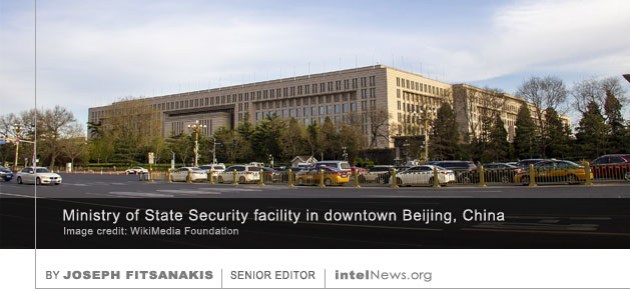
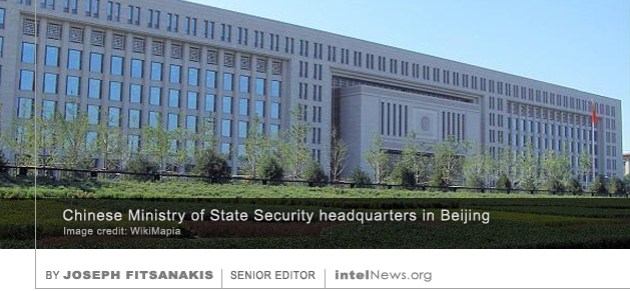
Chinese Ministry of State SecurityFOR THE SECOND TIME in 10 days, the government of China has announced the arrest of a Chinese government employee on suspicion of spying for the United States Central Intelligence Agency (CIA). In a statement issued on Monday, China’s civilian intelligence agency, the Ministry of State Security (MSS), said it had launched an investigation into an official of a government ministry, who was allegedly caught conducting espionage on behalf of the CIA.
The MSS statement did not name the government ministry where the alleged spy works. But it identified the accused by his surname, Hao, describing him as a 39-year-old Chinese national. According to the MSS statement, Hao spent a number of years as a graduate student in Japan. While he was studying in Japan, he allegedly visited the United States embassy in Tokyo, in order to apply for a travel visa. During his visit to the embassy, he met a United States embassy official, who befriended him.

Over time, Hao allegedly formed a close relationship with the unnamed American embassy official. The latter treated him to meals, sent him gifts in the mail, and secured funds for him to conduct research. Eventually, the embassy official introduced Hao to another American official, who, according to the MSS, was a CIA case officer. The CIA case officer allegedly recruited Hao to spy for the United States and instructed him to seek employment at “a core and critical department” of the government upon his return to China.

After completing his studies in Japan, Hao returned to China and secured employment in a government agency. He continued to meet regularly with his alleged CIA handler and other CIA officers, who to whom he “provided intelligence” in return for “espionage funds”, according to the MSS statement. The statement said that Hao’s case remains under investigation and that no official charges have yet been filed.

The MSS statement about Hao’s case came exactly 10 days after the spy agency posted on its WeChat social media account that it had caught another government official spying for the CIA. On August 11, the MSS said it had detained an alleged CIA spy named Zeng, whom it described as a 52-year-old “staff member of a Chinese military industrial group and an important confidential employee” of the Chinese state. Zeng had reportedly been sent to Italy by his employer, presumably in order to pursue graduate studies or receive technical training. While in there, he was allegedly accosted and eventually recruited by an employee of the United States embassy in Rome.

It is not known if the two cases are in any way connected. Government officials in Washington and at the United States embassy in Beijing have not commented on the story.

Author: Joseph Fitsanakis | Date: 23 August 2023 | Permalink

Eighth person detained in sprawling Taiwanese probe of Chinese spy ring

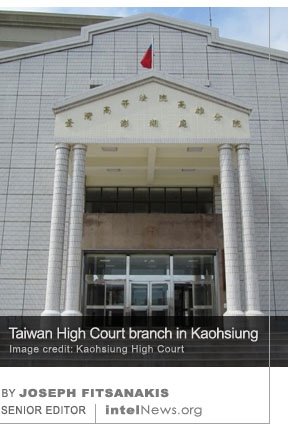
Kaohsiung High Court, TaiwanA SEVENTH PERSON HAS been detained in Taiwan as a result of a broadening investigation into a Chinese spy ring that allegedly provided Beijing with sensitive military intelligence. The existence of the investigation was revealed in January of this year, when the Taiwanese authorities announced the arrests of one retired and six active-duty military officers, all of whom were charged with spying for China.
On January 6 of this year, a retired Taiwanese Air Force colonel, identified only by his last name, Liu, was arrested for spying. According to court documents unsealed at the Taiwan High Court branch in Kaohsiung, Liu retired from the Air Force 2013. Soon afterwards, he began business dealings in China. It was during one of his trips to China when Liu was allegedly recruited by the Chinese government. He then carried out espionage operations on behalf of Beijing for approximately eight years.

Throughout his espionage activities, Liu allegedly used his military contacts to recruit six active-duty Taiwanese Air Force and Navy officers to carry out espionage, in return for monetary payments. The six active-duty military officers were arrested along with Liu on January 6. In April of this year, all seven individuals were formally charged with spying for China, in violation of Taiwan’s Classified National Security Information Protection Act.

Taiwanese government prosecutors alleged that each member of the spy ring received between NT$200,000 and NT$700,000 (approximately US$6,500-23,000) for agreeing to spy for Beijing. As the principal agent, Liu received individual bonuses of between NT$30,000 and NT$100,000 (US$1,000-3,200) each time he gave his Chinese handlers information gathered by one of the members of the spy ring.

On August 16, the Taiwanese government announced that one more individual, referred to as “a field officer” was detained on suspicion of spying for China. The suspect was identified only by his last name, Cheng. He was reportedly arraigned in the Taiwan High Court branch in Kaohsiung, the same court that last January delivered espionage charges against the other seven suspects involved in the spy ring investigation. All eight suspects have been denied bail. Their trial has not yet been set.

Author: Joseph Fitsanakis | Date: 21 August 2023 | Permalink

UK charges three Bulgarians with spying for Russia in ‘major national security’ case

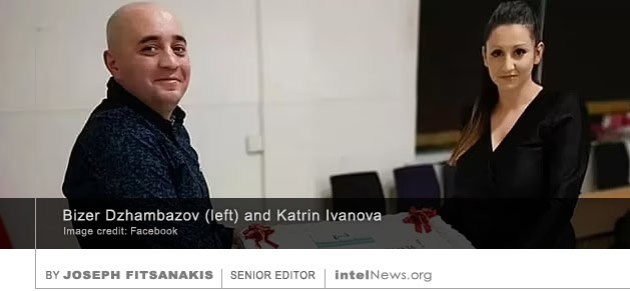
Bizer Dzhambazov and Katrin IvanovaAUTHORITIES IN BRITAIN HAVE charged three Bulgarian nationals with spying for Russia, as part of “a major national security investigation” that led to at least five arrests as early as last February. Two of the Bulgarians appear to be legally married. They have been identified as Bizer Dzhambazov, 41, and Katrin Ivanova, 31, who live in Harrow, a northwestern borrow of Greater London. The third Bulgarian, Orlin Roussev, 45, was arrested in Great Yarmouth, a seaside town in the east coast identity dof England. None of the suspect appears to have a formal diplomatic connection to either Bulgaria or Russia.

The Bulgarians were reportedly arrested in February of this year by the Counter-Terrorism Command of the Metropolitan Police, whose law enforcement mandate includes working on counterespionage cases. Two other individuals who were arrested at the time have not been charged or named. The three suspects have been charged under Section 4 of the United Kingdom’s Identity Documents Act 2010, which prohibits the possession of fake identity documents with “improper intention” and with the owner’s knowledge that they are fake. According to British government prosecutors, the suspects possessed forged passports and identity cards for Spain, France, the United Kingdom, Croatia, Italy, Greece, Bulgaria, the Czech Republic, and Slovenia.

Dzhambazov and Ivanova are believed to have moved to the United Kingdom as a couple in 2013. Both worked in the British healthcare sector —Ivanova as a laboratory assistant for a private company and Dzhambazov as a driver for a hospital. Roussev moved to the United Kingdom in 2009 and worked on the technical side of the financial services industry. He claims to have worked as an adviser for the Ministry of Energy of Bulgaria. He also claims to have previously owned a private company that operated in the area of signals intelligence (SIGINT), which involves the interception of electronic communications.

Bulgaria was one of the Soviet Union’s closest allies during the Cold War. Relations between Bulgaria and Russia plummeted in the 2000s, but pro-Russian sentiments continue to survive among some nationalist segments of the Bulgarian electorate. In June of this year, Kiril Petkov, the leader of Bulgaria’s We Continue the Change party, which today backs Bulgaria’s Prime Minister, Nikolai Denkov, spoke publicly about “Moscow-backed agents” operating inside Bulgaria’s intelligence services. Petkov proposed an ambitious plan to reform the Bulgarian intelligence services in order to “diminish the influence of Russia”. He proposed to do this through the administration of “integrity and ethical tests” to intelligence personnel.

Author: Joseph Fitsanakis | Date: 15 August 2023 | Permalink

China arrests government worker who gave CIA ‘core information’ about military

US embassy Rome ItalyA CHINESE GOVERNMENT EMPLOYEE gave “core information” about China’s military to the United States, after he was recruited by a Central Intelligence Agency (CIA) officer in Italy, a Chinese state agency has said. The allegation was made in a statement that was issued on Friday by China’s civilian intelligence agency, the Ministry of State Security (MSS), on its WeChat social media account.
The MSS statement did not specify the period during which the alleged espionage took place. But it named the alleged spy as “Zeng” and described him as a 52-year-old “staff member of a Chinese military industrial group and an important confidential employee” of the Chinese state. According to China’s state-owned newspaper The Global Times, Zeng had been sent to Italy by his employer, presumably in order to pursue graduate studies or receive technical training. While in Italy, Zeng was allegedly accosted by an employee of the United States embassy in Rome, which the MSS identified as “Seth”.

According to the MSS, Seth was a CIA case officer, who befriended Zeng through “dinner parties, outings and trips to the opera”. The Chinese man “developed a psychological dependence” on Seth and was “indoctrinated” by him “with Western values”, the MSS statement claims. Seth eventually convinced Zeng to sign an agreement with the CIA to conduct espionage, after which the Chinese man allegedly received intelligence tradecraft training. Upon returning to China from his stay in Italy, Zeng is alleged to have carried out espionage on behalf of his CIA handlers. The MSS claims Zeng gave his CIA handlers “a great amount of core intelligence” during “multiple secret meetings” with them.

The information Zeng is alleged to have provided to the CIA concerned “key developments about China’s military” to which he had access through his employer. In exchange for this information, Zeng is accused of having received “a huge amount of [financial] compensation” by his CIA handlers. The latter also promised him that they would help his family emigrate to the United States, as per the MSS statement. The spy agency said that Zeng remains in detention while the case is under investigation. The MSS statement also warned other Chinese citizens living or traveling abroad of “the risks and perils” of recruitment by Western spy agencies.

The Reuters news agency said it contacted the United States embassy in Beijing about the MSS allegations, but received no response.

Author: Joseph Fitsanakis | Date: 14 August 2023 | Permalink

Brazil judges block international requests to extradite alleged Russian spy

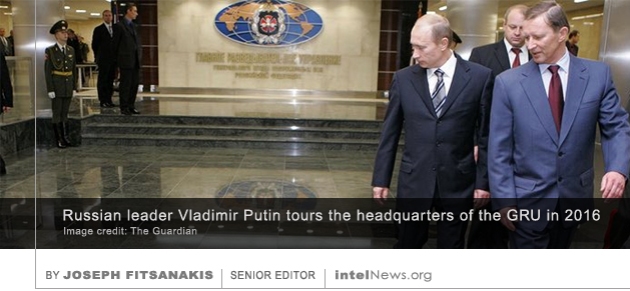
GRUTHE BRAZILIAN GOVERNMENT IS blocking requests from the United States and Russia to extradite an alleged Russian deep-cover spy, whose forged Brazilian identity papers were discovered by Dutch counterintelligence. Sergey Cherkasov was expelled by authorities in the Netherlands in June 2022, after he attempted to enter the country using a Brazilian-issued passport under the name of Victor Muller Ferreira.
Within a few days of his expulsion, Dutch and American counterintelligence had outed Cherkasov as an intelligence officer of the Main Directorate of the Russian Armed Forces’ General Staff, which is commonly known as GRU. Cherkasov is alleged to have built his forged identity over several years, while operating in Brazil and the United States. Upon returning to Brazil, Cherkasov was sentenced to 15 years in prison for using forged Brazilian identity documents.

Last week, Cherkasov’s sentence was reduced to 5  years, after a court in Brazil dropped some of the initial charges that had been filed against him by the Brazilian government prosecutor’s office. Cherkasov’s lawyers are now arguing that their client does not pose a flight risk and should therefore be allowed to serve the remainder of his sentence outside of prison, wearing an electronic tagging device.

These recent developments are of concern to authorities in the United States. The latter have filed an extradition request for Cherkasov, claiming that he spent several years as a graduate student in an American university while using his forged Brazilian identity papers. During that time, Cherkasov is alleged to have repeatedly communicated with his Russian intelligence handlers, supplying them with information about American politics and policy.

However, the Ministry of Justice and Public Security of Brazil said on Friday that Washington’s extradition request had been denied and that Cherkasov would remain in Brazil. The apparent reason for the denial is that Brazil’s Supreme Federal Court had already approved a similar extradition request for Cherkasov, which was filed in April by the Russian government. Moscow claims that Cherkasov is wanted in Russia for narcotics trafficking. The Russians also deny that the alleged spy worked for the GRU or any other government agency.

Yet, despite claims to the contrary, the Brazilian government appears to be essentially stalling on Moscow’s extradition request. On Friday, Flávio Dino, who serves as Minister of Justice under the administration of President Inácio Lula, stated that Cherkasov would continue to serve his prison sentence in Brazil until further notice. In the United States, CBS News reported that Cherkasov’s extradition to Russia would take place “only […] after the final judgment of all of his cases here in Brazil” has been issued, according to the accused spy’s lawyers.

Author: Joseph Fitsanakis | Date: 31 July 2023 | Permalink

Switzerland overrun with foreign spies, Swiss intelligence service warns

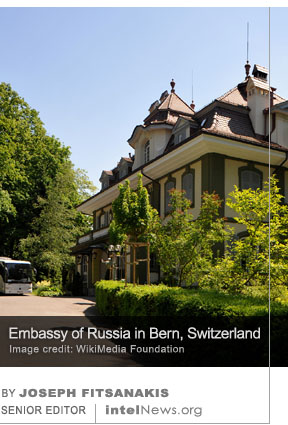
Russian embassy SwitzerlandINTENSIFYING COMPETITION BETWEEN THE superpowers has turned Switzerland into an espionage battlefield, with more foreign spies being active there than in most other European countries, according to a new report. The report, published earlier this week by the Swiss Federal Intelligence Service (FIS), notes that Russian operatives are particularly active in the alpine country. Many Russian intelligence officers have relocated there after being expelled by a host of European countries in the past 18 months, according to the report.
Traditionally neutral Switzerland has not joined most other European countries in expelling Russian intelligence officers —posing as diplomats— following Russia’s full-scale invasion of Ukraine in 2022. Therefore, as Russia tries to rebuild its shattered intelligence-gathering networks in Europe, it is using Switzerland as a forward-operating base, according to the FIS. As of 2023, the number of Russian intelligence personnel stationed on Swiss soil, and the ensuing espionage activity, “is notably high”, states the report.

According to the FIS report, that the lion’s share of Russian intelligence officers —“several dozen”— are stationed “at the Russian diplomatic and consular missions in Geneva”. A major international diplomatic hub, Geneva is an “ideal operational environment” for foreign intelligence agencies. It hosts a significant number of international organizations —including one of the four major offices of the United Nations. Additionally, it is situated close to the largely unmonitored French border. This allows intelligence operatives to move seamlessly in and out of European Union soil.

Furthermore, as Western intelligence agencies increase their presence in Switzerland, in order to counter Russian intelligence activities there, “espionage levels […] are continuously rising”, according to the FIS report. This situation is unlikely to change in the coming year, as “intensifying competition between superpowers” is expected to continue to involve Switzerland as an espionage battlefield that draws in rival intelligence agencies, the FIS report concludes.

Author: Joseph Fitsanakis | Date: 28 June 2023 | Permalink

Albanian court releases Russian and Ukrainian bloggers suspected of espionage

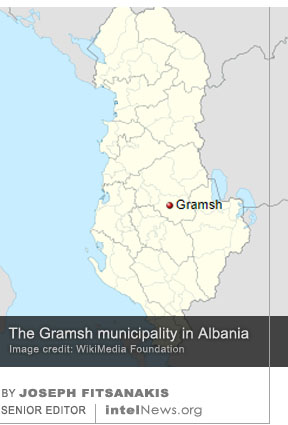
Gramsh AlbaniaA COURT IN ALBANIA has ordered the release from prison of two Russians and one Ukrainian national, who were arrested nearly last August on suspicion of carrying out military espionage. On August 20, 2022, Albania announced the arrests of Russian nationals Svetlana Timofeeva and Mikhail Zorin. Arrested alongside the two Russians was a Ukrainian citizen, who was identified in media reports as Fedir Alpatov.

Albanian authorities said the three foreigners had been arrested while attempting to enter the Gramsh military installation, a defunct small-arms factory, which is located 50 miles south of the Albanian capital Tirana. During the Cold War, the Gramsh factory specialized in producing Soviet-designed AK-47 assault rifles. After the collapse of Albania’s communist system in the early 1990s, the factory was turned into a storage facility and was subsequently used to deactivate and decommission expired munitions.

Following their arrest, the three foreign nationals said they were “urban explorers” who engaged in “industrial tourism”, a type of travel that centers on entering and photographing dilapidated industrial facilities around the world. Soon after her arrest was announced, the United States government-funded Radio Free Europe (RFE) confirmed that Timofeeva, was indeed “one of Russia’s most famous urban explorers”. According to RFE, Timofeeva, 34, was known under the nom de guerre “Lana Sator” and maintained an Instagram page that was followed by over 250,000 users.

The plot thickened in March of this year, when Timofeeva, while still in detention, applied for political asylum in Albania. It emerged that Timofeeva was wanted by the Russian government on charges of “illegally obtaining information constituting a state secret”. In February of this year, the Ministry of Justice of Albania approved a request by Moscow to extradite Timofeeva to Russia, in order to face espionage charges. However, this decision was later overturned by an Albanian judge, a development that reportedly angered Russian President Vladimir Putin.

Timofeeva’s lawyers argued that she had openly opposed the February 2022 Russian invasion of Ukraine and had voiced public criticism of President Putin. As a result, Timofeeva had left Russia and had been living in exile in Georgia at the time of her arrest. Some observers, however, suspected that at least one of those arrested had links to Russian intelligence. It was reported that Zorin had admitted being an informant for the Russian Federal Security Service (FSB). However, the precise conditions under which Zorin’s alleged admission was made are not known.

In a statement released to the media last week, Albania’s Elbasan Trial Court said that, even though Timofeeva, Zorin and Alpatov would be released from detention, the investigation against them on suspicion of espionage would continue for the time being.

Author: Joseph Fitsanakis | Date: 29 May 2023 | Permalink

Turkey claims it uncovered Israeli spy cell that targeted Iran

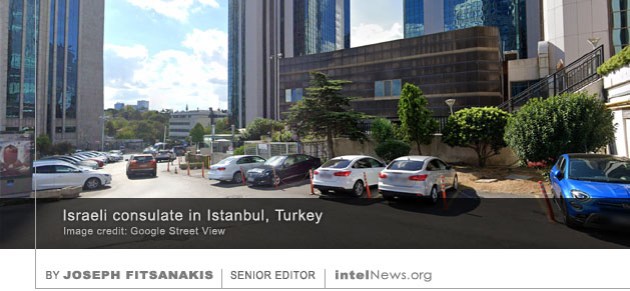
Israeli consulate Istanbul TurkeyON MONDYA, TURKEY’S NATIONAL intelligence organization (MİT) announced the arrest of several members of an alleged spy network, who were reportedly recruited, trained and handled by Israel’s intelligence agency, the Mossad. Two members of the alleged spy ring were arrested two months ago, according to the Office of the Istanbul Chief Public Prosecutor and Turkey’s National Intelligence Organization (MİT).


The arrests reportedly came as a result of an investigation into a threatening package sent that was sent in the mail by one of the spy suspects. The investigation was initiated by the Istanbul branch of the General Directorate of Security (Turkish police), which later revealed a connection with a separate 18-month long counterintelligence investigation by the MİT. It eventually led to the arrest of  Selçuk Küçükkaya, a Turkish national, who is accused of operating as the head of the alleged spy ring.

On Monday, Istanbul police arrested 11 associates of Küçükkaya, who the MİT believes to be members of the alleged spy cell. Some reports indicate that Turkish authorities are still searching for two additional suspects who are believed to be part of the alleged spy ring. The MİT states that the spy ring had established a front company through which its members conducted business activities in Iran, with the assistance of intermediaries operating abroad.

The Istanbul Chief Public Prosecutor’s office alleges that Küçükkaya made contact with Israeli intelligence through a member of the so-called Gülen movement. The Gülen movement consists of supporters of Muslim cleric Fethullah Gülen, who runs a global network of schools, charities and businesses from his home-in-exile in the United States. The Turkish government has designated Gülen’s group a terrorist organization and claims it was behind the failed 2016 coup against Turkey’s President, Recep Tayyip Erdoğan.

Küçükkaya is further-accused of having had several in-person meetings with Mossad officers in various locations around Europe. During those meetings, Küçükkaya allegedly received assignments designed to test his intelligence-gathering abilities. It is alleged that Küçükkaya was eventually hired as a spy by the Mossad, who also provided him with instructions on how to use a clandestine communication system to contact his Israeli handlers.

The claim by the Turkish government that it has busted a Mossad spy cell operating in its territory is not unprecedented. In October 2021, the MİT disclosed the arrests of 15 members of an alleged Mossad spy ring following a series of raids across four Turkish provinces. Last December, Turkish media reported that 44 individuals had been detained and interrogated for allegedly spying on Palestinian exiles living in Turkey on behalf of the Mossad. What is new about this latest claim is the alleged connection between the Mossad and the Gülen movement, which the administration of Turkish President Erdoğan views as an existential domestic security threat.

Author: Joseph Fitsanakis | Date: 24 May 2023 | Permalink

China sentences US citizen to life for espionage following closed-door trial

Hong KongA CHINESE COURT HAS sentenced a United States passport holder to life in prison on espionage charges, following a brief closed-door trial. However, no information has been made available about the precise charges against him. Closed-door trials are frequent occurrences in Chinese courts, especially in cases relating to national security, which include charges of espionage against the state. However, life sentences are exceedingly rare for espionage cases.

The individual convicted in this case has been named in media reports as John Shing-Wan Leung, 78. He is reportedly a permanent resident of Hong Kong, a special administrative region of China, over which Beijing has near-absolute control. It is not known if Leung was a Chinese citizen at any time in his life. China does not recognize joint citizenship and requires its citizens to drop their Chinese citizenship when swearing allegiance to another country. The Reuters news agency reported on Monday that Leung was at some point a member of two American-based Chinese expatriate groups, which it described as “pro-China”. These are the United States-China Friendship Promotion Association and the United States-China Friendship Association.

Leung is believed to have been arrested in Hong Kong in 2021 by local Chinese counterintelligence officers. He has been held in prison ever since his arrest. A press release issued on Monday by the Intermediate People’s Court in Suzhou, a city located in southern Jiangsu province, 700 north of Hong Kong, said Leung had been found “guilty of espionage”. The press release added that Leung had been “sentenced to life imprisonment and deprived of [his] political rights for life”. However, the statement provided no information about Leung’s alleged crimes, or the country he was found to have spied for.

According to the BBC, the United States embassy in Beijing refused to discuss the details of this case, stating only that the United States government was aware of Leung’s conviction. An embassy spokesperson told the BBC that “the Department of State has no greater priority than the safety and security of US citizens overseas”.

Author: Joseph Fitsanakis | Date: 15 May 2023 | Permalink

Senior members of South Korea’s largest trade union charged with espionage

KCTU South KoreaSOUTH KOREAN PROSECUTORS have charged four senior members of one of the country’s largest trade unions with espionage on behalf of North Korea. The move, which is seen as highly controversial by South Korea’s liberal opposition, has come a few months after the conservative administration of President Yoon Suk Yeol launched what some commentators have described as South Korea’s largest counter-espionage operation in over 30 years.

The operation came to light on January 18, when hundreds of police officers, led by officers of the National Intelligence Service (NIS), conducted search raids at a number of regional offices of the Korean Confederation of Trade Unions (KCTU). Founded in the mid-1990s, the KCTU represents over 1.1 million members. Most of its membership consists of supporters of the Democratic Party of Korea (DPK), a left-of-center liberal coalition that ruled South Korea until last year. Since its establishment in 2014, the DPK has been engaged in a bitter political rivalry with the People Power Party (PPP), a conservative coalition that currently governs South Korea.

On Wednesday, four KCTU officials, all of them men, between the ages of 48 and 54, were charged with several violations of South Korea’s National Security Act, including carrying out espionage on behalf of North Korea and meeting illegally with North Korean intelligence officers. South Korean government prosecutors accuse the four of meeting several times with their alleged North Korean handlers. The alleged meetings too place during overseas trips in Vietnam and Cambodia between 2017 and 2019.

While abroad, the four alleged spies were allegedly trained and given instructions to establish what prosecutors describe as “an underground organization [operating] under the guise of legal union activities”. The four men were allegedly tasked with steering the KCTU toward actions and rhetoric that were against the United States and Japan. They were also asked to helping organize worker rallies against the policies of the PPP. In other instances, the alleged spies photographed American military installations located in South Korea.

The opposition DPK has strongly condemned the charges, calling them politically motivated and describing them as a return to the days of rightwing military rule, which South Korea experienced until 1987. The NIS remains highly controversial among left-of-center South Koreans, many of whom view it as a corrupt state entity that is politically aligned with the conservative PPP. Between 2018 and 2022, the liberal DPK government spearheaded what it described as an “anti-corruption campaign” inside the NIS. As a result of that campaign, three former NIS directors were charged with —and eventually convicted of— secretly diverting funds from the agency’s clandestine budget. The funds were eventually used to aid the re-election campaign of the then-South Korean President, Park Geun-hye. Their apparent goal was to prevent the DPK from coming to power, fearing that the left-of-center party was too close to Pyongyang. President Park also went to prison for accepting financial bribes from the NIS.

Author: Joseph Fitsanakis | Date: 12 May 2023 | Permalink

Russia calls for UN Security Council meeting in response to Polish espionage claims

Warsaw PolandAUTHORITIES IN POLAND HAVE seized an abandoned school building in the Polish capital Warsaw, allegedly because it was being used as a base for espionage activities by the Russian government. Following the seizure  of the building complex, Russian officials issued stern but vague warnings, saying that action will be taken in response to what they termed as an “act of provocation” by the Polish government.

The controversial seizure was revealed on Saturday afternoon by Warsaw’s Deputy Mayor Tomasz Bratek, who announced that Warsaw city authorities had “taken possession” of the building. He was referring to a communist-era building complex in central Warsaw’s Ochota district, which, according to Moscow, belongs to the Russian government. The property was originally part of the Soviet embassy complex, but was later transformed into a high school and community center specializing in Russian language and culture. Many of its students were children of Russian diplomats who are stationed at the nearby Russian embassy. It has fallen into disuse in recent years.

Poland claims that the Russian government never officially bought or leased the property, and that it had been using it without permission for over three decades. Warsaw city officials maintain that the building belongs to the Warsaw city council and that they have repeatedly asked Russia to vacate the building, but to no avail. In recent years, the Polish government has been accusing Russia of using the high school as a cover for espionage activities, and claims that the use of the building by Moscow violates Polish sovereignty while also constituting a security threat.

Late on Saturday, the Russian government strongly denied the allegations and accused the Polish government of engaging in anti-Russian propaganda. It was later reported that Russia had called for an emergency meeting of the United Nations Security Council (which it currently chairs) to discuss the matter. The United States and other Western countries have not yet commented on the incident, but are likely to express support for Poland’s actions, given their own concerns about Russian intelligence activities in the region.

The seizure of the high school building is just the latest incident in a long list of espionage and counter-espionage incidents involving Russia and its neighbors in Europe. Since the Russian invasion of Crimea in 2014, such incidents have increased considerably. The seizure of the high school building in Warsaw highlights the continuing tensions between Russia and its neighbors in Europe, as well as the centrality of intelligence-gathering and counter-intelligence efforts in the region.

Author: Joseph Fitsanakis | Date: 01 May 2023 | Permalink

China-based Australian businessman charged with espionage

ASIO AustraliaAN AUSTRALIAN BUSINESSMAN, WHO has worked in China for over two decades, is facing up to 15 years in prison for allegedly selling secrets to two foreign intelligence officers. The businessman, Alexander Csergo, 55, grew up in Sydney, but moved to China in 2002 and currently works for a digital solutions firm in Shanghai. According to reports, Csergo describes himself on social media as a “business strategist” and an “operational transformation specialist”.

Csergo was arrested by the Australian Federal Police (AFP) on Friday afternoon at his family home in the eastern Sydney suburb of Bondi. According to a press release, Csergo’s arrest resulted from an investigation by the Counter Foreign Interference Taskforce (CFITF), aa joint counterintelligence body led by the AFP and the Australian Security Intelligence Organisation. Established in 2021, the CFITF brings together counterintelligence units from across Australia’s federal government sectors in order to discover, disrupt and investigate foreign interference activity.

Australian government prosecutors claim that representatives of a foreign think-tank approached Csergo on social media while he was overseas —presumably in China. The think-tank representatives arranged for Csergo to come in contact with two individuals, calling themselves “Evelyn” and “Ken”. They offered to pay Csergo in return for reports that contained “information about Australian defence, economic and national security arrangements, as well as matters relating to other countries”.

Csergo allegedly agreed to provide the requested services and proceeded to compile a number of reports for the think-tank between February 2021 and April 14 of this year. The Australian government alleges that “Evelyn” and “Ken” are in fact emploees of a foreign intelligence service, which has not yet been publicly identified in Australian government press releases. The Australian government also claims that these individuals may have tried to recruit other Australians, or foreign citizens living in Australia.

Author: Joseph Fitsanakis | Date: 17 April 2023 | Permalink

United States charges Russian spy who lived in Maryland using forged identity

US Department of JusticeA RUSSIAN INTELLIGENCE OPERATIVE, who lived in Maryland using forged Brazilian identity documents, has been charged with espionage and other crimes by the United States Department of Justice. Victor Muller Ferreira, a Brazilian national, was stopped from entering the Netherlands in June of last year, where he had intended to join the International Criminal Court (ICC) as an intern.

Shortly after Muller was stopped at Amsterdam’s Schiphol International Airport, the Netherlands General Intelligence and Security Service (AIVD) revealed that he was in fact Sergey Vladimirovich Cherkasov, a 36-year-old Russian citizen. According to the AIVD, Cherkasov had worked for over a decade as an intelligence officer for the Main Directorate of the Russian Armed Forces’ General Staff, which is commonly known in the intelligence field as GRU.

A few days after Cherkasov returned to Brazil, a federal court in Guarulhos, a suburb of Sao Paolo, found him guilty of having used the identity of a dead Brazilian citizen to forge identity papers, which he then used to enter and leave Brazil 15 times over 10 years. The 10-year period had started in 2010, when Cherkasov had entered Brazil using his real Russian identity. But when he left the country a few months later, he did so using the forged identity that had allegedly been provided to him by Russian intelligence. Having examined the charges against Cherkasov, the court jailed him for 15 years.

Now the United States Department of Justice has charged Cherkasov with a list of new crimes, including acting as an unregistered agent of a foreign power and repeatedly carrying out visa, bank and wire fraud. The charges resulted from an investigation that was conducted by the Federal Bureau of Investigation’s counterintelligence division, in coordination with the Bureau’s Washington Field Office.

The charges stem from the years 2018-2020, when Cherkasov used his forged Brazilian identity to enroll as Master’s student at the Johns Hopkins University’s School of Advanced International Studies. Cherkasov successfully completed his graduate degree in 2020. Two years later, he left for the Netherlands, where he hoped to enter employment in the ICC.

Author: Joseph Fitsanakis | Date: 27 March 2023 | Permalink

Greek authorities uncover identity of Russian spy who posed as Greek citizen

Embassy of Russia in GreeceGREEK INTELLIGENCE OFFICIALS ANNOUNCED late last week that they had uncovered the identity of a female Russian spy who lived in central Athens using a set of forged identity documents. According to the Greek National Intelligence Service (NIS/EYP), the case is under investigation by several Western intelligence agencies. Additionally, there seems to be a connection with Brazil where the Russian spy’s husband lived until recently, using forged identity papers.

In an article published on Friday, the Greek daily Kathimerini, identified the woman as “Irena A.S.”. It said she had arrived in Greece from an unspecified Latin American country in 2018. Soon afterwards, she assumed a new cover identity, using the birth certificate of a Greek child named Maria Tsalla. The child is believed to have died in the northeastern Athens suburb of Marousi in December 1991, a few days after being born. According to the report, NIS/EYP officers discovered that the dead child’s archived death certificate in the Marousi town hall had been removed by persons unknown, giving officials the impression that Maria Tsalla was still alive.

Soon after assuming her cover identity, Irena A.S. registered herself as a resident of Aliveri, a largely rural municipality in the central Greek island of Euboea. Less than a year later, using the name Maria Tsalla, she opened a knitwear store in the central Athens neighborhood of Pagrati, where she also rented an apartment. It is believed that she had hired an employee and had a Greek boyfriend, none of whom were aware that she was not Greek. According to the article in Kathimerini, the NIS/EYP has yet to uncover evidence that Irena A.S. was in contact with officials at the Russian embassy in Athens (pictured).

For reasons that remain unclear, Irena A.S. left Greece in a hurry in January of this year, leaving behind most of her personal belongings. She eventually contacted her store and apartment landlords, informing them that she would not be returning to Greece due to some health issues. In the weeks that followed, she ensured that all of her financial obligations toward her landlords and employee were met. It is believed that Irena A.S.’s husband, also a Russian national, who lived in Brazil using forged cover credentials, and going by the cover name “Daniel Campos”, also disappeared in January of this year. It is highly likely that they have both returned to Russia, possibly under fear of their cover being blown.

Author: Joseph Fitsanakis | Date: 20 March 2023 | Permalink