News you may have missed #457

  • Belgium investigates Colombian spying allegations. Judicial authorities in Brussels have formally opened an investigation into the alleged spying activities of Colombia’s foreign intelligence agency, DAS, in Belgium. The investigation is in response to claims by human rights organizations that the DAS broke Belgium’s espionage laws and spied on European Union politicians.
  • Russia reshuffles foreign intelligence after spy scandal. Russia’s foreign intelligence service, the SVR, is holding a “minor staff reshuffle” following last summer’s Russian-American spy scandal, in which 10 alleged deep-cover Russian spies were arrested in the United States.
  • Israel gets new spy chief amid big shuffle. Israel’s Prime Minister Binyamin Netanyahu has appointed Tamir Pardo, a veteran spy, as the new chief of the Mossad, Israel’s foreign intelligence service. Pardo, who was twice deputy director of the Mossad, will replace hard-charging former army general and black operations specialist Meir Dagan, who has run the agency since 2002.

Some underreported WikiLeaks revelations

WikiLeaks

WikiLeaks

By JOSEPH FITSANAKIS | intelNews.org |
There is little point in recapping here the bulk of disclosures contained in the ongoing WikiLeaks revelations. The news sphere is jam-packed with them —and perhaps this is the real story in the WikiLeaks revelations, namely the fact that espionage and intelligence issues have near-monopolized the global news cycle for the first time since the post-Watergate Congressional investigations of the 1970s. But it is worth pointing out a handful of news stories on the WikiLeaks revelations that have arguably not received the media coverage that they deserve. Undoubtedly the most underreported disclosure concerns a 2007 meeting between US officials and Meir Dagan, the then Director of Israel’s Mossad intelligence agency. During the meeting, Dagan apparently “presented US with five-step program to perform a coup in Iran“.  But there are other underreported disclosures. Take for instance the revelation that US Secretary of State Hillary Clinton personally authorized US diplomats to engage in all-out and indiscriminate spying on senior United Nations officials. Although there is nothing here that will surprise seasoned intelligence observers, the breadth of intelligence collection that US diplomats are instructed to engage in (which includes collecting credit card numbers and biometric data of UN officials) is astonishing and certainly unprecedented. Moreover, it should be noted that many senior UN officials are in fact American, which leads to the intriguing question of whether US diplomats are routinely required to engage in intelligence collection against American UN officials. Read more of this post

News you may have missed #456 (Israel edition)

  • US Senate intel committee ex-chief wants Israel spy free. Former Democratic Senator Dennis DeConcini, who used to chair the US Senate Select Committee on Intelligence, has called for the release of Jonathan Pollard, a US Navy Intelligence Analyst who was found guilty in 1987 of spying on the US on behalf of Israel. Pollard “is guilty, but it’s time for this to be resolved in a better way”, said DeConcini.
  • Israel about to announce next Mossad chief. On Thursday, or at the latest, early next week, the Israeli Prime Minister will announce his pick for the top post at the Mossad. Despite widespread speculation, nobody really knows who will replace Meir Dagan, the current Mossad chief.
  • Mossad book authors accused of plagiarism. The Mossad, a new book on the major exploits of Israel’s storied spy agency, has been on the Israeli best-seller list for months. But if much of the text sounds familiar, it’s because the authors, Nissim Mishal and Michael Bar-Zohar, apparently relied on previously published material –without crediting the original sources.

News you may have missed #454

  • Georgia lets Russian envoy visit jailed spy suspect. Georgia says it has allowed a representative of the Russian consulate to meet with a Russian citizen detained on charges of espionage. The jailed man is one of 13 individuals suspected of spying for Russia, who were arrested by Georgian counterintelligence earlier this month. Four of the detained suspects are Russian citizens and nine are Georgian nationals.
  • Danish agency aware of CIA spying since 2004. The Danish security services have released a statement saying they have known since 2004 that the US Embassy in Copenhagen was collecting information on Danish citizens. Last week, several Scandinavian countries launched investigations into the activities of intelligence gathering networks employed by US embassies.
  • Iran charges German reporters with espionage. Iranian officers detained the journalists, who were pretending to be tourists, as they conducted an interview with the son of Sakineh Mohammadi Ashtiani, a 43-year-old mother of two, condemned to death by stoning.

Did FSB leak Russian double spy’s name to the media?

SVR seal

SVR seal

By JOSEPH FITSANAKIS | intelNews.org |
The revelation that a double agent betrayed the ten Russian deep-cover spies, who were arrested in the United States last summer, may have been leaked to the media as part of a turf war between two rival Russian spy agencies. On November 11, Russian newspaper Kommersant disclosed that a senior officer in Russia’s Foreign Intelligence Service (SVR) had defected to the United States shortly before the arrest of ten Russian deep-cover spies by the FBI, on June 27, 2010. The paper identified the alleged double agent as “Colonel Shcherbakov”, believed by veteran KGB officer Oleg Kalugin to be Aleksandr Vasilyevich Shcherbakov. The Kommersant disclosure was later confirmed by no other than Russian President Dmitry Medvedev. But who leaked Shcherbakov’s name to Kommersant, and why? According to Pavel Felgenhauer, military and intelligence correspondent for Russia’s Novaya Gazeta newspaper, the leak originated from within the Russian intelligence establishment. Specifically, Felgenhauer suggests that it was Russia’s Federal Security Service (FSB) that leaked the information to the media, in an attempt to score points against the SVR. Read more of this post

News you may have missed #452

  • Britain’s GCHQ turns to Google for help. GCHQ, Britain’s Cheltenham-based signals intelligence agency, is recruiting an expert on MapReduce, the patented number-crunching technique developed by Google to distribute the load of billions of web searches across its cluster of hundreds of thousands of commodity servers.
  • CIA double agent pleads guilty from prison. CIA officer Harold James Nicholson, who in 1997 was jailed for spying for Russia, has pleaded guilty to enlisting his son Nathan to sell the Russians more secrets and collect money owed to him by the Russian spy services.
  • Georgia offers to negotiate with Russia over spies. Tbilisi is ready for negotiations with Moscow on the repatriation of several alleged Russian spies arrested in Georgia, the country’s Deputy Foreign Minister Nino Kalandadze has said.

Colombian agency spied on Spanish politician

DAS seal

DAS seal

By IAN ALLEN | intelNews.org |
An official report prepared for the Colombian government reveals that an illegal unit set up within the Colombian intelligence services spied on a member of the Spanish parliament. A copy of the report was leaked earlier this week to Spanish newspaper El Mundo, which has published an executive summary. The paper claims that Colombia’s scandal-prone and soon-to-be-dismantled DAS intelligence service spied on members of the Spanish-based Valencian Coordination of Solidarity with Colombia (CVSC), which works in support of victim’s of Colombia’s government-tied paramilitary groups. Specifically, in 2004, DAS agents spied on Spanish parliamentarian and CVSC activist Isaura Navarro, while she participated in Global Voices for Colombia, an international human rights conference held in Spain. El Mundo claims that the report, which was prepared for the Office of Colombia’s Inspector General, states that a team of DAS agents “closely monitored” Navarro and several other CVSC conference participants, collecting personal information, audio recordings and photographs. Read more of this post

Scandinavians launch probes into US spying activities

Scandinavia

Scandinavia

By JOSEPH FITSANAKIS | intelNews.org |
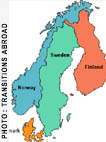
Norway, Sweden and Denmark have launched official investigations into media reports that accuse US embassies in Scandinavian countries of operating illegal intelligence gathering networks. The issue first emerged last Wednesday, when a report by Norway’s TV2 channel alleged that the US embassy in Oslo maintained a network of around 20 local former police and intelligence officers, who were conducting “illegal systematic surveillance of Norwegian citizens”. According to TV2, the surveillance network was tasked with collecting visual and physical intelligence on individuals “thought to pose a threat to American interests”. The US Department of State responded to the allegations by arguing that the US embassy had “fully informed” the Norwegian authorities of the surveillance activities. But Norwegian investigations expressed fears that the intelligence collection, which dates back to 2000, may constitute a violation of Norwegian diplomatic legislation, and have launched an investigation into the affair. Read more of this post

News you may have missed #448

  • Russian intel source threatens WikiLeaks. A Russian secret services expert has denied that whistleblower website WikiLeaks poses a threat to Russia, and warned that the “right team” of people could simply shut down WikiLeaks “forever” if it posts classified Russian government documents.
  • UK female spy gave rare interview about WWII exploits. It has emerged that British wartime spy Eileen Nearne, who died aged 89 in September, and whose exploits echoed the fictional character Charlotte Gray, gave an interview 13 years ago –in disguise– in which she told how she was tortured by the Gestapo.
  • Lebanon sentences 3 to death for spying for Israel. A Lebanese military court on Monday sentenced three people to death for spying for Israel. Two of the Lebanese nationals, Sami Farhat and Amar al-Halabi, were sentenced in absentia because they have fled the country. The third man, Jawdat el-Hakim, is held by Lebanese authorities. Dozens of alleged Israeli spy cells have been uncovered in Lebanon in the past year.

News you may have missed #446

  • American pleads guilty to spying for China. Glenn D. Shriver acknowledged on Friday that he accepted $70,000 from Chinese spies as he attempted to secure jobs with the CIA and US Foreign Service that would have allowed him to expose US government secrets. He apparently spent two years going through the CIA hiring process and reached the final security screenings. But US intelligence sources say Shriver was discovered very early in the hiring process.
  • Obama widens CIA operations in Pakistan. The US is pushing to expand secret CIA operations in Pakistan. But Islamabad is so far rebuffing US requests to allow additional CIA officers and special operations military trainers to enter the country.
  • US spy balloons blew towards Iran. The latest WikiLeaks revelations show that on two occasions in 2006 American JLens spy balloons broke from their moorings in Iraq and drifted toward the Iranian airspace. No information on the balloons’ fate is reported in the war logs. Did Iran get hold of them?

Greek-Cypriot spies behind largest document theft in UN history, report claims

Alexander Downer

Alexander Downer

By JOSEPH FITSANAKIS | intelNews.org |
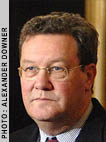
Agents of the Greek-Cypriot government were behind the largest document theft in the history of the United Nations, according to reports in the Cypriot and Turkish press. In 2009, Greek-Cypriot newspaper Fileleftheros published extracts of what the paper claimed was a treasure trove of 6,500 UN documents containing sensitive information on the organization’s negotiations with Turkish-Cypriot leaders. The negotiations concerned ongoing talks over a possible reunification of the island, which has been divided for decades between the Greek-majority southern part, and the predominantly Turkish northern part. According to the newspaper’s New York correspondent, the documents were leaked by a source inside the UN. But Cypriot and Turkish media now claim that an internal UN report has concluded that the documents were stolen by Greek-Cypriot intelligence agents, who subsequently leaked some of it to the Greek-Cypriot press. The operation was reportedly headed by a Cyprus Intelligence Service (CIS) agent who befriended Sonja Bachmann, senior aide to Alexander Downer, former Australian Foreign Minister, senior advisor to UN Secretary General Ban Ki Mon, and the UN’s Special Rapporteur on the Cyprus negotiations. Read more of this post

Mysterious Russian spy goes on trial in Poland

Valentin Korabelnikov

V. Korabelnikov

By IAN ALLEN | intelNews.org |
The trial has started in Warsaw, Poland, of an unnamed Russian citizen accused of working for Russian military intelligence. On October 22, the mysterious Russian, known only as “Tadeusz J.”, appeared before the Regional Court of Warsaw and pleaded not guilty to charges of collecting military intelligence on Poland on behalf of the Russian Defense Ministry’s Main Intelligence Directorate (GRU). The accused has a Polish-sounding name and is fluent in Polish, but is not a Polish citizen. Instead, he lived in Poland under permanent residency status for at least decade. His legal income appears to have come from his ownership of a hunting-rifle accessories store. But he was arrested last February, after a six-month surveillance operation by Poland’s Internal Security Agency (ABW). He was subsequently charged of obtaining classified information on the Polish military through his patronage of elite Polish hunting clubs, whose members included several Polish military officials. Read more of this post
Iran admits some of its nuclear scientists spied for the West

Ali Akbar Salehi

Ali Akbar Salehi

By JOSEPH FITSANAKIS | intelNews.org |
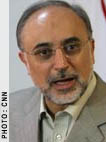
A top-level Iranian government official has admitted that some scientists and technicians in Iran’s nuclear energy program were successfully lured into spying for Israeli and Western intelligence agencies in the past. The disclosure, which was characterized as “stunning” by the Associated Press, marked the first-ever open admission by the Iranian government that the country’s nuclear energy program has been penetrated by foreign spies. It was made last weekend by Ali Akbar Salehi, Iran’s Vice President and Director of the country’s Atomic Energy Organization. According to the Iranian government-controlled Fars News Agency, Vice President Salehi told an audience that individual scientists and technicians working in Iran’s nuclear program had used their access to classified relevant information to benefit from “foreign purchases and commercial affairs”. Read more of this post

News you may have missed #442

  • Israeli lobby intensifies Pollard release effort. As convicted spy Jonathan Pollard approaches 25 years behind bars, Israelis and others are renewing efforts to secure freedom for the former US Navy intelligence analyst, who is serving a life sentence in the United States for relaying military documents to Israel.
  • No compromise in WikiLeaks expose, concludes Pentagon. Much ado about nothing. The US Pentagon has concluded that no US intelligence sources or practices were compromised by the posting of secret Afghan war logs by the WikiLeaks website. Meanwhile, WikiLeaks is preparing to publish more revelations.
  • Niger ex-spy chief arrested. Seini Chekaraou, head of counterintelligence at the uranium-rich nation of Niger, has been arrested along with four senior members of the West African country’s ruling junta, allegedly on suspicion that they were “attempt[ing] to destabilize the [military] regime” that took power in the country last February.

Israel may have helped FBI nab American Jewish informant

Akamai Technologies logo

Akamai logo

By JOSEPH FITSANAKIS | intelNews.org |
The government of Israel may have tipped off US federal agents about the activities of an American Jew, who was arrested by the FBI earlier this month for sharing confidential information with an undercover FBI agent. Elliot Doxer, a 42-year-old finance department employee of Massachusetts-based Akamai Technologies, is charged with providing inside company information to a Bureau agent posing as an Israeli spy. According to court papers, the FBI counterintelligence operation against Doxer began after he emailed Israel’s consulate in Boston, in 2006, identifying himself as a Jewish American “offering the little [information] I may have […] to help our homeland and our war against our enemies”. A year later, an FBI counterintelligence team posing as Israeli Mossad operatives contacted Doxer and offered to satisfy his request for $3,000 in return for inside information on Akamai, a company whose role in the architecture of Internet’s worldwide infrastructure is instrumental. But how did the FBI know about Doxer’s attempt to contact the Israeli consulate in Boston? Read more of this post