News you may have missed #0042

  • Postcards containing Cold War spy messages unearthed. The postcards, containing chess moves, were posted in 1950 by an unidentified man in Frankfurt, thought to have been an undercover agent, to Graham Mitchell, who was then deputy director general of MI5. The problem is, researchers are not quite sure whether the cryptic text on the postcards is based on British or Soviet codes, because Mitchell was suspected of being a secret Soviet agent at the time.
  • Is NSA actively mapping social networks? There are rumors out there that NSA is monitoring social networking tools, such as Tweeter, Facebook and MySpace, in order to make links between individuals and construct elaborate data-mining-based maps of who associates with whom.
  • US Senate bill would disclose intelligence budget. The US Senate version of the FY2010 intelligence authorization bill would require the President to disclose the aggregate amount requested for intelligence each year. Disclosure of the budget request would enable Congress to appropriate a stand-alone intelligence budget that would no longer need to be concealed misleadingly in other non-intelligence budget accounts.

Bookmark and Share

News you may have missed #0041

Bookmark and Share

News you may have missed #0040

  • Top court scolds German government over spy secrecy. Angela Merkel’s government has been rebuked by Germany’s most senior court for withholding information from a parliamentary inquiry into the role of Germany’s intelligence service (BND) in the detention of two Muslims from Germany at a US prison in Afghanistan.
  • Man implicated in Israeli spy affair says US government “tainted by anti-Semitism”. Larry Franklin, the former Defense Department analyst accused by the US government of handing classified US military information to two American Israel Public Affairs Committee (AIPAC) lobbyists, has told Israeli newspaper Ha’aretz that “some of the agencies of the US administration, and in particular the Federal Bureau of Investigation, are tainted by anti-Semitism”.
  • Defense contractors preparing private cyberwarriors? US Defense contractors such as Raytheon, Lockheed Martin, Boeing, Science Applications International Corporation (SAIC), and others, are moving into the lucrative realm of cyberwarfare.

Bookmark and Share

Cambridge spy ring member’s memoir reveals motives behind actions

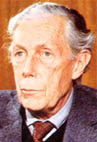
Anthony Blunt

Anthony Blunt

By IAN ALLEN | intelNews.org |
The British Library kept its promise and released yesterday the closely guarded, incomplete autobiographical manuscript of Anthony Blunt, fourth member of the Cambridge spy ring. The group of British spies, which worked secretly for the Soviet Union from the 1930s until the 1960s, included Guy Burgess, Donald Maclean and H.A.R. “Kim” Philby, all of whom eventually defected to the Soviet Union. In his 30,000-word memoir, Blunt, an art history professor who in 1945 became Surveyor of the King’s Pictures and was knighted in 1954, describes his recruitment to spy for the Soviets as “the most important decision of my life”. Read more of this post

News you may have missed #0037

  • Gambian Army chief accused of spying. A newspaper claims that the chief of Gambia’s armed forces, Lt. Colonel Sainey Bayo, who recently fled to the United States, did so while being “investigated for supplying sensitive state secrets to an unnamed Western country”.
  • US Secretary of State violates declassification statute. The latest historical records release of the Foreign Relations of the United States, which is the official record of US foreign policy, has failed once again to abide by a 1991 statute which requires the Secretary of State to publish records “not more than 30 years after the events recorded”.
  • Intelligence report says Canada is key cash source for Tamil Tigers. A Canadian intelligence report released under the country’s Access to Information Act claims that the Liberation Tigers of Tamil Eelam in Sri Lanka receive millions each year in backing from Canada’s Tamil diaspora.

Bookmark and Share

News you may have missed #0033

Bookmark and Share

News you may have missed #0031

Bookmark and Share

Al-Qaeda book warns West is winning spy war

al-Libi

Abu al-Libi

By IAN ALLEN | intelNews.org |
A guidance report authored by an al-Qaeda field commander in Afghanistan says that Western-handled spies have infiltrated the organization’s networks and are sabotaging is activities. As intelNews pointed out on July 12, the report, penned by Abu Yahya al-Libi, also contains an illustrated essay on the CIA’s use of SIM cards planted on al-Qaeda militants’ cell phones to direct unmanned drone strikes. But most of the circular, entitled Guidance on the Ruling of the Muslim Spy, is devoted to cautionary advice on the “swarms of locusts” of Western-aligned spies, who have even penetrated “the military and financial supply roads of the mujaheddin, which are far from the enemy’s surveillance”. Read more of this post

Sweden expels Chinese diplomat after uncovering Uighur spy

Babur Mehsut

Babur Mehsut

By JOSEPH FITSANAKIS | intelNews.org |
On June 16, intelNews drew attention to a little-noticed news report from Sweden concerning the arrest of an unidentified spy who was caught keeping tabs on an undisclosed immigrant group in the country. The spy turned out to be Babur Mehsut, a Uighur exile with dual Chinese-Swedish nationality, who was apparently monitoring the political activities of Sweden’s Uighur community on behalf of Beijing. Sweden’s security service (SAPO) and the country’s Ministry of Foreign Affairs have declined commenting on the case. However, Swedish authorities have charged Mehsut with “unlawful acquisition and distribution of information relating to individuals for the benefit of a foreign power”, and earlier this week ordered the expulsion of a Chinese diplomat stationed in Stockholm. China responded a day later with the expulsion of a Swedish diplomat from Beijing. Read more of this post

Analysis: Ulterior Motives In Panetta’s Philippines Visit

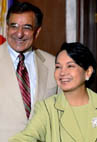
Panetta & Arroyo

Panetta, Arroyo

By IAN ALLEN | intelNews.org |
Few heads outside Southeast Asia were turned last Sunday by CIA director Leon Panetta’s brief visit to the Philippines. Panetta arrived in Manila early Sunday morning and left at 10 p.m. on the same day. But he managed to squeeze in meetings with Philippines President Gloria Arroyo, as well as her most senior cabinet executives, such as Foreign Affairs Secretary Alberto Romulo and Defense Secretary Gilbert Teodoro Jr. Panetta’s meeting with the President was brief, reportedly lasting around 30 minutes, but its significance was enormous for Washington’s continuing military and intelligence presence in the region. To understand the level of that commitment, one must consider the rare telephone call that US President Barack Obama recently placed to his Philippine counterpart. Read article →

The CIA in Iran Today: A Realistic Assessment

Iran protestors

Iran protestors

By JOSEPH FITSANAKIS | intelNews.org |
It is hardly surprising to witness the sudden cessation of the US media frenzy that placed Iran under the microspore last month. And yet I believe that now, as the regime in Tehran is redeploying its machinery of social control, is the perfect time to calmly and sensibly provide a rational assessment of what really took place in Iran in June, as well as the US involvement, if any. The CIA’s past shenanigans in Iran are by now widely known and understood –particularly by the Iranians themselves, who, regardless of their feelings toward the present regime in Tehran, are suspicious of collaborating with US agencies. But what is the US involvement in fomenting unrest in Tehran today? More importantly, to what extent can the CIA’s ongoing covert activities in the Middle East be said to have played a role in last June’s seemingly spontaneous popular uprising in Tehran? With this question in mind, I wrote The CIA in Iran Today: A Realistic Assessment, which you can now read in Jeremy Hammond’s Foreign Policy Journal. Here’s a tip: for the CIA’s intelligence directorate  analysts, the recent unrest in Iran was more like 1979 than 1953. Read article →

News you may have missed #0020

  • Social media is ruining spy industry, says IT security group. IT security consultancy NCC Group says that intelligence “agencies are concerned that Facebook and other social networking tools are ruining the spy industry”. The comments come just hours after British newspaper The Mail on Sunday revealed that personal details about the future head of MI6, Sir John Sawers, had been accessible to 200 million online users through his wife’s Facebook account.
  • Pakistan’s nukes face insider threat, says ex-CIA official. Rolf Mowatt-Larssen, a 23-year veteran of the Central Intelligence Agency, argues in Arms Control Today that “[t]he greatest threat of a loose nuke scenario stems from insiders in the nuclear establishment working with outsiders, people seeking a bomb or material to make a bomb […]. Nowhere in the world is this threat greater than in Pakistan. Pakistani authorities have a dismal track record in thwarting insider threats”, claims the retired US intelligence agent.
  • Hamas says Israeli spy cell in Ramallah busted. Hamas says it has dismantled an Israeli spy network, which served through the West Bank-based administration of Palestinian Authority Chief Mahmoud Abbas. The group claims that the network “channeled […] false information to Ramallah [in the Fatah-dominated West Bank] and then to the Israeli occupation”, in order to create “target bank” in Gaza.

Bookmark and Share

Larry Franklin, implicated in Israeli spy affair, breaks silence

Franklin

Franklin

By JOSEPH FITSANAKIS | intelNews.org |
Lawrence Anthony Franklin, the former US Defense Department analyst whose 12-year prison sentence was suspended last month, has finally broken his silence. Franklin, who was accused by the US government of handing classified US military information to two American Israel Public Affairs Committee (AIPAC) lobbyists, has told Jeff Stein of SpyTalk that he handed out the secret information “in hopes that it would be passed on to the White House”. He said he was “worried” the Bush administration pursued a schizophrenic policy on Iran and had not calculated the Iranian reaction to a possible US invasion of Iraq. He therefore decided to pass on the classified information, which included “the names and locations of Iran’s secret agents and safe houses in Iraq”, to AIPAC lobbyists Steve Rosen and Keith Weissman, who claimed they had senior contacts in the Bush administration. Read more of this post

News you may have missed #0019

  • More interesting podcasts on Afghanistan at Electric Politics. George Kenney, of Electric News, has posted a full transcript of last month’s interesting interview with Graham E. Fuller, CIA’s former station chief in Kabul, Afghanistan. Also, a new highly interesting interview on Afghanistan has been posted on the Electric News website, this time with George Wilson. A veteran reporter who covered the Vietnam and Iraq wars, Wilson makes some noteworthy comparisons between Vietnam and Afghanistan.
  • Panetta, not Blair, should name CIA station chiefs, says ex-CIA agent. Haviland Smith, former CIA agent in Europe and the Middle East, has penned an editorial for The Baltimore Sun, in which he denounces as “simple insanity” efforts by Director of National Intelligence, Dennis Blair, to have a say at who gets appointed as CIA station chief in Kabul, Afghanistan, and elsewhere.  This is the second ex-CIA agent to issue the same warning in recent days.
  • Two more people arrested in Lebanon for spying for Israel. This raises the number of those arrested for belonging to an alleged Israeli spy ring in southern Lebanon to nearly 40. The latest arrestees include Ziad al Homsi, who in 1969 was photographed with Palestine Liberation Organization (PLO) leader Yasser Arafat.

Australian espionage convict leaving US for home

By IAN ALLEN | intelNews.org |
An Australian former intelligence officer who was arrested by the FBI for trying to sell classified US defense documents will be allowed to serve the remaining of his prison sentence in Victoria, Australia. Jean-Philippe Wispelaere was an employee of Australia’s Defence Intelligence Organisation, the agency responsible for assessing and relaying intelligence information to Australian government officials. In 1999, he resigned from his job and flew to Bangkok, Thailand, where he contacted embassy officials of a third country (rumored to be Singapore) and offered to sell them over 700 pages of classified US documents. Read more of this post