News you may have missed #0092

Bookmark and Share

Document release offers new clues on MI5 activities

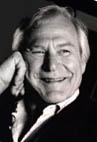
Sam Wanamaker

S. Wanamaker

By IAN ALLEN | intelNews.org |
A batch of intelligence documents from the immediate post-World War II period released this week by Britain’s National Archives offer glimpses into previously unknown activities by MI5, Britain’s domestic intelligence service. One set of documents shows that the MI5 closely monitored liberal Americans who escaped McCarthyism by emigrating to the isles in the 1940s and 1950s. Among such targets was Sam Wanamaker, father of actor Zoe Wanamaker, who played in Harry Potter and the Philosopher’s Stone among other films. Her father left the US shortly before being called to testify in Senator Joe McCarthy’s House Un-American Activities Committee. He became an important figure in British theater, but was monitored by MI5, who at one point considered including him in a list of domestic radicals to be “interned” during a possible military confrontation with the USSR. Another set of documents shows that British spies spent years looking for Martin Bormann, Hitler’s private secretary, in places such as Switzerland, Italy and Brazil. Read more of this post

News you may have missed #0090

Bookmark and Share

Analysis: Assessing the record of Russian espionage

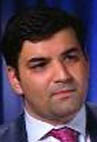
R. Kupchinsky

R. Kupchinsky

By JOSEPH FITSANAKIS | intelNews.org |
Roman Kupchinsky has penned an article for The Prague Post, in which he examines the recent expulsion of two Russian spies from the Czech Republic as part of a broader decline in Russian intelligence operations. The Jamestown Foundation analyst explains that Vladimir Putin’s campaign to rebuild the Russian espionage activities abroad to their former glory has not borne fruits. Rather, the gradual decay in Russia’s global intelligence presence, which began in the early 1980s, continues to mire the country’s Foreign Intelligence Service (SVR). The SVR is the successor to the KGB’s First Chief Directorate (PGU), which was responsible for foreign operations and intelligence collection. Although Kupchinsky’s view is shared by a many Western intelligence observers, some remain skeptical. Read more of this post

News you may have missed #0085

  • How the ACLU got the CIA agents’ photos. As intelNews reported earlier this week, the ACLU has been trying to identify CIA agents who participated in torture of detainees, by taking surreptitious pictures outside the operatives’ homes. It is worth noting that uncovering the identities of CIA officers is legal, so long as it is based on publicly available records.
  • Russian espionage case is bigger than initially thought, say Czech officials. Intelligence authorities in the Czech Republic say the two Russian agents who were recently expelled from the country last week were not primarily interested in the US missile defense shield.
  • US spy community builds Wikipedia-style database. Intellipedia, the intelligence community’s version of Wikipedia has grown markedly since its formal launch in 2006. It now averages more than 15,000 edits per day and is home to 900,000 pages and 100,000 user accounts.

Bookmark and Share

News you may have missed #0080

Bookmark and Share

News you may have missed #0078

  • Indian police claims busting of Pakistani spy ring. Punjab Police claims to have arrested a member of a spy ring allegedly handled by Pakistani intelligence (ISI). The arrestee was reportedly trying to leave India for Pakistan at the time of his arrest.
  • Iraq intelligence chief retired before major blasts. Mohammed al-Shehwani, the head of the Iraqi National Intelligence Service, went into retirement days before huge bombings in Baghdad killed almost 100 people in the deadliest day of violence this year.
  • Backlash over plan to spy on Indonesian mosques. Indonesian religious leaders are warning that the Indonesian National Police’s plan to monitor religious sermons during Ramadan will offend and anger Muslims, and be viewed as a repeat of tactics employed during the hated Suharto regime.

Bookmark and Share

News you may have missed #0077

Bookmark and Share

News you may have missed #0077

  • US Army documents reveal Mexican military’s role in massacre. Newly declassified documents from the US Defense Intelligence Agency describe the Mexican Army’s role in backing paramilitary groups in Chiapas at the time of the Acteal massacre. The massacre involved the killing of 45 people attending a prayer meeting of Roman Catholic indigenous townspeople, including a number of children and pregnant women, who were members of the pacifist group Las Abejas (“The Bees”).
  • Tamils in the UK continue fundraising despite spy fears. Members of the Tamil community in Oxford, England, have vowed to continue fundraising despite fears that the Sri Lankan government is spying on them.
  • Major purge at Bulgarian intelligence agency. More key officials of Bulgaria’s State National Security Agency (DANS) have submitted their resignations after its director, Petko Sertov, was recently replaced. Sertov was allegedly axed because Bulgaria’s “American partners were said to have lost faith” in him.

Bookmark and Share

News you may have missed #0076

Bookmark and Share

Czechs, Russians expel diplomats in escalating spy row

By IAN ALLEN | intelNews.org |
The Russian Foreign Ministry ordered two Czech diplomats out of Russia on Tuesday, one day after the Czech Republic expelled two members of staff of the Russian embassy in Prague. On August 17, Czech websites reported the expulsion of Russia’s deputy military attaché in Prague, and another Russian embassy official, who was told not to return to the Czech Republic from his vacation. The move came after the Czech Military Intelligence Service (VZ) allegedly verified that the two diplomats are paid employees of the Russian secret services. According to one report, VZ was able to establish that the two Russian embassy officials “tried to develop close ties with people from the Czech Defense Ministry and [had] shown a particular interest in the planned construction of a US radar base on Czech soil”, a reference to Washington’s missile defense shield plans for Eastern Europe. Read more of this post

News you may have missed #0069

Bookmark and Share

News you may have missed #0068

Bookmark and Share

News you may have missed #0061

  • Finland police identify body of WWII Soviet spy. Police believe a body found near Kouvola, Finland, to be the World War II remnants of a Soviet spy. The man apparently parachuted to his death. The body will be offered to the Russian Embassy for repatriation –an offer that is expected to be refused.
  • Hacker conferences attract spies, thieves. Interesting account of Defcon conference anecdotes by CNET correspondent Elinor Mills, who has been attending Defcon since 1995.
  • Interesting interview with lawyer behind CIA lawsuit. McClatchy news agency has published a rare interview with Brian Leighton, the lawyer representing retired Drug Enforcement Agency (DEA) officer Richard A. Horn, who in 1994 claimed that CIA agents illegally wiretapped his conversations while he was stationed in Burma.

Bookmark and Share

Analysis: How vital was spying during the Cold War?

Gordon Corera

Gordon Corera

By IAN ALLEN | intelNews.org |
The BBC’s security correspondent, Gordon Corera, asks a very basic yet very intriguing question about the history of the Cold War: did espionage actually make a difference in ts outcome? This question stems out of BBC Radio 4’s three-part documentary series examining the 100-year history and operations of MI6, Britain’s foremost external intelligence agency. Corera’s article on the BBC website provides conflicting answers by intelligence defenders and intelligence skeptics, including Rodric Braithwaite, former British ambassador to the USSR, and David Owen, Britain’s former Foreign Secretary, who says that, barring a few important exceptions, UK policy makers “didn’t really […]  know exactly what was going on” in the Communist Bloc. Other commentators include former MI6 deputy director Sir Gerry Warner, and Sir David Omand, who argues that most of the intelligence collected during the Cold War was of a military or tactical nature and would therefore have proven effective only “if the Cold War had gone hot”.

Bookmark and Share