News you may have missed #0050

  • Cuban Five to be given new sentences in October. Washington accuses the Five of spying on the US for Cuba. But an appeals court has ruled that the sentences they received (ranging from life to 19 years) were too long. New sentences will be imposed on October 13. The Cuban government has said that it would be willing to swap jailed political dissidents for the Five.
  • CIA invests in web-based software company –again. The CIA’s venture-capital investment arm, In-Q-Tel, appears to be really fond of Lingotek, a tiny software company in Draper, Utah. Last month, In-Q-Tel funded another software start-up, Lucid Imagination.
  • Canada to investigate spy service’s role in Abdelrazik’s torture. Canada’s Security Intelligence Review Committee has agreed to probe the case of Abousfian Abdelrazik, who was renditioned to Sudan by Canada’s Canadian Security Intelligence Service (CSIS). He says he was severely tortured by Sudanese guards and interrogators.

Bookmark and Share

News you may have missed #0049

  • Return to court for ex-CIA station chief accused of rape. Andrew M. Warren has been free on bail since February of 2009, when he was unceremoniously recalled to the US from the CIA’s Algiers station. He is accused of having drugged and raped two Algerian women at his official residence. On Tuesday he was back at a federal courtroom in Washington for a status hearing.
  • Swedish spy threat at Cold War levels, claims report. A study by the Swedish Military Intelligence and Security Service (MUST), says spying on Sweden by “several countries, including those in our immediate surroundings” is “at the same level […] as during the Cold War”.
  • Former CIA station chief doubts Daniel Boyd story. Milt Bearden, former CIA station chief in Pakistan, doubts that Boyd, who was arrested along with seven others in North Carolina on domestic terrorism charges, ever saw action in Afghanistan, as stated by his prosecutors.

Bookmark and Share

News you may have missed #0048

Bookmark and Share

Kim Philby’s granddaughter describes memories of her grandfather

Charlotte Philby

Charlotte Philby

By JOSEPH FITSANAKIS | intelNews.org |
Charlotte Philby, daughter of John Philby, H.A.R. “Kim” Philby’s oldest son, has penned an extensive account of her memories of her grandfather. In her article, published yesterday in British daily The Independent, she describes Kim Philby as “a proud man, and one who chose to publicly stand by his actions”. Kim Philby was probably the most successful double spy in history. While working as a senior member of British intelligence, he spied on behalf of the Soviet KGB and NKVD from the early 1930s until 1963, when he defected to Moscow. Two years later he was awarded the Order of the Red Banner. The Soviet authorities buried him with honors when he died in 1988. Read more of this post

News you may have missed #0044

  • Attorney behind CIA lawsuit gives interview. Brian C. Leighton, the attorney representing former Drug Enforcement Agency officer Richard A. Horn, who claims that CIA agents illegally wiretapped his conversations, has given an interview to The Merced Sun-Star.
  • Germany accuses China of industrial espionage. A senior German counterintelligence official has said Germany is under attack from an increasing number of state-backed Chinese spying operations that are costing the German economy tens of billions of euros a year. Similar claims were made in May.

Bookmark and Share

News you may have missed #0042

  • Postcards containing Cold War spy messages unearthed. The postcards, containing chess moves, were posted in 1950 by an unidentified man in Frankfurt, thought to have been an undercover agent, to Graham Mitchell, who was then deputy director general of MI5. The problem is, researchers are not quite sure whether the cryptic text on the postcards is based on British or Soviet codes, because Mitchell was suspected of being a secret Soviet agent at the time.
  • Is NSA actively mapping social networks? There are rumors out there that NSA is monitoring social networking tools, such as Tweeter, Facebook and MySpace, in order to make links between individuals and construct elaborate data-mining-based maps of who associates with whom.
  • US Senate bill would disclose intelligence budget. The US Senate version of the FY2010 intelligence authorization bill would require the President to disclose the aggregate amount requested for intelligence each year. Disclosure of the budget request would enable Congress to appropriate a stand-alone intelligence budget that would no longer need to be concealed misleadingly in other non-intelligence budget accounts.

Bookmark and Share

News you may have missed #0041

Bookmark and Share

News you may have missed #0040

  • Top court scolds German government over spy secrecy. Angela Merkel’s government has been rebuked by Germany’s most senior court for withholding information from a parliamentary inquiry into the role of Germany’s intelligence service (BND) in the detention of two Muslims from Germany at a US prison in Afghanistan.
  • Man implicated in Israeli spy affair says US government “tainted by anti-Semitism”. Larry Franklin, the former Defense Department analyst accused by the US government of handing classified US military information to two American Israel Public Affairs Committee (AIPAC) lobbyists, has told Israeli newspaper Ha’aretz that “some of the agencies of the US administration, and in particular the Federal Bureau of Investigation, are tainted by anti-Semitism”.
  • Defense contractors preparing private cyberwarriors? US Defense contractors such as Raytheon, Lockheed Martin, Boeing, Science Applications International Corporation (SAIC), and others, are moving into the lucrative realm of cyberwarfare.

Bookmark and Share

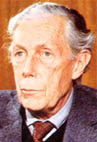
Cambridge spy ring member’s memoir reveals motives behind actions

Anthony Blunt

Anthony Blunt

By IAN ALLEN | intelNews.org |
The British Library kept its promise and released yesterday the closely guarded, incomplete autobiographical manuscript of Anthony Blunt, fourth member of the Cambridge spy ring. The group of British spies, which worked secretly for the Soviet Union from the 1930s until the 1960s, included Guy Burgess, Donald Maclean and H.A.R. “Kim” Philby, all of whom eventually defected to the Soviet Union. In his 30,000-word memoir, Blunt, an art history professor who in 1945 became Surveyor of the King’s Pictures and was knighted in 1954, describes his recruitment to spy for the Soviets as “the most important decision of my life”. Read more of this post

News you may have missed #0037

  • Gambian Army chief accused of spying. A newspaper claims that the chief of Gambia’s armed forces, Lt. Colonel Sainey Bayo, who recently fled to the United States, did so while being “investigated for supplying sensitive state secrets to an unnamed Western country”.
  • US Secretary of State violates declassification statute. The latest historical records release of the Foreign Relations of the United States, which is the official record of US foreign policy, has failed once again to abide by a 1991 statute which requires the Secretary of State to publish records “not more than 30 years after the events recorded”.
  • Intelligence report says Canada is key cash source for Tamil Tigers. A Canadian intelligence report released under the country’s Access to Information Act claims that the Liberation Tigers of Tamil Eelam in Sri Lanka receive millions each year in backing from Canada’s Tamil diaspora.

Bookmark and Share

News you may have missed #0033

Bookmark and Share

News you may have missed #0031

Bookmark and Share

Al-Qaeda book warns West is winning spy war

al-Libi

Abu al-Libi

By IAN ALLEN | intelNews.org |
A guidance report authored by an al-Qaeda field commander in Afghanistan says that Western-handled spies have infiltrated the organization’s networks and are sabotaging is activities. As intelNews pointed out on July 12, the report, penned by Abu Yahya al-Libi, also contains an illustrated essay on the CIA’s use of SIM cards planted on al-Qaeda militants’ cell phones to direct unmanned drone strikes. But most of the circular, entitled Guidance on the Ruling of the Muslim Spy, is devoted to cautionary advice on the “swarms of locusts” of Western-aligned spies, who have even penetrated “the military and financial supply roads of the mujaheddin, which are far from the enemy’s surveillance”. Read more of this post

Sweden expels Chinese diplomat after uncovering Uighur spy

Babur Mehsut

Babur Mehsut

By JOSEPH FITSANAKIS | intelNews.org |
On June 16, intelNews drew attention to a little-noticed news report from Sweden concerning the arrest of an unidentified spy who was caught keeping tabs on an undisclosed immigrant group in the country. The spy turned out to be Babur Mehsut, a Uighur exile with dual Chinese-Swedish nationality, who was apparently monitoring the political activities of Sweden’s Uighur community on behalf of Beijing. Sweden’s security service (SAPO) and the country’s Ministry of Foreign Affairs have declined commenting on the case. However, Swedish authorities have charged Mehsut with “unlawful acquisition and distribution of information relating to individuals for the benefit of a foreign power”, and earlier this week ordered the expulsion of a Chinese diplomat stationed in Stockholm. China responded a day later with the expulsion of a Swedish diplomat from Beijing. Read more of this post

Analysis: Ulterior Motives In Panetta’s Philippines Visit

Panetta & Arroyo

Panetta, Arroyo

By IAN ALLEN | intelNews.org |
Few heads outside Southeast Asia were turned last Sunday by CIA director Leon Panetta’s brief visit to the Philippines. Panetta arrived in Manila early Sunday morning and left at 10 p.m. on the same day. But he managed to squeeze in meetings with Philippines President Gloria Arroyo, as well as her most senior cabinet executives, such as Foreign Affairs Secretary Alberto Romulo and Defense Secretary Gilbert Teodoro Jr. Panetta’s meeting with the President was brief, reportedly lasting around 30 minutes, but its significance was enormous for Washington’s continuing military and intelligence presence in the region. To understand the level of that commitment, one must consider the rare telephone call that US President Barack Obama recently placed to his Philippine counterpart. Read article →