Opinion: Five months into the war, Israeli intelligence failure looks even worse

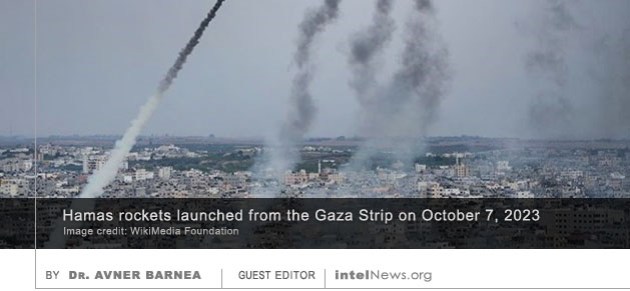
Israel Hamas warSINCE OCTOBER 7, 2024, when Israel was caught off guard by a sudden and highly damaging attack from Hamas, more information has surfaced regarding why there was no prior warning about the attack and the failures of Israeli intelligence in this regard.

It has become clear that Israeli intelligence miscalculated Hamas’s intentions. The Israeli security concept, spearheaded by the Israel Military Intelligence (IMI) and the Israel Security Agency (ISA), was that: (a) Hamas had been deterred from launching large-scale attacks; and (b) Hamas was focused on carrying out terrorist attacks against Israelis in the West Bank and not on Israel proper. This flawed security concept, which had been fully adopted by the Israeli cabinet and the Israel Defense Forces (IDF) was proven to be groundless. In fact, Hamas successfully exploited it in order to develop and accelerate its attack strategy.

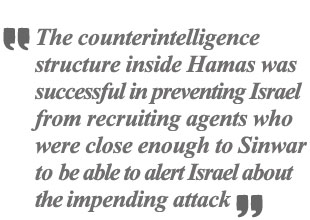
One significant reason for the failure of the IDF, both in the area of intelligence collection and operationally, was its underestimation of the capabilities of Hamas and the intentions of its leader, Yahya Sinwar. There was also an overestimation by many in Israel, including the security establishment, of Israel’s own intelligence Q Quotecapabilities. Another important insight is that the counterintelligence structures inside Hamas were successful in preventing Israeli intelligence from recruiting agents who were close enough to Sinwar to be able to alert Israel about the impending attack. Furthermore, Israel’s collection and analysis of signals intelligence was unproductive, possibly because Hamas was successful in countering Israel’s ability to produce effective intelligence from signals intercepts.

As the IDF moved deeper into Gaza, and as more information was collected from Hamas facilities, it became clear that there were significant gaps in information regarding the preparations for the attack by Hamas inside Gaza. These preparations lasted for a long time and involved numerous operatives who remained undetected by Israeli intelligence. It looks like the compartmentation system inside Hamas, based on a need-to-know only model, was highly effective.

The IDF attacked the Gaza Strip in 2014 in Operation Protective Edge. Its mission was to destroy Hamas’s ability to carry out assaults against Israel through tunnels dug deep inside Gaza and crossing the border into Israel. Indeed, about 20 such tunnels were destroyed during that operation. Later, Hamas built 250 miles of new tunnels in Gaza that were aimed at defense and to hide combatants when Israel attacked. It has been suggested that this construction project was funded by cash sent to Gaza by Qatar, with Israel’s approval —though Qatar denies this claim. Read more of this post

Analysis: How Israeli Intelligence Failed to Anticipate the Hamas Attack

Hamas GazaSEVERAL DAYS HAVE PASSED since October 7, the day when Hamas stunned Israel with a surprise attack against several settlements near the Gaza border. It is now clear that Israeli intelligence was in possession of warning indicators about the attack, and that these indicators were misjudged.

The IMI and ISA Assessment

It is important to note that the intelligence division of the Israel Defense Forces (IDF), known as Israeli Military Intelligence (IMI), and the  Israel Security Agency (ISA), have been monitoring Hamas for years. These two agencies are believed to have conducted a situation assessment approximately two weeks before the October 7 attack. The assessment concluded that Hamas was deterred and had no interest in changing the status quo by attacking Israel in the short run. This assessment was communicated to Prime Minister Benjamin Netanyahu and Minister of Defense Yoav Gallant.

It appears that this assessment was not supported by concrete intelligence. The agencies that produced it relied primarily on monitoring the recent behavior of Hamas, including the fact that it was allowing Palestinians living in Gaza to work inside Israel. Additionally, the assessment noted the fact that Hamas was receiving funds from Qatar to help the poverty-stricken residents of Gaza. In retrospect, this assessment appears to have been based on wishful thinking.

The Egyptian Warning

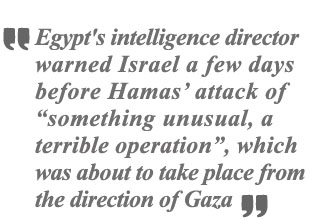
It is now known that Abbas Kamel, Director of the Egyptian General Intelligence Directorate, sent a warning to Israel a few days before Hamas’ attack. Kamel allegedly warned of “something unusual, a terrible operation”, which was about to take place from the direction of Gaza. The warning was forwarded to Prime Minister Netanyahu’s office. The Israeli newspaper that published this report, Yedioth Ahronot, is known for its serious reputation and quality sources inside the Egyptian establishment. According to the report, Kamel was told by the Israelis that they were focused on preventing terrorist attacks in the West Bank.
Yet, in a speech that Netanyahu delivered immediately after the October 7 attack broke out, he denied claims about the Egyptian warning and claimed that they were fake news. However, American Congressman Michael McCaul, Chairman of the House Foreign Affairs Committee, said on October 11: “We know that Egypt […] warned the Israelis three days prior that an event like this could happen”. Speaking to reporters following a closed-door intelligence briefing on the crisis for American lawmakers, McCaul added: “I don’t want to get too much into classified [details], but a warning was given”. An Egyptian government source also asserted that Egyptian intelligence officials warned their Israeli counterparts that Hamas was planning “something big” ahead of the October 7 surprise onslaught. But this intelligence appears to have been ignored. Read more of this post
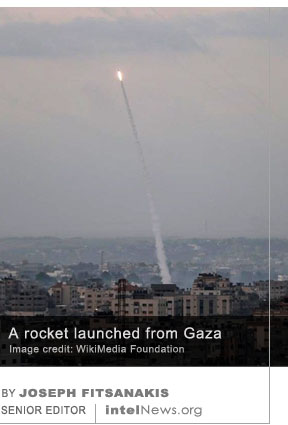
How Did Israel Miss This Attack? Some Likely Explanations

Gaza HamasTHE HAMAS-LED OPERATION al-Aqsa Flood, which began on October 7, marked the first large-scale conflict within the borders of Israel since the 1948 Arab-Israeli War. However, unlike the coalition of Arab armies it faced in 1948, Israel now confronts an alliance of sub-state groups. Led by Hamas’ military wing, the al-Qassam Brigades, this alliance includes the Syrian- and Iranian-backed Palestinian Islamic Jihad and a number of secular groups, such as the Fatah-aligned al-Aqsa Martyrs’ Brigades, the Popular Front for the Liberation of Palestine (PFLP) and the Democratic Front for the Liberation of Palestine (DFLP).
Such groups are lesser-known than Hamas; however, they often bring with them expertise in niche areas, such as handling networks of informants inside Israel, building sophisticated explosives, employing unmanned combat drones, or procuring specialized weaponry. They are therefore likely to have contributed greatly to the outcome of Operation al-Aqsa Flood. Their participation also enabled Hamas to launch what essentially amounted to a combined arms assault on Israel. The latter included coordinated land, sea and air elements, which were purposefully low-tech. That may explain why the assailants were able to short-circuit and overwhelm the purportedly impregnable security perimeter that Israel maintains around the Gaza Strip.

Iranian and Lebanese Coaching

Putting aside the individual low-tech elements of the operation, its overall level of tactical organization almost certainly points to considerable support from actors beyond the Gaza Strip. Such actors likely include networks of informants within Israel, as well as possibly Iran and its Lebanese proxy, Hezbollah. Both are well-versed in hybrid warfare and have studied Israeli defense systems more extensively than any other regional actor. Additionally, Iran’s Islamic Revolutionary Guard Corps (IRGC) and Hezbollah’s Lebanese Resistance Brigades are seasoned practitioners of deception operations. They likely coached Hamas, not only on how to carry out Operation al-Aqsa Flood, but more importantly on how to prevent Israel and its allies from gathering intelligence about it.

There is no question that an operation of such a magnitude must have taken months —possibly even years— to conceive, develop and organize. Such a complex process would have taken place under the watchful eyes and ears of Israeli and Egyptian intelligence agencies, who have historically faced little resistance in penetrating Palestinian militant groups, including Hamas. Yet none seem to have collected enough intelligence to anticipate the attack. It is equally stunning that the meticulous planning of Operation al-Aqsa Flood appears to have escaped the attention of American intelligence agencies, whose presence in the Middle East is significant. How was that even possible? Read more of this post

In rare move, Israel identifies special operations officer killed in Gaza Strip raid

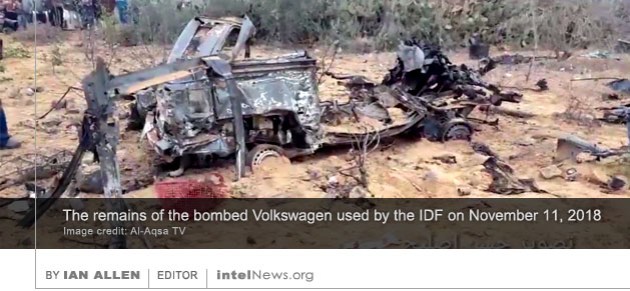
IDF Gaza Strip HamasIN A RARE MOVE, Israel released the identity last weekend of a special operations officer who was killed by Islamic Hamas during a 2018 covert mission in the Gaza Strip. As intelNews reported at the time, an undercover team of Israeli operatives was exfiltrated by helicopter from Gaza on November 11, 2018. The exfiltration took place after the Israelis were spotted by members of the Izz ad-Din al-Qassam Brigades, which is part of Hamas’ armed wing.
The incident was followed by a barrage of nearly 500 rockets and mortars fired from the Gaza Strip into Israel. The Israelis responded by firing more than 160 missiles that fell throughout the Palestinian enclave. Hostilities were halted on November 13, when Hamas declared a unilateral ceasefire brokered by Egypt. The incident prompted the resignation of Israel’s Defense Minister, Avigdor Liberman. At the time, the Israel Defense Forces, which were behind the botched operation, refused to comment on the team’s mission, admitting only that its troops “operated […] in the Gaza Strip”.

It was said at the time that the members of the undercover team were dressed in civilian clothes and that at least two of them were disguised as women. After entering Gaza in a civilian Volkswagen vehicle, they drove to Khan Yunis, a city in the south of the Strip, near the Egyptian border. It was there that they were discovered by the al-Qassam Brigades, who stopped them at a checkpoint, asking for identification. The Israeli team opened fire using a silenced gun. Following a high-speed car chase, the Israelis left via helicopter. Their abandoned Volkswagen car was then blown up by an Israeli fighter jet.

On Sunday, the IDF declassified the name of the fallen officer. It also released a photograph of the man, who has been identified as Lt. Col. Mahmoud Kheir el-Din, 41, from Galilee. A member of Israel’s Druze community, el-Din served in the Mista’arvim, a counter-terrorism unit of the IDF’s Special Operations division that is trained to capture or assassinate targets in enemy territory. El-Din joined the IDF’s Special Operations division in 2002, after having served as a platoon commander.

The IDF also provided limited details about the botched operation that led to el-Din’s death. It claims that el-Din “physically confronted” one of the Hamas operatives, thus giving another one of the Israeli soldiers the opportunity to open fire and kill seven Hamas members. El-Din was killed during the shootout, according to the IDF. The Israeli government said the decision to release el-Din’s identity was coordinated with his family. It added, however, that it does not plan to release further details about the botched operation.

Author: Ian Alen | Date: 17 May 2022 | Permalink

Israeli team spotted in Gaza was installing advanced surveillance system, says Hamas

IDF Gaza Strip HamasAn undercover Israeli team that clashed with Hamas in Gaza on November 11 —an incident that brought the region to the brink of war— was installing an advanced surveillance system, according to Palestinian sources. Local media reports said that the Israeli undercover team —believed to be members of the Israel Defense Forces (IDF)— killed seven members of Izz ad-Din al-Qassam Brigades, the military arm of Hamas’ armed wing. The IDF troops eventually escaped into Israel with the help of air support, having lost one team member. The incident was followed by a barrage of nearly 500 rockets and mortars fired from the Gaza Strip into Israel. The Israelis responded by firing more than 160 missiles that fell throughout the Palestinian enclave. Hostilities were halted on November 13, when Hamas declared a unilateral ceasefire brokered by Egypt. The incident prompted the resignation of Israel’s Defense Minister, Avigdor Liberman, and may bring about early parliamentary elections in the Jewish state.

In the ensuing political crisis, little has been said about the reason for the Israeli undercover incursion into Gaza. The IDF has refused to comment on the team’s mission, admitting only that its troops “operated […] in the Gaza Strip”. It is believed that the members of the undercover team were dressed in civilian clothes and that at least two of them were disguised as women. After entering Gaza in a civilian Volkswagen vehicle, they drove to Khan Yunis, a city in the south of the Strip, near the Egyptian border. It was there that they were discovered by the al-Qassam Brigades, who stopped them at a checkpoint, asking for identification. The Israeli team killed at least one Palestinian at the checkpoint by shooting him with a silenced gun. Following a high-speed car chase, they left via helicopter after their pursuers were killed by Israeli tank and aircraft fire. Their abandoned Volkswagen car was then blown up by an Israeli fighter jet.

Speaking on Saturday at a media conference held in Gaza City, and aired live on the Hamas-affiliated Al-Aqsa TV, Hamas’ Gaza City Deputy Chief Khalil al-Hayya claimed that the Israeli undercover incursion was significant. Had it been successful, said al-Hayya, the IDF would have “achieved a major security breakthrough” by installing a new, state-of-the-art surveillance system. Had it been able to “install the surveillance equipment”, the undercover team would have given Israel the ability “to kill, hack and abduct”, and it would have “possibly made it easy for [Israel] to discover tunnels and other” activities pursued by Hamas, according to the Palestinian side. Video footage aired by Al-Aqsa TV on Sunday showed what the television station said was remnants of “surveillance devices” left behind by the IDF undercover team. Al-Hayya finished his statement on Saturday with a warning, saying that “penetrating the security of the Gaza Strip will not be an easy task”.

Author: Ian Allen | Date: 19 November 2018 | Permalink

Hamas accuses Mossad of assassinating Palestinian engineer in Malaysia

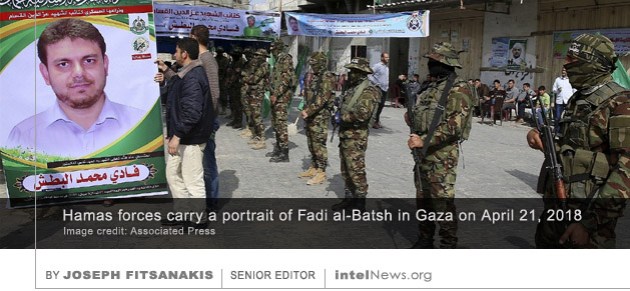
Fadi al-Batsh Fadi AlbatshMilitants in the Gaza Strip have accused Israel of assassinating a Palestinian engineer based in Malaysia, who was shot dead on Saturday by unknown assailants riding motorcycles. The victim has been identified as Dr. Fadi M. al-Batsh, 35, from the town of Jabalia in the Gaza Strip, a Palestinian enclave controlled by the militant group Hamas. Al-Batsh is believed to have completed undergraduate and Master’s degrees in electrical engineering at the Islamic University of Gaza. In 2011 he enrolled as a PhD student at the University of Malaya in Kuala Lumpur, from where he subsequently received his doctorate in electrical engineering. He was then employed as a lecturer by the University of Kuala Lumpur’s British Malaysian Institute. The Institute is located in the Jalan Gombak neighborhood of the Malaysian capital, where al-Batsh lived with his wife and three children. Some reports from Israel said that al-Batsh worked on drone technology and that he had authored scientific articles on the development of drone technology, as well as on the technical specifications of transmitters used to remotely control drones.
Local reports said al-Batsh was gunned down at around 6:00 a.m. on Saturday morning as he was walking from his home to a nearby mosque for early-morning prayers. Footage taken from nearby security cameras shows that al-Batsh was shot by two men riding on a large BMW 1100cc motorcycle, who waited for him to arrive at the scene for at least 20 minutes before opening fire. Malaysian police said the Palestinian man was pronounced dead at the scene, having sustained wounds from 14 bullets in the chest and head. A subsequent report by local police authorities said the incident was being treated as a “targeted killing”, not as a terrorist attack, because the assassins appeared to focus solely on al-Batsh while ignoring several bystanders that were present.

Shortly after al-Batsh’s killing some reports identified him as a relative of Khaled al-Batsh, a senior official in the Palestinian Islamic Jihad. A subsequent statement published by Hamas-affiliated media said al-Batsh was a commander in the Izz ad-Din al-Qassam Brigades, Hamas’ military wing. The militant group described him as a “loyal member” and called him a “shahid” (martyr), who was “assassinated by the hand of treachery”. The Gaza-based group also vowed retaliation against Israel and the Mossad intelligence agency.

Malaysian authorities said on Sunday that they did not rule out anything, including the possibility that al-Batsh may have been killed by militants belonging to the Islamic State. Malaysia’s Deputy Prime Minister, Ahmad Zahid Hamidi, said that the possible involvement of “foreign agents” in al-Batsh’s killing was also being looked at. He added that the two main suspects behind the killing were believed to be “white, European-looking men”. On Monday, Malaysian police released facial composites of the two suspects, based on eyewitness testimonies. An accompanying press release said the two suspects were “around 1.80 meters tall, well built, had fair complexions, and were believed to be of Middle Eastern or Western descent”.

Author: Joseph Fitsanakis | Date: 23 April 2018 | Permalink | Research credit: R.B. and C.F.

French consular employee caught smuggling guns to Gaza using diplomatic car

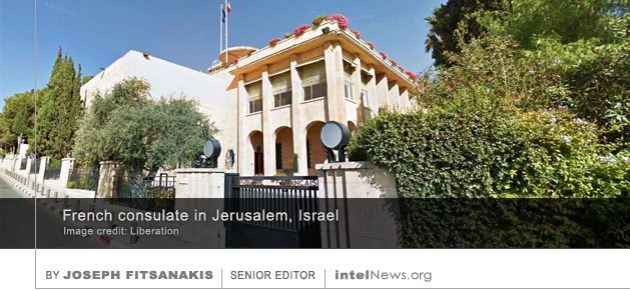
French consulate in JerusalemAn employee of France’s consulate in Jerusalem is under arrest for allegedly smuggling weapons from the Gaza Strip to the West Bank, according to French media reports, which have been confirmed by Israel. The consular employee has been identified by the Shin Bet, Israel’s domestic security agency, as Romain Franck, 23. He reportedly worked as a driver at the consulate, a job he managed to secure through a prestigious “international volunteer” program sponsored by the French government. The elite program allows recent French college graduates to gain work experience in various countries around the world. Although he had a relatively junior post at the French consulate, Franck carried a diplomatic passport, which allowed him to move through international borders without being searched, due to his diplomatic immunity privileges.
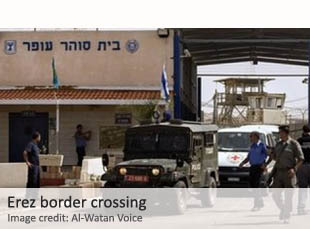
But, according to French newspaper Liberation, Franck was detained by Shin Bet officers on February 19 of this year, as he was trying to enter Israel from the Gaza Strip at the Erez border crossing. He was driving a car that bears French diplomatic license plates and belongs to the French consulate in Jerusalem. Inside the car, the Shin Bet officers reportedly found pistols and assault rifles. According to Liberation, Franck’s arrest has been kept secret. The Shin Bet admitted that the newspaper’s story was true on Tuesday afternoon. Franck reportedly told his Israeli captors that he had received the weapons from a Palestinian who worked at the French Cultural Center in Gaza. He then transported them over several trips to the West Bank, where other Palestinians picked them up, paid him, and sold them on to others.

Israel has reportedly arrested eight more people in connection with the gun running, all of whom are Palestinians. They include a Palestinian security guard at the French consulate. According to the Shin Bet, Franck was not ideologically or politically allied with Hamas, Fatah, or any other Palestinian group. Instead, he participated in the gun smuggling for financial gain. A spokesman at France’s embassy in Tel Aviv said that Paris was closely monitoring the incident and was “in close contact with the Israeli authorities on the matter”.

Author: Joseph Fitsanakis | Date: 21 March 2018 | Permalink | Research credit: MF

Sophistication of Hamas official’s killing points to Mossad, say sources

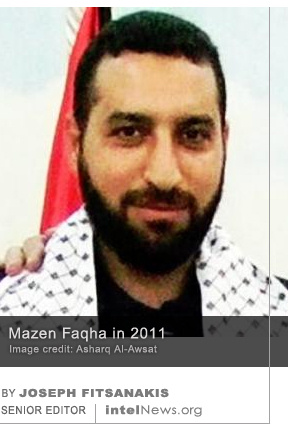
Mazen FaqhaThe sophistication behind the killing of a senior Hamas official, who was assassinated in his home in the Gaza Strip on Friday evening, points almost certainly to Israel, according to observers. Mazen Faqha, 38, helped plan several lethal operations by the Palestinian militant group, including a 2002 suicide bombing that killed nine and wounded over 50. Following an extensive manhunt, Israeli authorities arrested Faqha in the West Bank and in 2003 convicted him to nine life sentences. But in 2011, Faqha was among 1,027 Palestinian and Arab-Israeli prisoners that Israel released in exchange for Gilad Shalit, a soldier in the Israel Defense Forces, who was held prisoner by Hamas. Since that time, Faqha had lived in the Gaza Strip, the Hamas-controlled Palestinian enclave that has been under strict Israeli blockade since 2006.
Last Friday, March 24, Faqha was found dead inside the garage of his apartment block in Tel el-Hawa, a densely populated neighborhood in southwestern Gaza City. Initial reports stated that the Hamas official had been shot dead by a team of assailants outside his home. But subsequent accounts revealed that several gunmen were waiting for Faqha inside the car garage located on the bottom floor of the building that houses his apartment. It now appears that the assailants had been hiding in the garage for several hours before Faqha entered it with his car. Minutes earlier, his wife and young daughter had exited the car and made their way to the front door of their apartment. As soon as Faqha drove his car to the garage and closed the garage’s electric door, the gunmen shot him four times in the head from point-blank range and vanished. There was hardly a sound, because the assailants used weapons equipped with silencers. Faqha’s body was not discovered until 7:30 in the evening, a full 90 minutes after he was shot dead. His wife apparently thought that he was talking to their neighbors.

Investigators who are looking into Faqha’s murder say that his killers were intimately familiar with the architectural details of the apartment building where he lived, and had studied his daily routine. They also made sure to leave no traces behind. Consequently, their identity remains a mystery despite the presence of security cameras around the building. Hamas security officials say they believe that Faqha’s killers entered and exited the Gaza Strip by boat. The Palestinian militant group lost little time in blaming the murder on the Mossad, Israel’s primary external intelligence agency, which has targeted several Hamas officials for assassination in the past. Khalil al-Haya, Hamas’ second-in-command in the Gaza Strip said that Israel was the only beneficiary of Faqha’s demise. Khaled Mashal, who chairs Hamas’ Political Bureau, said Israel had “changed the rules of the game” by killing Faqha, adding that Hamas would “accept the challenge”. There has been no official comment from Israel in regards to Faqha’s killing.

Author: Joseph Fitsanakis | Date: 28 March 2017 | Permalink | Research credit: SF

Israeli military says Hamas lured its soldiers using online profiles of women

Cellular telephoneThe Israel Defense Forces told a press conference on Wednesday that hackers belonging to the Palestinian militant group Hamas lured Israeli soldiers by posing as young women online. Wednesday’s press conference was led by an IDF spokesman who requested to remain anonymous, as is often the case with the Israeli military. He told reporters that the hackers used carefully crafted online profiles of real Israeli women, whose personal details and photographs were expropriated from their publicly available social media profiles. The hackers then made contact with members of the IDF and struck conversations with them that in many cases became intimate over time. At various times in the process, the hackers would send the Israeli soldiers photographs of the women, which were copied from the women’s online public profiles.
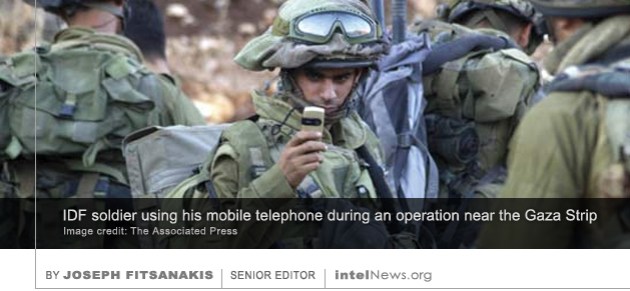
The anonymous IDF spokesman said that, if the soldiers continued to show interest, they were eventually asked by the hackers posing as women to download an application on their mobile telephones that would allow them to converse using video. Once the soldiers downloaded the application, the ‘women’ would find excuses to delay using the application, or the relationships would abruptly end. But the soldiers would leave the application on their telephones. It would then be used by the Hamas hackers to take control of the camera and microphones on the soldiers’ mobile devices. According to the IDF spokesman, dozens of Israeli soldiers were lured by the Hamas scam. No precise number was given.

Media reports suggest that the Hamas hackers were primarily interested in finding out information about IDF maneuvers around the Gaza Strip, the narrow plot of densely inhabited territory that is controlled by the Palestinian militant group. They were also interested in collecting information about the size and weaponry of the Israeli forces around Gaza. Media representatives were told on Wednesday that the operation “had potential for great damage”. But the IDF claims that the harm to its operations was “minimal”, because it primarily targeted low-ranking soldiers. Consequently, according to the Israeli military, the hackers were not able to acquire highly sensitive information.

In 2009, dozens of members of Sweden’s armed forces serving with NATO’s International Security Assistance Force in Afghanistan were found to have been approached via Facebook, and asked to provide details on NATO’s military presence in the country. The Afghan Taliban are believed to have carried out the operation.

Hamas has not commented on the allegations by the IDF.

Author: Joseph Fitsanakis | Date: 12 January 2017 | Permalink

Elite Hamas military commander reportedly defects to Israel

Kerem Shalom border crossingA senior member of the military wing of Hamas, the Palestinian militant group that governs the Gaza Strip, is believed to have defected to Israel. News of the rumored defection first appeared on the website of Al-Hayat al-Jadida, the official newspaper of the Palestinian Authority, which is based in the West Bank. On Tuesday, Al-Hayat said that the man, a member of the Izz ad-Din al-Qassam Brigades, Hamas’ military wing, had not been seen for several days.

The alleged defector was later named as Bassam Mahmoud Baraka, and reportedly comes from a well-known family in Kahn Younis, on the southern sector of the Gaza Strip. Baraka’s father is believed to be a religious judge that serves in Gaza under Hamas’ jurisdiction. According to Al-Hayat, the missing man is an elite member of the al-Qassam Brigades and specializes in operating inside the numerous underground tunnels that are said to span the entirety of the Palestinian enclave. The tunnels are of strategic importance to Hamas, as they secretly connect it with the outside world, despite Israeli efforts to prevent the trafficking of goods and people to and from the Gaza Strip. Some Israeli military officials believe that Hamas operatives are able to travel from one end of the Strip to the other without having to emerge from the ground. Since the 2014 Israeli invasion of Gaza, Tel Aviv has said that it views the elimination of Hamas’ vast underground tunnel network as a national security priority.

According to Palestinian websites, Baraka told members of his family that he was stepping out for a brief hike but never returned. He is believed to have voluntarily approached the border fence that separates Gaza from Israel and surrendered himself to a group of Israeli soldiers. Al-Hayat reports that Baraka’s family has already been informed from representatives of the Red Cross that he is in Israeli hands. Palestinian sources suggest that the Israeli soldiers that took in Baraka were aware of his pending defection and were waiting for him at the border. He was also reportedly carrying a laptop computer with him.

Israel is known to aggressively recruit informants in the Gaza Strip, many of them affiliated with Hamas. In 2010 it was revealed that Mosab Hassan Yousef, whose father is a senior Hamas official, was a secret informant for Shin Bet, Israel’s domestic security agency. Yousef defected to Israel and is now believed to be living in the United States.

Author: Ian Allen | Date: 15 June 2016 | Permalink

Israel says it foiled attempt to smuggle spy drones into Gaza

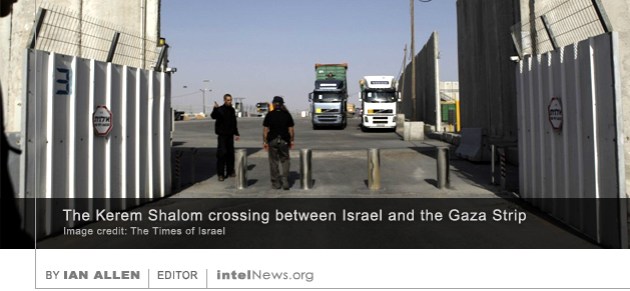
spy droneAuthorities in Israel said on Sunday that they foiled a plan to smuggle dozens of spy drones from Israel into the Gaza Strip. The Israeli Ministry of Defense said in a statement late on Sunday that the drones had been detected by members of the Shin Bet, Israel’s security police. The incident reportedly took place at Kerem Shalom, a major border crossing in to Gaza, a Palestinian enclave that is controlled by Hamas. The Defense Ministry statement also said that Sunday’s incident was only the latest in a string of recent attempts to smuggle spy drones into Gaza, all of which had been stopped by the Shin Bet since January.

According to the Israeli government report, the spy drones were found hidden inside boxes of toys that had been marked for export to Gaza. The drones were of different sizes, types and capabilities, but all were equipped with sophisticated cameras and related software, said the report. Israeli media reported on Sunday that, according to Israeli government sources in Tel Aviv, the drones were almost certainly going to be used by Hamas to spy on possible targets inside Israel. A source in the Israeli Department of Defense said Hamas was known to employ drones in order to explore and map the terrain that is adjacent to the Gaza Strip.

In March of last year, Egyptian authorities reported seeing several spy drones flying out of the Gaza Strip and conducting reconnaissance over Egyptian airspace in the Sinai Peninsula, which borders Gaza. According to some reports, a number of the spy drones that flew out of Gaza were seen as far as 50 kilometers (35 miles) inside Egyptian territory. The latest information from Israel is that the government in Tel Aviv believes that the pattern and frequency of attempts to smuggle spy drones into the Gaza Strip justify an investigation, which is now underway.

Author: Ian Allen | Date: 22 February 2016 | Permalink

Analysis: How does Israel recruit Palestinian informants in Gaza?

Erez border crossingBy JOSEPH FITSANAKIS | intelNews.org
According to human-rights organizations, the Palestinian group Hamas has executed over 50 alleged Israeli informants in the Gaza Strip. Nearly two dozen Gaza residents were accused of collaborating with Israel and summarily shot in the weeks following the recent war between Israel and Hamas. There are serious concerns over the absence of appropriate legal processes in these executions. The issue of legal standards aside, however, there is little question that Israeli intelligence agencies have for decades relied on Palestinian informants to gather information on Arab communities in Israel and the Occupied Territories. These individuals provide the Israeli intelligence establishment with human intelligence or plant technical surveillance equipment as instructed by their handlers. But how do Israeli intelligence agencies, including the Mossad and Shin Bet, recruit Palestinian informants in difficult-to-penetrate places such as the Gaza Strip?

Palestinians who have been personally wronged by Hamas, or who oppose the militant group’s seven-year rule in the Gaza Strip, constitute low-hanging fruit for Israeli recruiters. Other informants, such as petty-thieves and other small-time criminals, are recruited through traditional intelligence techniques that include entrapment or blackmail. But it would be reasonable to assume that most recruits are lured by direct cash payments. Unemployment in the Gaza Strip is currently estimated at 40 percent, which makes offers of cash extremely enticing for a significant segment of the Gazan population. One officer in the Shin Bet —Israel’s domestic intelligence agency— said recently in respect to the recruitment of informants that “everything starts and ends with money”.

Read more of this post

Mossad officer who saved Hamas leader’s life appeals for moderation

Mishka Ben DavidBy IAN ALLEN | intelNews.org
An Israeli intelligence operative, who in 1997 saved the life of the leader of Palestinian militant group Hamas, has published a letter calling on Hamas to show moderation in the dispute with Israel. In 1997, Benjamin Netanyahu, who, like today, was Israel’s prime minister, authorized an ambitious operation to assassinate the leader of Hamas, Khaled Mashal. The operation was carried out by the Mossad, Israel’s covert-action agency, which sent several of its members to Jordanian capital Amman, where Mashal was living at the time. On September 25, two Mossad assassins were waiting for Mashal to arrive at his office, ready to dispense a fast-acting poison in the form of an injection. But as the Hamas leader entered the premises, his young daughter called his name, causing him to turn his head in the opposite direction. As a result, the needle with the deadly poison landed on his ear, as opposed to his neck, and much of it was spilled. Mashal started yelling and before too long the two Mossad assassins had been captured alive by Hamas security guards. Mashal was then rushed to hospital and was about to die, when a furious King Hussein of Jordan contacted Tel Aviv with an ultimatum: either an antidote would be provided to save Mashal’s life, or the captured Mossad agents would be speedily tried and most likely sentenced to death by execution. The director of the Mossad operation then contacted a support officer, Mishka Ben-David, who was awaiting orders in an Amman hotel, and asked him to deliver a vial of antidote to a Jordanian security officer who would be waiting at the lobby of the hotel later that evening. Ben-David did as he was told and handed to the Jordanians the vial of antidote, which the Mossad had prepared in case one of their operatives was inadvertently injected with the poison. The antidote saved Mashal’s life and enabled him to continue to lead Hamas, the organization that is now in command of the Gaza Strip. Last week, Ben-David published an open letter addressed to Mashal, the man whose life he once saved, in which he calls on the Hamas strongman to stop taking his cues from “the most extreme side” of his organization. In a subsequent interview with British newspaper The Sunday Telegraph, Ben-David said his intention in authoring the letter was to “appeal to the rational side of Khaled Mashal”, and urge him to “accept a compromise” in order to “end the war with Israel”. Read more of this post

Destroying Hamas won’t solve conflict, says top US Pentagon official

Lieutenant General Michael FlynnBy JOSEPH FITSANAKIS | intelNews.org
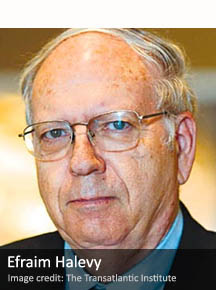
The most senior military intelligence official of the United States has warned that the destruction of Palestinian militant group Hamas will not solve, and might even intensify, the Palestinian-Israeli conflict. Hamas, otherwise known by its full name, Islamic Resistance Movement, was founded with Israeli help in 1987 to combat the power of its secular rival, Fatah. Since 2007, Hamas has ruled the Gaza Strip, after winning most of the votes in the 2006 Palestinian parliamentary election. Fatah, which refused to hand over power to Hamas, now governs the West Bank. Israel has for many years accused Hamas for leading what it describes as the “rejectionist” camp of the Palestinian nationalist movement, by refusing to accept the legitimacy of the Jewish state. The US is in broad agreement with its close ally Israel, and has designated Hamas as a foreign terrorist organization. On Saturday, however, the outgoing director of the US Defense Intelligence Agency, Lieutenant General Michael Flynn, warned Israeli officials that wiping out Hamas will not mean the end of the Palestinian-Israeli dispute, and that the group’s demise will probably lead to a far more radical group taking its place. Lieut. Gen. Flynn was speaking at the Aspen Security Forum, an annual gathering of senior defense leaders in Aspen, Colorado. The top US military intelligence official told his audience that “if Hamas were destroyed and gone, we would probably end up with something much worse”. He went on to add that the militant group’s place in Gaza would probably be replaced by “something like ISIS”. Lieut. Gen. Flynn was referring to the Islamic State of Iraq and al-Sham, known as ISIS, which has emerged from the Syrian Civil War as the most powerful non-state actor in the region. The group has already announced the creation of an Islamic State in territory under its control in the borderlands of Iraq and Syria. Lieut. Gen. Flynn was echoing similar views expressed earlier this month by former Israeli intelligence official Efraim Halevy, who directed Israel’s covert-action agency, Mossad, from 1998 to 2002. Speaking to American television network CNN, Halevy said that numerous radical groups in the Gaza Strip would be far more threatening to Israel’s security than Hamas. Read more of this post

Israel should negotiate with Hamas, says former Mossad chief

Efraim HalevyBy JOSEPH FITSANAKIS | intelNews.org
A former director of the Israeli covert-action agency Mossad, who helped forge a historic peace treaty between Israel and Jordan in the 1990s, has called for the Jewish state to negotiate with Palestinian group Hamas. Efraim Halevy, who directed the Mossad from 1998 to 2002, told American television network CNN on Tuesday that numerous radical groups in the Gaza Strip would be far more threatening to Israel’s security than Hamas. Speaking to CNN’s chief international correspondent Christiane Amanpour, Halevy said that Hamas, which controls the Gaza Strip, “is a very bad option” for Israel, but that the militant Sunni Islamist groups coming out of Syria and Iraq are “a lot worse” and posed a much more pertinent challenge to regional stability. He specifically mentioned the Islamic State of Iraq and al-Sham, known as ISIS, which has emerged as the most powerful non-state actor in the region, saying that “ISIS has its tentacles in the Gaza Strip too”. Amanpour retorted that, by negotiating with Hamas, Israel would effectively legitimize the militant group. But Halevy said that, while it would be “politically inconvenient” for Israel to reach out to Hamas, the fact is that Tel Aviv has been negotiating with the Palestinian group “for years”. Even though Israel and Hamas insist on refusing to publicly acknowledge each other’s existence, in reality they have been negotiating with each other for a long time, he said. “We [presumably the Mossad] have had several rounds with Hamas in recent years, and the previous rounds ended up in agreements —arrangements, as it was called”, said the former Mossad chief. “But in effect”, he went on, “it was a negotiation between us and Hamas”. As an example, Halevy mentioned the release of Israel Defense Forces soldier Gilad Shalit, who was captured in 2006 in a cross-border raid by Hamas forces. He was released in 2011 as part of a prisoner exchange agreement between the Palestinian group and Israel. In 2012, Halevy issued a public call for dialogue between Israel and Iran, saying that “the Iranians, in their heart of hearts, would like to get out of their conundrum”, referring to Tehran’s nuclear program. Read more of this post