News you may have missed #787

Alexander Makowski By IAN ALLEN | intelNews.org |
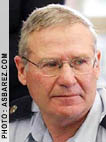
►►An interview with a senior Yemeni spy. Here’s something you don’t read every day: an interview with Ahmed Bin Mo’aili, 66 (pictured here), who worked as a spy for Yemen’s Political Security Organization (PSO) for more than 30 years. He says that, due to his “different duties in different countries”, which required him to travel in several Arab countries, he acquired “tens of wives” over the years. He is now upset with the PSO because the Organization has “separted him from his 31 children who live all around the Arab countries he has worked in and who are awaiting his return”.
►►Cyprus wants answers from UK over Syria spy claims. Dr. Erato Kozakou-Marcoullis, the Minister of Foreign Affairs of the Republic of Cyprus, has asked British authorities for “a full explanation” into media reports that UK military installations in Cyprus are providing intelligence to Syrian rebels. Earlier this month, The London Times claimed that two British military bases on Cyprus, located in Dhekelia and Akrotiri, were being used to collect signals intelligence on Syria. The data collected at the listening posts, operated by the General Communications Headquarters, Britain’s foremost signals intelligence agency, was passed on to the Free Syrian Army through Turkish intelligence operatives, said The Times. But the Cypriot Foreign Minister said that it was crucial that the bases were not being used for purposes not enshrined in the island’s Treaty of Establishment, which mandates the British Bases to be used for defensive purposes only.
►►CIA ‘turned down offer’ to kill bin Laden in 1999. In late 1999, two years before the 9/11 terrorist attacks, which killed nearly 3,000 people, a group of Afghan agents loyal to an anti-Taliban guerrilla leader proposed assassinating Osama bin Laden. In returne, they asked for the $5 million reward the Bill Clinton administration had offered for bin Laden’s capture. But the CIA rejected the plan, saying: “we do not have a license to kill”. This is according to the book Ferreting Out Bin Laden (not yet available in English), by Polish former spy Alexander Makowski (pictured), who claims he was the Afghans’ go-between on the plot. Makowski’s credentials are many: the son of a spy, he attended primary school in Great Britain, high school in the United States, and received a postgraduate law degree from Harvard. He graduated from the Polish military intelligence academy at Stare Kiejkuty before spending 20 years in Polish intelligence.

Germany, UK, share intelligence with Free Syrian Army [updated]

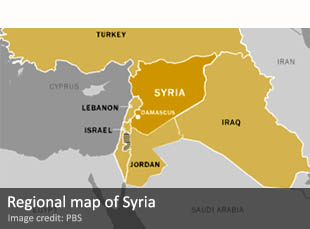
Regional map of SyriaBy JOSEPH FITSANAKIS | intelNews.org |
Two newspapers alleged over the weekend that German and British spy services routinely share critical intelligence on Syrian government troops with rebel forces in the country. In a leading article, German newspaper Bild am Sonntag claimed yesterday that Germany’s intelligence activities in Syria were far broader than officially acknowledged. The paper quoted an unnamed official from Germany’s Federal Intelligence Service (BND), who said that the country “can be proud of the significant contribution we are making to the fall of the Assad regime”. Also quoted in the article was an unidentified American intelligence official, who claimed that “no Western intelligence service has such good sources inside Syria as Germany’s BND”. According to Bild, the BND collects most of its intelligence on Syria through a number of ships, equipped with signals intelligence platforms, stationed in international waters off the Syrian coast. These ships can collect data on Syrian troop movements as far inland as 600 kilometers, or 400 miles. The collected data is then forwarded to BND officers stationed at the North Atlantic Treaty Organization base in Adana, Turkey, who are also tasked with intercepting radio messages and telephone exchanges between members of the Syrian government and/or military. The information is then passed on to members of the Free Syrian Army (FSA), the primary armed force engaged in a fierce civil war against the Syrian regime of Bashar al-Assad. Also on Sunday, the London-based Times newspaper quoted an unnamed FSA official as saying that the rebel forces are routinely given intelligence by British spy agencies. The official told the paper that “the British are giving the information to the Turks and the Americans and we are getting it from the Turks”. Read more of this post

Canadian spy compromised Australian, British intelligence

Jeffrey Paul DelisleBy JOSEPH FITSANAKIS | intelNews.org |
Most regular readers of this blog are undoubtedly familiar with the case of Jeffrey Paul Delisle, a Sub-Lieutenant in the Royal Canadian Navy, who until recently was employed at Canada’s ultra-secure TRINITY communications center in Halifax. Delisle was arrested in January on suspicion of passing information gathered from radio and radar signal interceptions to a foreign power, most likely Russia. Back in May, when it was disclosed that the United States helped Canadian counterintelligence investigators build their case against Delisle, we warned that “a far more important subject concerns the degree in which [Delisle’s] penetration has affected Canada’s intelligence-sharing relationship with its […] partners”. Now a new report in The Sydney Morning Herald reveals that Delisle’s espionage activities compromised Australian secrets that had been shared with Canada under longstanding intelligence cooperation arrangements. Citing “Australian security sources”, the paper said that the Delisle case “has sent shock waves through Western security agencies” due to the volume of compromised information. The Herald claims that the stolen intelligence is “on a scale comparable to the alleged handover to WikiLeaks of US military and diplomatic reports by US Army private Bradley Manning”. An unnamed “Australian security source” told the paper that Delisle’s access to classified information was “apparently very wide” and that Australian intercepts were “inevitably compromised”. Read more of this post

News you may have missed #738

Gareth WilliamsBy IAN ALLEN | intelNews.org |
►►Pathologist says MI6 spy may have died alone. Leading British pathologist Richard Shepherd has told the BBC there is “credible evidence” that MI6 officer Gareth Williams died alone. Williams, a mathematician in the employment of Britain’s signals intelligence agency, GCHQ, was found dead in a padlocked sports bag at his home in Pimlico, London, in 2010. According to Dr. Shepherd, bags identical to the one Williams was found in, can be locked by someone inside the bag.
►►Turkey may indict Israeli officers Over Gaza flotilla raid. A prosecutor in Turkey has prepared indictments and recommended life sentences for four senior Israeli officers over the killing of nine activists aboard a Gaza-bound aid flotilla forcibly intercepted in international waters by Israeli commandos two years ago. The indictments, which have not been formally approved by the Turkish judiciary, could further strain relations between Turkey and Israel, which were once close but which deteriorated badly after the flotilla raid on May 31, 2010.
►►Czech secret services alarmed by drastic drop in funding. The BIS, Czech Republic’s counterintelligence service, is used to operating on Kč 1.149 billion (around US$60 million). According to the Finance Ministry’s plan, the agency’s budget will be reduced to Kč 911 million (US$45 million) in 2013. The news has prompted former interior minister and current member of parliament František Bublan to accuse the government of effectively leading to the spy service’s “liquidation”. But Finance Minister Miroslav Kalousek argues that all state institutions must cut back in order to help achieve a balanced budget by 2016.

Lawyer alleges MI6 withheld data in spy’s death

Gareth WilliamsBy IAN ALLEN | intelNews.org |
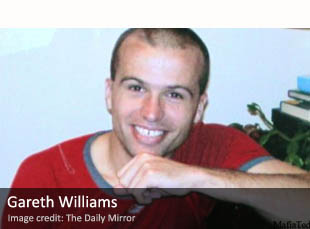
A lawyer representing the family of an MI6 employee found dead in his London apartment in 2010, has accused the British intelligence agency of deliberately withholding evidence from police investigating his death. The allegation was made on Tuesday morning at the Coroner’s Court in Westminster, London, during an official inquest into the death of Gareth Williams, a mathematician in the employment of Britain’s signals intelligence agency, GCHQ. A few years ago, Williams was seconded to MI6, Britain’s external intelligence agency, to help automate intelligence collection. He had also worked with several United States agencies, including the Federal Bureau of Investigation and the National Security Agency. But his career came to an abrupt end in 2010; on August 23, he was found dead in a padlocked sports bag at his home in Pimlico, London. The bizarre murder case, which has preoccupied British media for 21 months, took a new twist this week, after it was revealed in open court that MI6 had failed to share nine computer memory sticks with officers of the London Metropolitan Police, who were investigating Williams’ death. It was also revealed that MI6 did not allow the Met to handle the case, due to its alleged sensitivity. Instead, MI6 asked for the force’s Counter-Terrorism Command (also known as SO15 Branch), whose officers have security clearances, to act as a go-between linking MI6 with the police. Government witnesses also disclosed that MI6 had searched the memory sticks without telling the police, and that it had failed to share with detectives a detailed list of Williams’ possessions. Read more of this post

News you may have missed #718 (GCHQ edition)

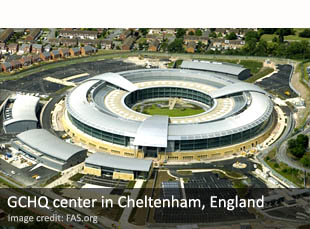
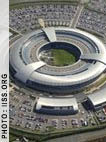
GCHQ center in Cheltenham, EnglandBy IAN ALLEN | intelNews.org |
►►GCHQ releases Alan Turing papers. Britain’s signals intelligence agency, GCHQ has released two mathematical papers written by cryptographer Alan Turing after keeping the works secret for over half a century. The intelligence agency believes the handwritten papers were produced by Turing during his time at Bletchley Park, the World War II code-breaking center. The year 2012 marks the centenary of Alan Turing’s birth. Turing, whose work heavily contributing to the Allied war effort, committed suicide in 1954 by taking cyanide. Turing had been convicted of homosexuality, which was then a crime, and was given the choice between prison or chemical castration. The UK government officially apologized over Turing’s treatment in 2009, over 50 years after his death.
►►Britain’s GCHQ sued for ‘racism’. Alfred Bacchus, 42, claims he was bullied by bosses while he was a senior press officer at the Government Communications Headquarters in Cheltenham. He says he wanted to publish an official report in 2010 into race bias inside GCHQ which warned that not enough ethnic minority staff were being recruited to help fight terrorism. It found that black and Asian intelligence officers at GCHQ complained of a racist culture in which they were insulted by white colleagues and challenged over their loyalty to Britain.
►►Ex-GCHQ chief wants more surveillance of Facebook and Twitter. Sir David Omand, an ex-Cabinet Office security chief and former director of Britain’s GCHQ electronic eavesdropping agency, said it was essential that monitoring of social media was put on a proper legal footing. A report by the think-tank Demos, which Sir David co-authored, said existing laws regulating the interception of communications by police and intelligence agencies needed to be overhauled to meet the complexities of social media. However, the ability of state security agencies and the police to intercept social network communications such as tweets must be placed on a clear legal footing, the report says.

News you may have missed #710

Jonathan PollardBy IAN ALLEN | intelNews.org |
►►MI6 officer murder inquest to be held in secret. Britain’s Foreign Secretary William Hague has ordered that key evidence in the inquest into the death of MI6 officer Gareth Williams is to be heard in secret. Williams, who was found dead in a padlocked sports bag in the bath of his London apartment 20 months ago, was on secondment to MI6 from GCHQ, the British government’s signals intelligence agency, and had worked closely with the American security services.
►►GCHQ warns it is losing terrorists on the internet. Speaking of the GCHQ, the organization says that modern internet technology has left them unable to intercept calls which use new technology instead of traditional phone systems. Britain’s Daily Telegraph quotes “senior intelligence sources with detail knowledge of the problem”, who say that GCHQ technical experts have seen their access to telephone intercept information “eroded” by the use of the technologies such as Voice Over Internet Protocol, or VoIP, which route telephone calls over the world wide web.
►►Israel pressures Obama to release Jewish spy. Israel’s Prime Minister Benjamin Netanyahu has again called on the United States to release convicted spy Jonathan Pollard after the former US Navy intelligence analyst was hospitalized this week. Pollard, an American of Jewish descent, was sentenced to life in prison 25 years ago for leaking classified documents to Israel. Many Israelis believe the sentence was too harsh and officials often demand his release. But Democratic and Republican administrations in the US have repeatedly refused Israeli appeals to release the convicted spy.

News you may have missed #694

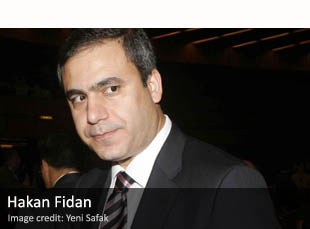
Hakan FidanBy IAN ALLEN| intelNews.org |
►►India’s spy satellite to be launched in April. The Radar Imaging Satellite, or RISAT-1, is a wholly Indian-built spy-surveillance satellite that can see through clouds and fog and has very high-resolution imaging. The Indian Space Research Organisation (ISRO) has said that RISAT-1 is slated for launch in April. The satellite would be used for disaster prediction and agriculture forestry, and the high-resolution pictures and microwave imaging “could also be used for defense purposes”.
►►GCHQ staff could risk prosecution for war crimes. British law firm Leigh Day & Co. and the legal action charity Reprieve are launching the action against Britain’s foreign secretary William Hague, accusing him of passing on intelligence to assist US covert drone attacks in Pakistan. Human rights lawyers have said that civilian staff at GCHQ, Britain’s signals intelligence agency, could also be at risk of being prosecuted for war crimes.
►►Turf war between Turkey’s top spy and police commander? A news report appeared yesterday, which claimed that there was a rift between Turkish intelligence agency MİT Undersecretary Hakan Fidan and National Police Chief Mehmet Kılıçlar, over intelligence sharing in the fight against the terrorist Kurdistan Workers’ Party (PKK). But the two agencies issued a rare joint statement calling media reports “unsubstantiated”.

News you may have missed #661

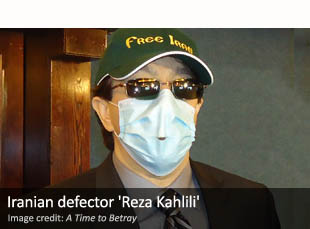
Reza KahliliBy IAN ALLEN | intelNews.org |
►►Britain increases pay for key intelligence staff. Having seen many of its key intelligence staff lured away by tech heavyweights like Google and Microsoft, the UK government is apparently offering bonuses and payouts to key intelligence staff to ensure they don’t leave their jobs at the Government Communication Headquarters (GCHQ). The UK Cabinet Office has stated that the bonuses to be paid to its key staff have been already given the green light.
►►Ex-CIA spy sees split in Iran’s Revolutionary Guards. Reza Kahlili (codenamy WALLY) is the pseudonym used by an Iranian defector to the US, who claims to have worked as a CIA agent in the 1980s and early 1990s. Kahlili (pictured), who says he was a member of the Islamic Revolutionary Guard Corps (IRGC), the ideological protectors of Iran’s 1979 Islamic Revolution, argues that a serious split is developing within the IRGC, with one faction favoring the overthrow of the government.
►►A rare look at Fort Bragg’s Special Warfare Center. The US Special Warfare Center at Fort Bragg is a CIA-approved paramilitary training facility, aimed at members of the US Army Green Berets, Navy SEALs and Marine Corps special operators. The piece claims –rather unconvincingly– that the Center is “an illustration of how special operations and intelligence forces have reached an easier coexistence, after early clashes where CIA officers accused the military operators of ineptly trying to run their own spy rings overseas without State Department or CIA knowledge”.

News you may have missed #655

DARPA logoBy IAN ALLEN | intelNews.org |
►►DARPA awards team that reassembled shredded documents. The Defense Advanced Research Projects Agency (DARPA), a US government group that funds high-tech military research, has awarded $50,000 to a group of programmers that came up with a way to quickly and effectively piece together shredded documents.
►►Europeans refuse to disclose CIA flight data. A majority of 28 mostly-European countries have failed to comply with freedom of information requests about their involvement in secret CIA flights carrying suspected terrorists, two human rights groups say. London-based Reprieve and Madrid-based Access Info Europe accuse European nations of covering up their complicity in the so-called ‘extraordinary rendition’ program by failing to release flight-traffic data that could show the paths of the planes.
►►Final look at GCHQ’s Cheltenham site. The Oakley site of Government Communications Headquarters (GCHQ), Britain’s signals intelligence agency, is being decommissioned with the last few staff members leaving for the nearby Benhall site, nicknamed ‘the doughnut’. The BBC published an interesting tour of the site, which opened in 1951.

News you may have missed #648

Academi HQ

►►IntelNews editor interviewed on RT. IntelNews senior editor, Dr Joseph Fitsanakis, was interviewed yesterday on the main news program of the popular international news channel RT. The interview, concerning the rebranding of private security company Xe Services (formerly Blackwater) to Academi, can be watched here (watch video at the bottom of the page).
►►Contractors making a killing working in UK cyberdefense. Britain has spent more than £100 million ($160 million) in the past year on consultants to combat cyber espionage and the growing use of the internet by terrorists. Now, members of Parliament are investigating the soaring costs of employing private contractors, some paid the equivalent of £150,000 a year, three times the average wage at GCHQ, the UK’s signals intelligence agency.
►►Japan launches second spy satellite. Japan’s space agency, JAXA, has launched an intelligence-gathering satellite, its second this year. Japan launched its first pair of spy satellites in 2003, prompted by concerns over North Korea’s missile program. It currently has four optical information-gathering satellites in orbit. Officials refused to provide details of the capabilities of the most recently launched satellite.

News you may have missed #640

Amos Yadlin

Amos Yadlin

►►Chinese defector says Canada right to worry about spying. Li Fengzhi, a former intelligence officer for China’s Ministry of State Security, who defected to Canada in 2003, has told a conference that Canada should be concerned about relationships between senior politicians and journalists from China, saying Beijing is targeting lawmakers everywhere. He was referring to the case of senior Conservative MP Bob Dechert, who was enveloped by controversy in September over amorous e-mails he sent to Shi Rong, a Chinese government journalist based in Toronto. After the Dechert controversy broke, the journalist recalled to Beijing to meet with her superiors and has not returned to her Canadian posting.
►►More intel officials warn against airstrikes on Iran. Meir Dagan, the former head of Israeli spy agency Mossad, is not alone in warning against the possibility of Israeli attacks against Iran’s nuclear program. He has now been joined by Major General Amos Yadlin, who until recently headed Israel’s Military Intelligence directorate. Speaking at Israel’s Institute for National Security Studies, Yadlin doubted that airstrikes could threaten Iran’s numerous, distant and well-defended nuclear facilities. Another intelligence official, Saudi Arabia’s Prince Turki al-Faisal, also cautioned last week against any attacks on Iran, saying that “there are other non- military policy alternatives, as yet unexplored, that could have the desired result without the unwanted consequences”.
►►GCHQ challenges code breakers via social networks. Britain’s signals intelligence agency, the General Communications Headquarters, has launched a code cracking competition to help attract new talent. The organization has invited potential applicants to solve a visual code posted at an unbranded standalone website. The challenge will also be ‘seeded’ to social media sites, blogs and forums. A spokesman said the campaign aimed to raise the profile of GCHQ to an audience that would otherwise be difficult to reach.

News you may have missed #639

GCHQ

GCHQ

►►GCHQ will sell cyberdefense tech to private firms. The GCHQ, Britain’s signals intelligence agency, is to market some of its security technologies to companies in the private sector, in an attempt to bolster defenses against the foreboding threat of cyberwarfare. The UK government’s “cyber security strategy”, which was unveiled this month, has earmarked £650 million in public funding to set up a four-year National Cyber Security Program, a percentage of which will be used to collaborate with private companies. Click here for an excellent analysis on the public-private cybersecurity collaboration in Britain.
►►Was there a coup attempt in Trinidad? Many in Trinidad and Tobago were expressing skepticism yesterday about an alleged assassination plot, which Prime Minister Kamla Persad-Bissessar said had been uncovered against her and several of her ministers. Police said nearly a dozen people had been arrested, including members of the army and police, but authorities have not given more details, citing the need to maintain security in operations to dismantle the plot.
►►US Senators resist $7 Billion in spending cuts for spy satellites. The Obama Administration wants to stop incessant spending by Defense Department contractors, especially those who have wasted billions of US taxpayers’ money in failed spy satellite projects. But the contractors’ friends in Congress, including lawmakers on the US Senate Intelligence Committee, are trying to stop the White House from cutting a $7 billion commercial satellite program being developed by GeoEye Inc. and DigitalGlobe Inc. What else is new?

News you may have missed #636

Lebanon

Lebanon

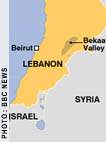
►►Careless codeword may have cost CIA its Lebanon network. Hezbollah have reportedly just rolled up the CIA’s network of spies in Lebanon. If so, it’s because of one of the stupidest, least secure code words in history. According to ABC News, Hezbollah operatives figured out that CIA informants, who had infiltrated the Iranian proxy group, were meeting with their agency handlers at a Beirut Pizza Hut. How could Hezbollah deduce that location? “The CIA used the codeword ‘PIZZA’ when discussing where to meet with the agents,” ABC reports.
►►UK spy chiefs to be publicly questioned for first time. The heads of British intelligence agencies are set to be questioned for the first time in public, under plans to make spies more accountable. The directors of MI5, MI6 and GCHQ will face Parliamentarians on the Intelligence and Security Committee. Although, they have recently begun to make rare public appearances, and deliver speeches, it will be the first time the intelligence agency heads will face public cross-examination over their activities.
►►Documents reveal largest domestic spy operation in Canadian history. Police organizations across Canada co-operated to spy on community organizations and activists in what the Royal Canadian Mounted Police called one of the largest domestic intelligence operations in Canadian history, documents reveal. Information about the extensive police surveillance in advance of last year’s G8 and G20 meetings in southern Ontario comes from evidence presented in the case of 17 people accused of orchestrating street turmoil during the summits.

News you may have missed #628 (analysis edition)

Michael Scheuer

Michael Scheuer

►►Should intelligence agencies chase tax evaders? Three years ago, Germany’s foreign intelligence service, the BND, paid a whistleblower close to $7 million for DVDs containing information on thousands of secret accounts at a leading Liechtenstein bank. The discs contained data on 4,527 Liechtenstein foundations and financial entities, 1,400 of which were owned by Germans. But should a spy agency like the BND take part in the unglamorous and politically charged business of collecting information on tax cheats?
►►UK ex-spy chief says Google makes spies work harder. The rise of the web and Google means Britain’s spies have to work harder to produce genuinely secret intelligence, according to Sir David Pepper, the former director of GCHQ, Britain’s signals intelligence agency. He said “the Google effect” of so much information being readily available online had “very substantially” raised the “threshold for producing intelligence” for MI5, MI6 and GCHQ.
►►Ex-CIA official says America ‘creates its own enemies’. Americans are in the crosshairs of terrorists worldwide purely due to Washington’s policy in the Muslim world, according to former CIA officer Michael Scheuer, who spoke to Russia Today. Scheuer, author of Through Our Enemies’ Eyes, worked for the CIA for over 20 years and at one time was the chief of the agency’s ‘Bin Laden unit’.