News you may have missed #620 (cyberespionage edition)

GCHQ

GCHQ

►►Canada government ‘warned prior to cyberattack’. Canada’s spy agency, CSIS, warned the government that federal departments were under assault from rogue hackers just weeks before an attack crippled key computers. A newly released intelligence assessment, prepared last November, sounded a security alarm about malicious, targeted emails disguised as legitimate messages —the very kind that shut down networks two months later.
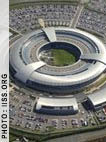
►►GCHQ warns cyber crime reaches ‘disturbing’ levels. Cyber attacks on the British government, the public and industry have reached “disturbing” levels, according to the director of Britain’s biggest intelligence agency. Iain Lobban, who runs the British government’s listening centre, GCHQ, has warned that the “UK’s continued economic wellbeing” is under threat.
►►Japanese parliament hit by cyber-attack. Alleged Chinese hackers were able to snoop upon emails and steal passwords from computers belonging to lawmakers at the Japanese parliament for over a month, according to Japanese daily Asahi Shimbun. The paper claims that computers and servers were infected after a Trojan virus was emailed to a Lower House member in July. The Trojan then allegedly downloaded malware from a server allegedly based in China —allowing remote hackers to secretly spy on email communications and steal usernames and passwords from Japanese lawmakers.

News you may have missed #585 [updated]

GCHQ

GCHQ

►►GCHQ recovers £300m worth of stolen information. Details stolen from more than a million credit cards across Europe, worth an estimated £300 million, have been recovered by Britain’s GCHQ signals intelligence spy agency, according to The Daily Telegraph.
►►Kuwait arrests alleged Iraqi spy. Kuwait security forces have arrested a man of Iraqi origin for alleged intelligence links with Iraq, a Kuwaiti daily said on Sunday. The man, who was arrested on Friday, and is referred to by the media as “Abu Ahmad”, was staying illegally in the country and allegedly provided Iraq with sensitive information about vital facilities in Kuwait. This is the third time in recent months that the government of Kuwait has pressed espionage charges against a spy suspect. [Update: Kuwait denies reports of spy’s arrest]
►►Hackers steal CIA and Mossad SSL certificates. The tally of digital certificates stolen from a Dutch company in July has exploded to more than 500, including ones for intelligence services like the CIA, the UK’s MI6, and Israel’s Mossad, a Mozilla developer said Sunday. According to some sources, the hackers were Iranian.

News you may have missed #576 (Europe edition)

GCHQ

GCHQ

►►Inside Britain’s signals intelligence agency. This account of the work of Britain’s General Communications Headquarters is a bit basic, but it’s not every day that the GCHQ grants access to a journalist to its Cheltenham base.
►►Czech telecoms to share data with intel services. The Czech Interior Ministry has placed a clause in the planned amendment to the electronic communications law, under which operators of communication networks will have to provide data on cell phones and the Internet to the civilian and military counterintelligence.
►►Dutch F-16 pilot suspected of espionage. A Dutch former F-16 pilot suspected of espionage, identified only as Chris V., had more state secrets in his possession than he previously admitted to, according to public prosecutors in The Hague. The pilot was arrested last April and stands accused of leaking state secrets to a colonel from Belarus.

News you may have missed #575

IARPA logo

IARPA logo

►►Inquest into death of MI6 spy to go ahead. The inquest into the bizarre death of MI6 and GCHQ officer Gareth Williams will go ahead before Christmas without a jury, according to London-based newspaper The Express. The paper says that “12 spy chiefs will attend [the inquest] to explain the background to the case”.
►►Colombia’s ex-president denies role in spy scandal. Alvaro Uribe has denied, during a 3½-hour appearance before a Colombian congressional committee, that he ordered the country’s domestic intelligence agency to spy on judges, journalists and political foes. More than 20 agents of the DAS intelligence agency have been imprisoned for alleged roles in the spying. Two more have pleaded guilty in exchange for reduced sentences.
►►US spy research firm eyes stock market. IARPA, the US intelligence community’s research arm, plans to introduce a new program to develop tools to help analysts “quickly and accurately assess petabytes of complex anonymized financial data”. According to a conference presentation, the program would help spies “analyze massive amounts of data to spot indicators of market behavior, find relationships between seemingly unrelated transactions across hundreds of global markets, and provide insight into specific events and general financial trends”.

News you may have missed #571 [updated]

Markus Wolf

Markus Wolf

►►East German spymaster’s widow loses pension battle. Andrea Wolf, The widow of Markus Wolf, the shadowy spymaster of communist East Germany, lost a court battle on Monday to reclaim his honorary pension. Dubbed “The Man Without a Face” because Western intelligence services long lacked even a photograph of him, Wolf directed the General Intelligence Administration, the foreign intelligence division of East Germany’s Stasi. He died in 2006, at the age of 83.
►►Dominica government officials deny spying accusations. Dominican officials have strongly denied accusations that the government of the former British colony, through the National Joint Intelligence Committee (NJIC), has been spying on the activities and actions of political activists over the last few months. According to the allegations, in one case, in April 2009, a member of the Dominica Police Force was sent to Brooklyn, New York, to spy on a conference on the political situation in Dominica, on orders from the country’s Prime Minister. But Dominica’s Police Commissioner, Cyril Carrette, denied the existence of NJIC, and called the accusations unfounded.
►►British spy agency called in to crack BlackBerry encryption. The British intelligence service, MI5, has been drafted in to assist its sister service, GCHQ, in cracking the BlackBerry encryption code, in order to find those responsible for Read more of this post

News you may have missed #568

Gareth Williams

Gareth Williams

►►Lebanon intercepts covert arms shipment bound for Syria. It looks like anti-Syrian Lebanese groups, allied with former Lebanese Prime Minister Saad Hariri, are smuggling Kalashnikovs and M-16s across the border to anti-government rebels in Banyas and other Syrian towns. The question is, where are these arms coming from? It is also worth noting that the Syrian army claimed last week that it has detained hundreds of Salafi fighters –including Afghans– with Lebanese documents.
►►Russian embassy cars seen near murdered MI6 officer’s flat. British paper The Daily Mail quotes an unnamed “former KGB agent who fled to London 12 years ago”, who says that he “logged two cars with Russian diplomatic number plates […] parked or driving close” to the central London apartment of MI6 and GCHQ officer Gareth Williams. The unnamed former agent says he noticed the vehicles around the time when Williams is believed to have been murdered in his apartment.
►►Indonesian intel reports on West Papua leaked. Hundreds of intelligence briefs from Indonesia’s elite special forces unit, Kopassus, have been obtained by Australian newspaper The Age. They include a detailed analysis of the separatist movement in oil-rich Western Papua. According to the Australian press, the reports “illustrate the level of paranoia in Jakarta about its hold over the resource-rich region”.

News you may have missed #452

  • Britain’s GCHQ turns to Google for help. GCHQ, Britain’s Cheltenham-based signals intelligence agency, is recruiting an expert on MapReduce, the patented number-crunching technique developed by Google to distribute the load of billions of web searches across its cluster of hundreds of thousands of commodity servers.
  • CIA double agent pleads guilty from prison. CIA officer Harold James Nicholson, who in 1997 was jailed for spying for Russia, has pleaded guilty to enlisting his son Nathan to sell the Russians more secrets and collect money owed to him by the Russian spy services.
  • Georgia offers to negotiate with Russia over spies. Tbilisi is ready for negotiations with Moscow on the repatriation of several alleged Russian spies arrested in Georgia, the country’s Deputy Foreign Minister Nino Kalandadze has said.

News you may have missed #443

  • First budget cuts in a decade for UK spy agencies. Spending on Britain’s intelligence agencies is set to fall by 7%, for the first time in more than a decade. This is be expected to force MI5, MI6 and GCHQ to cap staff numbers, merge some of their operations, and scrap plans to modernize some of their buildings. Looks like even more British spies will be moving to Australia.
  • South Koreans arrested for trying to defect to North. Three South Koreans, including a medical doctor, are being investigated after allegedly trying to defect to North Korea from China. It is extremely unusual for South Koreans or other nationals to attempt to defect to the North.
  • Plame calls Fair Game movie ‘accurate portrayal’. CIA agent Valerie Plame has said the movie Fair Game, based on her book, is a “really good, accurate portrayal of what we went through, both personally and in the political maelstrom that we live through”. The Bush administration was accused of blowing Plame’s cover as retaliation after her diplomat husband openly challenged the reasoning behind the Iraq War.

News you may have missed #430

  • Russians arrested outside US power plant. Police in the US state of Georgia have arrested one Kazakh and two Russian citizens, who were carrying “a machete, shovel, wire cutters and ski masks”, outside Georgia Power’s Plant McIntosh, at 1:00 in the morning. Hmm….
  • MI6 spy could have climbed into sports bag before death. British detectives reportedly believe that someone else padlocked GCHQ and MI6 employee Gareth Williams into the sports bag where his body was found on August 23. But they remain open to the possibility that Dr Williams climbed into the bag as part of a sex game and then suffocated.
  • Tamils claim espionage behind Canada HQ break-in. The Canadian Tamil Congress believes that lists containing the names of hundreds of Tamil asylum-seekers were stolen from its Toronto headquarters by Sri Lankan government spies.

News you may have missed #426 (Gareth Williams edition II)

  • ‘Turf war’ over Williams killing. British media claim that a turf battle has erupted between British police and the country’s external intelligence agency, MI6, with some police officers complaining that MI6 personnel are hindering their investigation into the death of former MI6 and GCHQ employee Gareth Williams.
  • Williams reported ‘being tailed’ before death. British tabloid The Daily Express claims that Gareth Williams feared he was being followed and told his superiors at MI6 he thought he was being targeted by foreign agents, several weeks before his death.
  • NSA expert doubts Williams killing was spy-related. Intelligence commentator James Bamford, who has authored several books on the NSA, GCHQ’s equivalent agency in the US, says that “leaving a body in a canvas bag sounds more like a jealous lover or drug deal gone bad than a political assassination”.

Killer submerged British spy’s body in ‘chemical substance’

Gareth Williams

Gareth Williams

By JOSEPH FITSANAKIS | intelNews.org |
Investigators are still in the dark about vital clues behind last month’s killing of a British intelligence employee in his London apartment. Detectives say they are still unsure about the exact cause of death of Dr. Gareth Williams, a 31-year-old mathematician employed by General Communications Headquarters (GCHQ), the British government’s communications security and surveillance agency. It has been determined that Williams, who for the past year had been temporarily transferred to MI6, Britain’s external intelligence agency, was not stabbed or shot, and is unlikely to have been strangled by his murderer(s). There are, however, increasing signs that the GCHQ scientist’s murder was carried out in a professional manner, possibly by a member of a rival intelligence agency. Read more of this post

Police see ‘professional job’ in British spy’s death

Gareth Williams

Gareth Williams

By JOSEPH FITSANAKIS | intelNews.org |
As authorities investigate the recent death of British spy Dr. Gareth Williams, the country’s notorious tabloid media industry is having a field day disorienting interested observers. It is thus easy to miss important news breakthroughs in the cacophony of sensationalized headlines about Williams, whose body was discovered a week ago, stuffed in a sports duffle bag in the bath of his London apartment. One such breakthrough was yesterday’s report by Britain’s widely respected Channel 4, which said that law enforcement investigators described Williams’ death as “a neat job”, a term used to refer to professional killings. The Channel 4 report was preceded by strong official denials by police that Williams’ murder was sex-related, as had been previously reported. Some investigators now believe that Williams was killed by a foreign agent, who then deliberately “planted a trail of clues” pointing to a homosexual link to the death. Read more of this post

News you may have missed #419 (Gareth Williams edition)

British MI6 employee found dead in London flat

Gareth Williams

Gareth Williams

By JOSEPH FITSANAKIS | intelNews.org |
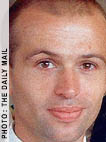
British authorities are keeping silent on the mysterious death of a Secret Intelligence Service (MI6) employee, whose body was found in the bath of his London apartment, stuffed in a sports duffle bag. By Monday afternoon, when police entered the top apartment of the five-storey townhouse in Pimlico, London, the man had been laying dead for nearly a fortnight. On Wednesday, he was identified as Dr. Gareth Williams, a 31-year-old mathematician employed by General Communications Headquarters (GCHQ), the British government’s foremost communications security and surveillance agency. For the past year, Williams had been temporarily transferred to MI6, the country’s external intelligence agency, whose headquarters is located less than a mile from the apartment where the mathematician’s body was discovered. Read more of this post