News you may have missed #0177

  • TV footage shows Afghan insurgents with US ammo. Television footage broadcast Tuesday in Kabul showed Afghan insurgents handling what appears to be US ammunition, in a remote area of eastern Afghanistan that American forces left last month following a deadly firefight that killed eight US troops.
  • US formally accuses Iran of weapons sales to Hezbollah. The US has accused Iran of illicit arms deliveries to Lebanese Hezbollah during a session of the UN Security Council, endorsing charges by Israel following its seizure of a German ship in the Mediterranean last week.
  • Finnish union spokesman was Stasi informant, says paper. Riitta Juntunen, spokeswoman at the Central Organization of Finnish Trade Unions (SAK), worked for the Stasi, the former East German ministry of state security, Swedish-language daily Hufvudstadsbladet reported on Monday.

Bookmark and Share

News you may have missed #0175

  • South Korean spy agency now regards North as ‘international affairs’. The Seoul-based National Intelligence Service (NIS) has relocated its unit that monitors North Korea under a department dealing with international affairs. The change, described as a “paradigm shift” by one South Korean official, apparently reflects President Lee Myung-bak’s view that the North Korean issue should be dealt more “from the international geopolitical perspective”.
  • Robbery of S. African intel agent was planned, say officials. The robbery by five men of a woman said to be an agent of South Africa’s National Intelligence Agency “was conducted as though it was very well planned”, according to police.
  • Interview with ex-West German spy master. Radio France Internationale has aired an interview with Hans-Georg Wieck, chief of the West German Secret Service (BND) between 1985 and 1990. Among other things, Wieck claims that BND had “well-placed” agents in East Germany, as well as in spy services of other communist, including the KGB.

Bookmark and Share

News you may have missed #0174

  • West feared German reunification in 1989, documents show. The fall of the Berlin Wall 20 years ago caused major anxiety in not only Eastern, but also Western capitals, to the point of outright opposition to a possible German unification, according to documents published last Friday by the National Security Archive.
  • Convicted CIA agents also in Norway. At least two of the 22 (not 23, as the article mistakenly states) CIA agents convicted last week for the 2003 abduction from Italy of Muslim cleric Hassan Mustafa Osama Nasr, were also active in Norway, according to Norwegian daily Stavanger Aftenblad.
  • Shin Bet tried to recruit alleged Israeli terrorist. Jack Teitel, an American-born Jewish settler who was recently arrested for allegedly having murdered two Palestinians, was asked by Israel’s internal intelligence agency to inform on extremist Israeli groups after the attacks, the agency said Friday.

Bookmark and Share

New research reveals extent of East German spying in Canada

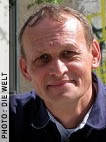
Helmut Muller-Enbergs

Muller-Enbergs

By JOSEPH FITSANAKIS | intelNews.org |
Previously unknown aspects of East German intelligence-gathering operations in Canada will be presented this coming Saturday at the annual conference of the Canadian Association for Security and Intelligence Studies in Ottawa. The new data was unearthed in Berlin by Helmut Müller-Enbergs, a researcher with Germany’s Office of the Federal Commissioner Preserving the Records of the Ministry for State Security of the German Democratic Republic (BStU). His findings show that the Stasi (Hauptverwaltung Aufklärung), the main foreign intelligence department of the German Democratic Republic (GDR), was able to gain “deep insights into the domestic and foreign affairs of Canada”. The feat appears impressive when considering that the GDR had no embassy in Canada until 1987. Read more of this post

News you may have missed #0144

  • Cuban Five convict’s sentence cut to 22 years. As intelNews reported on October 12, Antonio Guerrero, a member of the Cuban Five spy ring, has had his life sentence cut to 22 years, following a successful appeal. Given the time he has already served since his 1998 arrest, and benefits for good behavior, Guerrero could be released in seven years. The Cuban Five were sentenced in 2001 for spying on the US for Cuba.
  • Was British MP a Czech agent during Cold War? A recently published book on MI5’s history by Cambridge historian Dr. Christopher Andrew has reignited rumors that Labour Party parliamentarian John Stonehouse worked as an agent for the Czech StB intelligence agency in the 1960s.
  • West German spies collected East German jokes during Cold War. West German spies diligently recorded popular East German jokes about communism during the Cold War, in an attempt to gain insights into the public mood, according to recently released intelligence files.

Bookmark and Share

News you may have missed #0128

  • US government appeals judge’s order in Cuban Five spy case. US government officials are contending a judge’s order because they say it would be detrimental to US national security. The order requires the US government to turn over any national security damage assessments in the Cuban Five case. Washington accuses the Five of spying on the US for Cuba. Three of the five are to be given new sentences on October 13 after an appeals court ruled that the initial sentences they received (ranging from 19 years to life) were too long.
  • Indian spies want access to missed calls. Indian security agencies have told the country’s Department of Telecommunications that they need access to missed calls because “anti-social elements” may be using the system to communicate without actually making a call. Last month, India’s Intelligence Bureau asked for all VOIP (internet-based) calls in the country to be blocked until it figures out a mechanism to track them. It also said it wants access to the content of all mobile phone calls in the country.
  • New book investigates Stasi’s scientific espionage. Documents from the vaults of HVA (Hauptverwaltung Aufklärung), the foreign department of the Stasi, the East German Ministry for State Security, which were purchased by the CIA from a German informant in 1992, were made available in 2005 to Kristie Macrakis professor of history at the Georgia Institute of Technology in Atlanta. Her book, Seduced by Secrets: Inside the Stasi’s Spy-Tech World, offers a rare look into the Stasi’s secret technical methods and sources. Macrakis’s analysis of the CIA material reportedly reveals that about 40% of all HVA sources planted in West German companies, research institutions and universities were stealing scientific and technical secrets.

Bookmark and Share

News you may have missed #0079

  • Berlin football club cancels deal over Stasi controversy. FC Union Berlin has dumped its main sponsor, International Sport Promotion, over allegations that its CEO, Juergen Czilinsky, was a member of the Stasi, the East German secret police.
  • US officials targeted by fake emails. Malicious emails claiming to be from the US Department of Homeland Security, but which actually originate from Latvia and Russia, are being sent to Pentagon and state and local officials in the US. Similar news emerged from Australia last week.
  • Emirates expel Thai ex-premier. Ousted former Thai premier Thaksin Shinawatra was expelled by the United Arab Emirates (UAE) on Tuesday, and has gone to Montenegro. Interestingly, Montenegrin authorities have supplied Thaksin with a Montenegrin passport.

Bookmark and Share

News you may have missed #0025

  • BREAKING NEWS: Several news outlets are reporting this morning that it was former US vice-President Dick Cheney who ordered the CIA to conceal from Congress key information about a covert action intelligence program of an undisclosed nature. See here for more.
  • New book claims Ernest Hemingway was KGB agent. The new book Spies: The Rise and Fall of the KGB in America (Yale University Press), co-written by John Earl Haynes, Harvey Klehr and Alexander Vassiliev, alleges that the Nobel prize-winning novelist was on the KGB’s list of agents in America from 1941, when he was given the codename “Argo” by the Soviets.
  • Thousands of former Stasi spies still working in German civil service. A report in the German edition of The Financial Times claims that over 17,000 former members of East Germany’s Stasi remain employed as civil servants in reunified Germany. Stasi is the name commonly used for the Ministry for State Security, communist East Germany’s secret police.
  • NSA director’s secret visit to New Zealand revealed. A reporter accidentally spotted Lieutenant-General Keith Alexander, director of the US National Security Agency, entering a Wellington building accompanied by security personnel. The revelation prompted a spokesperson at the US embassy in Wellington to admit that Alexander was indeed in New Zealand “for consultations with government officials”. The close signals intelligence relationship between the US and New Zealand have been known since 1996.
  • Chinese national caught trying to purchase crypto hardware. Chi Tong Kuok was arrested by the FBI at the Atlanta International Airport en route from Paris to Panama, where he allegedly planned to purchase US military radios. The US government claims Kuok has admitted he was “acting at the direction of officials for the People’s Republic of China”.
  • Taliban say cell phone SIM cards guide US drone strikes. A Taliban circular says SIM cards planted by informants in cell phones used by militants are used to signal American drones in Afghanistan and Pakistan. As IntelNews recently explained, there are suspicions that this and similar discoveries are gradually prompting the Taliban and al-Qaeda to stop using cell phones altogether.

Bookmark and Share

W. German cop behind fatal 1967 shooting was a spy, documents show

By JOSEPH FITSANAKIS | intelNews.org |
On June 2, 1967, West German police opened fire on leftist students demonstrating against a visit to Berlin by the Shah of Iran. One of the shots fired by the police killed student protester Benno Ohnesorg. His killing was dubbed in Germany “the shot that changed the republic”. It had a major role in radicalizing the West German student movement in the late 1960s and early 1970s and directly sparked the creation of the militant student organization Red Army Faction –also known as the Baader-Meinhof Group. But a group of researchers working at Germany’s Office of the Federal Commissioner Preserving the Records of the Ministry for State Security of the German Democratic Republic (BStU), led by archivist Marianne Birthler, now claim they have discovered that the West German police officer who fired the shot that killed Ohnesorg was actually an East German spy. Read more of this post




