Reuters publishes details about alleged Russian airline sabotage plot

DHL AviationTHE REUTERS NEWS AGENCY has disclosed more information about an alleged plot by Russian intelligence to detonate bombs on cargo flights from Europe to North America. Initial details of the plot emerged in October 2024, when it was reported that explosions had occurred earlier that year at shipping warehouses in England and Germany. It later emerged that a similar explosion had occurred at a third shipping warehouse, located in Poland.

It is now understood that the explosions occurred on July 19, 20 and 21, 2024, and that at least two of them took place in facilities belonging to DHL, a German logistics firm headquartered in Bonn. Affected facilities are reportedly located in Leipzig, Warsaw, and Birmingham. All three explosions were caused by rudimentary incendiary devices hidden inside commercial shipments. European officials said at the time that the explosions were part of a broader wider campaign by Russian intelligence to sabotage Western European transportation and shipping networks.

Now the Reuters news agency claims that the explosions were meant to test security systems in preparation for a major sabotage operation. The operation aimed to detonate explosive mechanisms in mid-air on cargo flights from Europe to the United States and Canada. Moreover, a fourth incendiary device, which was found at a Warsaw shipping facility, failed to explode and has been forensically examined by bomb experts, Reuters said. Citing “interviews with more than a dozen European security officials”, including a person familiar with the case in Poland, the news agency said it was able to provide “the most granular account yet of the alleged plot”.

The report claims the incendiary devices were concealed inside pillows, bottles of cosmetics, and sex toys. They were ignited with the use of remote timers taken from cheap Chinese electronic goods. Once detonated, the timers sparked explosions with the help of gelled flammable cocktails that included compounds such as nitromethane—a highly flammable liquid chemical used in industrial applications. All ingredients used in the incendiary devices, including nitromethane, are easily accessible to consumers at a relatively low cost.

According to Reuters, the procedures followed in the DHL attacks fit the profile of similar operations that have been carried out in recent years by the Main Intelligence Directorate of the Russian Forces’ General Staff, known as GRU. Such procedures include hiring disposable agents, most of which are not Russian citizens, for one-off operations. In the case of the DHL attacks, the agents were allegedly hired on the encrypted messaging platform Telegram and paid with the use of cryptocurrencies, or in cash.

Among the alleged suspects in the case is a Ukrainian man identified by Reuters as Vladyslav Dekravets, who was recruited in southern Poland and is now facing extradition to Poland from Bosnia. Another suspect, identified in the Reuters report as Alexander Bezrukavyi, allegedly packaged parcels containing sneaker shoes for shipment to the United States and Canada. The shipments were intended to help the GRU “gather information about parcel-processing methods and timing”. During the operation, the two men came in contact with individuals who appeared to be GRU officers, using the cryptonyms WARRIOR and MARY.

The DHL cases remain at a pre-trial stage in several European countries, Reuters said. They involve the pending extradition of suspects from elsewhere in Europe. The trials are going to feature evidence gathered from criminal investigators and intelligence agencies, according to the report.

Author: Joseph Fitsanakis | Date: 07 April 2025 | Permalink

Germany charges three dual German-Russian nationals with espionage

Grafenwoehr Training Area GermanyTHE OFFICE OF THE Federal Prosecutor in Germany has charged three dual German-Russian citizens with acts of espionage on behalf of Russia, with the intent of harming the national security of the German state. In compliance with German privacy laws, the three espionage suspects have been publicly identified only by their first names and last name initials. They are: Dieter S.,  Alex D., and Alexander J.

Dieter S. appears to be the central suspect in this case. Following his arrest by the German Federal Criminal Police Office, he was found to have participated in military operations of the secessionist Donetsk People’s Republic in Ukraine. By that time, German authorities had already charged him with being in contact with an individual known to be a member of Russian intelligence, who operated as his handler.

According to the indictment, throughout his interactions with his Russian handler, Dieter S. repeatedly made it known that he was willing and able to carry out acts of sabotage against security-related installations in Germany, on behalf of the Russian Federation. He also offered to carry out arson attacks and use explosives against transportation facilities and infrastructure, such as railway lines, which were used by the German state to transport military supplies to Ukraine.

Subsequently, Dieter S. was instructed by his Russian handler to collect intelligence about potential targets in southeastern Germany. He thus engaged in systematic surveillance activities targeting the Grafenwoehr Training Area, a United States Army military training base located near Grafenwöhr, in eastern Bavaria. Grafenwöhr is the largest training facility maintained by the United States in Europe. Since 2022, it has been used to instruct Ukrainian troops on how to operate American-built tanks.

Dieter S. is also believed to have conducted surveillance at several loading stations used by the German and American militaries, as well as the facilities of private-sector contractors to the German military. In his surveillance operations, Dieter S. was assisted by Alex D. and Alexander J. All three men took photographs and videos of the targeted facilities. The collected material was eventually passed on to Dieter S.’s Russian handler.

Official charges against the three suspects were filed before the State Security Senate of the Munich Higher Regional Court on December 9. They were publicized by the office of the Federal Public Prosecutor General on December 30. A trial date is now pending.

Author: Joseph Fitsanakis | Date: 06 January 2025 | Permalink

Mounting concern in the EU about Indian black operations targeting dissidents

BLACK OPERATIONS, WHICH AIM to liquidate targeted individuals, are once again the subject of various reports. The primary focus tends to be on Russian intelligence agencies targeting alleged traitors worldwide. Michael Weiss, US publisher of The Insider, spoke in a recent interview of “more than 60 mysterious deaths of Putin’s enemies in Russia and Europe since the Ukraine war began”.
Somewhat-less-black operations, in which individuals —usually living abroad— are not killed, but intimidated, persecuted, threatened, or roughed up, appear to be increasingly utilized as a tool by certain states that have little tolerance for domestic political opposition. Ken McCallum, Director General of Britain’s Security Service (MI5), stated on 8 October 2024 that, “since January 2022, with police partners, we have responded to twenty Iran-backed plots presenting potentially lethal threats to British citizens and UK residents”.

Back in September 2023, The Guardian reported having spoken to 15 Iranian activists living in the United Kingdom, France, Germany, Spain, Switzerland and Sweden, who were being persecuted and intimidated, or had been threatened in various ways by the Iranian regime’s henchmen and its intelligence services. There are numerous similar examples of journalists and dissidents who have been a thorn in the side of the Turkish government for several years now. In addition to threats and violence, there are reports of abductions by Turkey’s National Intelligence Organization (MIT). In recent years, China too has increasingly relied on intimidation directly in the West, and has also engaged Western investigators and helpers for this purpose.

One concerning development is the fact that these states are apparently increasingly resorting to the help of members of Outlaw Motorcycle Gangs (OMCG), members of drug cartels, and other criminals. Regardless of whether it is for purposes of sabotage, threats, or assassinations, shady figures —typically apolitical— are undertaking missions on behalf of the intelligence agencies of authoritarian states on European soil.

The Case of India

Another country that has been in the spotlight for some time is India, which has historically maintained a low profile in the West, in terms of black operations. Western intelligence agencies could have predicted that there would be an escalation —i.e. Indian black operations on Western soil— which could lead to the liquidation of alleged or actual terrorists. If one observes the reports of Indian intelligence agencies and analysts on the activities of its mortal enemy, Pakistan, and its intelligence agency, the Inter-Services Intelligence (ISI), it quickly becomes apparent that India is less and less willing to tolerate what it regards as terrorism sponsored by Pakistan. This applies particularly to individuals and organizations operating from abroad. Read more of this post

Possible Russian role probed in incendiary devices found in Britain and Germany

DHLAUTHORITIES IN BRITAIN AND Germany are reportedly investigating the possibility that the Russian intelligence services may be behind two fires that occurred in shipping warehouses last summer. The fires occurred in late July in facilities belonging to DHL, a German logistics firm headquartered in Bonn.

On September 1, the German government issued a warning about unknown suspects allegedly shipping “unconventional incendiary devices” throughout Europe. The warning referenced a fire that occurred at a DHL logistics center in the east German city of Leipzig. Germany’s Federal Office for the Protection of the Constitution (BfV) warned at the time that “further incendiary incidents” were anticipated, but provided no further details.

Late last week, British newspaper The Guardian reported that an incident like the one that occurred in Leipzig had taken place in a DHL warehouse in Minworth, a suburb of the city of Birmingham, located in the British Midlands region. In subsequent reporting, the paper alleged that British and German authorities have been investigating a link between the two incidents. Moreover, authorities are reportedly probing the possibility that the incidents may be part of a wider campaign by Russian military intelligence to sabotage Western European transportation and shipping networks.

Meanwhile, Lithuanian media revealed on Friday that a suspect had been arrested in Lithuania in connection with the two fires in Britain and Germany. The reports suggested that the two incendiary devices had been shipped from Lithuania by the same individual. However, there have been no updates about who may be behind the apparent sabotage campaign.

Author: Joseph Fitsanakis | Date: 21 October 2024 | Permalink

German intelligence agencies discuss ongoing espionage and hybrid challenges

Conference AgendaTHE 5TH SYMPOSIUM ON the Law of Intelligence Services (Symposium zum Recht der Nachrichtendienste) took place in Berlin, Germany, on March 21-22. In view of the public criticism that German intelligence agencies have faced in recent times, it was probably a relief for their officials to be able to talk more-or-less among themselves for once.
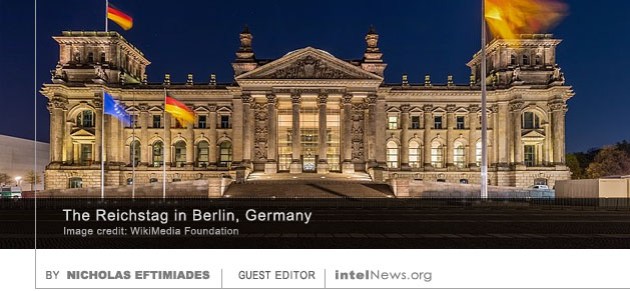
The event (see agenda in .pdf) was organized by the Federal Ministry of the Interior and the Federal Chancellery Office. This year’s topic was: “Intelligence Agencies and Armed Conflicts”. It included the tried and tested mix of academics —predominantly legal scholars—, practitioners and heads of various government authorities. The majority of the external experts discussed the complicated and, in Germany, arduous parliamentary procedures that would arise in the event of a war.

In view of the controls increasingly being placed on German intelligence agencies by various bodies and authorities —which were also represented at the symposium— a certain discrepancy became apparent repeatedly in the presentations: How can the German intelligence agencies react adequately and quickly to hybrid threats when these types of threat do not concern themselves with administrative-legal subtleties and parliamentary procedures? Although the concept of hybrid threats was generally taken for granted and therefore hardly discussed in terms of content, those present agreed at a minimum that disinformation is part of it. All the more worrying was the statement by one speaker who explained that there was no official definition of disinformation within the German security authorities’ legal codes.

In the discussion, the panel moderated by Center for Intelligence Service Training and Further Education (ZNAF), the common training and study location of the Federal Intelligence Service (BND) and the Federal Office for the Protection of the Constitution (BfV), clearly stood out and underscored that this relatively new institution has made a name for itself in the academic intelligence landscape since its establishment in 2019.

However, the symposium also showed that the German security bureaucracy tends to reach its limits when it comes to current developments in the unconventional domain. This was demonstrated, for example, by a speaker’s demand that hybrid risks ought to be assigned to a “state area of responsibility”. The problem, however, lies precisely in the statelessness of hybrid risks. The existing regulations are also proving to be counterproductive, in view of the challenges: there would simply be highly heterogeneous participants in the so-called Cyber Defense Centre, which would also include police authorities. However, due to the strict separation in the legal domain, personal data cannot simply be passed on from the BND to the Federal Police, for example. Read more of this post

Tradecraft observations on the Reichenbach/Fischer espionage case

Germany ReichstagSEVERAL CASES OF CHINESE espionage have been announced recently in Europe. Thomas Reichenbach and Herwig and Ina Fischer —a married couple— were arrested on April 22, 2024, for illegal exports of dual use technology with military (naval) applications.
Reichenbach lists himself as a contract marketing manager for the Hong Kong Trade Development Council. He studied at Peking University in the mid-1980s. He worked in China, speaks Mandarin, and has a Chinese wife.

Herwig and Ina Fischer own a small engineering consulting company named Innovative Dragon in Duesseldorf. Both have travelled extensively in China. Innovative Dragon contracts for technical research with universities. Herwig studied mechanical engineering and aircraft and spacecraft construction at the Rhine-Westphalia Higher Technical School, focusing on guidance technology and composite fiber materials. The company headquarters are in London and there are offices in Duesseldorf and Shanghai (Donghua University Science and Technology Park). The London office does not appear to have a functioning telephone number.

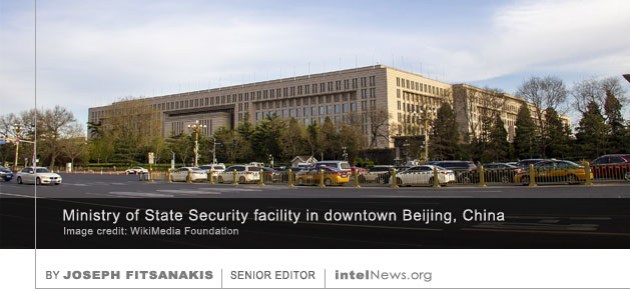
Reichenbach is suspected of having been recruited by the Ministry of State Security (MSS) in China. The German government has accused the trio of having illegally exported dual use technology since at least 2022. At the time of the arrests, the suspects were in negotiations on additional research projects useful for expanding the combat strength of the Chinese People’s Liberation Army Navy.

Status: Alleged

Tradecraft observations:

  1. Use of a potential front company in London to facilitate allegedly illegal exports.
  2. Use of third countries to facilitate allegedly illegal exports.
  3. Reichenbach allegedly recruited Herwig and Ina Fischer and handled them as in-country assets.
  4. It is alleged that the MSS probably recruited Reichenbach in China.
  5. An MSS officer allegedly handled Reichenbach from China (linear control).
  6. The MSS allegedly funded the operation through front companies.

Author: Nicholas Eftimiades* | Date: 03 May 2024 | Permalink

* Nicholas Eftimiades is a Senior Fellow at the Atlantic Council. He retired from a 34-year government career that included employment in the United States Central Intelligence Agency, the Department of State, and the Defense Intelligence Agency. He held appointments on the Department of Defense’s Defense Science Board and the Economic Security Subcommittee of the Department of Homeland Security’s Homeland Security Advisory Council. He is an advisor to the United States Intelligence Community. Eftimiades authored numerous works on China’s espionage methods. His books, Chinese Intelligence Operations (1994) and Chinese Espionage: Operations and Tactics (2020) are examinations of the structure, operations, and methodology of China’s intelligence services. They are widely regarded as seminal works in the field.

Germany arrests sixth alleged spy in less than a month

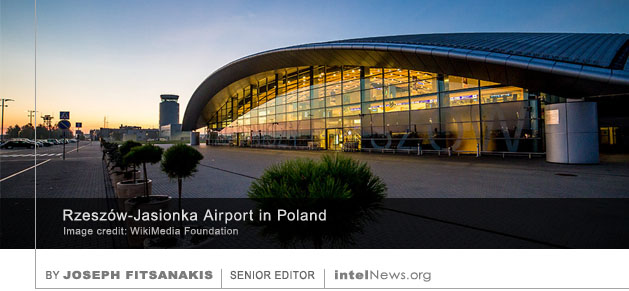
MSS ChinaAUTHORITIES IN GERMANY HAVE arrested a sixth person in less than a month, in connection with three separate cases of espionage orchestrated by Russian or Chinese intelligence. Last Tuesday, police in the east German city of Dresden arrested an assistant to a leading politician of the far-right Alternative für Deutschland party (AfD). The assistant, who is a dual German-Chinese citizen, is accused of spying for Chinese intelligence, while the far-right politician who employed him is also being investigated, according to reports.
German news reports have identified the alleged spy as Jian Guo, 43, who lives in Dresden with his wife and children. Guo reportedly entered Germany as a student and stayed there after completing his studies, eventually becoming a naturalized German citizen. In 2019 he joined the staff of the office of Maximilian Krah, a senior AfD politician, who had recently been elected to the European Parliament.

According to the German prosecutor’s office, Guo had begun working for Chinese intelligence prior to joining Krah’s office as an assistant. At least some of his alleged espionage activities involved posing as a critic of the Chinese government and joining dissident groups of Chinese expatriates in Germany. He would then provide information about the activities of these groups to Chinese intelligence, according to his indictment. The latter described Guo’s intelligence activity as “an especially severe case” of espionage.

Meanwhile, German authorities are also reportedly investigating Krah himself over payments he allegedly received from pro-Chinese and pro-Russian individuals or groups. In a statement issued late last week, the AfD politician said he had been informed about Guo’s arrest from media reports and that he had no information about this case. Shortly after Krah’s statement, the AfD described Guo’s arrest as “highly disturbing” and added that party authorities would do “everything possible to aid the investigation”.

During the month of April alone, Germany has arrested no fewer than six individuals in a series of apparently unconnected cases of espionage, connected with Russia or China. Two of these individuals are German citizens of Russian origin, who were allegedly assisting Russian intelligence plan acts of sabotage against military installations located on German soil. Three other German citizens were allegedly planning to provide designs of advanced aircraft engines to Chinese intelligence officials.

Author: Joseph Fitsanakis | Date: 29 April 2024 | Permalink

Poland and Germany charge Russian operatives with assassination, sabotage plots

Rzeszów-Jasionka AirportAUTHORITIES IN GERMANY and Poland have charged three individuals with working on behalf of Russian military intelligence in planning acts of sabotage and assassination on European soil. One of the plots allegedly involved an effort to assassinate Ukrainian President Volodymyr Zelenskyy. Another aimed to sabotage commercial airport facilities that are being managed by the United States military.
Polish and Ukrainian authorities announced last week the arrest of Paweł K., a Polish citizen, who is believed to have been engaged in collecting information about the security of the Rzeszów-Jasionka Airport. Located in southeastern Poland, Rzeszów-Jasionka is a relatively small provincial airport. Its proximity to the Ukrainian border has made it central to efforts by Kyiv’s allies to supply it with war materiel following the expansion of Russia’s occupation of Ukraine in February 2022. Military supplies are transported to Rzeszów-Jasionka from across the world and then transferred across the Ukrainian border with trucks. Additionally, many high-level meetings between Ukrainian and Western officials take place at the airport. The United States military is currently providing security at the Rzeszów-Jasionka Airport.

Polish authorities said last week that Paweł K. was part of a Russian intelligence collection operation that was “intended to assist in the planning of a potential assassination of a foreign state leader”, namely President Zelenskyy. The Security Service of Ukraine (SBU) said it informed its Polish counterpart agency about the assassination plot, which had been foiled “as a result of the close co-operation” between Ukrainian and Polish intelligence. Paweł K. is not a diplomat and thus has no immunity from prosecution in Poland. If convicted, therefore, he could face up to eight years in prison.

In a seemingly unconnected development, police in the southeastern German state of Bavaria arrested two dual German-Russian nationals, who have been charged with planning to sabotage military and industrial facilities on German soil. The plot appears to be part of broader Russian efforts to disrupt the production and delivery of military aid to Ukraine. At least one of the locations that the suspects are accused of targeting is a local military base under the command of the United States. The two suspects have been identified as Dieter S., 39, and Alexander J., 37. Both were arrested in the small city of Bayreuth.

Germany’s Federal Foreign Office, led by Minister Annalena Baerbock, summoned Sergei Nechayev, Russian Ambassador to Berlin, shortly after the arrest of Dieter S. and Alexander J. Some media reports noted the “unusually hasty” way Nechayev was summoned, which may indicate that German authorities have acquired “unequivocal proof of the link between the plot and the Kremlin”. An announcement made by the Russian embassy in Berlin confirmed that Nechayev had been summoned in connection to the arrests, but added that the ambassador had been presented with “no proof” that the two suspects were connected with Russian intelligence or that they had planned acts of sabotage.

Author: Joseph Fitsanakis | Date: 22 April 2024 | Permalink

Germany charges two with ‘high treason’ for spying for Russia

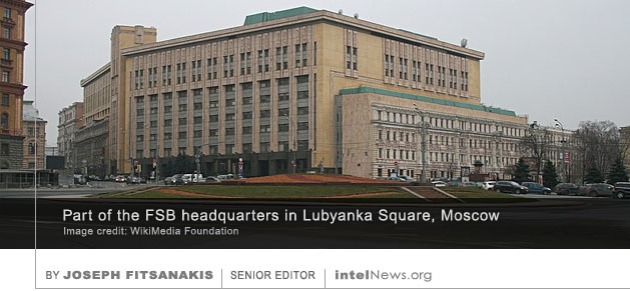
FSB RussiaGERMANY HAS CHARGED TWO men, among them a German intelligence officer, with spying for Russia, in a case that has shocked German public opinion and alarmed Germany’s allies. The two men have been identified only as “Carsten L.” and “Arthur E.”, in compliance with Germany’s privacy laws. Carsten L. is accused of having provided the Russian Federal Security Service (FSB) with intelligence about the Russo-Ukrainian war, in return for nearly $500,000. Arthur E. is believed to have been Carsten L.’s accomplice and to have acted as an intermediate between him and his Russian handlers.

The German prosecutor general has charged both men with “high treason in a particularly serious case”. However, there is no public information about the timeline of Carsten L.’s recruitment by the FSB and his espionage for the Russians. He reportedly met his accomplice, Arthur E., a Russian-born German diamond trader, in Bavaria in 2021. After being recruited by Carsten L., Arthur E. is believed to have traveled frequently between Germany and Russia. During those trips, he is thought to have met with FSB officers in order to provide them with intelligence and receive payments.

When they announced the arrests of the two men back in January of this year, German officials said they had been tipped by a foreign intelligence agency. The foreign intelligence agency had allegedly found a document from the BND’s internal files in the possession of an unnamed Russian spy agency. However, the identity of the intelligence agency that provided the tip to the Germans is among several important details about this case that remain unknown for the time being. Among them are the estimated duration of Carsten L.’s alleged espionage for Moscow, the damage he caused to German intelligence, as well as his motives for spying for the FSB.

Author: Joseph Fitsanakis | Date: 12 September 2023 | Permalink

Leading German university suspends Chinese state-funded researchers

FAU UniversityONE OF GERMANY’S LEADING universities has suspended researchers funded by the Chinese government, citing concerns about academic freedom and industrial espionage. The Friedrich Alexander University of Erlangen-Nuremberg (FAU) announced the suspension of Chinese government-funded researchers in June of this year. In announcing the measure, the university stated that the move was designed to protect academic freedom and freedom of expression among its faculty and staff. Earlier this week, however, German media reported the contents of an internal FAU email, which expressed concerns that the Chinese state could be utilizing government-funded researches as spies.
Founded in Bavaria in 1743, FAU is among Germany’s leading universities. On June 1, it became the first university in Germany to suspend researchers funded by the China Scholarship Council (CSC). The CSC is an outreach unit of the Chinese Ministry of Education, which funds the work of Chinese researchers in foreign universities, while also providing scholarships to foreign citizens who apply to study in China. In January 2023, Swedish daily Dagens Nyheter reported that, in order to become recipients of CSC scholarships, Chinese citizens were required to pledge “support [to] the leadership of the Chinese Communist Party […] and to have a correct world view, outlook on life, and values system”.

On June 1, the FAU leadership announced that the CSC funding methods conflicted with Germany’s Basic Law (the country’s Constitution). Furthermore, according to the FAU leadership, the CSC funding methods violated the principles of academic freedom and freedom of expression for its faculty, as practiced in Germany. On Saturday it was reported that, according to an internal FAU email, university officials also expressed concerns that the Chinese state could use CSC researchers to spy on FAU scientific and industrial research, and to compromise FAU’s data security and intellectual property practices.

FAU’s decision was reportedly met with support by Germany’s Minister for Education, Bettina Stark-Watzinger, who said that German universities and research establishments have “a responsibility to safeguard themselves against espionage activities conduced by students receiving scholarships from the Chinese government”. It is also reported that other universities in Germany and elsewhere in Western Europe are considering following FAU in suspending CSC-funded Chinese researchers.

Author: Joseph Fitsanakis | Date: 31 August 2023 | Permalink

German spy services had foreknowledge of Wagner mutiny, report claims

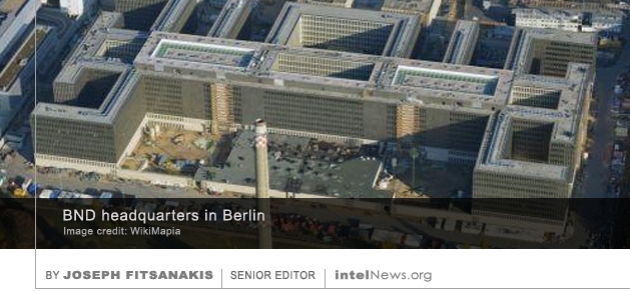
BND GermanyCONTRARY TO EARLIER CLAIMS that the German intelligence agencies failed to anticipate last month’s showdown between PMC Wagner and the Kremlin, German intelligence did in fact have foreknowledge of the mercenary group’s uprising, a new investigative report has concluded. The report further claims that German intelligence had unique and real-time insights into the negotiations between Wagner PMC leader Yevgeny Prigozhin and Belarussian President Aleksandr Lukashenko, who intervened in the dispute.
In the days following the June 23 mutiny by soldiers of the Russian private military firm Wagner Group, German intelligence agencies were publicly criticized for allegedly failing to warn Berlin about the unprecedented incident. Specifically, it was claimed that Germany’s primary foreign intelligence agency, the Federal Intelligence Service (BND), did not issue an actual warning about the mutiny until Saturday —a full 12 hours after the first clashes had erupted between Wagner mercenaries and forces loyal to the Russian Ministry of Defense.

Much of the criticism came from the ranks of the center-left German Social Democratic Party (SPD), which is the primary political party behind the government of German Chancellor Olaf Scholz. However, criticism also came from the Green Party, which supports Scholz’s administration, and the liberal center-right Free Democratic Party (FDP), which also supports Scholz’s government. The criticism intensified after June 28, when, during a live television interview, Chancellor Scholz appeared to confirm speculation that the BND had left his administration in the dark about the Wagner mutiny until it was too late.

Late last week, however, a joint investigation by two of Germany’s most respected public television broadcasters, the Hamburg-based NDR and the Cologne-based WDR, concluded that the BND had been far more informed about the Wagner mutiny than its critics have claimed. The investigation concluded that, not only did the BND have foreknowledge of the mutiny nearly a week before it materialized, but that it was able to listen-in to the frantic telephone conversations between Prigozhin and Belarussian President Lukashenko, as the latter tried to dissuade the Wagner leader from storming the Russian capital with his heavily armed band of mercenaries.

According to the NDR-WDR report, the BND had been able to hack into Wagner’s internal communications system up for over a year. However, its operation was betrayed by “Carsten L.”, a German intelligence officer who was arrested late last year for spying for Russia. However, the German spy service was able to continue to monitor the internal affairs of Wagner through other sources and had access to channels of information within Wagner in the months leading up to the mutiny. Thus, according to the report, the BND had “vague indications of an imminent uprising by Wagner” about a week prior to June 23.

However, the agency was unsuccessful in verifying these indications through other sources, including its foreign counterpart agencies. For this reason, it chose not to notify the German Chancellery in concrete terms.

Nevertheless, the BND did issue a warning on Friday evening, a few hours before the Wagner mutiny began. The warning was issued a full day prior to the takeover of Wagner’s armed takeover of the Russian armed forces’ operational headquarters in Rostov, which occurred on Saturday. The two state broadcasters reportedly reached out to the BND for confirmation of the report’s findings. However, a BND spokesperson declined to comment on the matter, saying simply that the BND “generally does not comment publicly on matters relating to intelligence findings or operations”.

Author: Joseph Fitsanakis | Date: 11 July 2023 | Permalink

Comment: Is Germany’s external spy agency a liability for Europe?

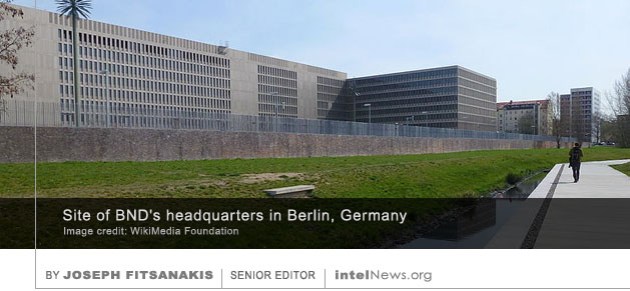
BND GermanyGERMANY’S EXTERNAL INTELLIGENCE AGENCY, the Federal Intelligence Service (BND), constitutes a liability for Europe’s security and is in desperate need of a drastic and immediate overhaul. That is the conclusion of a blunt editorial penned last week by James Crisp, the Brussels-based Europe editor of Britain’s Daily Telegraph newspaper.
Founded in the early stages of the Cold War under American tutelage, the BND operated for several decades on the frontlines of the existential clash between the United States and the Soviet Union. Deservedly, the agency received strong criticism about the Nazi past of some of its senior officials in the early days. Yet, like West Germany as a whole, by the 1970s it had largely managed to democratize its institutional structure and practices.

Crisp argues, however, that the BND, once one of Europe’s most important intelligence agencies, has been “hollowed out since the Cold War” and is today viewed by its European counterparts as “complacent and arrogant”. Consequently, the string of embarrassments that the BND has suffered lately, culminating in the discovery of an alleged Russian spy in its ranks, is hardly coincidental, according to Crisp. Even this recent discovery appears to have occurred only after the BND was tipped off by an allied intelligence agency.

The German spy agency has not fared much better in the American-led war in Afghanistan, or during the latest phase of the Russo-Ukrainian war. Unlike the American intelligence agencies, the BND did not subscribe to the view that Moscow would invade its neighbor to the west. Bruno Kahl, the agency’s president, was actually in Ukraine for consultations when Russian tanks began to head toward Kyiv. In what has rightly been described as a humiliation, Kahl was trapped inside Ukraine and had to be smuggled out of the country by a German special forces unit, just as Russian bombs began falling on the Ukrainian capital.

How does one account for the current state of the BND? To some extent, the spy agency’s culture has been shaped by that of the broader postwar German state, which has gone out of its way to reconcile with Russia. Successive German administrations have viewed their rapprochement with Moscow as a cornerstone of Europe’s security trajectory. Consequently, it can be said that Berlin has a history of underestimating the security threat posed by Russia. Read more of this post

Germany arrests alleged collaborator of intelligence officer who spied for Russia

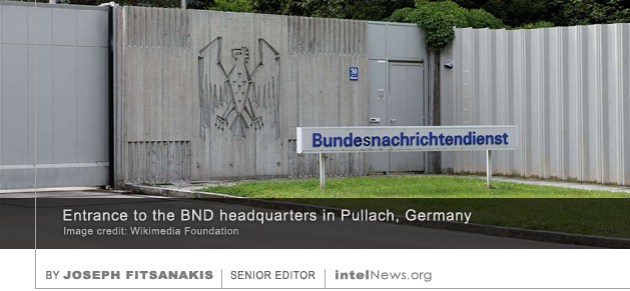
BND GermanyTHE GERMAN GOVERNMENT ANNOUNCED last week the arrest of a man believed to have acted as a courier between Russian intelligence and another German spy, who was arrested in December and is awaiting trial. The new arrest is bound to attract even more international attention to this unfolding case of espionage, whose urgency has reportedly alarmed Western intelligence services.

On December 22, German authorities arrested a senior German intelligence official, who has been charged with treason and remains in custody. The official, named only as “Carsten L.”, in compliance with Germany’s strict privacy laws, worked in the signals intelligence (SIGINT) wing of the Federal Intelligence Service (BND). As Germany’s foreign intelligence agency, the BND is tasked with collecting intelligence on foreign targets, a mission that makes it broadly equivalent to the United States Central Intelligence Agency (CIA).

As intelNews reported earlier this month, Carsten L.’s seniority within the BND allowed him to access several compartmentalized areas of information, including secrets shared with the BND by other Western intelligence agencies. For this reason, it was reported that some Western intelligence officials were “most incensed” with this case. One source reported that British intelligence leaders were “considering whether they will continue to provide the BND with their most sensitive information”.

Now a second arrest has come to arguably add to the gravity of this case. On January 22, the German Federal Criminal Police Office announced the arrest of “Arthur E.”, who was captured at the Munich International Airport. Apparently, Arthur E. is a German citizen who has German-Russian background. According to the press release issued by the German government, Arthur E. was arrested through a collaborative effort between the BND and the United States Federal Bureau of Investigation (FBI). Apparently, the FBI became suspicious when Arthur E. attempted to frantically leave the United States after Carsten L.’s arrest. Read more of this post

Western intelligence agencies alarmed by arrest of Russian spy in Germany

BND GermanyWESTERN INTELLIGENCE AGENCIES HAVE been alarmed by the arrest of a senior German intelligence official, who has been charged with spying for Russia, according to an expert in German intelligence. On December 22, the German government announced the arrest of a senior officer in the signals intelligence (SIGINT) wing of the Federal Intelligence Service (BND). As Germany’s foreign intelligence agency, the BND is tasked with collecting intelligence on foreign targets, a mission that makes it broadly equivalent to the United States Central Intelligence Agency.
The official, named only as “Carsten L.”, in compliance with Germany’s strict privacy laws, has been charged with “high treason” and is currently awaiting trial. When announcing his arrest, German officials said they were tipped by a foreign intelligence agency that detected a document from the BND’s internal files in the possession of a Russian spy agency. The identity of the intelligence agency that provided the tip is among several important details about the case that remain unknown for the time being. Among them are the duration of Carsten L.’s alleged espionage for Moscow, as well as his motives.

Some reports suggest that Carsten L. may have been blackmailed by the Russians as a result of a kompromat. It has also been reported that the alleged spy was found to be in possession of material relating to the Alternative for Germany (AfD), a far-right party known for its friendly stance toward the Kremlin. But such reports are largely speculative. No information about Carsten L.’s motives has been released by the office of the German prosecutor. It is clear, however, that at least some of the information that Carsten L. gave the Russian government relates to the ongoing war in Ukraine.

Additionally, the suspect’s seniority within the BND allowed him to access several compartmentalized areas of information, including secrets shared with the BND by other Western intelligence agencies. These almost certainly include the United States Central Intelligence Agency and National Security Agency, as well as a host of British intelligence agencies. On Monday, British newspaper The Telegraph quoted German intelligence expert, Erich Schmidt-Eenboom, who said that British intelligence officials were “most incensed” with the case. He added that British intelligence leaders were “considering whether they will continue to provide the BND with their most sensitive information”. The German expert concluded that the Carsten L. case may have “deep implications for future cooperation between the BND and other Western spy agencies”.

Author: Joseph Fitsanakis | Date: 10 January 2023 | Permalink

Germany is prepared for projected increase in Russian spy activity, says BfV director

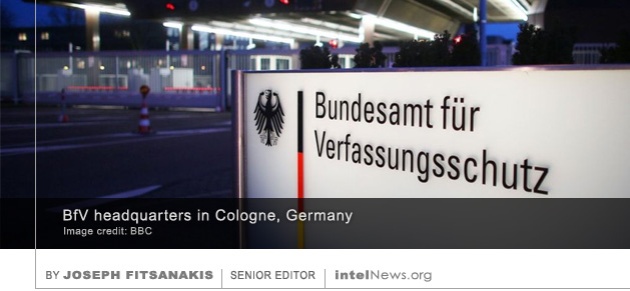
BfV GermanyRUSSIAN FOREIGN INTELLIGENCE ACTIVITIES in Germany have increased exponentially since the start of the war in Ukraine, and are projected to further-increase in 2023, according to the head of German counterintelligence. In an interview on Monday with the German Press Agency (DPA), Thomas Haldenwang, director of the Federal Office for the Protection of the Constitution (BfV), also warned that China, Iran and Turkey are intensifying their intelligence activities inside Germany.

In April of last year, the German government expelled 40 members of the diplomatic staff from Russia’s embassy in Berlin. It is believed that the majority of those expelled were intelligence officers operating under official cover. According to Haldenwang, the Kremlin has taken steps to compensate for the loss of its intelligence presence in Germany. This is largely being done in two ways: first, with “traveling operatives”, i.e. intelligence officers who are stationed in third countries and travel to Germany to carry out specific operations; second, with non-official-cover officers, i.e. intelligence operatives who have no overt relations with the Russian government. Moreover, Russia has been mounting its cyber-attacks and foreign-influence operations against Germany, according to Haldenwang.

In response to the Kremlin’s actions, German counterintelligence is making “great efforts to prevent […] people who may be connected to Russian intelligence from entering Germany” with valid visas, Haldenwang said. The BfV has hired more personnel and has “organizationally redesigned” its defensive and offensive counterintelligence capabilities, as well as cyber-defense expertise. As a result, the BfV “feels sufficiently prepared for the current challenges”, Haldenwang said. He also disputed allegations in Western media that the BfV had been relatively passive in countering Russian intelligence operations prior to the war in Ukraine.

Finally, Haldenwang cautioned that Iran and Turkey maintained a significant intelligence presence in Germany, and that the stormy domestic politics in those countries would “have an impact in Germany”, as “internal political conflicts [in those countries] are fought here”. This also applies to China, whose intelligence collection targets are no longer primarily economic, but are moving into the political domain. According to Haldenwang, a “pan-European solution is needed to reverse this trend, at least for the European [Union] states”.

Author: Joseph Fitsanakis | Date: 03 January 2023 | Permalink



