MI6 chiefs used secret slush fund to finance operations, document shows
November 22, 2017 1 Comment
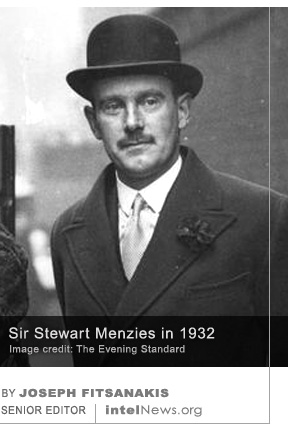 Successive directors of the Secret Intelligence Service used a secret slush fund to finance spy operations without British government oversight after World War II, according to a top-secret document unearthed in London. The document was found in a collection belonging to the personal archive of the secretary of the British cabinet, which was released by the United Kingdom’s National Archives. It was discovered earlier this year by Dr Rory Cormac, Associate Professor of International Relations in the Faculty of Social Sciences of the University of Nottingham in England. It forms the basis of an episode of BBC Radio 4’s investigative history program, Document, which was aired last weekend. In the program, the BBC’s security correspondent Gordon Corera explains that the discovery of the secret slush fund reveals new information about the activities of the Secret Intelligence Service. It also raises questions about the underground activities of British spies in the Middle East following the British Empire’s postwar retreat.
Historically, the activities of the Secret Intelligence Service —known commonly as MI6— have been indirectly supervised by the British Parliament and its committees, which fund the agency through a secret vote. The use of the agency’s funds to carry out operations is also monitored by the Secretary of State for Foreign Affairs, the head of the Foreign and Commonwealth Office, who exercises political control over MI6. However, the document uncovered by Dr Cormac shows that, for many years, successive directors of the secretive spy agency financed operations using a sizeable personal fund, the existence of which was not disclosed to the government. The document describes a meeting held in 1952 between Sir Stewart Menzies, who was then the outgoing director of MI, and the permanent secretaries —essentially the top-ranking civil servants— to the Foreign Office and the Treasury. The meeting was held to prepare the ground for Sir Stewart’s retirement and to facilitate the smooth handover of power to his successor, Major-General Sir John Sinclair, who became director of MI6 in 1953. Read more of this post
 A videotaped lecture by Kim Philby, one of the Cold War’s most recognizable espionage figures, has been unearthed in the archives of the Stasi, the Ministry of State Security of the former East Germany. During the one-hour lecture, filmed in 1981, Philby addresses a select audience of Stasi operations officers and offers them advice on espionage, drawn from his own career. While working as a senior member of British intelligence, Harold Adrian Russell Philby, known as ‘Kim’ to his friends, spied on behalf of the Soviet NKVD and KGB from the early 1930s until 1963, when he secretly defected to the USSR from his home in Beirut, Lebanon. Philby’s defection sent ripples of shock across Western intelligence and is often seen as one of the most dramatic moments of the Cold War.
 In 2007 I wrote in my “








 intelNews.org
Spy agencies target biomedical secrets in worldwide race to find COVID-19 vaccine
May 5, 2020 by Joseph Fitsanakis 2 Comments
The government of the United States, whose race to develop a vaccine for COVID-19 is reportedly codenamed Operation WARPSPEED, has warned its biomedical experts that foreign intelligence agencies may be trying to spy on their research. This warning was relayed to the BBC’s security correspondent Gordon Corera on April 1 by Bill Evanina, director of the US National Counterintelligence and Security Center (NCSC). The NCSC is part of the Office of the Director of National Intelligence (ODNI), the US agency created after the attacks of September 11, 2001, to coordinate the activities of American spy agencies. The mission of the NCSC is to manage the US government’s counterintelligence activities.
Evanina told the BBC that the NCSC has “every expectation that foreign intelligence services, to include the Chinese Communist Party, will attempt to obtain what we are making here”. He added that his organization had contacted “every medical research organization” carrying out COVID-19-related research and warned them that they should be “very, very vigilant”. However, Evanina would not tell the BBC whether scientific data had actually been stolen by foreign intelligence agencies.
According to the BBC, other Western governments, including those of the United Kingdom and Canada, have warned that foreign spies have become active in the field of biomedical intelligence, with attempts to steal scientific data related to COVID-19. In March, Canada’s Centre for Cyber Security warned that research and development data related to the pandemic may be targeted by “sophisticated threat actors” operating online.
The BBC notes, however, that Western intelligence agencies are also likely to be interested in biomedical data from China and other countries. Their interest may be two-fold: on the one hand trying to determine the precise origins of the SARS-CoV-2 pandemic and the precise case load of the virus in these countries, while on the other seeking to steal information about “research on vaccines and treatments”.
► Author: Joseph Fitsanakis | Date: 05 May 2020 | Permalink
Filed under Expert news and commentary on intelligence, espionage, spies and spying Tagged with Bill Evanina, biomedical intelligence, Coronavirus, COVID-19, espionage, Gordon Corera, News, US National Counterintelligence and Security Center