Analysis: HUMINT insights from the Muller/Cherkasov case
June 20, 2022 6 Comments
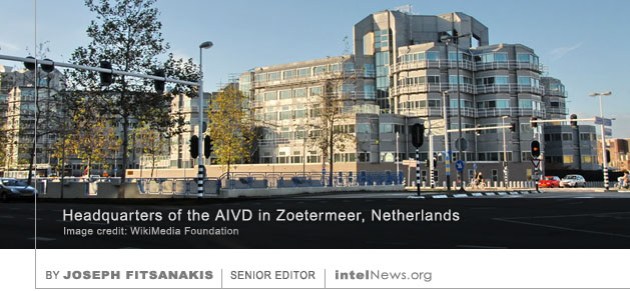 AT A TIME WHEN dozens of countries are routinely expelling record numbers of Russian intelligence officers, news of the unmasking of yet another Russian spy is barely newsworthy. However, the case of Sergey Cherkasov/Victor Muller is different. That is because, unlike the vast majority of Russian spies with blown covers, he did not operate under diplomatic protection. This is not necessarily uncommon —in fact, there are probably dozens of Russian case officers operating internationally without diplomatic cover. What is unusual is that one of them has been publicly unmasked. What is more, the case offers some interesting pointers for those interested in contemporary human intelligence (HUMINT).
The Facts
According to the Netherlands General Intelligence and Security Service (AIVD), which publicized the case last week, a man using a Brazilian passport attempted to enter Holland in April of this year. His passport had been issued under the name Victor Muller Ferreira, allegedly born to an Irish father and a Spanish-speaking mother in Niteroi (near Rio de Janeiro) on April 4, 1989. However, according to the AIVD, the man’s real name is Sergey Vladimirovich Cherkasov, a citizen of Russia, who was born on September 11, 1985. Based on the information released by Dutch intelligence, Cherkasov is an intelligence officer of the Main Directorate of the Russian Armed Forces’ General Staff, which is commonly known as the GRU.
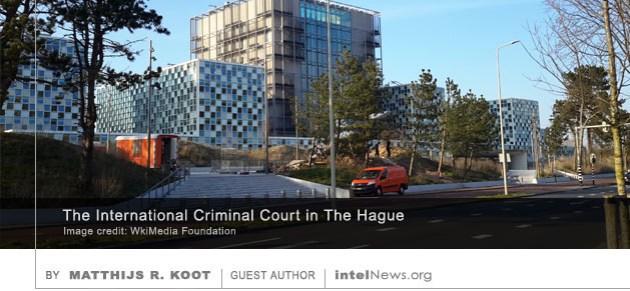
The AIVD claims that the reason for Cherkasov’s visit to the Netherlands was to join the International Criminal Court (ICC) in The Hague, as a paid intern. He eventually planned to transition into full-time employment in the ICC, where he “would be highly valuable to the Russian intelligence services”. The AIVD reportedly notified the Dutch Immigration and  Naturalization Service, which detained Cherkasov upon his arrival at Amsterdam’s Schiphol International Airport. The Dutch government declared the alleged GRU officer persona non grata and promptly expelled him back to Brazil “on the first flight out”.
Cherkasov’s Cover and Legend
Cherkasov arrived in Holland with a cover, a term that refers to a fake operational identity used for purposes of espionage. It is unlikely that his cover was natural, meaning that he is probably not Brazilian by birth —though it is possible that at least one of his parents was/is not Russian by birth. What is more likely is that Cherkasov’s cover is contractual, meaning that it was crafted especially for him by the GRU after he was hired as an intelligence officer. This likely happened as many as 10 years ago, when Cherkasov was in his early 20s. Read more of this post
 ON JUNE 16, THE Dutch General Intelligence and Security Service (AIVD)
 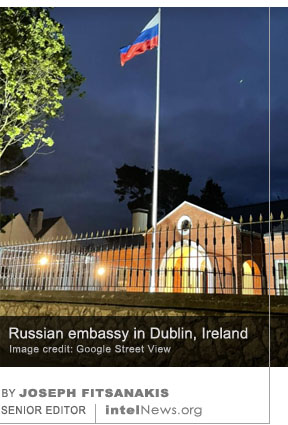 FOUR RUSSIAN DIPLOMATS, WHO Ireland claims are undercover intelligence officers, met with Irish paramilitaries as part of a wider plan to “stoke political unrest” in Britain and Ireland, according to a new report. In a press conference held in Dublin last week, Irish Taoiseach (Prime Minister) Micheál Martin
 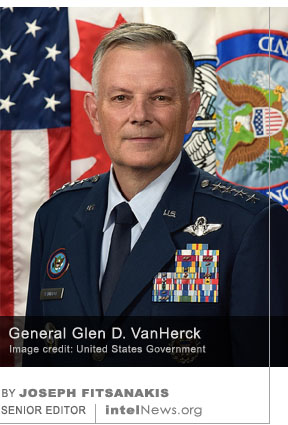 THE PRESIDENT OF MEXICO has stated that his country is “sovereign” in response to comments, made by a senior United States military official, that Mexico hosts more Russian intelligence personnel than any other country in the world. These
  ON MARCH 3, 2022, Dutch newspaper Volkskrant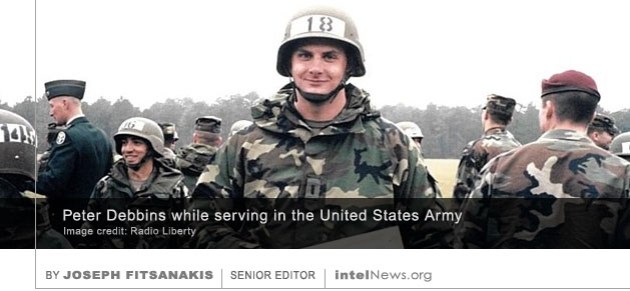
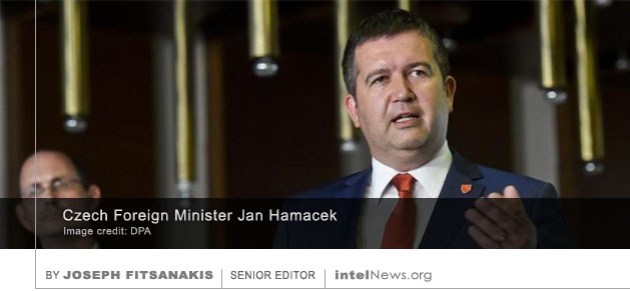 CZECH GOVERNMENT OFFICIALS SAID they would welcome the expulsion of Russian diplomats from European Union and North Atlantic Treaty Organization countries, in support of Prague’s ongoing diplomatic spat with Moscow. The Czech Republic expelled 18 Russian diplomats last weekend, in order to protest against an explosion at a remote munition depot in the east of the country, which the government claims was part of a Russian intelligence operation.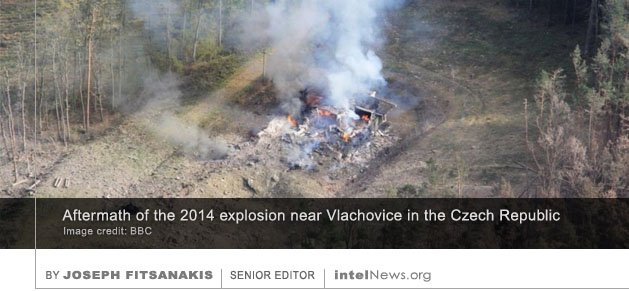
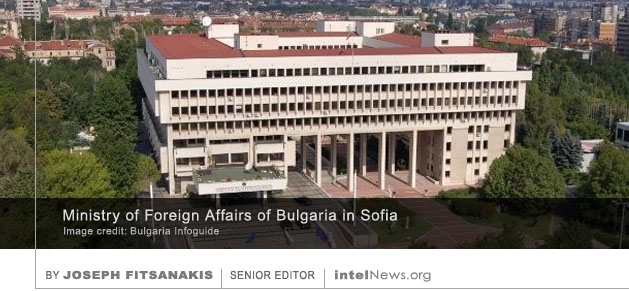
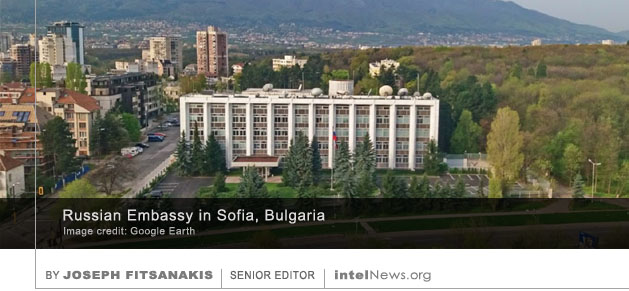
 COLOMBIA EXPELLED TWO RUSSIAN diplomats earlier this month, without publicly explaining why, according to news reports. Several Colombian news outlets reported on Tuesday that the two Russians were expelled after they were found engaging in espionage. Also on Tuesday, Colombian officials confirmed earlier reports that Moscow had expelled two Colombian diplomats in a tit-for-tat response.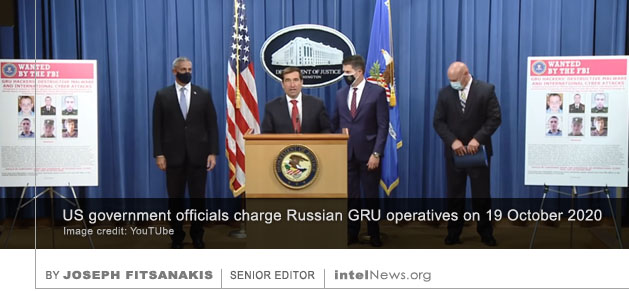
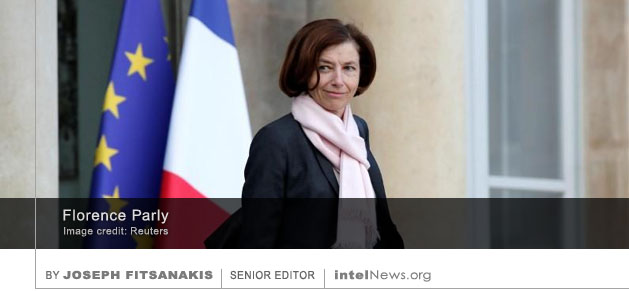 French authorities are reportedly investigating a senior military officer, who is serving with the North Atlantic Treaty Organization in Italy, for spying on behalf of Russia, according to a news report from France. On Sunday, France’s Minister of the Armed Forces, Florence Parly (pictured), gave a press conference in Paris, during which she provided limited information about the ongoing investigation. Parly






 intelNews.org
Newspaper discloses names of Russian alleged spies expelled from Belgium
July 14, 2022 by Joseph Fitsanakis 1 Comment
Like other governments in Europe, the Belgians carried out the expulsions of Russian diplomats in secret, and employed a “no comment” policy in response to media requests. Such an approach is customary when it comes to diplomatic expulsions. It allows the government ordering the expulsions to expect a similar level of discretion if and when its own diplomats are expelled in a possible tit-for-tat move by an adversary. It is therefore highly unusual for information concerning expelled diplomatic personnel to be made public. And yet that is precisely what happened earlier this week, when the EUObserver, an English language newspaper based in Brussels, published information about the names and backgrounds [PDF] of the 21 expelled Russian diplomats. The paper said the information was leaked by a source, but did not elaborate.
According to the newspaper, all 21 expelled diplomats were men. It further alleged that 10 of them were intelligence personnel of the Main Directorate of the Russian Armed Forces’ General Staff. A further nine diplomats worked for the Foreign Intelligence Service (SVR, Russia’s equivalent to the United States Central Intelligence Agency), while two were employees of the external service of the Russian Federal Security Service (FSB). Most were in their 40s, though at least one was in his early 60s and one was in his late 20s. The EUObserver said that some of the information about the alleged spies was unearthed by The Dossier Center, a British-based open-source information outlet, which is similar to Bellingcat. The Dossier Center is funded by the oligarch Mikhail Khodorkovsky, who is a critic of the Russian President Vladimir Putin. Read more of this post
Filed under Expert news and commentary on intelligence, espionage, spies and spying Tagged with Belgium, diplomatic expulsions, FSB, GRU, News, Russia, Russian embassy in Belgium, SVR (Russia)