News you may have missed #0133

  • Book examines Central Asian espionage in WWI. On Secret Service East of Constantinople, by Peter Hopkirk (John Murray Publishers), examines the role of German intelligence services in Kaiser Wilhelm’s attempt to gain influence in the Ottoman Empire, the Caucasus, Persia, Afghanistan and India. A very interesting, under-researched aspect of World War I.
  • CIA intercepted communication between Zazi and al-Qaeda. A local TV station in Denver, Colorado, quotes “intelligence officials familiar with the investigation” of Najibullah Zazi, as saying that the CIA alerted US federal agencies after intercepting a conversation between Zazi and a senior al-Qaida operative. No word yet about this from the FBI, which is supposed to handle domestic terrorism cases.
  • US defense secretary hints at more secret nuke sites in Iran. Speaking alongside Secretary of State Hillary Clinton last night at a CNN/George Washington University forum, Robert Gates dropped what seemed to be a big hint that the United States knows much more about the Iranian nuclear program than the Iranians might think.

Bookmark and Share

“Unprecedented” history of MI5 published

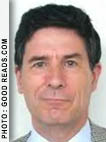
Dr. Andrew

Dr. Andrew

By JOSEPH FITSANAKIS | intelNews.org |
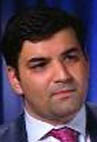
The MI5, Britain’s foremost counterintelligence organization, made headlines in 2002, when it appointed Cambridge University history Professor Christopher Andrew to produce an authorized account of its long history. The 1,032-page-long book, entitled Defense of the Realm, was published this week by Allen Lane, as announced last March, in time to mark the agency’s centennial. Despite the fact that Defense of the Realm has been officially sanctioned by MI5, (ex-director-general Stephen Lander was sitting next to Dr. Andrew during Monday’s press conference), the book makes some interesting revelations. Among them is that MI5 considered assassinating V.K. Krishna Menon, post-colonial India’s first High Commissioner (an ambassador within the British Commonwealth of Nations) to Britain. Read more of this post
Documents show Japan government aide was CIA mole

Shigeru Yoshida

Shigeru Yoshida

By JOSEPH FITSANAKIS | intelNews.org |
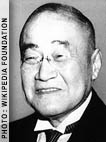
A senior military aide to Japanese Prime Minister Shigeru Yoshida in the 1950s was an informant for the CIA, according to documents unearthed at the US National Archives. A CIA memorandum dated November 26, 1956, describes Lt. Gen. Eiichi Tatsumi (ret.), who advised the Japanese Prime Minister on defense matters, as “one of the best, safest, most qualified persons in Japan today for CIA use”. Waseda University professor Tetsuo Arima, who unearthed the documents, said the CIA codenamed Tatsumi POLESTAR-5. Bearing fresh memories from Japan’s destructive participation in World War II, the government of Prime Minister Yoshida refused calls to remilitarize Japan. But a hardcore group of senior military officials, including Tatsumi, who had fought in the war, wished to see Japan rearm. Washington, which interpreted Yoshida’s refusal to rearm as a friendly gesture to Russia, also wanted to see Japan remilitarize. Read more of this post

News you may have missed #0101

  • Red Army Faction member was on German spy service payroll. German media report that Verena Becker, a former member of the militant student organization Red Army Faction, who was arrested last week in connection with a murder committed thirty years ago, worked as an informant for the German secret services.
  • Pakistanis worried about US embassy expansion. In a rare article in the English-speaking press, The Washington Post examines the Pakistani population’s opposition to the planned expansion of the US embassy in Islamabad.
  • A.Q. Khan tells all about Pakistani nuclear program. Recently released from house arrest, the father of the Pakistani nuclear bomb has given an interview to a Pakistani television station, in which he reveals that Pakistan was able to detonate a nuclear device within a week’s notice in as early as 1984.

Bookmark and Share

US threatened Indonesia with war during 1999 East Timor crisis

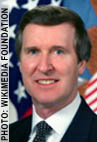
William Cohen

William Cohen

By JOSEPH FITSANAKIS | intelNews.org |
The Clinton Administration threatened to go to war with Indonesia in 1999, if Jakarta resisted an Australian-led plan to grant independence to what was then Indonesia’s province of East Timor. The revelations were made by former American and Australian military officials quoted in a new book titled The March of Patriots: The Struggle for Modern Australia. According to Pentagon official James Schear and Dr. Ashton Calvert, the late Director of the Australian Foreign Affairs Department, US Secretary of Defense William Cohen met with Indonesia’s President Bacharuddin Jusuf Habibie and Defense Minister General Wiranto, and told them that Washington would retaliate militarily if Jakarta contested the planned deployment of an Australian-led UN force in East Timor. Read more of this post

CIA documents reveal secret aspects of Vietnam War

CIA report cover

CIA report cover

By JOSEPH FITSANAKIS | intelNews.org |
The CIA has released a six-volume internal history of its involvement in Vietnam prior to and during the Second Indochina War (usually referred to in the US as the Vietnam War). The release of the documents’ is the long-awaited result of a Freedom of Information Act request by intelligence historian and National Security Archive research fellow John Prados. The documents, which are available online in the National Security Archive’s Electronic Briefing Book No. 283, detail the CIA’s activities in Vietnam from the early 1950s, and provide what appears to be the most complete account to-date of the Agency’s operations during the US war in South and North Vietnam, Laos and Cambodia. Read more of this post

News you may have missed #0086

Bookmark and Share

BBC releases archival documents on KGB spy Guy Burgess

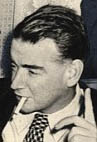
Guy Burgess

Guy Burgess

By JOSEPH FITSANAKIS | intelNews.org |
The BBC’s archive unit has released 24 previously unpublished documents on Guy Burgess, a British-born KGB double spy who defected to Moscow during the early stages of the Cold War. Prior to joining the British Foreign Office, Burgess worked for the BBC as a producer of its Week in Westminster radio program, which covered British Parliamentary activity. The archival documents, some of which date back to 1936, shed light on his activities while at the BBC. They include a reference letter addressed to the BBC from Burgess’ academic mentor, renowned Cambridge University historian Sir George Trevelyan. In the letter, Professor Trevelyan describes Burgess as “a first rate man” and notes that “[h]e has passed through the communist measles that so many of our clever young men go through and is well out of it”. Read more of this post

Analysis: How vital was spying during the Cold War?

Gordon Corera

Gordon Corera

By IAN ALLEN | intelNews.org |
The BBC’s security correspondent, Gordon Corera, asks a very basic yet very intriguing question about the history of the Cold War: did espionage actually make a difference in ts outcome? This question stems out of BBC Radio 4’s three-part documentary series examining the 100-year history and operations of MI6, Britain’s foremost external intelligence agency. Corera’s article on the BBC website provides conflicting answers by intelligence defenders and intelligence skeptics, including Rodric Braithwaite, former British ambassador to the USSR, and David Owen, Britain’s former Foreign Secretary, who says that, barring a few important exceptions, UK policy makers “didn’t really […]  know exactly what was going on” in the Communist Bloc. Other commentators include former MI6 deputy director Sir Gerry Warner, and Sir David Omand, who argues that most of the intelligence collected during the Cold War was of a military or tactical nature and would therefore have proven effective only “if the Cold War had gone hot”.

Bookmark and Share

News you may have missed #0048

Bookmark and Share

Documents reveal CIA meddling in Japanese elections

Taketora Ogata

Taketora Ogata

By JOSEPH FITSANAKIS | intelNews.org |
Researchers from three Japanese universities have unearthed US documents that detail CIA activities to monitor and influence Japanese politics in the early 1950s. Dubbed “The Ogata File”, the five-volume, 1,000-page document collection, which was declassified in 2005, relays CIA efforts to assist the electoral campaigns of Japanese conservative politician Taketora Ogata. Ogata led the Japan Liberal Party in the early 1950s and in 1955 was instrumental in merging his party along with other conservative groups into the Liberal Democratic Party, which has ruled Japan for most of the post-war period. Read more of this post

Japanese intelligence history discussed in new books

By JOSEPH FITSANAKIS | intelNews.org |
In comparison to their Asian counterparts, Western intelligence organizations are oases of transparency and openness. In such Asian countries as Japan, governments have yet to recognize the existence –let alone operations– of their espionage agencies. This attitude is slowly changing in Japan, however, through a new trend of published books authored by former intelligence operatives. An article in Japan’s second-largest newspaper, Asahi Shimbun, available here in English, discusses this new trend, as well as some of the new information provided in several new memoirs by Japanese ex-intelligence professionals. One interesting aspect of postwar Japanese intelligence, revealed in such books, is its overwhelming concentration on Japan’s communist neighbors. Another is the substantial degree to which US intelligence agencies were involved in the day-to-day running of Japanese intelligence operations. Read more of this post

News you may have missed #0027

  • Former KGB captain still fighting deportation from Canada. IntelNews has been keeping an eye on the case of Mikhail Alexander Lennikov, whose deportation from Canada has been ordered by a court. Lennikov, a former KGB captain, claims that if deported back to Russia he will be treated as a defector by the FSB. IntelNews has also learned that Lennikov now maintains a public blog, which he updates daily.
  • New book claims Errol Flynn worked as a Nazi spy. The Australian-born star, who became a Hollywood legend in the 1930s, was known for his anti-Semitic views. But now a new book claims that declassified CIA files prove Flynn collaborated with German Nazi intelligence in gathering information on German socialists who fought in the Spanish Civil War.
  • Iranian spying allegations nonsensical, says France. French Foreign Minister Bernard Kouchner said that Tehran’s claims that 23-year-old French student Clotilde Reiss was a spy in Iran are “stupid”. “Do you think my country would be so naive and shorthanded as to send a 23-year-old woman to spy in Iran? That’s stupid, it’s not possible”, said Mr. Kuchner during a visit to Lebanon.
  • Interesting account of Israel’s only spy history memorial. Matti Friedman, of The Associated Press, has written an interesting account of the little known Israel Intelligence Heritage and Commemoration Center in Tel Aviv.

Bookmark and Share

W. German cop behind fatal 1967 shooting was a spy, documents show

By JOSEPH FITSANAKIS | intelNews.org |
On June 2, 1967, West German police opened fire on leftist students demonstrating against a visit to Berlin by the Shah of Iran. One of the shots fired by the police killed student protester Benno Ohnesorg. His killing was dubbed in Germany “the shot that changed the republic”. It had a major role in radicalizing the West German student movement in the late 1960s and early 1970s and directly sparked the creation of the militant student organization Red Army Faction –also known as the Baader-Meinhof Group. But a group of researchers working at Germany’s Office of the Federal Commissioner Preserving the Records of the Ministry for State Security of the German Democratic Republic (BStU), led by archivist Marianne Birthler, now claim they have discovered that the West German police officer who fired the shot that killed Ohnesorg was actually an East German spy. Read more of this post

Article on formerly unknown Soviet spy published

George Koval

George Koval

By JOSEPH FITSANAKIS | intelNews.org |
On November 2, 2007, some of Russia’s most senior military and intelligence officials gathered at the Kremlin to honor a Soviet spy whose name was until then completely absent from the annals of espionage history. Russian defense minister Anatoly Serdyukov and Main Intelligence Directorate (GRU) chief Valentin Korabelnikov were among several officials who joined Russian president Vladimir Putin to pay tribute to George Koval. Koval was an American citizen born in Iowa to immigrant parents from Belarus. In 1932, Koval, his parents and two brothers, all of whom were US citizens, moved back to the then rapidly developing Soviet Union to escape the effects of the Great Depression. It was there that the young George Koval was recruited by the GRU, the foreign military intelligence directorate of the General Staff of the Soviet Armed Forces. He received Soviet citizenship and returned to the US through San Francisco in October 1940. Read more of this post