News you may have missed #560 (new books edition)
August 6, 2011 3 Comments
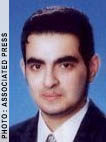
Khalil al-Balawi
►►New book on CIA’s Khost bomb disaster. Washington Post reporter Joby Warrick has authored a new book, examining the December 31, 2009, killing of seven CIA operatives by Jordanian doctor Humam Khalil al-Balawi in Khost, Afghanistan. In the book, entitled The Triple Agent, Warrick quotes several “anonymous” sources from within CIA and Jordan’s General Intelligence Department (GID), which was involved in running al-Balawi. Aside from blaming GID, Warrick says the CIA’s Amman station chief was partly responsible for the botched operation.
►►Hollywood producer was Mossad spy, says new book. The book Confidential: The Life of Secret Agent Turned Hollywood Tycoon Arnon Milchan, says that Milchan was a full-fledged operative for Israel’s now-defunct intelligence agency, Lakam. The agency, which was also known as Israel’s Bureau of Scientific Relations, collected scientific and technical intelligence abroad. It was disbanded in 1986 following the arrest of US Navy analyst Jonathan Pollard for engaging in espionage on behalf of Israel. The book’s authors, Meir Doron and Joseph Gelman, argue that Milchan, who produced such movies as Love and Other Drugs and Knight and Day, worked for Israeli intelligence by supervising government-backed accounts and front companies that financed “the special needs of the entirety of Israel’s intelligence operations outside the country”.
►►Book alleges US-Russian spy swap deal. In 2010 the CIA considered a swap deal that would have delivered to Moscow two Americans currently imprisoned in the US for spying for Russia. This information is included Read more of this post








 intelNews.org
Were Pakistani spies behind 2009 attack that killed seven CIA employees?
April 19, 2016 by Joseph Fitsanakis Leave a comment
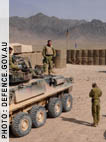
However, a set of newly released US State Department cables seem to suggest that Pakistani intelligence may have been behind the attack. The documents were released by George Washington University’s National Security Archive through a Freedom of Information Act request. One document, dated January 11, 2010, discusses the FOB Chapman attack in association with the Haqqani network, a Taliban-aligned Pashtun militant group that operates in Afghanistan but is headquartered in Pakistan. Western security observers have long considered the Haqqani network to be a paramilitary arm of Pakistan’s Inter-Services Intelligence (ISI) directorate. The January 11 State Department cable suggests that senior Haqqani network operatives met with their ISI handlers at least twice in the weeks prior to the FOB Chapman attack. Another cable, dated February 6, 2010, suggests that the ISI gave the Haqqani operatives $200,000 to step up attacks against Western forces in Afghanistan. A specific order was given at the meeting to carry out “the attack on Chapman [and] to enable a suicide mission by an unnamed Jordanian national”, presumably al-Balawi.
But an unnamed US intelligence official, who read the declassified documents, told the Associated Press news agency that the documents were “information report[s], not finally evaluated intelligence”. The material was thus “raw, unverified and uncorroborated”, said the official, and clashed with the broad consensus in the US Intelligence Community, which was that the attack was planned by al-Qaeda, not by the Haqqani network. The Associated Press contacted the Pakistani embassy in Washington, DC, about the National Security Archive revelations, but received no response.
► Author: Joseph Fitsanakis | Date: 19 April 2016 | Permalink
Filed under Expert news and commentary on intelligence, espionage, spies and spying Tagged with declassification, Forward Operating Base Chapman, Haqqani Network, Humam Khalil Abu-Mulal al-Balawi, Humam Khalil al-Balawi, ISI, National Security Archive, News, Pakistan, suicide bombings, United States