In rare speech, Australian intelligence chief stresses urgent need to recruit more spies
May 10, 2022 1 Comment
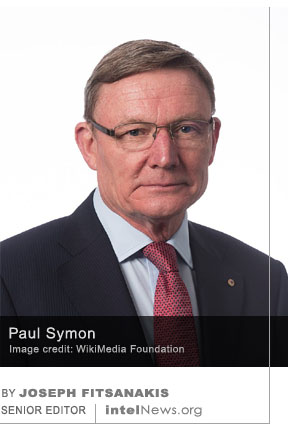 AUSTRALIAN INTELLIGENCE MUST recruit foreign spies with more urgency than at any time since the opening years of the Cold War, according to the head of Australia’s main foreign intelligence agency. Paul Symon, director of the Australian Secret Intelligence Service (ASIS), was speaking at a public event to mark the 70th anniversary of the organization’s history. It was a rare public speech by the head of Australia’s secretive main foreign intelligence service.
Symon’s talk was hosted in Sydney by the Lowy Institute, an independent Australian think-tank that focuses on international affairs. During his talk, which was made available afterwards on the Lowy Institute’s website, Symon spoke about a range of issues relating to Australia’s geopolitical priorities and their connection to intelligence operations. He told the audience that the primary task of ASIS, which is to recruit foreign subjects to spy on behalf of Australia, remained as crucial as ever.
He added, however, that a growing number of pressing concerns made “the need to recruit new spies” more essential than ever before. According to Symon, ASIS needs to “recruit and work with even more vigor and urgency than at any other point in our 70-year history”. In this task, China remains a strategic focus for ASIS, given its role in the region. Symon claimed there were signs that increasing numbers of Chinese state “officials [and] individuals” were “interested in a relationship” with ASIS. This was because many Chinese are becoming concerned about what he described as the rise of “an enforced monoculture” in China, and wish to stop it, said Symon.
Later in his speech, the ASIS director touched in broad terms on the challenge posed by technology on human intelligence (HUMINT) operations, in which ASIS specializes. He described these challenges as “extraordinary”, and said they resulted from an interaction between “a complex strategic environment [and] intensified counter-intelligence efforts” by Australia’s adversaries, as well as a host of “emergent and emerging technologies”. These technologies are in many ways posing “a near-existential” risk to the types of HUMINT operations carried out by ASIS, as the organization’s collection activities run the risk of becoming “increasingly discoverable”, said Symon.
► Author: Joseph Fitsanakis | Date: 10 May 2022 | Permalink
 The United States Central Intelligence Agency will not collect human intelligence on the United Arab Emirates, even though the oil kingdom’s actions often run directly counter to American interests, according to sources. The CIA’s policy, which some sources described as “highly unusual”, fails to recognize the growing distance between American interests and the UAE’s foreign policies, according to Reuters. The news agency cited “three former CIA officials familiar with the matter” who claimed that the CIA’s policy is out of touch and may be endangering US national security.
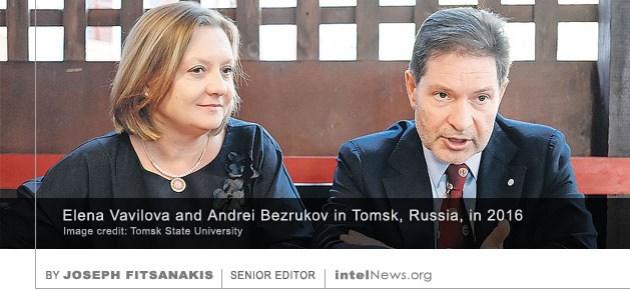 One of the ten Russian deep-cover spies who were arrested in the United States in 2010, and swapped with American- and British-handled spies held by Moscow, has spoken to Western media for the first time. Elena Vavilova was
 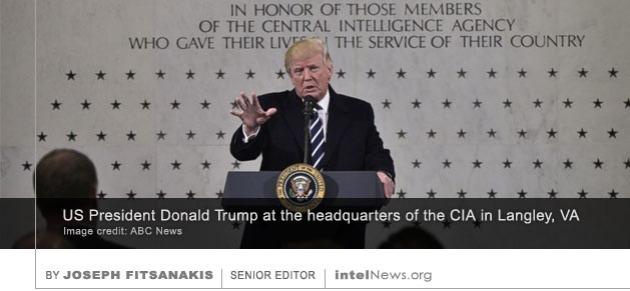 United States President Donald Trump said on Tuesday that he would not allow American intelligence agencies to use spies against North Korea, raising eyebrows in Washington, before appearing to backtrack a day later. The American president was speaking to reporters at the White House on Tuesday, when he was asked about a report that appeared in The Wall Street Journal that day. According to the
 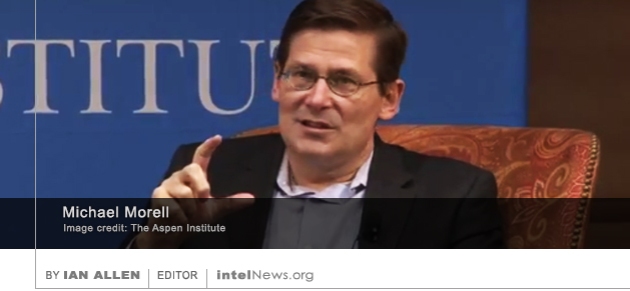 A senior Central Intelligence Agency official, who led the agency as its acting director before retiring in 2013, has said that not having sources in the Iraqi government’s upper echelons led to the intelligence failure of 2003. Michael Morell retired as deputy director of the CIA, after having served twice as its acting director, in 2011 and from 2012 to 2013. A Georgetown University graduate, Morell joined the agency in 1980 and rose through the ranks to lead the Asia, Pacific and Latin America divisions. In May 2015, Morell published his book, The Great War of Our Time: The CIA’s Fight against Terrorism from al Qa’ida to ISIS, which he has been promoting while working as a consultant in the private sector.












 intelNews.org
Is there such a thing as female HUMINT? New research highlights understudied topic
June 13, 2022 by Joseph Fitsanakis 6 Comments
In an article published earlier this month in the International Journal of Intelligence and CounterIntelligence, Stephan Lau and Farina Bauer ask a number of important questions about the effective inclusion of women in HUMINT. The article is entitled “What About Her? Increasing the Actionability of HUMINT in Paternalistic Cultures by Considering Female Intelligence”. Lau is a member of the Faculty of Intelligence at the Federal University of Administrative Sciences in Berlin. Bauer, who holds a Master’s degree from the University of the Armed Forces in Munich, is a female HUMINT practitioner with Germany’s Bundeswehr (Federal Defense).
The article contains insights from Bauer’s experience as a HUMINT operative. It also shares data from surveys and interviews with 40 military HUMINT operatives in the Bundeswehr, who have served in male-dominated collection environments, such as Afghanistan, Iraq and Kosovo. A central question the authors focus on is “whether there is a gender-sensitive perspective regarding women as targets as well as females as operators in these theaters”. In attempting to answer that question, Lau and Bauer elaborate on the concept of “female intelligence collection”, namely “a gender-sensitive perspective in intelligence collection planning that not only recognizes females as targets of collection but also considers females as operatives”. This concept was partly behind the creation of female engagement teams (FETs), which have been pioneered in Afghanistan by American and other Western Special Operations Forces units in order to engage with local women.
The authors conclude that, despite the growth of FETs in the past decade, female targets in paternalistic societies remain “both untapped (i.e., not yet a standardized part of mission planning) and harder for operators to access”. Moreover, they recommend that FETs should not be the centerpiece of female intelligence collection, because it isolates women in the broader HUMINT environment and fails to combine male and female collection capabilities. They argue that “[f]emale-only teams are not the right answer to reform a male-dominated profession”. Instead, they propose the “integration of female and male operators in the same units by creating and supporting mixed teams”. These teams, they argue, would “increase the actionability of intelligence collection entities, even beyond military intelligence”.
► Author: Joseph Fitsanakis | Date: 13 June 2022 | Permalink
Filed under Expert news and commentary on intelligence, espionage, spies and spying Tagged with academic research, Female Engagement Teams, Germany, HUMINT