One in four US hackers is FBI informant, says report

2600 magazine

2600 magazine

By JOSEPH FITSANAKIS | intelNews.org
Experienced observers with strong links in the American computer hacker community estimate that around 25 percent of its members are working as informants for the Federal Bureau of Investigation and other US government agencies. This according to an investigative report published in British quality broadsheet The Guardian, which claims that the large numbers of government operatives have spread unprecedented “paranoia and mistrust” inside the US computer hacker underground. According to the report, the authorities have made significant inroads, not by training their officers in hacking skills, but by employing the threat of lengthy prison sentences as a means of convincing captured hackers to turn into government informants. This technique is largely responsible for the creation of an “army of informants” operating “deep inside the hacking community” in the US. An example provided in the report is the infiltration of online forums used by the cybercriminal community as marketplaces for credit card, bank account, and other stolen identity information, which are often traded in bulk around the world. Read more of this post

News you may have missed #516

  • UK government will continue to spy on Muslims says official. Britain’s Home Secretary, Theresa May, says she does not see “anything wrong with identifying people who are vulnerable to being taken down a certain route”.
  • UK government outed IRA double agent. Senior Irish Provisional Army volunteer Denis Donaldson, who spied for the British government, was deliberately outed by the government to send a message to the IRA that he was expendable, and that it had another, more valuable informant within the IRA leadership ranks. The revelation is contained in a leaked US diplomatic document published by whistleblower website WikiLeaks. Donaldson was shot dead shortly after his role as an MI5 informant was revealed.
  • Legendary CIA airline now in danger of crashing. There was a time, not so long ago, that CIA-linked contractor Evergreen International Aviation was doing quite well for itself. Today, the venerable intelligence-helpers have fallen on hard times. The other day, it had to unload its 200 million square foot maintenance facility in southern Arizona in order to help pay off its debts.
News you may have missed #494

  • David Petraeus tipped to be new CIA director. The Obama administration may tap CIA Director Leon Panetta to succeed Bob Gates as Secretary of Defense. If this happens, then General David Petraeus, the top US commander in Afghanistan, may take over Panetta’s job at the CIA.
  • Reuters denies bureau chief had CIA contacts. The Reuters news agency has denied an accusation made on Cuban state television that its bureau chief Anthony Boadle helped arrange a meeting between an undercover Cuban agent and a US diplomat described as a CIA operative.
  • UK court grants Russian ‘spy’ aid to fight deportation. Katia Zatuliveter, who is accused by Britain’s MI5 of spying for Russia, has won legal aid to help fight her case against deportation, according to news reports.

News you may have missed #477 (Germany edition)

  • German ex-foreign minister in spat with ex-CIA director. Former CIA Director, George Tenet, claims that he discovered “too damn late” that Curveball –the Iraqi defector who became a key source for the CIA and the German secret service (BND)– was a fabricator. But Germany’s former foreign minister, Joschka Fischer, has told journalists that the BND did in fact share its doubts about Curveball with the CIA.
  • German spy chief claims Mubarak to stay in Egypt [unconfirmed]. According to German newspaper Die Welt, Ernst Uhrlau, director of Germany’s BND federal intelligence agency, says he has “no evidence that former Egyptian President Hosni Mubarak wants to leave the country, and that his comment that he intends to stay and be buried in Egypt “is credible”.
  • Austrian on trial in Germany on charges of spying for Russia. An Austrian soldier is on trial in Germany, accused of spying for Russia’s Foreign Intelligence Service (SVR) and passing on sensitive information about European helicopter prototypes. Prosecutors at the Munich court allege that the unnamed 54-year-old Austrian army mechanic spied from 1997 to 2002.

Colin Powell wants answers over fake Iraq intelligence

Rafid Ahmed Alwan al-Janabi

Alwan al-Janabi

By IAN ALLEN | intelNews.org |
Regular readers of this blog will not be surprised by recent news that the Iraqi defector whose information helped build the Bush Administration’s case for invading Iraq in 2003, has admitted he lied about Saddam Hussein’s alleged weapons of mass destruction. Rafid Ahmed Alwan al-Janabi, known in intelligence circles as ‘Curveball’, arrived in Germany in 1999, where he applied for asylum, saying he had been employed as a senior scientist in Iraq’s biological weapons program. Serious doubts about al-Janabi’s reliability were expressed at the time by Germany’s Federal Intelligence Service, the BND, and by some in the CIA. Yet his testimony became a major source of US Secretary of State Colin Powell’s February 2003 speech before the United Nations Security Council, in which he layed out Washington’s case for war. A year later, both the BND and the CIA concluded that al-Janabi had been lying about his alleged biological weapons role, and that he was in reality a taxi driver from Baghdad, who had used his undergraduate knowledge of engineering to fool Western intelligence. Now al-Janabi, who still lives in Germany, has spoken to British newspaper The Guardian, and openly admitted that his story was completely fabricated. He told the paper that he was an “opposition activist” and that he lied to his German and American intelligence handlers in order to help “topple” the regime of Saddam Hussein. Read more of this post

South African spy chief had secret US talks, embassy cable reveals

Moe Shaik

Moe Shaik

By JOSEPH FITSANAKIS | intelNews.org |
South Africa’s spy chief regularly gave the American embassy in Pretoria detailed information on internal African National Congress (ANC) politics, according to a diplomatic cable leaked by WikiLeaks. The cable, entitled “Zuma Advisor Threatens to Expose Political Skeletons”, was authored on September 10 2008 by the embassy and communicated to several recipients, including the State Department, CIA, and the National Security Council. It reveals that Moe Shaik, who heads the South African Secret Service (SASS), the country’s external intelligence agency, met regularly with an unnamed political officer of the US embassy and “always share[d] insights into the motivations and strategies of the Zuma camp”. The reference is to Jacob Zuma, President of the governing ANC, who assumed the organization’s leadership in May of 2009, after a bitter internal party struggle. Several months prior to Zuma’s election as ANC’s President, the organization’s rival faction, which was loyal to Thabo Mbeki, attempted to challenge Zuma’s eligibility by leveling corruption charges against him. Read more of this post

Why is Germany protecting Iraqi informant who lied about WMDs?

Rafid Ahmed Alwan

Alwan al-Janabi

By JOSEPH FITSANAKIS | intelNews.org |
German politicians in the state of Baden-Württemberg are questioning the protection given by German intelligence services to a notorious Iraqi informant, who lied about Iraq’s weapons program. Rafid Ahmed Alwan al-Janabi, known in intelligence circles as “Curveball”, arrived in Germany in 1999, where he applied for political asylum, saying he had been employed as a senior scientist in Iraq’s biological weapons program. Despite serious doubts expressed at the time by officials in Germany’s Federal Intelligence Service, the BND, and by some of their CIA colleagues, al-Janabi was given asylum in Germany. Moreover, information gathered from his testimony became a major source of the Bush Administration’s argument in favor of going to war in Iraq in 2003. Less than a year later, both the BND and the CIA concluded that al-Janabi had been lying about his alleged biological weapons role, and that he was in reality a taxi driver from Baghdad, who had used his undergraduate knowledge of engineering to fool Western intelligence. Read more of this post

News you may have missed #462

  • CIA secrets could surface in Swiss nuclear case. A seven-year effort by the CIA to hide its relationship with the Tinners, a Swiss family who once acted as moles inside the world’s most successful atomic black market, hit a turning point on Thursday when a Swiss magistrate recommended charging the men with trafficking in technology and information for making nuclear arms.
  • Pakistan spy chief to ignore US summons. The Pakistani government has announced that hat there is “no possibility” that Lt. Gen. Ahmad Shuja Pasha, the head of Pakistan’s powerful Inter-Services Intelligence Directorate, would obey a summons requesting his appearance before a court in the United States relating to the 2008 Mumbai terrorist attacks.
  • Australia told to prioritize spy recruitment. Carl Ungerer, from the Australian Strategic Policy Institute, has advised the Australian intelligence agencies to “look at ways to improve information gathering from human sources”, as they undergo a period of reform.

Leaked cable confirms end of US-NZ spy quarrel

Hillary Clinton

Hillary Clinton

By JOSEPH FITSANAKIS | intelNews.org |
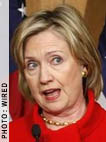
To regular readers of this blog, this is not so much a revelation, as it is a confirmation. Back in October of 2009, we wrote about a peculiar comment made Hillary Clinton. The United States Secretary of State had told a press conference that “we [the US] are resuming our intelligence-sharing cooperation [with New Zealand], which we think is very significant”. Resuming? When had it been disrupted, and why? Most intelligence observers agree that the only glitch that could have caused the cooperation to end would have been New Zealand’s nuclear ban. It was in 1984 when, under mounting popular pressure, the Labour government of David Lange voted to bar nuclear-powered or nuclear-armed ships from entering New Zealand territorial waters. At the time, the ban was heralded by the global nuclear disarmament movement as a major victory. But Washington did not see it that way. Successive US administrations pressured Wellington to repeal the nuclear-free legislation and allow US warships to make use of strategic New Zealand ports. Washington’s pressure increased in the years after 9/11, culminating in 2006, when it threatened to cancel a free-trade agreement between the two countries if New Zealand refused to repeal the ban. It appears that, at some point in time, possibly after 9/11, the US actually terminated intelligence sharing between the two countries in order to force New Zealand to comply. Read more of this post

Largest Afghan narcotrafficker was CIA, DEA informant

Haji Juma Khan

Haji Juma Khan

By JOSEPH FITSANAKIS | intelNews.org |
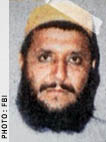
The history of operational collision between the Central Intelligence Agency and illicit narcotics traders is both long and largely documented. But new revelations published in The New York Times this week come to add a new chapter in this ever-expanding saga. The revelations this time concern Haji Juma Khan, perhaps the most notorious of Afghanistan’s drug lords, who has been described by US federal officials as arguably the most dangerous narcotrafficker in Central Asia. In 2008, Khan was finally arrested in New York, where he was charged with conspiracy to fund terrorist operations through trading in narcotics. American prosecutors allege that Khan literally “helped keep the Taliban in business”, providing them with weapons and cash on a systematic basis. But The Times reveal that, over a number of years, Khan also acted as an informant for both the CIA and the Drug Enforcement Administration and was “paid a large amount of cash” in return for his services. Read more of this post

Even more underreported WikiLeaks revelations

WikiLeaks

WikiLeaks

By JOSEPH FITSANAKIS | intelNews.org |
It appears increasingly likely that Sweden will extradite Julian Assange to the United States, where the WikiLeaks founder will face espionage charges. But the WikiLeaks revelations keep coming, although not all of them receive the worldwide media attention that they deserve. Take for instance the disclosure that at least three senior Australian Labour Party (ALP) politicians have operated as “protected sources” (diplomatic parlance for secret informants), providing regular updates on internal ALP politics to US embassy operatives in Canberra. According to internal US diplomatic cables released on Thursday, ALP politicians Bob McMullan, Michael Danby and Mark Arbib, who currently serves as the Australian federal government’s Minister for Sport, regularly held secret meetings with US embassy officials after 2004.  All three deny accusations that they acted as spies for the US. Another underreported WikiLeaks revelation concerns a 2008 proposal by the Saudi government to create an US- and NATO-backed Arab military force to invade Lebanon, seeking to obliterate Shiite paramilitary group Hezbollah, which controls large sections of the country. Read more of this post

News you may have missed #451 (history edition)

Scandinavians launch probes into US spying activities

Scandinavia

Scandinavia

By JOSEPH FITSANAKIS | intelNews.org |
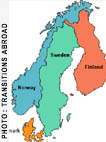
Norway, Sweden and Denmark have launched official investigations into media reports that accuse US embassies in Scandinavian countries of operating illegal intelligence gathering networks. The issue first emerged last Wednesday, when a report by Norway’s TV2 channel alleged that the US embassy in Oslo maintained a network of around 20 local former police and intelligence officers, who were conducting “illegal systematic surveillance of Norwegian citizens”. According to TV2, the surveillance network was tasked with collecting visual and physical intelligence on individuals “thought to pose a threat to American interests”. The US Department of State responded to the allegations by arguing that the US embassy had “fully informed” the Norwegian authorities of the surveillance activities. But Norwegian investigations expressed fears that the intelligence collection, which dates back to 2000, may constitute a violation of Norwegian diplomatic legislation, and have launched an investigation into the affair. Read more of this post

News you may have missed #444

News you may have missed #441

  • US officials admit terrorist suspect was DEA informant. US government officials have told The Washington Post what the world’s media has been saying for almost a year, namely that Pakistani-American David Coleman Headley, who was arrested by the FBI in October for plotting an attack on a Danish newspaper, was working as a Drug Enforcement Administration informant while training with Islamist insurgents in Pakistan.
  • Ex-CIA officer decries Israeli policies. Philip Giraldi, a former counter-terrorism specialist and military intelligence officer at the CIA, has said in an interview that Israel’s policies in Palestine “are manifestly evil”.
  • Bomber who killed seven at CIA base was not vetted. Humam Khalil Abu-Mulal al-Balawi, a Jordanian al-Qaeda sympathiser who killed himself and seven CIA agents at a remote base in eastern Afghanistan in January had not been properly vetted, the CIA has said.