CIA chief has ‘confrontational’ meeting with Pakistani spymaster

Ahmed Shuja Pasha

A.S. Pasha

By JOSEPH FITSANAKIS | intelNews.org |
There is almost no coverage in the US media of CIA director Leon Panetta’s trip to Pakistan —in sharp contrast to the Pakistani and Indian press, where his visit made national headlines over the weekend. A scheduled meeting with Ahmed Shuja Pasha, director of Pakistan’s Inter-Services Intelligence (ISI), was undoubtedly among Panetta’s most important engagements in Islamabad. According to Pakistani media accounts, the meeting between the two men —the second in less than two months— was confrontational and marred by serious differences between the ISI and the CIA —two agencies that rarely see eye-to-eye lately. Citing “well-placed sources”, Pakistani daily The Nation said that the ISI spymaster “expressed his disappointment” to Panetta about the CIA’s “dismal role in countering terrorism” in Pakistan and its “failure to provide concrete actionable information” to the Pakistani secret services. Read more of this post

One third of Pakistani spy budget comes from CIA, say officials

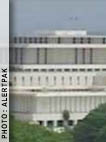
ISI HQ

ISI HQ

By IAN ALLEN | intelNews.org |
As much as one third of the annual budget of Pakistan’s Inter-Services Intelligence has come from the CIA in the last eight years, according to a new report in The Los Angeles Times. The paper says that even more US dollars have been supplied to the ISI through a secret CIA monetary rewards program that pays for the arrest or assassination of militants wanted by Washington. The payments reportedly began during the early years of the George W. Bush administration, and are now continuing under the Obama administration, despite “long-standing suspicions” that the ISI and the Pakistani military maintain close links with the Afghan Taliban and al-Qaeda operatives in Pakistan and elsewhere. Read more of this post

News you may have missed #0180

  • UK spy tip led to Zazi arrest in New York. British spies tipped off their American counterparts to what has been described as “the most serious terrorist plot foiled in the US since 9/11”, which led to the recent arrest of Najibullah Zazi in New York.
  • US prevents Indian spies’ access to jailed Islamist. US authorities won’t let an Indian intelligence team question American Muslim David Coleman Headley, who was arrested last month for traveling to Denmark in order to plot an attack on a newspaper targeted by Islamic extremist group Lashkar-e-Taiba, because it published cartoons of the prophet Muhammad. Sources blamed “bureaucratic” and “procedural” hurdles. Hmmm…
  • Largest military deal in Israeli history taking shape. The largest defense deal in Israel’s history, the purchase of 25 F-35 stealth fighters, is advancing, as talks continue between Israel, the Pentagon, and Lockheed Martin.

Bookmark and Share

CIA-DNI turf war over embassy posts continues

Joe Biden

Joe Biden

By IAN ALLEN | intelNews.org |
This blog has kept tabs on the latest US bureaucratic turf war between the CIA and the office of the Director of National Intelligence (DNI). It started last May, when when DNI Dennis Blair argued in a still-classified directive that his office should have a say in certain cases over the appointment of senior US intelligence representatives in foreign cities. Former CIA officials publicly denounced the directive, which would allow the appointment of non-CIA personnel to these positions for the first time in 60 years, as “simple insanity”. The turf war appeared to be close to an end in July, when the US Senate Select Committee on Intelligence came out in support of the DNI, arguing that “some locations may give rise to circumstances where th[e CIA station chief’s] responsibility is best met by an official with expertise derived from another I[ntelligence] C[ommunity] element”. Read more of this post

News you may have missed #0166

Bookmark and Share

Documents allegedly describe joint US-Colombian spy operations

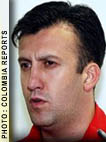
Tarek El Aissami

Tarek El Aissami

By IAN ALLEN | intelNews.org |
A day after announcing the arrest of a number of Colombian intelligence agents on Venezuelan soil, Venezuelan officials presented what they described as “irrefutable evidence” of joint US-Colombian spy operations. Speaking to reporters on Thursday, Venezuela’s interior minister Tarek El Aissami, said documents acquired in connection with the capture of the Colombian intelligence agents, show that their actions were part of “an ambitious CIA-funded operation”. Venezuelan security forces detained the two Colombians, Angel Jacinto Guanare and Eduardo Gonzalez Muñoz, along with an alleged Venezuelan accomplice, Melvin Argenis Gutierrez, on October 2, 2009, in the city of Maracay, 50 miles west of Venezuelan capital Caracas. El Aissami suggested that documents relating to the activities of the three men reveal that they were part of Operation FALCON, a joint project by the CIA and Colombian intelligence agency DAS, which aimed “to collect information about the Bolivarian National Armed Forces” and recruit informants from anti-government circles. Read more of this post

UK spy agencies argue for torture trial behind closed doors

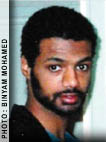
Binyam Mohamed

Binyam Mohamed

By JOSEPH FITSANAKIS | intelNews.org |
The two primary intelligence agencies in the British Isles have argued that any evidence presented in a lawsuit accusing them of torture should remain secret. The request, which is unprecedented in British legal history, was made on Monday before Britain’s High Court by MI5, MI6, as well as by a number of government ministers. The court case in point centers on a lawsuit filed jointly by seven British citizens or residents, all of whom were held in the Guantánamo Bay Detention Camp and claim they were tortured by the CIA with British complicity. The seven are Moazzam Begg, Bisher Al Rawi, Jamil El Banna, Richard Belmar, Omar Deghayes, Martin Mubanga, and Binyam Mohamed, whose case is perhaps the most well known. Read more of this post

News you may have missed #0153

  • More on Nozette’s 2009 mystery trip abroad. The affidavit of Stewart David Nozette, who was arrested last Monday for attempting to sell classified US government information to an undercover FBI agent, reveals that “[o]n or about January 6, 2009, [the scientist] traveled to a different foreign country”, carrying with him two thumb drives, which he failed to bring back with him. Where did he go, and why?
  • Armenia charges former army officer with spying for Azerbaijan. Armenian Army officer Gevorg Airapetian and a “foreign national” were arrested in a “special operation” by Armenian authorities earlier this week, and charged with spying for Azerbaijan. Some suspect Russian involvement, believing the Azerbaijanis to have acted as intermediaries between Airapetian and Moscow.
  • US spy chief Blair calls for spy cooperation. Director of National Intelligence (DNI) Dennis Blair called Wednesday for a better-coordinated effort within the US intelligence community. But he said nothing about recent reports that intelligence officials shut down a Web-based unclassified e-mail system, which had been heralded as an important step in information sharing between members of the US intelligence community.

Bookmark and Share

US wont’ share al-Qaeda intelligence, say Pakistani spies

Quetta, Pakistan

Quetta, Pakistan

By IAN ALLEN | intelNews.org |
A number of senior Pakistani security officials have accused US spy agencies of systematically withholding from their Pakistani counterparts actionable intelligence on al-Qaeda and Taliban activities in Pakistan. Speaking on condition of anonymity, the officials complained to The Washington Times that the last time the CIA shared actionable intelligence on al-Qaeda with the government of Pakistan was in 2007. They also said that recent public assertions by US officials that senior al-Qaeda leaders are hiding in Quetta, Pakistan, have not been followed with corresponding actionable intelligence by US spy agencies. The allegations shed further light on the increasingly severed intelligence relationship between Washington and Islamabad, which began shortly before the 2008 ousting of American-supported Pakistani dictator General Pervez Musharraf. Read more of this post

News you may have missed #0140

  • CIA Intellipedia gurus get Homeland Security Medal. Don Burke and Sean Dennehy, the CIA agents behind Intellipedia, have been awarded a medal for “promoting and expanding information-sharing in the Intelligence Community”. As intelNews noted last August, Intellipedia, the intelligence community’s version of Wikipedia, has grown markedly since its formal launch in 2006. It now averages more than 15,000 edits per day and is home to 900,000 pages and 100,000 user accounts.
  • Cuban Five resentencing delayed. A US federal judge has accepted requests from the lawyers of Antonio Guerrero, a member of the Cuban Five spy ring, to delay their resentencing, after the US government refused to turn over any national security damage assessments in the case. Washington accuses the Five of spying on the US for Cuba. But an appeals court ruled earlier this year that the sentences they received (ranging from 19 years to life) were too long. It appears that Guerrero’s sentence will be reduced from life to 20 years behind bars.
  • Was Christopher Columbus a spy? An independent researcher is raising eyebrows by suggesting that Columbus was a Portuguese spy who knew exactly what he was doing when he supposedly “got lost” in the Atlantic in 1492.

Bookmark and Share

Clinton’s mysterious comment raises eyebrows in New Zealand

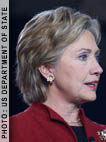
Hillary Clinton

Hillary Clinton

By JOSEPH FITSANAKIS | intelNews.org |
A comment by US secretary of state Hillary Clinton following a meeting with a senior New Zealand government official has raised questions by intelligence observers in the pacific nation. Speaking last Friday after an official meeting in Washington with her New Zealand counterpart, minister of foreign affairs Murray McCully, Clinton said the US “very much” values its diplomatic partnership with New Zealand. She then proceeded to say “[w]e are resuming our intelligence-sharing cooperation, which we think is very significant”. This latter comment struck many intelligence observers in Wellington as odd, and for a good reason: nobody was under the impression that the US-NZ intelligence cooperation had been disrupted. The mystery deepened when New Zealand prime minister John Key refused to explain Hillary Clinton’s remark when asked, saying simply “I just don’t comment on issues of national security”. Read more of this post

News you may have missed #0138

  • US intelligence turf wars plague email system. US intelligence officials have decided to shut down a Web-based, unclassified e-mail system, which had been heralded as an important step in the US intelligence community’s drive for better information sharing after 9/11. A Directorate of National Intelligence representative said “security concerns” led to the decision to shut down the e-mail system.
  • CIA Climate Change Center survives funding opposition. Republican lawmakers criticized the CIA’s plan to open the Center on Climate Change and National Security as a “misguided defense funding priority” and even tried to prevent appropriate funding last week. But they failed and so it appears that the Center will be established after all.
  • Colombia to rename spy agency to “CIA”. The restructuring of Colombia’s scandal-prone domestic spy agency, Administrative Department of Security (DAS), continues, as the government has announced that DAS will now be known as the Central Intelligence Agency (CIA), a new entity which will take over state and immigration intelligence and counterintelligence duties.

Bookmark and Share

News you may have missed #0121

  • DHS intelligence official speaks on cross-department collaboration. Since its establishment, the US Department of Homeland Security has been involved in almost every major turf battle within the US security and intelligence community. Bart Johnson, the department’s Acting Undersecretary of Intelligence and Analysis, speaks about collaborating with non-DHS actors.
  • Somali group executes two for spying for CIA. Somalia’s al-Shabaab on Monday publicly executed two people accused of spying for the US Central Intelligence Agency and the country’s embattled government. Before the US-assisted Ethiopian invasion of Somalia, al-Shabaab (The Party of Youth) used to be the youth organization of the Somali Islamic Courts Union (ICU). Al-Shabaab shares the ICU’s mission of turning Somalia into an Islamic khalifat.
  • US intelligence veterans group backs CIA torture probe. The Veteran Intelligence Professionals for Sanity (VIPS) have authored a memorandum addressed to US President Barack Obama, in which they “voice strong support for Attorney General Eric Holder’s authorization of a wider investigation into CIA interrogation”.

Bookmark and Share

IBM bungles expensive IT project for UK intelligence

IBM logo

IBM logo

By IAN ALLEN | intelNews.org |
The British government has scrapped a major intelligence-related network development project due to substandard security standards and several missed deadlines by International Business Machines (IBM). The company, which is the leading contractor in the project, has been blamed for its failure and will probably be taken to court by the government, which is eager to recover £24.4 million ($38,8 million) in research costs. Relatively little is known about the project itself, codenamed SCOPE, which the British government initiated in 2003 with the aim of facilitating increased cross-department collaboration between as many as ten government departments with security or intelligence components. Read more of this post

Does Norway engage in international espionage?

NIS HQ

NIS HQ

By IAN ALLEN | intelNews.org |
The death sentences handed down earlier this week by a Congolese military court to two alleged Norwegian spies, prompted Brian Palmer, of Slate magazine, to ask: do small countries like Norway engage in international espionage? The answer, of course, is yes. Palmer explains that intelligence agencies of smaller countries tend to be extremely focused on bordering nations. As a result, when it comes to their immediate geographical neighborhood, their intelligence knowledge and capabilities often surpass those of larger intelligence powers. Norway is a good example of this. Read more of this post