Civil war continues in South African spy agency

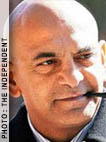
Arthur Fraser

Arthur Fraser

By JOSEPH FITSANAKIS | intelNews.org |
In July of last year, South Africa’s ministerial Review Commission on Intelligence warned that a steadily declining culture of accountability in South Africa’s spy services threatened the country’s constitutional order. In October, the government’s minster for state security, Siyabonga Cwele, cited the Commission’s findings and policy suggestions in announcing a “major restructuring” of South Africa’s security services. Several months later, the “restructuring” process resembles a major civil war between rival political factions of the African National Congress. An entire generation of pro-ANC intelligence officials, who staffed the post-apartheid South African intelligence apparatus, has already been purged. The wave of purges was completed with the resignation this past week of Arthur Fraser, until recently director of the South African National Intelligence Agency’s Operations Division. Read more of this post

Analysis: Should US spy agencies learn from France?

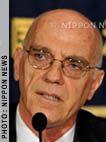
Jean-Louis Bruguiere

J.L. Bruguiere

By JOSEPH FITSANAKIS | intelNews.org |
What precisely is wrong with the US intelligence system? I have read several good analyses lately, all sparked by the disastrous Christmas holiday week, which included the Christmas Day bomber fiasco and the killing of seven CIA personnel in Afghanistan. One is written by ex-CIA operations officer Charles Faddis, who argues that the Agency’s central deficiency is that it places emphasis on process, rather than on mission accomplishment. Another, broader, analysis is authored by Ron Capps, the US Pentagon’s former director of human intelligence/counterintelligence operations in Afghanistan, who suggests that the way to break down bureaucratic walls between US intelligence agencies is to publish more unclassified reports. The most interesting commentary, however, is written by Paris-based Jean-Louis Bruguière, a French former Magistrate who led counterterrorism investigations from 1981 to 2007. Read more of this post

Analysis: Germany’s spies struggle to adapt to post-Cold War changes

BND logo

BND logo

By IAN ALLEN | intelNews.org |
Nearly everyone in Germany recognizes that the global intelligence landscape has changed, almost beyond recognition, in the years since the end of the Cold War. Current challenges are far more underground in nature, far more flexible, far more unpredictable. The question is, has Germany’s primary intelligence agency, the BND, changed along with the times? The answer is not so simple. The BND continues to struggle immensely with bureaucratic inefficiency and substandard human and financial resources, explains Deutsche Welle‘s Peter Philipp. Even when it does produce useful intelligence, its advice is not always taken into consideration by German government officials, who tend to have their own opinions on political developments. “Most politicians do have their own view of the world order”, says former BND chief Hans-Georg Wieck, “so [we] must address the[m] in a way that makes them more likely to act on [our] information”. Philipp’s interesting editorial can be accessed here.

Bookmark and Share

Comment: Is There a ‘DNA Problem’ in US Spying?

Sam Tanenhaus

Sam Tanenhaus

By IAN ALLEN* | intelNews.org |
The controversy of the apparent ineffectiveness of US intelligence agencies to uncover the so-called Christmas Day bomb plot has reignited the discussion about the operational shortcomings of the US intelligence community. Sam Tanenhaus, editor of of The New York Times Book Review, has authored an interesting commentary, in which he delves into some of what he sees as the design deficiencies in American intelligence.

Read more of this post

News you may have missed #0239

  • Iran denies secret deal to import Kazakh uranium. Iran and Kazakhstan have denied a report that they were close to clinching a deal to transfer to Iran 1,350 tons of Kazakh purified uranium ore. The IAEA has declined comment.
  • US travel security lapses to mark end of the line for DHS? The US Department of Homeland Security “is adrift and treated as an orphan by the rest of the [US intelligence] community but is so badly staffed by low quality people that no other agency will ever take them seriously”, according to an anonymous former senior US intelligence official.

Bookmark and Share

News you may have missed #0233

Bookmark and Share

News you may have missed #0204

  • Release of secret US reports to be postponed (again). Millions of secret US government documents are scheduled to be declassified at the end of the year, unless President Barack Obama extends the deadline, like his predecessors have done. The White House is reportedly preparing an executive order that will postpone the declassification, in order to assuage various US intelligence agencies “unwilling to part with their secrets”. Change, Mr. Obama?
  • Analysis: Why India needs an intelligence revamp. We have written before about the urgent need to restructure Indian intelligence agencies.

Bookmark and Share

News you may have missed #0182

  • China to keep Rio Tinto boss in prison. The Chinese government has extended (again) by two months a probe into Stern Hu, the jailed boss of Anglo-Australian mining corporation Rio Tinto. Hu was arrested by the Chinese last July on espionage charges.
  • Czech spy agency objects to outing Cold War agents. Recently a Czech research center published an extensive list of names of agents of StB, the country’s main intelligence agency in the communist era. But StB’s post-communist successor, the ÚZSI, condemned the airing of the names, calling it “a massive violation of protection of sources that is part of intelligence work, which also may have a negative impact on the Czech Republic’s [current] interests”.
  • Iran reportedly creates new domestic spy agency. A radical dissident Iranian group in Paris, with known ties to Washington, claims the Iranian regime has undertaken “the largest overhaul of the [country’s] intelligence structure since 1989”.

Bookmark and Share

News you may have missed #0179

  • Iran charges three US citizens with espionage. If convicted, the three Americans, who claim they accidentally crossed into Iran while hiking, could be sentenced to death. Meanwhile, relatives of the three have angrily rejected the espionage charges in a joint statement.
  • Findings of spy reform committee ignored in South Africa. South Africa’s statutory bodies that oversee the work of spy agencies are ignoring the warnings of a ministerial-level Review Commission on Intelligence, which last summer warned that a steadily declining culture of accountability in South African spy services is threatening the country’s constitutional order. So much for the government’s heralded “major restructuring” of South African security services.
  • Colombia paid Ecuador informant to infiltrate FARC. The informant that Colombia was said last week to have handled in Ecuador (see previous intelNews coverage) was reportedly paid around US$2.5 million by the Colombian government to supply information on the whereabouts of Raul Reyes, former leader of the Revolutionary Armed Forces of Colombia (FARC). The informant, allegedly known in Colombian intelligence files as “JCRF” or “Pirata”, managed to infiltrate FARC, and may have been instrumental in Reyes’ killing by the Colombian military in Ecuador last March.

Bookmark and Share

News you may have missed #0175

  • South Korean spy agency now regards North as ‘international affairs’. The Seoul-based National Intelligence Service (NIS) has relocated its unit that monitors North Korea under a department dealing with international affairs. The change, described as a “paradigm shift” by one South Korean official, apparently reflects President Lee Myung-bak’s view that the North Korean issue should be dealt more “from the international geopolitical perspective”.
  • Robbery of S. African intel agent was planned, say officials. The robbery by five men of a woman said to be an agent of South Africa’s National Intelligence Agency “was conducted as though it was very well planned”, according to police.
  • Interview with ex-West German spy master. Radio France Internationale has aired an interview with Hans-Georg Wieck, chief of the West German Secret Service (BND) between 1985 and 1990. Among other things, Wieck claims that BND had “well-placed” agents in East Germany, as well as in spy services of other communist, including the KGB.

Bookmark and Share

News you may have missed #0150

  • Israel’s inside intelligence. If only Israeli security services were as open as the CIA and other US spy agencies, lament Israelis.
  • Nozette and nuclear rocketry. Here are some of the reasons why the case of scientist Stewart D. Nozette, who was arrested and charged earlier this week under the US Espionage Act, is distressing on several levels.
  • Perle calls DoD spying whistleblower “a nutcase”. Richard Perle, chairperson of the US Defense Advisory Board under the Bush administration, has called Sibel Edmonds “a nutcase; certifiable”. Last August, Edmonds, a former FBI translator, alleged that Turkish spies had bugged, blackmailed and bribed US politicians, her FBI unit, the State Department, the Pentagon and Congress.

Bookmark and Share

Analysis: Major spy overhaul underway in South Africa

Moe Shaik

Moe Shaik

By IAN ALLEN | intelNews.org |
In July, Laurie Nathan, a former member of South Africa’s ministerial Review Commission on Intelligence, warned that a steadily declining culture of accountability in South Africa’s spy services was threatening the country’s constitutional order. Last week, based on the Commission’s findings and policy suggestions, the country’s minster for state security, Siyabonga Cwele, announced a “major restructuring” of South Africa’s security services. Already, the first generation of pro-ANC intelligence agents, who staffed the post-apartheid South African intelligence apparatus, is on its way out. The departures of Manana Manzini, who until recently directed the National Intelligence Agency (NIA), Loyiso Jafta, of the National Communications Centre, and Taki Netshitenzhe of the Electronic Communications Security, were accentuated by the retirement of ANC “superspy” Hilton Tim Dennis, who headed for many years the NIA’s Counter Espionage unit. Read more of this post

News you may have missed #0138

  • US intelligence turf wars plague email system. US intelligence officials have decided to shut down a Web-based, unclassified e-mail system, which had been heralded as an important step in the US intelligence community’s drive for better information sharing after 9/11. A Directorate of National Intelligence representative said “security concerns” led to the decision to shut down the e-mail system.
  • CIA Climate Change Center survives funding opposition. Republican lawmakers criticized the CIA’s plan to open the Center on Climate Change and National Security as a “misguided defense funding priority” and even tried to prevent appropriate funding last week. But they failed and so it appears that the Center will be established after all.
  • Colombia to rename spy agency to “CIA”. The restructuring of Colombia’s scandal-prone domestic spy agency, Administrative Department of Security (DAS), continues, as the government has announced that DAS will now be known as the Central Intelligence Agency (CIA), a new entity which will take over state and immigration intelligence and counterintelligence duties.

Bookmark and Share

Analysis: CIA “cronyism, favoritism” prompts resignations

Art Brown

Art Brown

By IAN ALLEN| intelNews.org |
Rumors emerged last week that the leading candidate to head the CIA’s station in Kabul, Afghanistan, has no experience in the Middle East or south Asia, and speaks no local languages. This is despite a bitter bureaucratic turf battle between the CIA leadership and the office the Director of National Intelligence (DNI) to find the best-suited person for the job. Why is it still so hard, after nearly eight years in Afghanistan, for the CIA to find qualified senior managers? Jeff Stein of SpyTalk says it’s because skilled staff are demoralized and frustrated by the Agency’s chronic inefficiencies. He quotes an anonymous former senior counterterrorism officer who claims that escalating “cronyism and favoritism” are coupled by the lack of any serious “effort to address […] massive senior leadership problems”. Read more of this post

Lost notebook reveals plans for New Zealand spy agency reshuffle

Nicky Hager

Nicky Hager

By JOSEPH FITSANAKIS | intelNews.org |
Plans for a possible radical reshuffling of New Zealand’s intelligence infrastructure were revealed yesterday, with the discovery of a notebook belonging to a government official. The notebook was dropped on a busy Wellington street by an employee of New Zealand’s Treasury Department, who was returning from a classified presentation on the future of the country’s intelligence agencies. It was recovered by Julian Robins, a political correspondent for Radio New Zealand, who proceeded to reveal the notebook’s contents. According to Robins, the government appears to be seriously considering merging the three separate intelligence agencies, which currently operate on different missions, in order to improve synergy and save money. Read more of this post