Poland’s super-secretive ‘school of spies’ marks 50 years of operation
August 2, 2023 1 Comment
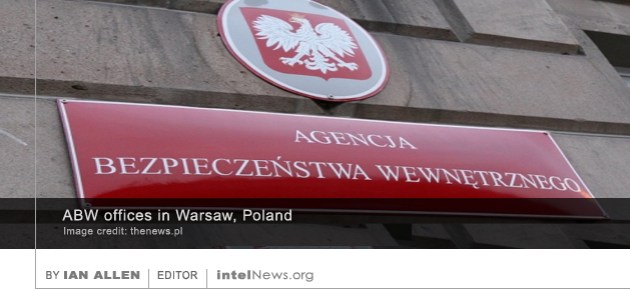 DURING THE COLD WAR, Poland hosted the Eastern Bloc’s only known intelligence training facility for operations officers situated outside of the Soviet Union. The highly secretive training facility operated out of a heavily guarded compound located near the northern Polish village of Stare Kiejkuty in Gmina Szczytno county, approximately 65 miles from the Polish-Soviet border. Today, 50 years after its establishment, the facility continues to train the operations officers of post-communist Poland’s intelligence services.
During World War II, and in the immediate post-war period, Soviet authorities trained Polish intelligence personnel in Kuybyshev (in 1991 renamed to Samara) in southwestern Russia. This setup continued following the establishment of the Soviet-controlled Polish intelligence community. By the 1960s, the Polish intelligence community was being led by the Ministry of Public Security, referred to by its Polish initials, SB. The SB’s elite operations officers, which staffed its First Department, were all trained in the Soviet Union and in a Soviet-controlled facility in Warsaw.
But in 1970, Poland’s reformist President, Edward Gierek, put in motion a plan to modernize the Polish intelligence services. Gierek’s goal was for Polish intelligence to catch up with the pace of technological development, especially in the emerging digital realm. He also wanted Polish spy organizations to be able to compete directly against rival agencies in Western Europe. The rapid establishment of the Intelligence Personnel Training Centre near Stare Kiejkuty was the centerpiece of Gierek’s intelligence reforms.
Construction began in 1971 and was mostly completed within two years. In 1973, the heavily guarded training facility, which had been disguised as a “holiday resort” in official government maps, welcomed its first students. Students were taught how to operate undercover in the West and how to recruit sources in countries like West Germany, France and the United Kingdom. They were taught about Western European lifestyles and had access to Western products, including soft drinks and vending machines, which were absent from Polish life. Read more of this post
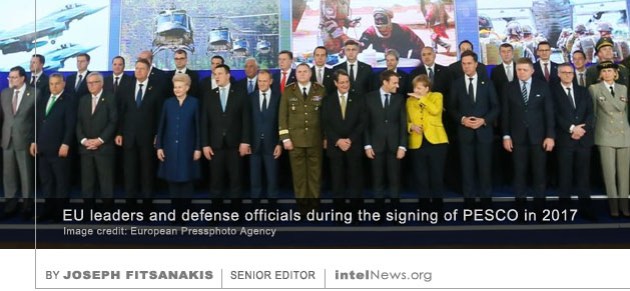 Twenty-five members of the European Union have agreed to establish a joint intelligence training academy, a move interpreted by some as a concrete effort to deepen inter-European security cooperation following Brexit. The announcement came just hours after leading EU heads of state











 intelNews.org
BBC given rare access to university course designed for French intelligence staff
January 19, 2026 by Joseph Fitsanakis 3 Comments
Reporting for the BBC, Bockman said the program of studies was designed by Sciences Po in association with the Academie du renseignement (Intelligence Academy)—the classified training arm of the Communauté française du renseignement (French National Intelligence Community). The Academie du renseignement is responsible for training personnel in several French civilian and military government agencies, including the General Directorate for External Security (DGSE) and the General Directorate for Internal Security (DGSI).
Following the November 2015 Paris attacks by the Islamic State, which killed nearly 140 people, an unprecedented number of new employees joined the French National Intelligence Community as a result of a massive hiring spree. This unprecedented expansion prompted the Académie du renseignement to reach out to France’s state universities in search of training programs for new intelligence personnel, as well as for seasoned employees.
The result was the Diplôme sur le Renseignement et les Menaces Globales, a four-month program consisting of 120 hours of class contact time divided into several modules taught by academics and practitioners. The modules include Islamic radicalism, non-religious political violence, business intelligence, and the economics of organized crime. The cost is €5,000 (around $6,000) per student. Students tend to come from the French intelligence services and the private sector, including consulting, aerospace, and defense contracting, according to Bockman.
► Author: Joseph Fitsanakis | Date: 19 January 2026| Permalink
Filed under Expert news and commentary on intelligence, espionage, spies and spying Tagged with Academie du renseignement, France, intelligence education, intelligence training, Sciences Po Saint-Germain