Analysis: Understanding WikiLeaks

WikiLeaks

WikiLeaks

By JOSEPH FITSANAKIS| intelNews.org |
The WikiLeaks cablegate revelations appear to be subsiding in the new year, and so is the public debate about their meaning and consequences. And yet, as calmer moods prevail, now is the appropriate time to probe the WikiLeaks phenomenon. To do so constructively, it is necessary to move beyond a mere political assessment of WikiLeaks. The question of whether the website, its founder, and its hundreds of volunteers, are criminals, heroes, terrorists, or dissidents, cannot even begin to be answered until WikiLeaks is understood, first and foremost. By ‘understood’, I don’t mean empathize. I mean comprehending WikiLeaks as an ideological paradigm, a technological vehicle reflective of the personal philosophies of its members, but also representative of a much wider sociotechnical trend. Click here to read my analysis brief published today by the Research Institute for European and American Studies.

News you may have missed #463

  • Iranian spy minister admits hacking emails. Iran’s Intelligence Minister Heydar Moslehi has publicly admitted that the Iranian government has hacked into the emails of Iranian opposition members. He claimed the hacking, conducted by Iran’s Intelligence Ministry, revealed messages exchanged between “foreigners and their elements inside Iran”.
  • Details on CIA officer killed in Afghanistan. An interesting article in The Washingtonian offers an interesting background story on Jennifer Matthews, a CIA officer who was killed nearly a year ago in Afghanistan in a suicide bombing by Taliban double-agent Humam Khalil Abu-Mulal al-Balawi.
  • China jails South Korean alleged spy. China is getting tougher with South Korean spies caught on Chinese soil collecting intelligence on North Korea, and has jailed one of them for more than a year, despite pleas from Seoul, according to news reports.
Israel sabotaged Egypt’s Internet, says alleged Mossad spy

Undersea Internet cable

Undersea cable

By IAN ALLEN | intelNews.org |
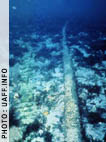
Israeli sabotage was behind the nationwide crippling of Egypt’s Internet in 2008, according to an alleged Mossad agent. The accused agent, Abdel Razeq Hussein Hassan, is an Egyptian businessman who was arrested earlier this year by Egyptian counterintelligence and is accused of working for the Israeli spy agency. Two of his alleged Israeli handlers, Joseph Daymour and Idid Moushay, are reportedly on the run and are wanted by the Egyptian government.  Hassan is due to go on trial next month, but transcripts of his interrogation records have been leaked to Egyptian media. In one instance, Hassan appears to tell his police interrogators that a team of Mossad operatives deliberately cut two undersea cables about 5 miles off the north Egyptian port city of Alexandria, disrupting the country’s Internet service for several days. Read more of this post

News you may have missed #455

  • Israel says it did not kill German politician. Israel has rejected a claim by a Swiss chemistry professor that the 1987 murder of German politician Uwe Barschel had the hallmarks of a Mossad assassination. For more on Barschel see previous intelNews story here.
  • Foreign cyber spies targeted UK defense official. Foreign spies, probably working for the People’s Republic of China, targeted senior British defense official Joanna Hole, in a sophisticated spear phishing operation that aimed to steal military secrets. The plan was foiled last year when Hole became suspicious of an email she received from a contact she had met at a conference.
  • The 10 most interesting CIA-backed startups. America’s only federally funded venture capital firm, In-Q-Tel, was created in 1999 during the tech boom. The company invests in startups developing technologies that could prove useful to the CIA and other intelligence agencies.

News you may have missed #438 (Stuxnet edition)

[Research credit to Arthur Sbygniew]

Iran announces arrests of alleged nuclear spies

Heidar Moslehi

Heidar Moslehi

By IAN ALLEN | intelNews.org |
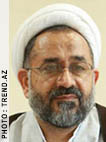
The Iranian government has announced the arrest of an unspecified number of alleged nuclear spies, reportedly in connection with a sophisticated virus that infected computers used in Iran’s nuclear energy program. The arrests were publicized on Sunday by Heidar Moslehi, Iran’s Minister of Intelligence, who said those arrested had helped facilitate the spread of the so-called Stuxnet virus last June. The malicious program, which appears to have been designed to sabotage sensitive hardware components found specifically in nuclear centrifuges, has infected at least 100,000 computer systems worldwide, most of which are located in Iran. Speaking to Iranian media, Moslehi accused Israel and the United States of trying to sabotage the Iranian nuclear energy program, but noted that Iran’s intelligence services have resumed “complete supervision of cyberspace” and will successfully prevent “any leak or destruction” of the Islamic Republic’s nuclear research and development program by outside forces. But elsewhere in Tehran, Hamid Alipour, an Iranian government Senior Information and Technology official, admitted that technical experts are still working on containing the virus, which appears to be mutating. Read more of this post

News you may have missed #435 (cyberwarfare edition)

  • Analysis: Cyber attacks test US Pentagon. US military and civilian networks are probed thousands of times a day, and the systems of the North Atlantic Treaty Organization headquarters are attacked at least 100 times a day. Meanwhile, more than 100 countries are currently trying to break into US defense networks.
  • US should be able to shut Internet, ex-CIA chief says. Cyberterrorism is such a threat that the US President should have the authority to shut down the Internet in the event of an attack, Former CIA Director Michael Hayden has said.
  • Iran battling alleged ‘spy virus’. Iranian officials have confirmed reports that a malicious computer code, called Stuxnet, was spreading throughout the nation’s nuclear infrastructure. But they have given differing accounts of the damage, said to be capable of taking over computers that operate huge facilities, including nuclear energy reactors. Did someone say ‘Israel‘?

Comment: What Can the US Do To Stop WikiLeaks?

Julian Assange

Julian Assange

By JOSEPH FITSANAKIS | intelNews.org |
Ever since whistleblower site WikiLeaks published 77,000 classified US military documents on the war in Afghanistan, several pundits have urged US government agencies, including the Pentagon, to take action. Late last week, former George W. Bush speechwriter Marc Thiessen urged the Pentagon to unleash its “cyber capabilities to prevent WikiLeaks from disseminating those materials”. Some columnists have even suggested that US intelligence services should “come up with an up-to-date photo of [WikiLeaks founder Julian] Assange and distribute it to […] SEAL sharpshooters”. Pentagon representatives have also stepped up their rhetoric, warning that “[i]f doing the right thing isn’t good enough for [WikiLeaks], we will figure out what alternatives we have to compel them to do the right thing”.

Read more of this post

German ex-spies to be fined for advertising skills online

BND seal

BND seal

By IAN ALLEN | intelNews.org |
At least a dozen German former intelligence officers are to face disciplinary action after they were found advertising their past spy careers on a job-seekers’ professional networking Web site. The German government authorized the country’s leading external intelligence agency, the Federal Intelligence Service (BND), to initiate an internal investigation, after German tabloid newspaper Bild drew attention to the online revelations in a leading article. The newspaper listed 12 former BND officers who advertised their past intelligence careers on their publicly listed résumés on Xing.com, a German-language website that serves as Germany’s version of LinkedIn.com. German federal legislation expressly forbids BND personnel from ever publicly revealing their professional ties with the spy agency, even after dismissal, resignation or retirement. Read more of this post

News you may have missed #405

  • Democracy Now on Google-CIA partnership. Democracy Now has aired an interview with John Simpson, director of Consumer Watchdog’s Inside Google project, and Noah Shachtman, of Wired magazine’s Danger Room blog, who broke the story of the Google-CIA investment partnership.
  • Ex-CIA chief downplays cyberwar with China. Retired CIA chief Michael Hayden downplayed the notion that the US is in a raging “cyberwar” with China during a speech on Thursday at the Black Hat Technical Security Conference in Las Vegas.
  • Men held over parcel bomb sent to MI6. Two men have been arrested in north Wales, after parcel bombs were sent to the offices of the British government executive at 10 Downing Street, and the headquarters of MI6, Britain’s external intelligence agency. The two men, aged 52 and 21, are believed to be related and of Pakistani origin.

Bookmark and Share

News you may have missed #403

Bookmark and Share

News you may have missed #301

  • Six more arrested in Lebanon for spying for Israel. The Lebanese army has arrested at least six more people in southern and northern Lebanon, among them former army officers, on suspicion of spying sharing information about the Lebanese Shiite movement Hezbollah with Israeli intelligence service Mossad. Dozens of alleged Israeli spy cells have been uncovered in Lebanon in recent months.
  • Survey of US spy agencies’ web presence. US intelligence agencies are using the Web to share information and engage the public. Some offer mobile versions and social networking tools –others badly need an update.
  • Danish journalist admits using job as cover to spy for Israel. Herbert Pundik, a Danish former newspaper editor, has admitted he used his journalism credentials to spy for Israel for a decade in the 1960s, saying he felt an obligation as a Jew.

Bookmark and Share

News you may have missed #295

  • US spies want super-sensitive human lie detectors. IARPA, the research unit of the US intelligence community is soliciting proposals for a five-year, three-phased overhaul of current deception-detection technology, which will include research on what is called “pre-conscious human assessment of trustworthiness”.
  • UK may purchase IP monitoring system from CIA-linked company. A security startup with close links to the CIA is touting a system to the UK government that monitors every IP address on the internet for malware, as part of its declared aim of improving cyber war capabilities. The firm has built a massive database of security breaches across the globe and is currently monitoring about 250 million compromised machines.
  • No Americans on CIA’s assassination list. The Washington Post has corrected an earlier report, flagged by intelNews earlier this month, which claimed that the US President has authorized the CIA to kill Americans abroad. According to new information, there are no Americans currently on the CIA hit list, but there are four on the list of the Joint Special Operations Command (JSOC). It is worth noting that JSOC, which some say is gradually taking over the CIA’s paramilitary mission, lacks the CIA’s mandatory Congressional oversight and has a history of being run directly out of the White House.

Bookmark and Share

News you may have missed #293

  • US DHS monitors websites. According to a document released by the US Department of Homeland Security, Cryptome, Wired‘s Danger Room blog, and WikiLeaks, are among websites the DHS systematically monitors “in order to provide situational awareness and establish a common operating picture”. IntelNews wants to take this opportunity to say ‘hi’ to members of the DHS lurking around.
  • Russian spy lived in Dayton, stole secrets. Iowa-born and -bred communist and US Army engineer, George Koval, was a master at blending in. And, as it turns out, he was also a master spy for the Soviet Union. He did just that while working on the Manhattan Project in Dayton for six months in 1945.
  • Niger army suspends constitution. No word yet in Niger about the elections promised by the military coup plotters who appear to have staged a successful coup. For those who may not know, in international politics, Niger means uranium –lots of it. It’s also worth asking what ten agents of Bulgaria’s counterterrorism unit were doing in Niger on the day of the coup.

Bookmark and Share

Analysis: Google-NSA partnership part of broader trend

Google

Google

By IAN ALLEN | intelNews.org |
We reported last week the apparent alliance between the Google Corporation and the US National Security Agency, which is the main US government organization tasked with communications interception, as well as communications security. The partnership, which began soon after Google’s decision to close down its venture business in China, where its operations came repeatedly under cyber-attack, has caused considerable controversy among civil liberties advocates. But an op-ed in the US-based Federal News Radio website describes it as the beginning of a new trend, which is likely to intensify. Read more of this post