Iranian diplomats expelled from Bosnia over spying allegations

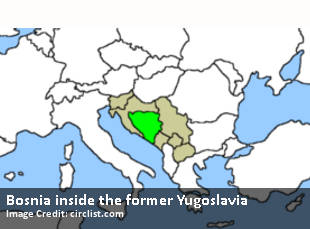
Bosnia inside the former YugoslaviaBy JOSEPH FITSANAKIS | intelNews.org |
In a move described as extremely rare, authorities in Bosnia have expelled two diplomats from Bosnian ally Iran over allegations that they are intelligence officers. However, the expulsion process took a while, which arguably reveals the complicated relationship between the two predominantly Muslim nations. The two diplomats were initially declared personae non grata in late April, when the Bosnian government ordered that they leave the country by April 30. According to Bosnia and Herzegovina’s Ministry of Security, the two envoys, Jadidi Sohrab and Hamzeh Dolab Ahmad, third and second secretaries respectively at the embassy of the Islamic Republic of Iran in Sarajevo, had engaged in activities that were “in violation of their diplomatic protocol”. Word has it that the Bosnian order was issued shortly after Israeli intelligence informed the Bosnians that the two Iranian diplomats were in fact employees of the Ministry of Intelligence and National Security of the Islamic Republic of Iran (MISIRI). The Israelis also said that one of the two men had been spotted in India, Georgia and Thailand, all of which were sites of a simultaneous bombing campaign in February of 2012 against Israeli interests —though there is no public evidence that he had an active role in the attacks. On May 9, however, Bosnian media reported that the two Iranian diplomats were still in Sarajevo, more than a week since the expiration of the deadline they had been given to leave the country. Why the delay? According to Dr. John Schindler, Iran watcher and professor of national security affairs at the United States Naval War College, the move to expel the two Iranians had been “stymied by the establishment” in Bosnia, which remains decidedly pro-Iranian. Read more of this post

CIA bankrolling Afghan government officials ‘on a vast scale’

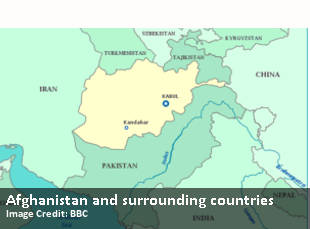
AfghanistanBy JOSEPH FITSANAKIS | intelNews.org |
The United States Central Intelligence Agency (CIA) has delivered “tens of millions of dollars [in] off-the-books cash” to Afghanistan’s governing elite, but there is little evidence that such bribes have helped promote Washington’s interests in the country, according to a new exposé published over the weekend in The New York Times. The paper cites “current and former advisers to the Afghan leader” Hamid Karzai, who allege that, for over a decade, the CIA has secretly delivered to the presidential palace in Afghan capital Kabul monthly payments ranging “from hundreds of thousands to millions of dollars”. According to Khalil Roman, who was President Karzai’s Chief of Staff for four years until 2005, Afghan officials called the CIA funds “ghost money” because “it came in secret [and] left in secret”. The article suggests that the cash given to the Afghan government appears to be handled outside the CIA’s standard financial assistance programs, which are typically subject to restrictions and oversight from administrators both inside and outside the Agency. Some American officials, who spoke to The Times on condition of anonymity, said the CIA’s goal in funding the inner circle of the Afghan government is to maintain access to its members and to “guarantee the Agency’s influence at the presidential palace”. But there is little evidence that the funds, which are handled exclusively by a “small clique at [Afghanistan’s] National Security Council” have bought the CIA the political influence it seeks. Read more of this post

News you may have missed #832 (foiled Canada terror plot)

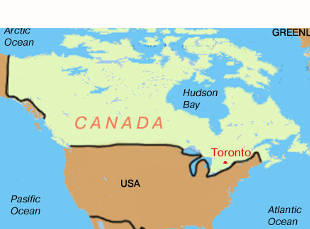
Toronto, CanadaBy IAN ALLEN | intelNews.org |
►►Two arrested in Canada terror plot. Chiheb Esseghaier, 30, and Raed Jaser, 35, who live in Montreal and Toronto, were planning to derail a Via Rail passenger train in Toronto  with support from “al-Qaeda elements located in Iran”, Canadian police said Monday. “This is the first known al-Qaeda planned attack that we’ve experienced in Canada”, Superintendent Doug Best told a news conference. Police said the men did not receive financial support from al-Qaeda, but declined to provide more details. There was no apparent reason to think the planned attacks were state-sponsored.
►►Canada foils ‘al-Qaeda inspired’ terror attack on train. The Royal Canadian Mounted Police (RCMP) said the surveillance operation leading to the arrests of the two suspects was “a result of extensive collaborative efforts”. Chief Spt Jennifer Strachan said the two men had sought to target “a specific route, but not necessarily a specific train”. At the same time, the RCMP said they believed the plot was in the planning stage and “there was no imminent threat to the general public”.
►►Tip from Muslim community ‘helped foil’ al-Qaeda plot. Canadian lawyer Hussein Hamdani told CTV News Channel that a tip from the Muslim community helped investigators foil the alleged al-Qaeda plot. “This goes to show the partnership between the Muslim community in Canada and the RCMP and all the police services,” said Hamdani. It might not be well known but collaboration between Muslims and government agencies —like the RCMP, CSIS, Canadian Border Services Agency and the Department of Justice— is quite common, according to Hamdani.

Saudi Arabia accuses Iran of running 18-member spy ring

Saudi ArabiaBy IAN ALLEN | intelNews.org |
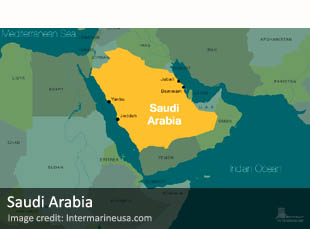
The government of Saudi Arabia has publicly accused Iran of setting up an espionage ring consisting of 18 members, in order to spy on “vital sites and installations in the Kingdom”. On March 19, Saudi authorities announced the arrest of 18 men on suspicion of operating an extensive “spy network working for a foreign entity”. The men were reportedly arrested in coordinated raids in four different regions of the country, which included locations in Mecca, Medina, and Saudi capital Riyadh. Sixteen of the arrestees are Saudi citizens, while one is Lebanese and one is Iranian. At the time of the initial announcement, Saudi officials refused to name the “foreign entity” behind the alleged espionage ring. But intelNews noted that most of the arrests took place in Saudi Arabia’s Eastern Province, which is home to much of the country’s Shiite Muslim minority. This, in association with the two foreign detainees, led us to speculate that there could possibly be an Iranian connection to the alleged spy affair. On Tuesday, Major General Mansour Al-Turki, spokesman for the Kingdom’s Ministry of the Interior, said that there was “a direct link between members of this cell and Iran’s intelligence apparatus”. Speaking to reporters in Riyadh, Al-Turki claimed that the government of Iran had provided members of the ring “regularly [with] sums of money in return for information and documents on important installations during the spy operation in the interest of [Iranian] agencies”. He added that the alleged link with Iran had been established during “preliminary investigations, physical evidence which has been collected, and statements from the accused in the case”. Read more of this post

Saudi Arabia arrests 18 on espionage charges

Saudi ArabiaBy IAN ALLEN | intelNews.org |
Authorities in Saudi Arabia announced the arrest yesterday of 18 people accused of conducting “espionage activities for the benefit of a foreign country”. Speaking on Saudi state television, Interior Ministry spokesman Mansour al-Turki said the men were arrested on suspicion of being members of an extensive “spy network working for a foreign entity”, which he refused to name. He added that the arrestees had been “gathering information about installations and vital areas” in Saudi Arabia, and were “providing intelligence agencies of that state with it”. He told reporters that the arrests were made five days ago, after Saudi security agencies received information of a foreign-instigated spy ring operating in the oil-rich kingdom. The alleged members of the ring were reportedly arrested during several coordinated raids in four different regions of the country, which included locations in Mecca, Medina, and capital Riyadh. Sixteen of those arrested are said to be Saudi citizens, while one is reportedly Lebanese and one is Iranian. It is worth noting that many of the suspected spy ring members were arrested in Saudi Arabia’s Eastern Province, which is home to much of the country’s Shiite Muslim minority. In association with the two foreign detainees, this detail may point to a possible Iranian connection to the alleged spy affair. Relations between Saudi Arabia and Iran have been essentially non-existent ever since the Islamic Revolution of 1979, when the Shiite-dominated Iranian government accused the Saudis of being puppets of the United States and called for the overthrow of the Saudi royal family. Read more of this post

Turkey refused to extradite bin Laden’s son-in-law to US

Ghaith (left) with bin Laden and al-ZawahiriBy JOSEPH FITSANAKIS | intelNews.org |
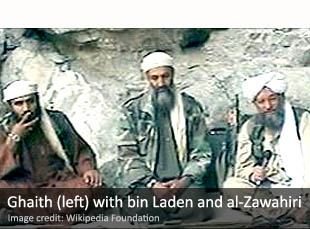
Turkish authorities have reportedly rejected a formal extradition request by the United States for a son-in-law of Osama bin Laden, who was arrested in Ankara on Friday following a tip-off by the Central Intelligence Agency. Suleiman Abu Ghaith was born in Kuwait but had his citizenship revoked after publicly opposing the rule of the Kuwaiti monarchy and demanding the institution of shari’a law in the oil emirate. In 2000, he traveled to Afghanistan where he met Osama bin Laden and joined al-Qaeda. He eventually married Fatima bin Laden, one of bin Laden’s numerous daughters, who is currently living in Saudi Arabia. He gradually rose within the ranks of the organization, eventually becoming one of its public spokesmen. Soon after the US invasion of Afghanistan, in 2001, Ghaith is believed to have escaped from Afghanistan by entering Iran on foot. He was eventually captured by Iranian government forces and placed in a detention camp along with other suspected al-Qaeda and Taliban members. It is not known how he managed to leave Iran and enter Turkey (though some say he was released the by Iranian authorities), or how the CIA knew of his presence there. However, according to Turkey’s leading daily Milliyet, the Agency contacted members of the Turkish National Intelligence Organization (known as MİT) and told them that Ghaith had entered the country on a forged passport. He was arrested soon afterwards at a hotel in Ankara’s affluent Çankaya district. The hotel where Ghaith was captured is reportedly located near the official residence of the Turkish President and a stone’s throw from numerous foreign embassies —including the embassy of the US, which was attacked by a suicide bomber on February 1. Read more of this post

News you may have missed #822 (Israeli airstrikes on Syria)

Mapping of the Israeli airstrikes in SyriaBy IAN ALLEN | intelNews.org |
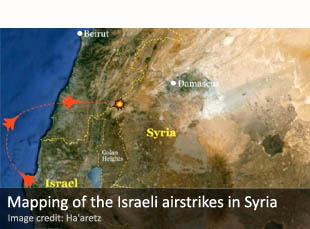
►►Should we be preparing for another Mideast war? Assad may not want a war with Israel, but Tehran could have other calculations. Over the weekend, Iran warned that it would consider any attack on Syria to be an attack on Iran. Claims by Syrian television that Israel hit a research facility near Damascus might be a pretext for an Iranian escalation with Israel. The Israeli army also deployed some of its Iron Dome batteries to northern Israel for the first time. It would not have done so if the chances of a war on Israel’s northern border weren’t increasing.
►►Why did Israel attack Syria now and why did the Syrians admit it? Two days before the Israeli attack on Syria, Iran said it would view any attack on Syrian territory as an attack against Iran itself. But the combination of strategic circumstances in the region at the moment makes the chance of a direct Iranian response unlikely. A Syrian military response seems even less likely, though neither possibility can be ruled out. The most worrying unknown since Tuesday night concerns Hezbollah’s reaction. It seems we are at the beginning of the story —and not the end.
►►Ex-Mossad head says Syria and Hezbollah will not respond. The former Director of Israel’s Mossad spy agency, Danny Yatom, has ruled out any response by the Syrian army or Hezbollah in Southern Lebanon to the Israeli attack on Syria. He told newspaper Yedioth Ahronoth on Wednesday he did not think there would be “any response, since there is no benefit for Hezbollah and Syria to do so”. He added: “Al-Assad is experiencing deep problems in his country and Hezbollah is doing its best to help him, so I don’t think that they will consider any response”.

Israel intelligence confirms ‘major blast’ at Iran nuclear plant

Fordo nuclear facility, IranBy JOSEPH FITSANAKIS | intelNews.org |

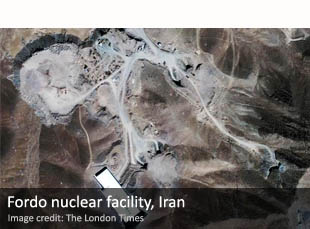
Intelligence officials in Israel have confirmed reports of a “major explosion” that is believed to have severely damaged an Iranian nuclear enrichment facility, but refused comment on rumors that Israeli jets were seen flying nearby around the time of the blast. The blast was initially reported late on Sunday by Reza Kahlili, an Iranian former agent of the United States Central Intelligence Agency inside Iran’s Revolutionary Guard Corps. Citing Hamidreza Zakeri, a former officer in Iran’s Ministry of Intelligence and National Security, Kahlili said that the explosion severely damaged the nuclear enrichment plant in Fordo, centrally located in Iran’s Qom Province. According to Zakeri, the blast was strongly felt across a three-mile radius around Fordo and “destroyed much of the installation” itself. The former government official added that around 240 plant workers had been trapped underground by the powerful explosion. Following the blast, according to Zakeri, Iranian troops quickly cordoned off the plant and prevented anyone from getting closer than 15 miles from Fordo. A few hours after Kahlili’s report, Seyyed Shamseddin Barbroudi, Deputy Head of the Iranian Atomic Energy Agency told Iranian media that there had been “no explosion in Fordo Nuclear Facility”. His denial was echoed by Alaeddin Boroujerdi, member of the Iranian Parliament’s Committee on Foreign Policy and National Security. He told the Islamic Republic News Agency that rumors of an explosion at Fordo were “Western-made propaganda” aimed at destabilizing Iran.  On Monday morning, however, the London-based Times newspaper said its “sources in Tel Aviv” had confirmed the blast took place in Fordo. Read more of this post

Iran secretly sold ‘untold quantities’ of ammo to African warring groups

Two of the 'mystery cartridges'By JOSEPH FITSANAKIS | intelNews.org |
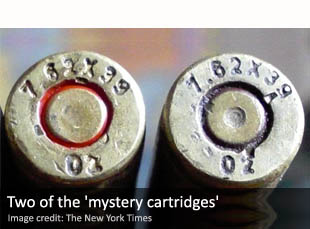
An independent report has concluded that some of Africa’s most brutal conflicts are currently being fuelled by “untold quantities” of Iranian-manufactured small-arms ammunition. The ire of weapons-trafficking researchers is usually directed at the ‘heavyweights’ of the global arms-trade, including Russia, China, the United States, and France, among other countries. It appears, however, that Iran’s state-owned weapons manufacturer has been selling ammunition throughout Africa since at least 2006 via a secret network of distributors. According to The New York Times, a group of arms-trafficking experts from the United Nations, Amnesty International, the Federation of American Scientists, and other bodies, has found that Iran began selling ammunition to African clients in 2006 or earlier. On that year, a new brand of ammunition rounds for Kalashnikov assault rifles started appearing in armed clashes in Kenya, Uganda, and Darfur (now South Sudan). By 2010, the same type of cartridges had been found in Guinea, Ivory Coast and the Democratic Republic of Congo. More recently, says The Times, similar cartridges were discovered in the hands of groups in Niger connected with Al-Qaeda in the Islamic Maghreb. Suspiciously, the cartridges bore no factory code and their packaging had been deliberately constructed to obscure the identity of the manufacturer. However, according to the expert study, it is now considered “beyond dispute” that the Ammunition and Metallurgy Industries Group, a subsidiary of Iran’s state-owned and operated Defense Industries Organization, is the source of the mysterious cartridges. It is worth pointing out that many of the governments or militias that have been found to use Iranian ammunition are officially subject to UN resolutions that bar arms transfers to the countries or territories in which they operate. Read more of this post

Iran official in secret visit to Egypt to discuss ‘new spy agency’

Qassem SuleimaniBy JOSEPH FITSANAKIS | intelNews.org |

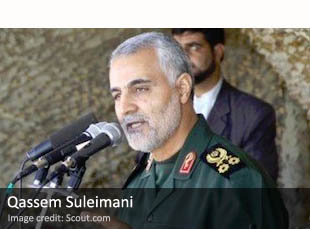
A senior Iranian intelligence official paid a secret visit to Egypt earlier this month, allegedly to discuss the establishment of a new intelligence service controlled by the Muslim Brotherhood. Several Egyptian newspapers, including the quality broadsheet Al-Masry Al-Youm, said that the Iranian official was Qassem Suleimani, commander of Quds Force, a unit inside the Islamic Revolutionary Guard Corps, which is specifically tasked with exporting the Iranian Revolution abroad. The Quds Force has traditionally constituted the primary channel of communication between the government of Iran and a host of international groups allied to it, including Hezbollah in Lebanon and Hamas in Palestine. Suleimani is said to have traveled incognito to Cairo at the personal invitation of Egyptian President Mohammed Mursi, who is also a leading member of the Muslim Brotherhood. The group, which was legalized in Egypt after the 2011 revolution, is the Egyptian branch of a Pan-Islamic political and social movement that assumed control of the government after the ousting two years ago of Egyptian longtime dictator Hosni Mubarak. According to reports from Egypt, Suleimani met with “senior officials” in the Egyptian capital, including President Mursi’s chief adviser on foreign affairs, Issam al-Haddad, as well as prominent members of the Muslim Brotherhood. Al-Masry Al-Youm said the Iranian commander discussed plans to develop a new civilian intelligence service in post-Mubarak Egypt, which will be answerable to the government of the country. The apparent plan of the Muslim Brotherhood is to create a brand new spy service that will operate outside the control of Egypt’s military, which currently commands the bulk of the country’s intelligence community. Read more of this post

Iran accuses Israel of kidnapping former Deputy Defense Minster

Ali-Reza AsgariBy JOSEPH FITSANAKIS | intelNews.org |
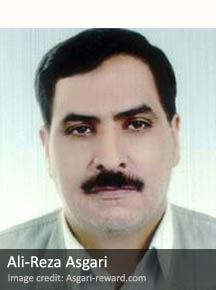
Iran’s Deputy Defense Minister has accused Israel of kidnapping his predecessor in 2006, while he was on an official visit trip to Turkey. Brigadier General Ali-Reza Asgari, who once commanded Iran’s Revolutionary Guard Corps, disappeared on December 9, 2006, from his hotel room in Istanbul. His fate remains unknown. But on Saturday, Brigadier General Hossein Daqiqi, who is currently Tehran’s second most senior military official, pointed the finger at Israel’s foremost covert-action agency, the Mossad. He was speaking to reporters in the Iranian capital during a public ceremony to mark the sixth anniversary of Asgari’s disappearance. He told Iranian media that the government had “a lot of evidence proving that members of the Israeli intelligence service have kidnapped Asgari”. There are conflicting reports about Asgari’s whereabouts, but most observers seem to believe he is still alive. A year after his disappearance from Turkey, Hans Rühle, former Director of Policy Planning in the German Ministry of Defense, wrote in Swiss newspaper Neue Zuercher Zeitung that Asgari was in Western hands and that “information was obtained” from him. Israeli media have reported that the Iranian General is in the hands of the United States and that he is helping Washington crack the “most inner workings [of] Iranian nuclear development”. Danny Yatom, former director of the Mossad, told the London-based Times newspaper in 2007 that Israel had played no part in Asgari’s disappearance and that the Iranian General had willingly defected “to the West”, but that he didn’t know his exact whereabouts. Since then, other sources have echoed Yatom’s claim that Asgari defected willingly, including Dafna Linzer of the Washington Post and intelligence historian Gordon Thomas, in his 2009 book Secret Wars: One Hundred Years of British Intelligence (see intelNews book review). Read more of this post

Who leaked Iranian nuclear document that turned out to be a hoax?

The leaked documentBy JOSEPH FITSANAKIS | intelNews.org |

On November 27, the Associated Press published an alleged Iranian document which it said proved Iran was working on a nuclear bomb. The news agency said the disclosure was the latest in a series of similar leaks to the media by “officials from a country critical of Iran’s atomic program”. However, the authenticity of the document, which contained a diagram calculating the explosive force of a nuclear weapon, is now heavily disputed. An analysis of the leaked document in the latest issue of The Bulletin of the Atomic Scientists concluded that it was either massively erroneous or a hoax designed by amateurs. The Bulletin, a specialist publication founded by physicists involved in the Manhattan Project, said the document was “unlikely to have been made by research scientists working at a national level”. The obvious question is who leaked the disputed document and why? An article in British newspaper The Guardian cites unnamed “Western officials” who claim that the diagram, along with several previous disclosures of a similar nature, was leaked by Israel “in an attempt to raise international pressure on Tehran”. If this is so, the leak appears to have seriously backfired and may have compromised the credibility of an ongoing investigation into the Iranian nuclear program by the International Atomic Energy Agency (IAEA). This is because the leaked document was part of an intelligence file on Iran’s nuclear program, compiled by the IAEA, which formed the factual basis for a new set of penalties and sanctions imposed on Iran by the United States and the European Union in November of 2011. The question that some United Nations officials are now asking is, if the leaked document is indeed a hoax, how could the IAEA guarantee the authenticity of the remaining documents on its file on Iran? Read more of this post

News you may have missed #811

Efraim HalevyBy IAN ALLEN | intelNews.org |
►►Former Mossad chief pushes for dialogue with Iran. After Meir Dagan, another former chief of Israeli intelligence agency Mossad has publicly called for a dialogue between the West and Iran. Speaking to Al-Monitor, an American website covering Middle-East news, Halevy, who directed the Mossad from 1998 to 2002, said that “the Iranians, in their heart of hearts, would like to get out of their conundrum”. IntelNews readers may remember Halevy’s comments in August, when he warned that Israel’s threats of a military attack on Iran were “credible” and “serious”, adding that, if he were an Iranian, he would be “very fearful of the next 12 weeks”.
►►UK says attack on Iran ‘not right course at this time’. The British government has reiterated that it does not believe military action against Iran would be appropriate at the moment, following the disclosure that Britain has rebuffed US requests to use UK military bases to support the buildup of forces in the Gulf. US diplomats have lobbied for the use of British bases in Cyprus, and for permission to fly from US bases on Ascension Island in the Atlantic and Diego Garcia in the Indian Ocean, both of which are British territories.
►►German spy agencies disclose spy tools in rare move. Most law enforcement agencies refuse to reveal the surveillance technologies they use, claiming doing so could threaten national security. But authorities in Germany have shown it is possible to be transparent without the sky falling in —by disclosing how they have spent millions on spy tools to help monitor Skype, email, and mobile phones. Earlier this year, German politician Jan Korte submitted a series of written questions to the country’s federal ministry of home affairs regarding surveillance tools. The answers Korte received were published in German in July, but have only this month been translated (.pdf) into English.

News you may have missed #809 (Obama-Iran edition)

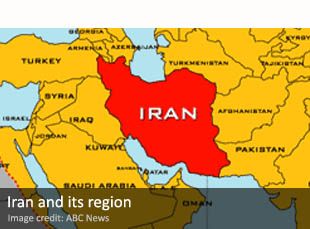
Iran and its regionBy IAN ALLEN | intelNews.org |
►►Will re-elected Obama take a new line on Iran? Barack Obama returns to office after an election campaign in which Iran’s nuclear program often dominated foreign-policy debates. Mitt Romney frequently accused him of taking too soft a line toward Tehran. Now, as Obama begins a second term, the question is how much he has been stung by such criticism. Will Obama retain confidence in his dual strategy of squeezing Iran with economic sanctions while also extending offers of rapprochement? Or will the fact that Iran keeps building centrifuges and enriching uranium despite Obama’s efforts persuade the White House it needs to try something new?
►►Obama’s victory vindicates his Iran policy. President Barack Obama’s re-election victory represents an important vindication of his approach to Iran and its potential nuclear ambitions —and, for the world, a new face of American policy in the Middle East that will relegate the aggressive policies of George W. Bush into the distant past. The election confirmed what polls have clearly shown, that while Americans are deeply concerned about the prospect of an Iranian nuclear weapon, they also view addressing the problem through vigorous diplomatic engagement and sanctions as the most appropriate exercise of American power and leadership.
►►Iranians see reduced risk of war in Obama’s reelection. In Iran, there is a sense of relief these days, as concerns of a military attack by US and Israeli forces over Iran’s nuclear energy program if Mitt Romney were elected, had become widespread. While there continues to be no official response from Iran’s leadership about US election results, Iranian media is still heavily focused on covering American polls. Commenting on one of Iran’s most popular political Web sites, Asriran, one reader wrote, “At least we know we won’t be going to war during the next four years”. And Iran’s state-run English language television channel, Press TV, carried a live and uninterrupted broadcast of President Barack Obama’s acceptance speech.

Mossad, IDF ‘resisted order’ to prepare for Iran war in 2010

Ehud Barak and Gabi AshkenaziBy JOSEPH FITSANAKIS | intelNews.org |

The heads of Israel’s army and main spy agency resisted an order issued by the Israeli Prime Minister to prepare for an all-out military attack on Iranian nuclear installations in 2010, according to a report aired today. According to Monday’s edition of Uvda (Fact), a popular investigative program on Israel’s Channel 2 television, the command to prepare for an attack was given by Israeli Prime Minister Benjamin Netanyahu and Minister of Defense Ehud Barak. The two men delivered the order to a meeting of senior cabinet ministers, telling them that the Israeli military’s preparedness level would be elevated to ‘P plus’, effective immediately. According to Uvda, ‘P plus’ meant that the Israeli armed forces should prepare to take military action at a moment’s notice. However, the then-Director of Israeli spy agency Mossad, Meir Dagan, who was present at the meeting, asked to speak and, according to Israeli newspaper Ha’aretz, which said it has seen the Uvda program, “came out sharply” against both Netanyahu and Barak. He told those present that elevating the military preparedness to ‘P plus’ was something that technically could only be decided at a meeting of Israel’s Political-Security Cabinet. Also known as “the inner cabinet”, the group, which consists of over a dozen Ministers and is led by the Prime Minister, is tasked with outlining and implementing Israel’s foreign and defense policy. Dagan told the two men that “only the [inner] cabinet is authorized to decide this” and warned them that they were “likely to make an illegal decision to go to war”. Dagan’s objection was later reinforced when General Gabi Ashkenazi, then-leader of the Israel Defense Forces, told the Prime Minister that the Israeli army was not ready to elevate its preparedness level to a ‘P plus’. Read more of this post