Iranian hackers used Gmail, Facebook, to spy on US aerospace contractor
August 3, 2021 Leave a comment

A GROUP OF HACKERS, who are known to operate under the direction of the Iranian government, used fictitious Gmail and Facebook accounts to compromise employees of a United States defense contractor. A report issued on Monday by the California-based cybersecurity company Proofpoint identified the hackers behind the espionage campaign as members of a group codenamed Threat Actor 456 (TA456).
Known also as Imperial Kitten and Tortoiseshell, TA456 has a history of pursuing espionage targets at the direction of the Iranian government. According to Proofpoint, TA456 is among “the most determined” Iranian-aligned threat actors. The cybersecurity firm adds that the espionage activities of TA456 often target Western “defense industrial base contractors” that are known to specialize in the Middle East.
The most recent operation by TA456 involved a fictitious online personality that went by the name “Marcella Flores”, also known as “Marcy Flores”, who claimed to live in the British city of Liverpool. The group used a Gmail account and fake Facebook profile to reinforce the fictitious profile’s credibility, and to approach employees of United States defense contractors. One such employee began corresponding with Flores on Facebook toward the end of 2019.
In June 2021, after having cultivated the relationship with the defense employee for over a year, Flores sent the employee a link to a video file, purportedly of herself. The file contained a malware, known as LEMPO, which is designed to search targeted computers and provide the hacker party with copies of files found on penetrated systems.
Facebook is apparently aware of the espionage campaign by TA456. Last month, the social media company said it had taken action “against a group of hackers in Iran [in order] to disrupt their ability to use their infrastructure to abuse [Facebook’s] platform, distribute malware and conduct espionage operations across the internet, targeting primarily the United States”.
► Author: Joseph Fitsanakis | Date: 03 August 2021 | Permalink
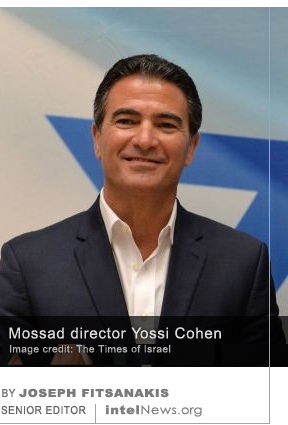 UNITED STATES JOE BIDEN reportedly told the director of Israel’s external intelligence agency, the Mossad, that Washington has “a long way to go” before rejoining a 2015 agreement aimed at halting Iran’s nuclear ambitions. The meeting between Biden and Mossad director Yossi Cohen reportedly took place last Friday, during Cohen’s visit to Washington last week, to discuss bilateral security issues with a series of American officials. On Thursday Cohen met with a number of Biden administration officials, including Secretary of State Anthony Blinken and Brett McGurk, who is the National Security Council’s Coordinator for the Middle East and North Africa.
 A WEB SERVER BASED in Holland and owned by a company registered in Cyprus is being used by the Iranian government to spy on its critics abroad, according to Dutch public radio. The information about Iranian espionage was
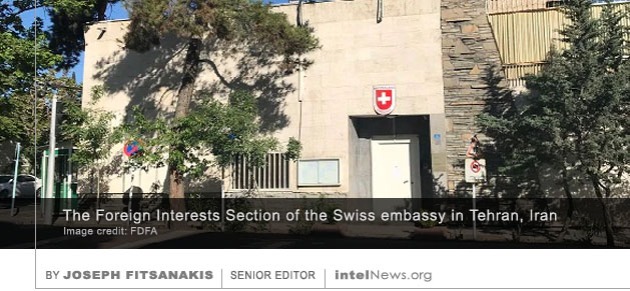
  AN IRANIAN DIPLOMAT, WHO in reality was the head of Iran’s European spy network, had contacts all over Europe, which are now being investigated by Western intelligence agencies, according to reports. Four Iranians are currently on trial in Belgium, accused of
 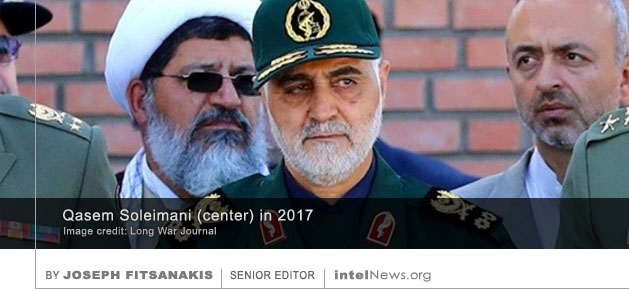 IRANIAN STATE MEDIA CLAIMED last week that several countries, including Britain and Germany, helped the United States assassinate its top paramilitary commander, Qassem Soleimani (pictured). The reports emerged on the one-year anniversary of the assassination of Soleimani, who led Iran’s Islamic Revolutionary Guard Corps (IRGC). He was
 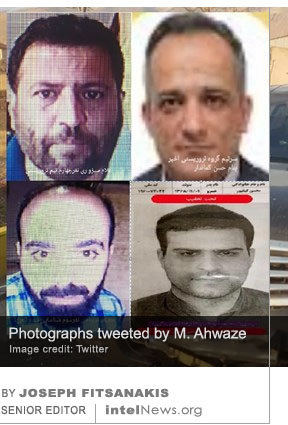 REPORTS IN BRITAIN AND Israel claim that Iranian authorities have visually identified the assassins who were allegedly involved in the killing of Mohsen Fakhrizadeh, a nuclear scientist believed to have led Iran’s nuclear program. Fakhrizadeh was a brigadier general in the Islamic Revolutionary Guard Corps (IRGC), Iran’s elite paramilitary force. He was accused by the United States and Israel of leading the Islamic Republic’s nuclear weapons program, whose existence Tehran strongly denies.
 An Iranian plot to kill the United States’ ambassador to South Africa was reportedly uncovered by American intelligence agencies, which believe Tehran is still seeking to avenge the assassination of General Qassem Soleimani in January of this year. The head of the Islamic Revolutionary Guard Corps, Iran’s elite paramilitary force, was killed by a US drone strike during a visit to the Iraqi capital Baghdad, sparking major tension between Washington and Tehran.
 Intelligence insiders, including a former senior Central Intelligence Agency operations officer who spent decades in the Middle East, have described the establishment of official relations between Israel and some Gulf States as “the biggest change in the region in decades”.
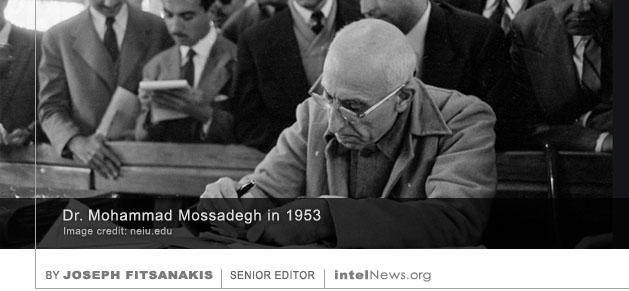 British researchers have found a lost interview by a senior British intelligence officer who led the joint Anglo-American coup in Iran in 1953. The coup overthrew the democratically elected government of Prime Minister Dr. Mohammad Mossadegh and reinstalled the shah (king) of Iran, Mohammad Reza Pahlavi, a close Western ally. London was alarmed by Dr. Mossadegh’s decision to nationalize the Anglo-Iranian Oil Company (later renamed to British Petroleum, or BP), which would deny Britain its lucrative stake in the Middle Eastern energy market. The British also viewed Dr. Mossadegh as being too close to the Soviet Union.
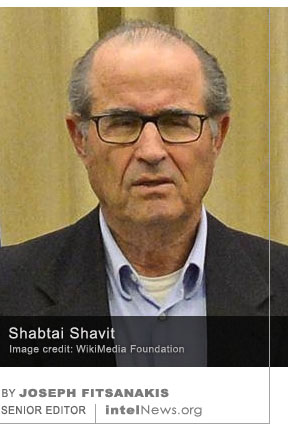 Shabtai Shavit, one of the longest-serving directors of the Israeli spy agency Mossad, has said that Israel and the world cannot stop Iran from developing a nuclear arsenal, and should focus instead on establishing a deterrence mechanism. Shavit, who is now 80, rose through the ranks of the secretive intelligence agency and became its director in 1989, under Labor Party leader Yitzhak Rabin. He stepped down in 1996 and was succeeded by Danny Yatom.
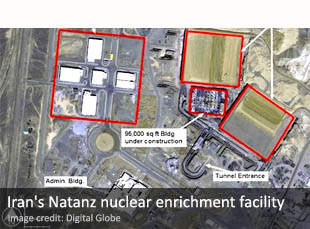 There is growing speculation that Israel’s intelligence services may be behind a spate of blasts that have damaged military and civilian industrial sites in Iran in recent days. Citing a “Middle Eastern intelligence official”, The New York Times






 intelNews.org
Israel has drastically curtailed intelligence-sharing with the US, report claims
August 27, 2021 by Joseph Fitsanakis 4 Comments
THE GOVERNMENT OF ISRAEL scaled back significantly intelligence cooperation with the United States in January of this year, following the change of guard in the White House, according to The New York Times. In an article published on Thursday, the paper cited several unnamed Israeli and American sources in claiming that the Israeli administration of then-Prime Minister Benjamin Netanyahu limited its intelligence relationship with Washington almost as soon as Joe Biden assumed the presidency of the United States.
According to the report, the Israelis decided to scale back intelligence-sharing with Washington in order to keep the Biden administration in the dark about the latest developments in the Iranian nuclear program. Following the demise of much of its intelligence network in Iran in 2019, the United States relies heavily on Israeli intelligence when it comes to following developments inside Iran, said The Times. The hope in Israel is that, by denying the Biden administration information about developments inside Iran, Israel can prevent the White House from making drastic changes to former President Donald Trump’s policy on Iran.
To illustrate its claim, the paper referred to the sabotage attack against Iran’s Natanz nuclear plant in April of this year, which has been widely attributed to Israel. According to the report, the Israelis gave the White House two hours’ notice of the plan, which was allegedly a deliberate attempt to prevent Washington from assessing the operation, and potentially pressuring Israel to cancel it.
American sources told The Times that the move by the Netanyahu administration had its roots in the bad blood between it and the administration of US President Barack Obama, who spearheaded the now-defunct nuclear deal with Iran. Additionally, American officials told the paper that the change of policy on intelligence-sharing by the Israeli government represented a violation of “a longstanding, unwritten agreement to at least advise the United States of covert operations” and giving Washington an opportunity to challenge specific courses of action.
But Israeli officials who spoke to the paper said that the reason why Washington was not given earlier notice about the attack on the Natanz nuclear plant was because of fears that it would be leaked. United States officials have leaked information before about pending Israeli covert operations, according to the Israelis. The report also suggested that the American and Israeli governments have tried to reset their intelligence relationship since the Natanz operation, but relations remain tense.
► Author: Joseph Fitsanakis | Date: 27 August 2021 | Permalink
Filed under Expert news and commentary on intelligence, espionage, spies and spying Tagged with intelligence cooperation, Iran, Iranian nuclear program, Israel, News, United States