World can’t stop Iran from going nuclear, says former Mossad chief
July 27, 2020 Leave a comment
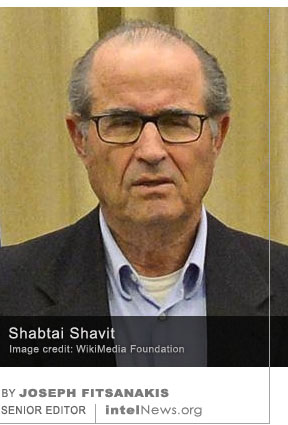 Shabtai Shavit, one of the longest-serving directors of the Israeli spy agency Mossad, has said that Israel and the world cannot stop Iran from developing a nuclear arsenal, and should focus instead on establishing a deterrence mechanism. Shavit, who is now 80, rose through the ranks of the secretive intelligence agency and became its director in 1989, under Labor Party leader Yitzhak Rabin. He stepped down in 1996 and was succeeded by Danny Yatom.
Shavit has rarely spoken since his retirement from the intelligence world. But earlier this month he gave an interview to David Horovitz, founding editor of The Times of Israel Newspaper. The former spy chief’s book, Head of the Mossad, which was published in Hebrew in 2018, is expected to become available in English in September. Horovitz said he spoke to Shavit on June 2 of this year. The English-language translation of the interview was published by The Times of Israel on July 8.
In the interview, Shavit is sharply critical of Israel’s Prime Minster, Benjamin Netanyahu, whom he accuses of “not making decisions as a statesman”. Instead of being statesmanlike, says Shavit, Netanyahu makes decisions on matters such as Israel’s national security, or the coronavirus, with reference to his trial for alleged corruption. Under Netanyahu’s leadership, says Shavit, Israel’s standing “is among the worst in decades” internationally, with the exception of the United States. But that alliance is also in doubt, as President Donald Trump’s re-election in November —a prospect Shavit calls “a catastrophe for the United States and the world”— is doubtful.
On the issue of Iran, Shavit says he is obligated to speak, not as politician or other public figure, but as an intelligence officer, and thus consider the worst possible outcome for Israel. He argues that the worst-case scenario is that Tehran will refuse to abandon its ambition to develop a nuclear arsenal. If Iran decides to pursue that goal with full speed, it would be very difficult —even impossible— for Israel to avert such an eventuality. However, the Jewish state could potentially deter Iran from using a nuclear weapon, he argues.
For this to happen, Israel must recognize that Iran’s prime rationale “is not necessarily: ‘I want to have a bomb in order to drop it on Tel Aviv’”, says Shavit. On the contrary, its prime rationale is to elevate its “influence and status” in the region, primarily vis-à-vis Saudi Arabia, Turkey and Israel. Additionally, the regime in Tehran is seeking to develop nuclear weapons in order to attain what Shavit calls “immunity” from a potential military attack by the United States.
Once Israel recognizes that Iran is not necessarily intent on destroying the Jewish state, it can stop trying to prevent Tehran from building nuclear weapons, and seek instead to deter it from using them. It can do so, says Shavit, by convincing the Iranians that “Iran will cease to exist” if it decides to make use of its nuclear arsenal. This policy of deterrence can be exercised no matter whether the clerics remain in charge in Tehran, or whether they are removed from power by the Islamic Revolutionary Guard Corps —something that Shavit believes is possible.
► Author: Joseph Fitsanakis | Date: 27 July 2020 | Permalink
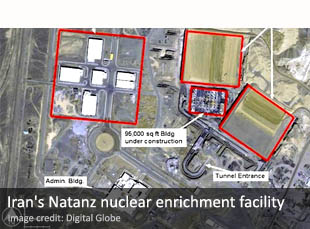 There is growing speculation that Israel’s intelligence services may be behind a spate of blasts that have damaged military and civilian industrial sites in Iran in recent days. Citing a “Middle Eastern intelligence official”, The New York Times
  A tense struggle is unfolding in Iran between the country’s civilian leaders and the parallel state of the Islamic Revolutionary Guard Corps. The two entities are fighting about who will control the national response to COVID-19, according to sources. The outbreak of the pandemic in Iran followed closely that of China. Today the Iranian government claims the disease has infected no more than 115,000 people and killed fewer than 7,000. But these numbers seem low for a country of 82 million, and many observers dispute them.
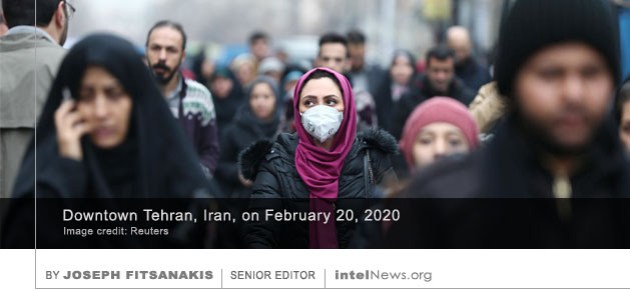 A senior Bahraini cabinet minister on Thursday accused the Iranian government of ‘biological aggression’ for spreading COVID-19 to several other countries in the Gulf, a claim that Iran promptly rejected. The allegation refers to Iran’s customary practice of not stamping the passport of visitors from some Sunni-majority nations.
 An Android application developed by the Iranian government to assist in coordinating the country’s response to the COVID-19 epidemic has been removed by Google amidst accusations that it may be used to track Iranian dissidents. The application, named AC19, was released several days ago by Iran’s Ministry of Health and Medical Education. Its release was announced through a text message sent by the Iranian government to every mobile telephone subscriber in the country. The text message urged citizens to download the application through a dedicated website or third-party app stores, including the Google Play Store. Millions have since done so.
 Authorities in Denmark have announced the arrests of three Iranian Arab separatists, who are charged with carrying out espionage on behalf of the intelligence services of Saudi Arabia. The arrests were announced on Monday by the Danish Security and Intelligence Service, known as PET.
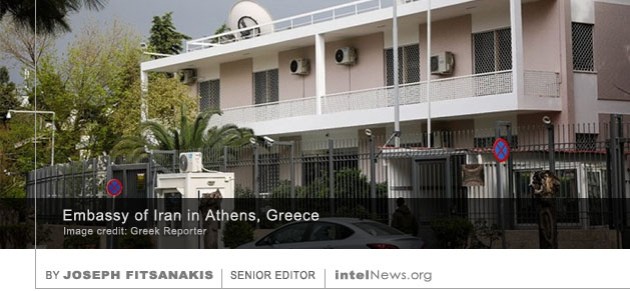 Iran has issued a warning against Greece, saying that it will retaliate if the United States attacks the Islamic Republic using its military bases on Greek soil. It is the first time that Iran has threatened to launch attacks against a member of the European Union in connection with the recent rise in tensions between Tehran and Washington.
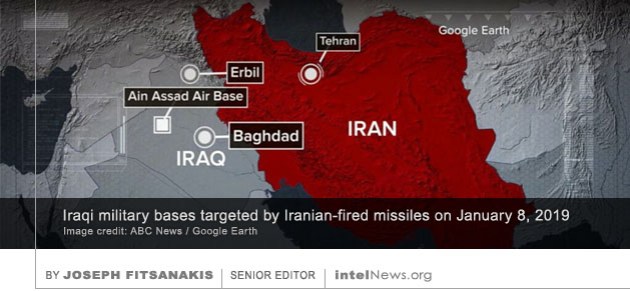 The missiles that targeted American troops in Iraq a few hours ago offer significant clues about the evolving confrontation between Iran and the United States. The attack appears to have been largely symbolic —a somewhat rushed attempt to restore some of Iran’s wounded prestige following the assassination of its military commander, Qasem Suleimani. At the same time, however, it is also the prelude to a broader regional conflict that appears increasingly unavoidable.
 Soleimani’s killing is viewed by Tehran as too insulting to be responded to indirectly. This does not mean that Tehran will not revert to its standard method of employing proxies in the future. But the fact that it consciously chose to deviate from that time-tested method is in itself extremely important.
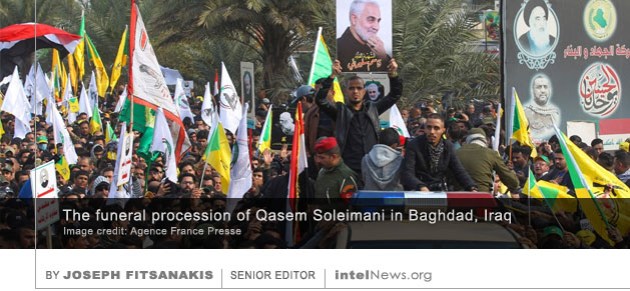 By assassinating Qasem Soleimani, a Shia celebrity and the Middle East’s most influential military leader, US President Donald Trump has made the most fateful decision of his presidency to date. Tehran has no option but to respond. When it does, the way that Mr. Trump and his administration handle the situation will largely determine the future of the Middle East and the fate of his presidency. In the meantime,
 it is becoming increasingly clear that victory, if and when it comes, will not be unblemished for whomever claims it.
 assassination. And yet, while publicly thanking Iran, Trump was likely formulating plans to kill its leading general.
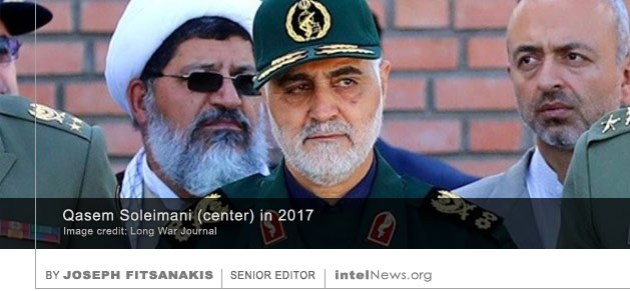 In an act whose implications are impossible to overstate, the United States has assassinated General Qasem Soleimani, arguably Iran’s second most powerful official. In the early hours of this morning, the entire Middle East stood on the verge of a regional war as the US Department of Defense
  why US President Donald Trump made the decision to kill Soleimani, and why he did so now.
 The Iranian government may have used a female intelligence officer to lure a leading Iranian dissident from his home in France to Iraq, where he was abducted by Iranian security forces and secretly transported to Iran. Iranian authorities
  Russian hackers hijacked an Iranian cyber espionage group and used its infrastructure to launch attacks, hoping that their victims would blame Iran, according to British and American intelligence officials. The information,
  Iranian authorities have announced the capture of a Paris-based Iranian dissident, who was reportedly lured out of France and then abducted by Iranian agents in a third country. The kidnapped dissident is Ruhollah Zam, 46, son of Mohammad-Ali Zam, a well-known reformist cleric who served in top Iranian government posts after the 1979 Islamic Revolution. But in 2009 the younger Zam distanced himself from this father and sided with the so-called Green Movement, whose leaders called for the toppling of the government in Tehran. Around that time, Zam was part of a group of Internet-savvy Iranians who launched AmadNews. The website’s stated purpose was “spreading awareness and seeking justice” in Iran, and it soon became the online voice of the Green Movement.
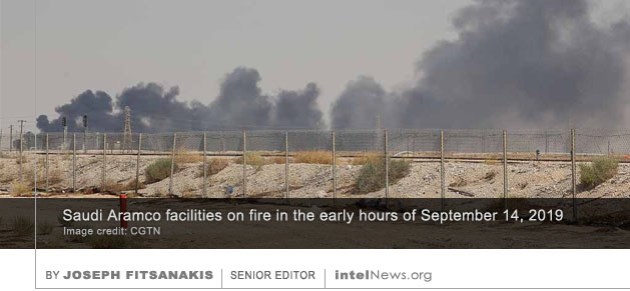 Saudi Arabia and the United States suffered “a total and embarrassing [intelligence] failure” in the lead-up to the drone strikes that shut down half of the kingdom’s oil production last month, according to Israeli sources. In the early hours of September 14, missiles








Researchers find lost interview of MI6 officer who helped plan 1953 coup in Iran
August 18, 2020 by Joseph Fitsanakis Leave a comment
In 1952, when Iran severed diplomatic relations with Britain, London intensified its efforts to convince the United States that overthrowing the Iranian government was imperative to keep communism out of the region. Until then, British plans for a coup had been led by Norman Darbyshire, who headed the Persia station of the Secret Intelligence Service, known as MI6. With American help, Darbyshire continued his plotting from Cyprus, where he had relocated after having been expelled from Tehran by the Iranian government. He died in 1993. But in 1985 he gave an interview to Granada, a British production company, for a television documentary titled “End of Empire: Iran”. Because Darbyshire refused to speak in front of the camera, the producers of the documentary ended up not using his interview.
Recently, however, a team of researchers found the interview and the associated transcript while researching archival material for a new documentary on the overthrow of Mossadegh. The documentary, titled “Coup 53”, is scheduled for release this coming Wednesday, which marks the 67th anniversary of the coup. On Monday, the Security Archive at George Washington University released the typewritten transcript of Darbyshire’s interview. It describes how British intelligence worked systematically over several years to convince the United States to support the coup plans, and that British spies also found it difficult to secure the support of a reluctant Shah Pahlavi.
According to Darbyshire, MI6 and the CIA tried to bribe Iranian parliamentarians, offering them money in exchange for defecting from Dr. Mossadegh’s party, thus eliminating its parliamentary majority. When that effort failed, the spies approached the Iranian military and proposed plans for a coup. In his interview, the late MI6 spy claims that the coup cost the British government £700,000. “I know because I spent it”, he says. He also claims that much of that money was smuggled into Iran in cash, concealed inside “biscuit tins”.
► Author: Joseph Fitsanakis | Date: 18 August 2020 | Permalink
Filed under Expert news and commentary on intelligence, espionage, spies and spying Tagged with CIA, coup plots, history, Iran, MI6, Mohammed Mossadegh, News, Norman Darbyshire