Notes on the assassination of Iranian IRGC Commander Hassan Mahdawi
April 26, 2024 2 Comments
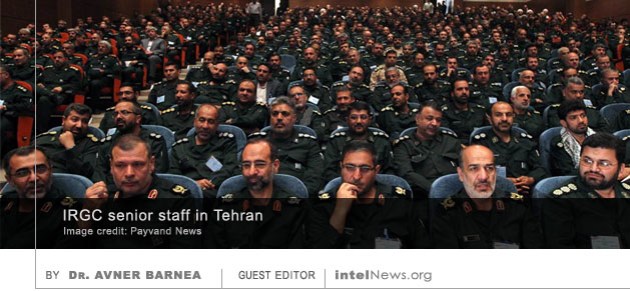 THE TARGETED KILLING OF Hassan Mahdawi, a high-ranking member of Iran’s Islamic Revolutionary Guards Corps (IRGC) and the commander of the Quds Force in Syria and Lebanon, was carried out by Israel on April 1, 2024. The actual assassination was based on precise operational intelligence, while Israel’s assessment of Iran’s response was wrong.
On the day of the attack, a building adjacent to the Iranian Embassy in the Syrian capital of Damascus was attacked with rockets. The attack killed seven IRGC members: General Muhammad Reza Zahedi, also known as Hassan Mahdawi, his deputy, and five additional officers. Mahdawi is the most senior Iranian commander to be killed since the assassination of IRGC Quds Force Commander Qasem Soleimani by the United States in 2020.
Mahdawi had close ties with Hezbollah. He maintained a close relationship with Hezbollah Secretary-General Hassan Nasrallah and was perceived by Israel to be directly coordinating the military attacks on Israel from Lebanon and Syria. In Tehran’s collective memory, Israel’s history of attacks against it includes numerous strikes on Iranian nuclear sites, assassinations of scientists within Iran, and actions against Iranian proxies in Syria, Lebanon, Iraq, and Yemen. Traditionally, these attacks have been invariably met with attacks by Iran’s proxies in the region.
This time, it was different. Iran recognized Mahdawi’s assassination as a direct attack on Iran that it could not tolerate, and had to respond to differently. Just days following Mahdawi’s assassination, Iran attacked Israel. According to the Israel Defense Forces, 99 percent of the more than 330 weapons fired at Israel (including at least 185 drones and 110 surface-to-surface missiles) were intercepted, mostly over the territory of countries adjacent to Israel. Iran’s attack on Israel was unprecedented. It was launched directly from Iranian territory in contrast to prior cases, when Iran has used its proxies, supposedly leaving its hands clean.
Israel could not tolerate such a blatant infringement on its sovereignty. After Israeli officials vowed a response to the Iranian attack, the Jewish State counter-attacked, causing minor damage to the Eighth Shekari Air Base in northwest Esfahan, a dozen kilometers from the Natanz nuclear facility. It was a calculated response designed to deliver a message to Iran that Israel could and would respond to an attack. Following Israel’s counterattack, the tensions between Iran and Israel have subsided for the time being.
While the attack on General Mahdawi was based on excellent operational intelligence, it became evident that the Israeli assessment regarding a possible Iranian response was erroneous. The Israeli assessment was that the Iranian response would be similar to what occurred in the past —namely limited attacks by Hezbollah on northern Israel and attacks on the Golan heights by Iranian proxies in Syria. Israel simply did not anticipate a direct Iranian attack on Israel from Iranian territory.
It seems that Israeli senior analysts were entangled in a conception of Iran’s past behavior and anticipated that Tehran’s response would be similar to prior cases, namely utilizing Iran’s proxies. Israel did not pay enough attention to the difference between Mahdawi’s assassination and previous attacks against Iran. This time, the attack targeted the Iranian embassy in Damascus and the target was a very senior official, who was close to Iran’s Supreme Leader Ali Khamenei.
It appears that Israel’s assessment of the Iranian response to Mahdawi’s assassination was a strategic failure. It appears more likely that the Israeli War Cabinet was provided with an incorrect assessment by the nation’s intelligence community, and less likely that it was provided with an incorrect assessment, which it then decided to ignore. There is concern in Israel that the intelligence assessment was once again wrong, after the colossal failure to anticipate the October 7 attack on Israel by Hamas.
► Author: Avner Barnea | Date: 26 April 2024 | Permalink
Dr. Avner Barnea is research fellow at the National Security Studies Center of the University of Haifa in Israel. He served as a senior officer in the Israel Security Agency (ISA). He is the author of We Never Expected That: A Comparative Study of Failures in National and Business Intelligence (Lexington Books, 2021).
 ARGUABLY NO COUNTRY BENEFITED more from the American invasion of Iraq than the Islamic Republic of Iran. In a war that lasted over a decade, Washington spent over
  branch of the Iranian Armed Forces that protects and promotes the ideological inheritance of the 1979 Islamic Revolution.
 ON MONDYA, TURKEY’S NATIONAL intelligence organization (MİT) announced the arrest of several members of an alleged spy network, who were reportedly recruited, trained and handled by Israel’s intelligence agency, the Mossad. Two members of the alleged spy ring were arrested two months ago, according to the Office of the Istanbul Chief Public Prosecutor and Turkey’s National Intelligence Organization (MİT).
 IRAN ANNOUNCED ON SATURDAY one of the most high-profile executions in its recent history, involving Alireza Akbari, who served as the Islamic Republic’s deputy minister of defense in the 2000s. Akbari, 61, a dual Iranian-British citizen, was
  ISRAELI AUTHORITIES HAVE STEPPED up measures to protect its senior intelligence and security figures, over concerns they may be targeted by agents of the Iranian state, according to news reports. The news comes amidst widespread concerns that the ongoing shadow conflict between Israel and Iran is escalating in the shadow of the Russo-Ukrainian war.
 A YEAR-LONG INVESTIGATION by the Reuters news agency attempts to shed light on the alleged arrests of more than a dozen Iranian spies, who claim to have worked for the United States Central Intelligence Agency. Periodically Iran claims to have captured members of alleged CIA spy rings operating across its territory. For instance, in 2019 Iran’s Ministry of Intelligence
  A GROWING NUMBER OF security observers point to Israel as the most likely culprit behind the assassination of a leading member of the Islamic Revolutionary Guard Corps (IRGC), Iran’s powerful paramilitary force. Brigadier General Hassan Sayyad Khodaei, who was killed in broad daylight in Tehran on May 22, served as deputy director of the Quds Force, a major branch of the IRGC. The mission of the Quds Force is to carry out unconventional warfare, especially in support of IRGC operations against adversaries abroad.
 THE FEDERAL BUREAU OF Investigation arrested two men on Wednesday, who allegedly tried to influence four agents of the United States Secret Service with money and gifts, according to an affidavit. The men were identified on Thursday as Haider Ali, 36, and Arian Taherzadeh, 40. Both are United States citizens and residents of Washington, DC. On the same day, FBI personnel searched five apartments and a number of cars that belong to the two men.
 A NUMBER OF WEBSITES sponsored through Google Ads, which seek to hire Iran and Hezbollah experts for “research and consultancies” in Israel, are part of an Iranian counterintelligence program, according to observers. The investigative news website Daily Beast
  AUTHORITIES IN ISRAEL CLAIM they busted a ring of spies for Iran, which was composed solely of middle-aged Jewish women. The Israel Security Agency, known as Shin Bet, said on Thursday that it had arrested four Jewish women, all of them Iranian-born Israeli citizens. The four women were charged with espionage against the state of Israel. The Shin Bet described the case as “serious” and as part of a broader plan by Iran to build a sophisticated espionage network inside the Jewish state.
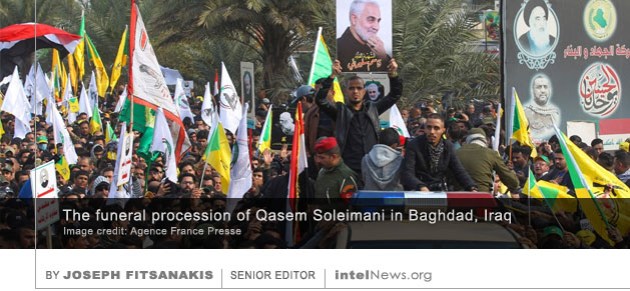 THE RECENTLY RETIRED DIRECTOR of Israel’s military intelligence agency has claimed in an interview that Israel had a role in the assassination of Qassem Soleimani, who led Iran’s Islamic Revolutionary Guard Corps (IRGC). Soleimani was arguably Iran’s most revered military official. He was










Israeli citizens arrested on suspicion of working for Iranian intelligence
October 28, 2024 by intelNews 2 Comments
Israeli authorities accuse the suspects of photographing and collecting information on military bases and facilities, including Air Force bases, Iron Dome battery sites, a power plant, and other energy infrastructure facilities. The suspects are also accused of having received from their Iranian handlers a set of maps of Israeli strategic sites, including the Golani Brigade’s training base, where four Israeli soldiers were killed by a drone attack last week. In over two years, the suspects allegedly performed approximately 600 missions under the direction of two handlers from Iranian intelligence. They did so in return for hundreds of thousands of shekels, which were paid to them in cash and various crypto-currencies.
Another Israeli citizen, who was arrested on suspicion of spying for Iranian intelligence in return for payments, has been named as Vladimir Varehovsky, 35, from Tel Aviv. Among other tasks, Varehovsky is suspected of gathering information about an Israeli scientist, whom he agreed to murder in exchange for a $100,000 payment. The suspect had reportedly acquired weapons for the assigned task, but the ISA arrested him before he could carry it out.
In another counterintelligence operation, the ISA arrested seven young Palestinians from the east of Jerusalem, who have been charged with working for Iranian Intelligence. The main suspect recruited the other six to carry out tasks for a fee. Tasks included setting cars on fire, gathering information about a city mayor in Israel, and plotting to assassinate one of the country’s top scientists. The suspects used social media for recruitment purposes. They were reportedly arrested before they were able to execute their missions. Read more of this post
Filed under Expert news and commentary on intelligence, espionage, spies and spying Tagged with Avner Barnea, counterintelligence, Iran, Israel, Israel Security Agency