WikiLeaks documents reveal CIA’s role in Iraq

CIA HQ

CIA HQ

By IAN ALLEN | intelNews.org |
Along with unprecedented inside information on American military operations in Iraq, the 400,000 US military reports recently released by whistleblower site WikiLeaks provide several interesting snippets of the role of the Central Intelligence Agency in that ongoing conflict. Wired magazine’s Danger Room blog correctly notes that, unlike Afghanistan, where the CIA’s role has been relatively clear almost from the very start of the US invasion, the Agency’s function in Iraq has been something of a mystery for most outside observers. There has even been some speculation that the CIA has been sidelined in Iraq by a host of Pentagon-managed special operations outfits, including the Joint Special Operations Command. But the WikiLeaks documents, which are primarily composed of incident reports authored by US troops on the ground in Iraq, include frequent references to operations by “Other Government Agency” or “OGA” —a term usually reserved for the CIA in internal military documents. Collectively, the reports referring to OGA activities reveal significant paramilitary functions performed by CIA personnel until as recently as 2009. Read more of this post

News you may have missed #446

  • American pleads guilty to spying for China. Glenn D. Shriver acknowledged on Friday that he accepted $70,000 from Chinese spies as he attempted to secure jobs with the CIA and US Foreign Service that would have allowed him to expose US government secrets. He apparently spent two years going through the CIA hiring process and reached the final security screenings. But US intelligence sources say Shriver was discovered very early in the hiring process.
  • Obama widens CIA operations in Pakistan. The US is pushing to expand secret CIA operations in Pakistan. But Islamabad is so far rebuffing US requests to allow additional CIA officers and special operations military trainers to enter the country.
  • US spy balloons blew towards Iran. The latest WikiLeaks revelations show that on two occasions in 2006 American JLens spy balloons broke from their moorings in Iraq and drifted toward the Iranian airspace. No information on the balloons’ fate is reported in the war logs. Did Iran get hold of them?

News you may have missed #445

  • WikiLeaks files show Iranian involvement in Iraq. The latest WiliLeaks release of nearly 392,000 US military reports from Iraq shows, among other things, that Iran was a major combatant in the Iraq War. According to the documents, Tehran’s elite Quds Force trained Iraqi Shiite insurgents and imported weapons like Explosively Formed Projectile bombs into Iraq for use against civilians, Sunni militants and US troops.
  • WikiLeaks founder on the run. Julian Assange’s fate seems as imperiled as that of Private Bradley Manning, the 22-year-old former Army intelligence operative under detention in the US for leaking Iraq and Afghan war documents to WikiLeaks. Last Monday, Mr. Assange’s bid for a residence permit in Sweden was rejected. His British visa will expire early next year.
  • Money problems of US spies may threaten US security. Elizabeth Bancroft The executive director of the US Association of Former Intelligence Officers, has suggested that government agencies should monitor intelligence service employees with security clearances, who may have fallen into bankruptcy during the ongoing economic crisis. Spy agencies are worried that financial problems might leave these employees open to bribery or blackmail.

News you may have missed #443

  • First budget cuts in a decade for UK spy agencies. Spending on Britain’s intelligence agencies is set to fall by 7%, for the first time in more than a decade. This is be expected to force MI5, MI6 and GCHQ to cap staff numbers, merge some of their operations, and scrap plans to modernize some of their buildings. Looks like even more British spies will be moving to Australia.
  • South Koreans arrested for trying to defect to North. Three South Koreans, including a medical doctor, are being investigated after allegedly trying to defect to North Korea from China. It is extremely unusual for South Koreans or other nationals to attempt to defect to the North.
  • Plame calls Fair Game movie ‘accurate portrayal’. CIA agent Valerie Plame has said the movie Fair Game, based on her book, is a “really good, accurate portrayal of what we went through, both personally and in the political maelstrom that we live through”. The Bush administration was accused of blowing Plame’s cover as retaliation after her diplomat husband openly challenged the reasoning behind the Iraq War.

News you may have missed #440 (USA edition)

News you may have missed #431

News you may have missed #362 (sex & politics edition)

Bookmark and Share

Essential links on WikiLeaks video of Iraq shooting

WikiLeaks

WikiLeaks

By JOSEPH FITSANAKIS | intelNews.org |
Whistleblower site WikiLeaks has released a leaked video taken from a US military helicopter in July 2007, showing US forces indiscriminately firing on Iraqi civilians, killing 12 people and wounding two children. The dead included two employees of the Reuters news agency. There are several edited versions of the video, which can be found in its entirety here. Cryptome offers a series of selected stills from the leaked WikiLeaks video, with some visual analysis of the footage. It is worth keeping in mind that the leaked video is of substantially lower quality than what the US helicopter pilots saw, because it was converted through several stages before it was released by WikiLeaks. Read more of this post

News you may have missed #313

  • British spies operated ‘renegade torture unit’ in Iraq. British military intelligence operated a secret operation in Iraq, called Joint Forward Interrogation Team (JFIT), which was authorized to utilize degrading and unlawful treatment of prisoners. The officers running the operation claimed to be answerable only “directly to London”.
  • Poland’s Jaruzelski was counter-intel officer. Documents in the infamous East German Stasi archives allegedly show that in 1952 the then colonel Wojciech Jaruzelski, who later became Poland’s last communist leader, began working for the Main Directorate of Information of the Polish Army –-the military police and counter-espionage agency in Poland.

Bookmark and Share

Analysis: Iranian spymaster a major player in Iraq

Suleimani

Qassem Suleimani

By JOSEPH FITSANAKIS | intelNews.org |
Newsweek’s Chris Dickey has penned an accurate analysis on Qassem Suleimani, leader of the mighty Quds Force, the Islamic Revolutionary Guard Corps’ (IRGC) unit tasked with exporting the Iranian Revolution abroad. Relatively little is known about Suleimani, a soft-spoken intelligence operative who oversees Iran’s links with Shiite movements in the Middle East and beyond. His influence inside Iraq has grown in recent years. Although the Quds Force intelligence network in Iraq was solid before the 2003 US invasion, the fall of the Saddam Hussein regime turned Suleimani’s agency to what is probably the most powerful organized intelligence force in the country. Indeed, Suleimani’s links with the Kurdish north and with the Shiite paramilitary groups in Iraq is so encompassing that, as Dickey correctly notes, “this 53-year-old Iranian general could pull the strings that make or break the new government in Baghdad”. Read more of this post

UK special forces chief trying to prevent book publication

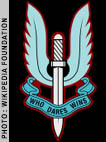
SAS seal

SAS seal

By JOSEPH FITSANAKIS | intelNews.org |
The director of Britain’s Special Forces is actively trying to stop the publication of a new book that sheds unprecedented light on the elite combat group’s operations in Iraq. The official, whose name cannot be revealed for security reasons, has said that the book, authored by BBC journalist Mark Urban, will negatively impact the operational effectiveness of the Special Air Service (SAS) and other UK Special Forces units. The official’s objections have come to overshadow a compromise struck earlier this month between Mr. Urban’s publishers and the UK Ministry of Defence. Following four months of negotiations, the Ministry reportedly decided that the book “would not compromise the operational effectiveness of the SAS”. Read more of this post

Uproar as UK government classifies details of weapon expert’s death

Dr. David Kelly

Dr. David Kelly

By JOSEPH FITSANAKIS | intelNews.org |
Public speculation over the alleged suicide of UK biological weapons expert Dr. David Kelly is bound to increase, after a senior state official secretly ordered that details of his death be kept secret for 70 years. Dr. Kelly, a British Ministry of Defense scientist, who had been employed by the United Nations as a weapons inspector, caused a major stir by becoming one of the sources of a 2003 BBC report disputing the British government’s claim that Iraq could deploy chemical or biological weapons at 45 minutes’ notice. He was later called to appear before a Parliamentary committee investigating the government’s claims about Iraq’s purported ‘weapons of mass destruction’. But on July 18, 2003, four days after appearing before the committee, Dr. Kelly’s was found dead at a wooded area near his home. Read more of this post

News you may have missed #0254 (activism edition)

  • US activists file lawsuit over domestic spying. Anti-war activists in Washington State are suing military analyst John Towery and police officials for allegedly infiltrating and spying on two antiwar groups in Olympia. The suit also names the City of Olympia and a US Coast Guard employee.
  • Antiwar activist to stage sit-in at CIA HQ. American political activist Cindy Sheehan says she intends to stage a sit-in in front of the CIA headquarters in Langley, Virginia, on January 16, to protest the Agency’s unmanned drone attacks in Pakistan. Sheehan, whose son was killed in the Iraq War in 2004, attracted international attention for her extended protest at a makeshift camp outside President George Bush’s Texas ranch.
  • Is there legal basis for CIA drone strikes in Pakistan? We at intelNews have asked this question before. Now the American Civil Liberties Union is asking it also, and has requested to see the US government’s estimates of civilian casualties caused by the strikes.

Bookmark and Share

News you may have missed #0227

  • British politicians sue CIA over rendition flights. A group of British members of parliament, led by Conservative MP Andrew Tyrie, has filed a complaint in a district court in Washington, DC, asking for a judicial review of secret agreements between the US and UK on renditioning terrorism suspects.
  • US DHS broke domestic spying rules. The US Department of Homeland Security gathered intelligence on the Nation of Islam for eight months in 2007, and broke the law by taking longer than 180 days to determine whether the US-based group or its American members posed a terrorist threat.
  • Expert says UK ex-spy chief misled Iraq War probe. Sir John Scarlett, Britain’s former spy chief has misled the Iraq inquiry by exaggerating the reliability of crucial claims about Saddam Hussein’s ability to launch weapons of mass destruction, according to Dr. Brian Jones, the leading UK Ministry of Defense expert who assessed the intelligence behind London’s decision to go to war in 2003.

Bookmark and Share

Former MI6 head testifies in UK Iraq War commission

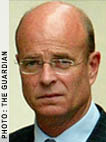
Sir John Scarlett

Sir John Scarlett

By JOSEPH FITSANAKIS | intelNews.org |
Sir John Scarlett, who until recently headed MI6, Britain’s foremost external spy agency, chaired the country’s Joint Intelligence Committee (JIC) in the run-up to the Iraq War. He was therefore in charge of an influential government report, produced in September 2002, which argued that Iraq’s supposed weapons of mass destruction constituted an immediate threat to Britain. As part of the official inquiry into Britain’s entry in the Iraq War, Sir John testified yesterday about the controversial report, known as ‘the dodgy dossier’, which has been criticized as a monumental intelligence failure that helped drag the country into an unpopular war. The former JIC chairman admitted that British intelligence services were aware before the War that Iraq had dismantled its long-range missiles and thus had no way of shooting its chemical munitions at distant targets, including Britain. Read more of this post