US misused our intel to justify Iraq War, says German ex-spy chief

August Hanning

August Hanning

By JOSEPH FITSANAKIS | intelNews.org |
The former Director of Germany’s foreign intelligence service has accused the Bush administration of consciously falsifying intelligence supplied by Germany in order to justify going to war in Iraq. August Hanning, who served as Director of Germany’s Bundesnachrichtendienst (known as BND) from 1998 to 2005, said that the BND had no part in the deception, and that “the responsibility for the war lies solely with the Americans”. In an interview to the Sunday edition of German national newspaper Die Welt, Hanning explained that the administration of US President George W. Bush was especially interested in intelligence collected by the BND from an Iraqi defector codenamed ‘Curveball’. The defector, whose real name is Rafid Ahmed Alwan al-Janabi, arrived in Germany in 1999 and applied for political asylum, saying he had been employed as a senior scientist in Iraq’s biological weapons program. Among other things, he told his BND debriefing team that Saddam Hussein had built a fleet of biological weapons labs on wheels, in order to avoid detection from America and other countries. After consulting with biological weapons experts, the BND expressed serious doubts about Curveball’s reliability, but kept him in Germany nonetheless. Several years later, al-Janabi confirmed the BND’s suspicions, by admitting that he had invented his allegations in order to help bring down the regime of Saddam Hussein. He also admitted that he was in reality a taxi driver from Baghdad, who had used his undergraduate knowledge of engineering to get asylum in Germany. At the time, said Hanning, the BND strongly and repeatedly communicated to the CIA its doubts about Curveball’s claims, something which is known. What is not known, however, is that Hanning personally wrote to then CIA Director George Tenet and urged him to adopt a skeptical approach to the defector’s allegations. The former BND chief told Die Welt that he was “assured by the Americans that our intelligence would not be used in Powell’s speech”. Read more of this post

Turkish intel report raises fears of Syrian, Iranian support for PKK

PKK banner

PKK banner

By JOSEPH FITSANAKIS | intelNews.org |
By all accounts, in 1998 Syria discontinued its clandestine support for the Kurdistan Workers’ Party (PKK), a leftist secessionist movement that aspires to create a Kurdish homeland comprising mostly of territories in Turkey’s Anatolia region. But a leading Turkish newspaper claims that, according to a classified intelligence report, Damascus has resumed its support for the PKK. The paper, Zaman, said that according to the report, Turkey’s main intelligence directorate, the MİT, has concluded that Syria has “started to support the PKK” again, thus reverting to its pre-1998 stance. It was on that year that Damascus expelled the PKK’s founder and leader, Abdullah Öcalan, who had previously been given shelter and protection in the country. A few months later, Öcalan was snatched by Turkish commandos from the hands of Greek diplomats in Nairobi, Kenya, and flown to Turkey, where he is now serving a life sentence. Following Öcalan’s expulsion, Syria, which is home to an estimated 400,000 Kurds, quietly began cooperating with Ankara against the PKK and its sister organizations operating on Syrian soil. But the MİT report cited by Zaman says that, under the fear of anti-government militancy and continuous popular and ethnic uprisings, Damascus has tried to mend relations with its Kurdish minority, and is now “providing shelter to some of the PKK’s most important leaders”. The classified report, which Zaman says gives “a highly detailed overview” of the PKK’s regional activities, also alleges that Syria has increased its security collaboration with Iran, which is also home to several thousand ethnic Kurds. Read more of this post

News you may have missed #556

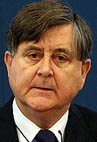
David Irvine

David Irvine

►►Australian computer networks spied ‘massively’. Cyberespionage is being used against Australia on a “massive scale” and some foreign spies are using Australian government networks to penetrate the cyberdefenses of allies such as the United States. This according to the Director of the Australian Security Intelligence Organisation (ASIO) David Irvine. Speaking at a business forum, Mr. Irvine said that “it seems the more rocks we turn over in cyberspace, the more [cyberespionage] we find”.
►►US to give Iraq wiretapping system. The US will give the government of Iraq a wiretapping system that will allow it to monitor and store voice calls, data transmissions and text messages from up to 5,000 devices simultaneously. The system is to be installed with the acquiescence of the three current cellular communications providers in Iraq, according to the US Air Force. A similar system was set up by a US contractor three years ago in Afghanistan.
►►Judge says NSA whistleblower faced ‘tyrannical’ US government. This blog has kept an eye on the case of Thoma Drake, a former US National Security Agency employee  who was taken to court for leaking secrets about the agency to a journalist. But the judge in his case, Richard D. Bennett, refused Read more of this post

News you may have missed #477 (Germany edition)

  • German ex-foreign minister in spat with ex-CIA director. Former CIA Director, George Tenet, claims that he discovered “too damn late” that Curveball –the Iraqi defector who became a key source for the CIA and the German secret service (BND)– was a fabricator. But Germany’s former foreign minister, Joschka Fischer, has told journalists that the BND did in fact share its doubts about Curveball with the CIA.
  • German spy chief claims Mubarak to stay in Egypt [unconfirmed]. According to German newspaper Die Welt, Ernst Uhrlau, director of Germany’s BND federal intelligence agency, says he has “no evidence that former Egyptian President Hosni Mubarak wants to leave the country, and that his comment that he intends to stay and be buried in Egypt “is credible”.
  • Austrian on trial in Germany on charges of spying for Russia. An Austrian soldier is on trial in Germany, accused of spying for Russia’s Foreign Intelligence Service (SVR) and passing on sensitive information about European helicopter prototypes. Prosecutors at the Munich court allege that the unnamed 54-year-old Austrian army mechanic spied from 1997 to 2002.

Colin Powell wants answers over fake Iraq intelligence

Rafid Ahmed Alwan al-Janabi

Alwan al-Janabi

By IAN ALLEN | intelNews.org |
Regular readers of this blog will not be surprised by recent news that the Iraqi defector whose information helped build the Bush Administration’s case for invading Iraq in 2003, has admitted he lied about Saddam Hussein’s alleged weapons of mass destruction. Rafid Ahmed Alwan al-Janabi, known in intelligence circles as ‘Curveball’, arrived in Germany in 1999, where he applied for asylum, saying he had been employed as a senior scientist in Iraq’s biological weapons program. Serious doubts about al-Janabi’s reliability were expressed at the time by Germany’s Federal Intelligence Service, the BND, and by some in the CIA. Yet his testimony became a major source of US Secretary of State Colin Powell’s February 2003 speech before the United Nations Security Council, in which he layed out Washington’s case for war. A year later, both the BND and the CIA concluded that al-Janabi had been lying about his alleged biological weapons role, and that he was in reality a taxi driver from Baghdad, who had used his undergraduate knowledge of engineering to fool Western intelligence. Now al-Janabi, who still lives in Germany, has spoken to British newspaper The Guardian, and openly admitted that his story was completely fabricated. He told the paper that he was an “opposition activist” and that he lied to his German and American intelligence handlers in order to help “topple” the regime of Saddam Hussein. Read more of this post

Why is Germany protecting Iraqi informant who lied about WMDs?

Rafid Ahmed Alwan

Alwan al-Janabi

By JOSEPH FITSANAKIS | intelNews.org |
German politicians in the state of Baden-Württemberg are questioning the protection given by German intelligence services to a notorious Iraqi informant, who lied about Iraq’s weapons program. Rafid Ahmed Alwan al-Janabi, known in intelligence circles as “Curveball”, arrived in Germany in 1999, where he applied for political asylum, saying he had been employed as a senior scientist in Iraq’s biological weapons program. Despite serious doubts expressed at the time by officials in Germany’s Federal Intelligence Service, the BND, and by some of their CIA colleagues, al-Janabi was given asylum in Germany. Moreover, information gathered from his testimony became a major source of the Bush Administration’s argument in favor of going to war in Iraq in 2003. Less than a year later, both the BND and the CIA concluded that al-Janabi had been lying about his alleged biological weapons role, and that he was in reality a taxi driver from Baghdad, who had used his undergraduate knowledge of engineering to fool Western intelligence. Read more of this post

WikiLeaks documents reveal CIA’s role in Iraq

CIA HQ

CIA HQ

By IAN ALLEN | intelNews.org |
Along with unprecedented inside information on American military operations in Iraq, the 400,000 US military reports recently released by whistleblower site WikiLeaks provide several interesting snippets of the role of the Central Intelligence Agency in that ongoing conflict. Wired magazine’s Danger Room blog correctly notes that, unlike Afghanistan, where the CIA’s role has been relatively clear almost from the very start of the US invasion, the Agency’s function in Iraq has been something of a mystery for most outside observers. There has even been some speculation that the CIA has been sidelined in Iraq by a host of Pentagon-managed special operations outfits, including the Joint Special Operations Command. But the WikiLeaks documents, which are primarily composed of incident reports authored by US troops on the ground in Iraq, include frequent references to operations by “Other Government Agency” or “OGA” —a term usually reserved for the CIA in internal military documents. Collectively, the reports referring to OGA activities reveal significant paramilitary functions performed by CIA personnel until as recently as 2009. Read more of this post

News you may have missed #446

  • American pleads guilty to spying for China. Glenn D. Shriver acknowledged on Friday that he accepted $70,000 from Chinese spies as he attempted to secure jobs with the CIA and US Foreign Service that would have allowed him to expose US government secrets. He apparently spent two years going through the CIA hiring process and reached the final security screenings. But US intelligence sources say Shriver was discovered very early in the hiring process.
  • Obama widens CIA operations in Pakistan. The US is pushing to expand secret CIA operations in Pakistan. But Islamabad is so far rebuffing US requests to allow additional CIA officers and special operations military trainers to enter the country.
  • US spy balloons blew towards Iran. The latest WikiLeaks revelations show that on two occasions in 2006 American JLens spy balloons broke from their moorings in Iraq and drifted toward the Iranian airspace. No information on the balloons’ fate is reported in the war logs. Did Iran get hold of them?

News you may have missed #445

  • WikiLeaks files show Iranian involvement in Iraq. The latest WiliLeaks release of nearly 392,000 US military reports from Iraq shows, among other things, that Iran was a major combatant in the Iraq War. According to the documents, Tehran’s elite Quds Force trained Iraqi Shiite insurgents and imported weapons like Explosively Formed Projectile bombs into Iraq for use against civilians, Sunni militants and US troops.
  • WikiLeaks founder on the run. Julian Assange’s fate seems as imperiled as that of Private Bradley Manning, the 22-year-old former Army intelligence operative under detention in the US for leaking Iraq and Afghan war documents to WikiLeaks. Last Monday, Mr. Assange’s bid for a residence permit in Sweden was rejected. His British visa will expire early next year.
  • Money problems of US spies may threaten US security. Elizabeth Bancroft The executive director of the US Association of Former Intelligence Officers, has suggested that government agencies should monitor intelligence service employees with security clearances, who may have fallen into bankruptcy during the ongoing economic crisis. Spy agencies are worried that financial problems might leave these employees open to bribery or blackmail.

Analysis: Deadly conflict inside Iraqi spy service goes unmentioned

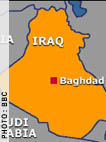
Iraq

Iraq

By JOSEPH FITSANAKIS | intelNews.org |
Amidst the chaos of post-Ba’athist Iraqi politics, a deadly sectarian conflict is raging within Iraq’s powerful spy agency. Employees inside Iraq’s National Intelligence Service (INIS) are split along religious sectarian lines, with Sunni and Shiite officers battling for control of the organization. The warring factions are directly affiliated with opposing political parties, and represent various political interests. Shiite officers are seen as aligned with Tehran, whereas Sunnis are close to Washington and –ironically– to the remnants of Saddam Hussein’s Ba’ath party. The conflict has resulted in the assassination of several INIS officers, mostly by their colleagues in the Service, according to two anonymous Iraqi security officials, who spoke to The National, an English-language newspaper published in the United Arab Emirates. Read more of this post

News you may have missed #422 (suspicious deaths edition)

  • Self-described CIA assassin dies in gun accident. Roland W. Haas, a senior intelligence officer in the US Army Reserve who claimed in a 2007 memoir that he was a CIA assassin, died over the weekend when he accidentally shot himself, police in the US state of Georgia said.
  • Russian military intel chief in mystery death. General Yuri Ivanov, 52, deputy head of Russia’s powerful military intelligence agency, the GRU, died mysteriously in a swimming accident “several days ago”, Russian media has reported. No further details have been released on the circumstances or the location of Ivanov’s death.
  • David Kelly inquest calls ‘outrageous’, says friend. Professor Christian Seelos, was a UN weapons inspector in Iraq alongside British biological weapons expert Dr. David Kelly, who was found dead four days after appearing before a UK Parliament committee investigating claims about Iraq’s purported ‘weapons of mass destruction’. Seelos now says that calls for a fresh examination into Dr. Kelly’s death are “totally politically motivated”.

US Army intel analyst arrested over Wikileaks probe

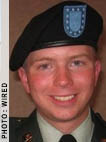
Bradley Manning

Bradley Manning

By IAN ALLEN | intelNews.org |
Speaking last Thursday at the annual Personal Democracy Conference in New York, Daniel Ellsberg said he was amazed that the US National Security Agency “can’t crack” Wikileaks. The former Pentagon employee, who in 1971 leaked the Pentagon Papers, was referring to the activist website that anonymously publishes secret governmental and corporate documents from around the world. But Ellsberg may have been talking too soon. On Sunday, Wired magazine’s Threat Level blog revealed that a US Army intelligence analyst had been detained for allegedly giving Wikileaks secret video footage and “hundreds of thousands of classified State Department records”. Specialist Bradley Manning, 22, was reportedly detained two weeks ago by the US Army’s Criminal Investigation Division while stationed in Forward Operating Base Hammer, near Baghdad, Iraq. Read more of this post

News you may have missed #362 (sex & politics edition)

Bookmark and Share

Recording of candid speech by Blackwater CEO leaked

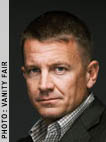
Erik Prince

Erik Prince

By IAN ALLEN | intelNews.org |
A recording of a relatively recent candid speech given by Erik Prince, the media-shy owner of Xe Services (formerly known as Blackwater), has been obtained by The Nation magazine. The extensive recording was made on January 14, during a private talk given by Prince at the University of Michigan before a sympathetic invitation-only audience consisting of military veterans, ROTC commanders and cadets, as well as business entrepreneurs. In his talk, Prince, who last December admitted having worked as a CIA asset, advocated for the employment of private contractors by the US Pentagon to combat insurgents and “Iranian influence” in countries such as Nigeria, Saudi Arabia, Yemen and Somalia. Writing for The Nation, Jeremy Scahill focuses on Princes views, as he conveyed them in his talk. Read more of this post