News you may have missed #646

Syed Ghulam Nabi Fai

Syed Fai

►►Analysis: Reorganizing Colombia’s disgraced spy agency. One former director of Colombia’s Administrative Department of Security, or DAS, has been convicted of conspiring to kill union activists. A former high-ranking manager is accused of collaborating with death squads to assassinate a television humorist. Dozens of agents have been implicated in what prosecutors call a systematic effort to illegally spy on the Supreme Court and opposition politicians, which some former DAS agents said was done with US equipment and funding. The new man in charge, however, Ricardo Giraldo, is an affable bankruptcy lawyer and former university professor, and his role is decidedly different from his predecessors’: namely to dismantle the agency.
►►Russian site snubs FSB request to block opposition networking. Russia’s top social networking site on Thursday defiantly rejected a request by the Federal Security Service to block opposition groups from using it to organize street protests accusing the authorities of rigging this week’s election. Over 45,000 people in Moscow alone have pledged on Facebook and the Russian site, VKontakte, to join fresh protests on Saturday against the 12-year rule of Vladimir Putin and the victory of his United Russia party in last Sunday’s parliament vote.
►►American citizen admits he took Pakistan spy money. Ghulam Nabi Fai, who is accused of working in Washington for Pakistan’s Inter-Services Intelligence (ISI) directorate, to lobby for Kashmiri independence, has pleaded guilty to secretly receiving millions of dollars from Pakistan’s spy agency in violation of US federal laws.

News you may have missed #644 (Pakistan edition)

Afghan-Pakistani Border

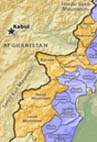
AfPak border

►►US built its own secret Pakistani spy service. Deep within Pakistan’s Inter-Services Intelligence (ISI), America’s most reliable ally has been the spy service’s division known as the T Wing. It was created largely from scratch in 2006 and 2007, after the Americans mostly gave up trying to work with the ISI’s uncooperative leadership. US officials say their hope was that the T Wing might help to offset the pernicious influence of the ISI’s S Wing, the division in charge of managing the Pakistani government’s relationship with Islamic extremist groups such as the Kashmiri separatist Lashkar-e-Taiba and Afghanistan’s Taliban.
►►Pakistan ‘permanently’ shuts down resupply routes to Afghanistan. NATO recently literally shot itself in the foot, imperiling the resupply of International Assistance Forces (ISAF) in Afghanistan, by shooting up two Pakistani border posts in a “hot pursuit’ raid. Given that roughly 100 fuel tanker trucks along with 200 other trucks loaded with NATO supplies cross into Afghanistan each day from Pakistan, Pakistan’s closure of the border has ominous long-term consequences for the logistical resupply of ISAF forces, even as Pentagon officials downplay the issue and scramble for alternative resupply routes.
►►Analysis: The fiction of Pakistan as a US ally. Sixty percent of the supplies used by US forces in Afghanistan transit Pakistan. The logistical requirements of the American army in the Afghan theater are staggering. Leaving aside food, ammunition and a million other necessities, the US military in Afghanistan consumes 300,000 barrels of oil a day. Every drop of that oil has to be trucked in country. NATO so far keeps stressing that there is no immediate threat to continued operations, but that will be true for only so long. Wars consume mountains of supplies, and without fuel, food and bullets soldiers will not fight for long.

Did US agencies fail to heed warnings of 2008 Mumbai attacks?

David Coleman Headley

David Headley

By JOSEPH FITSANAKIS | intelNews.org |
We have written before that the CIA alerted Indian authorities prior to the 2008 Mumbai attacks, which killed 166 people, including six American citizens. The incident, which was perpetrated by Pakistani-based militant group Lashkar-e-Taiba, is routinely described as the most sophisticated and spectacular terrorist strike since 9/11.  But there are numerous questions about the complex relationship between the United States, Lashkar-e-Taiba, and Pakistan’s Inter-Services Intelligence (ISI) directorate, which is widely believed to be protecting the terrorist group. Many of these questions center on David Coleman Headley, an American citizen, born in Washington, DC, who is currently in US custody, having confessed to helping plan the Mumbai attacks. According to Headley’s own court testimony, he worked for the ISI; moreover, despite early denials, the US government eventually admitted that Headley was a paid informant for the US Drug Enforcement Administration. There is, however, intense speculation in India and Pakistan that Headley, who is of Pakistani background, is in fact a CIA agent-gone-rogue, who used his CIA connections to pursue his militant plans undisturbed (something with the CIA flatly denies). Such rumors are reinforced by the US authorities’ puzzling refusal to allow Indian government investigators of the Mumbai attacks access to Headley. The curious relationship between US intelligence agencies and David Headley has been probed by several media outlets, including The New York Times, which in March of 2010 pointed out that Headley “moved effortlessly between the United States, Pakistan and India for nearly seven years, training at a militant camp in Pakistan on five occasions”. Now a new documentary by investigative group ProPublica, which aired on Tuesday as part of PBS’ Frontline television series, has unearthed new information that shows US government agencies failed to heed “repeated warnings over seven years”, which might have helped prevent the Mumbai attacks. Read more of this post

News you may have missed #634

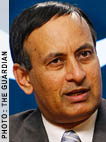
Husain Haqqani

Husain Haqqani

►►Korean ex-soldier investigated for spying. Police suspect that a former South Korean Army soldier, Kim, 34, whose full name was undisclosed to the media, crossed through Shenyang, northeastern China, into the North and handed over information gathered during and after his military service. This is the second case involving alleged North Korean spying on the South in as many days.
►►Pakistan ambassador to US resigns over spy memo row. Islamabad’s ambassador to Washington, Husain Haqqani, has resigned after a confrontation between Pakistan’s military and the civilian government of President Asif Ali Zardari. His resignation follows reports of an offer by the Pakistani government to the United States to rein in the army and its spy agency, Inter-Services Intelligence. Zardari’s government was accused of treachery over the proposal, which was made in a memo delivered to the US military chief, Admiral Mike Mullen.
►►US says ‘no proof’ of Libyan ex-spy chief’s capture. It emerged earlier this week that former Libyan intelligence chief Abdullah al-Senussi had been captured. But the United States now says there is no proof he is in custody. According to Susan Rice, the US envoy to the United Nations, Libyan authorities “were not able to confirm that Senussi was in anybody’s custody”.

News you may have missed #603

Syed Ghulam Nabi Fai

Syed Fai

►►Turkey has names of Israeli soldiers who attacked Gaza Flotilla. According to Turkish media, government officials succeeded in amassing the list of 174 names of officers and soldiers involved in the 2010 MV Mavi Marmara attack, by planting intelligence agents inside Israel. Turkish government officials have denied the reports.
►►Ex-MI5 chief to hear deportation case of alleged spy. A British judge has ruled that Sir Stephen Lander, former director of MI5, Britain’s domestic intelligence service, can help to decide whether Katia Zatuliveter should be deported from the UK for allegedly spying for Russia. Zatuliveter, a Russian citizen who worked as an assistant to former British Member of Parliament Mike Hancock, may be deported on the basis of espionage evidence gathered by MI5.
►►Analysis: Pakistan’s spy plot to influence Washington. Syed Ghulam Nabi Fai came to the US on Saudi money with hopes of helping people in the disputed Indian territory of Kashmir. But he found himself spending millions on behalf of Pakistan’s notorious Inter-Services Intelligence and, now, under arrest. An excellent article by The Atlantic‘s Kim Barker, Habiba Nosheen, and Raheel Khursheed.

US openly accuses Pakistan of waging ‘proxy war’ in Afghanistan

Mike Mullen

Mike Mullen

By JOSEPH FITSANAKIS | intelNews.org |
For the first time a senior American official has openly accused the intelligence services of Pakistan of using Taliban-linked groups to wage a “proxy war” in neighboring Afghanistan. United States Admiral Mike Mullen, Chairman of the Joint Chiefs of Staff, has described the Haqqani Network, an insurgent group closely allied with the Taliban, as Pakistan’s proxy-army in Afghanistan. The Haqqani Network, which is considered by US military commanders as “the most resilient insurgent force in Afghanistan”, is widely seen as responsible for the massive attack on the US embassy and several other targets in Kabul, earlier this month. Some military observers have compared the attacks to the 1968 Tet Offensive by the Viet Cong. Speaking on Tuesday at an event hosted by the Carnegie Endowment for International Peace, Admiral Mullen said he had pressed the government and intelligence agencies of Pakistan to break their links with the Haqqani Network. He did so during a recent meeting with the chief of Pakistan’s armed forces, which reportedly lasted over four hours. By “intelligence services”, Mullen means the Inter-Services Intelligence directorate (ISI), Pakistan’s most powerful spy agency. According to Admiral Mullen, the meeting centered on “the need for the […] ISI to disconnect from [the] Haqqani [Network] and from this proxy war that they’re fighting” in Afghanistan. He also said that “the ISI has been […] supporting proxies for an extended period of time” and described the ISI-Haqqani collaboration as “a strategy in the country”, rather than simply a series of isolated incidents by shadowy groups operating within the Pakistani intelligence services. Read more of this post

Saudis paid Pakistan to shelter bin Laden, claims security expert

R.J. Hillhouse

R.J. Hillhouse

By JOSEPH FITSANAKIS | intelNews.org |
An American academic and security expert with deep links in the intelligence community claims that, at the time of his killing by US Special Forces, Osama bin Laden was living under house arrest, following a secret arrangement between Pakistan and Saudi Arabia. Former professor and Fulbright Fellow R.J. Hillhouse has cited “sources in the intelligence community” in alleging that the CIA discovered bin Laden’s whereabouts through a Pakistani intelligence officer. The officer, who was privy to the alleged deal between the Saudis and the Pakistanis, appeared as ‘a walk-in’, a term meaning someone who voluntarily contacts an intelligence outpost, usually by simply walking into an embassy or consulate and asking to speak to the intelligence officer on duty. According to Hillhouse, the ‘walk-in’ provided CIA officers with detailed information as to the al-Qaeda leader’s whereabouts, in exchange for US citizenship for him and his family and the $25 million reward offered by the US Department of State for bin Laden’s head. According to Hillhouse’s story, which was picked up yesterday by The Daily Telegraph and The Sydney Morning Herald, the Pakistani informant also told the Americans that elements in the government of Saudi Arabia had entered into a complex monetary agreement with senior members of Pakistan’s main spy agency, the Inter-Services Intelligence directorate (ISI). Under the arrangement, the ISI was paid to keep bin Laden under house arrest in Abbottabad —a military community in Pakistan, selected precisely in order to keep bin Laden under constant and close supervision. Read more of this post

News you may have missed #559

Manuel Noriega

Manuel Noriega

►►Why did Pakistani spy chief secretly visit China? Reports reveal Lt. Gen. Ahmed Shuja Pasha, head of Pakistan’s main military intelligence agency, the ISI, flew on a secret mission to Beijing for urgent talks this Monday. China’s ties with Pakistan have traditionally been tense, and have become worse in recent years, because China accuses Pakistan of harboring secessionist Chinese Muslim militants. Some observers suggest that Pasha’s trip may have been more of a summons than a visit.
►►France to extradite Manuel Noriega to Panama. France has confirmed it will extradite Manuel Noriega to Panama, where he is wanted over human rights violations during his rule in the 1980s. The former Panamanian military leader is currently serving a prison sentence in France for money laundering. Speaking during his trial in Paris last year, the former US ally claimed that millions of dollars he deposited in several French bank accounts were CIA payments for his services, not income from illicit drug sales.
►►US intel budget drops by $500 million. More than $500 million would be cut from US intelligence agencies under a bill authorizing programs and spending for spying operations next year, Read more of this post

Pakistan removed spy from US at CIA’s request

ISI HQ

ISI HQ

By JOSEPH FITSANAKIS | intelNews.org |
A Pakistani intelligence officer was quietly removed from the United States last April, after the director of the CIA complained about him to his Pakistani counterpart. According to The New York Times, which aired the revelation last weekend, the then Director of the CIA, Leon Panetta, had “a tense conversation” with Lt. Gen. Ahmed Shuja Pasha, head of Pakistan’s Inter-Services Intelligence directorate (ISI), which led to the removal “within days” of the ISI officer. The officer in question is Mohammed Tasleem, whose diplomatic cover was that of attaché in the Pakistani Consulate in New York, but whose actual task was monitoring the political activities of the sizeable Pakistani diaspora in the United States. According to the FBI, which briefed the CIA about Tasleem earlier this year, his intelligence activities centered on pressuring politically active Pakistanis in the United States to refrain from speaking publicly on ‘controversial issues’. FBI counterintelligence reports claim that, on at least one occasion, Tasleem posed as an FBI agent, in order to extract intelligence from a member of the Pakistani community in the United States. The Times spoke to members of Pakistan’s ex-pat community who allege that the ISI systematically approaches Pakistanis speaking openly about ‘national issues’, such as the indigenous insurgency in Pakistan’s Baluchistan province, the disputed Indian region of Kashmir, or Pakistan’s appalling human rights record. Read more of this post

News you may have missed #545

Robert Baer

Robert Baer

By IAN ALLEN | intelNews.org |
►►Pakistan restores visas to CIA personnel. The government of Pakistan has reissued entry visas to nearly 90 CIA officers, which were withdrawn following the assassination of Osama bin Laden last May. Pakistan’s Dawn newspaper reports that the visas were approved hours after ISI director Ahmed Shuja Pasha’s visit to the United States last week. It is interesting to note the speed of official authorization of the visas in Pakistan –a country where even basic government services routinely fall victim to endless bureaucratic delays. Does this mean that the ISI and the CIA are back in business? If Pakistani media reports are to be believed, the two agencies were back in business as early as last May. ►►German spy agency accused of playing down stolen blueprints. New reports in the German media say that the stolen blueprints of Germany’s intelligence agency BND may contain even more sensitive security information than previously believed. German newsmagazine Focus alleged earlier this month that the top-secret architectural plans for the BND’s state-of-the-art new building “mysteriously disappeared” a year ago, without anyone in government noticing their absence. Ernst Uhrlau, BND’s Director, responded by claiming that only the building’s car park, cafeteria and energy supply areas had been affected by the theft. But according to Focus and Der Spiegel, Germany’s other major newsmagazine, the stolen documents contain classified plans for the headquarters’ main building. There are now rumors in Berlin that the scandal may force Uhrlau to resign. ►►Ex-CIA operative says he never claimed Israel would attack Iran. Recently we reported on former CIA officer Robert Baer’s warning that Israel was planning an armed attack against Iran. Read more of this post

Two US citizens charged with spying for Pakistan

Syed Ghulam Nabi Fai

Syed Fai

By JOSEPH FITSANAKIS | intelNews.org |
American counterintelligence officers have indicted two US citizens of Pakistani origin with trying to influence Congress and the White House on behalf of the government of Pakistan. According to court documents filed on Tuesday by the FBI in Virginia, Zaheer Ahmad (who escaped arrest and may be currently in Pakistan) and Syed Ghulam Nabi Fai acted as unregistered agents of a foreign government (legal terminology for espionage) while operating under the direction of Pakistan’s Inter-Services Intelligence directorate (ISI). Both men were leading members of the Kashmiri American Council, a lobby group that propagates Pakistan’s territorial claim to the northwester Indian region of Kashmir. Pakistan and India fought over Kashmir in 1947 and 1967, and have been engaged in constant low-intensity conflict over the territory ever since. The Kashmiri American Council is one of three Kashmir Councils in the West, the other two being in London, UK, and Brussels, Belgium. But the FBI court affidavit claims that the Kashmir Centers are ISI front-organizations, and that the activities of their employees are directed by the ISI. Specifically, the FBI alleges that Fai, who acted as the Council’s director in Washington, routinely coordinated his endeavors with his ISI handlers, usually communicating with them via email. The court documents mention a witness testimony that claims Fai has been an ISI operative for over two decades, and that in recent years he has been receiving between $500,000 and $700,000 per annum from Pakistani intelligence. Much of this money ended up in the pockets of influential American politicians, in the form of campaign donations. Read more of this post

News you may have missed #544

Google

Google

By IAN ALLEN | intelNews.org |
►►Russia a ‘leading suspect’ in cyberespionage attack on US. I wrote on Monday about the cyberespionage operation that targeted a leading US defense contractor last March, and resulted in the loss of tens of thousands of classified documents. US Deputy Defense Secretary William J. Lynn III, who disclosed the operation, said only that it was conducted by “a foreign intelligence service”. According to the last sentence of this NBC report, US officials see Russian intelligence as “one of the leading suspects” in the attack. ►►Al-Qaeda acquires Pakistani spy service manuals. Jamestown Foundation researcher Abdul Hameed Bakier reports that al-Qaeda operatives have managed to get access to espionage training manuals used by Pakistan’s Inter-Services Intelligence directorate (ISI). Copies of the documents have apparently been posted on Internet forums that are sympathetic to al-Qaeda, and bear the mark of the As-Sahab Foundation, al-Qaeda’s media wing. ►►Google-NSA collaboration documents to remain secret —for now. Even before Google shut down its operations in China, following a massive cyberattack against its servers in early 2010, the company has maintained close contact with American intelligence agencies. But after the 2010 cyberattack, some believe that Google’s relationship with the US intelligence community has become too cozy. In February of 2010, the ACLU said it was concerned about Google’s contacts with the US National Security Agency (NSA). Other groups, including the Electronic Privacy Information Center (EPIC), have filed Freedom of Information Act (FOIA) requests seeking access to the inner workings of Google’s relationship with NSA. Read more of this post

News you may have missed #539

Milt Bearden

Milt Bearden

By IAN ALLEN | intelNews.org |
►►Former CIA officer urges US-Pakistan reconciliation. During the 1980s, CIA officer Milt Bearden managed the CIA’s covert assistance to the Mujahedeen, who were fighting the Soviet army in Afghanistan. This means Bearden was dealing with Pakistan’s Inter-Services Intelligence directorate (ISI) on an almost daily basis. He has now written an article for Foreign Policy journal, in which he advises CIA and ISI officials to “cut through the shrillness, the schoolyard taunts that characterize […] the current feud between their services; decide on what is worth fixing; agree on important common goals; and get to work”. He also reminds policymakers in Washington that America’s “influence in the Indian Ocean is slipping as China and India flex their growing economic muscle”, and that the US needs Pakistan’s assistance to remain relevant in that part of the world. ►►Pakistan spy director comes to US following aid cut. Meanwhile, Washington’s decision to withhold nearly a billion dollars in annual military aid to Pakistan has shaken up Islamabad. The Associated Press reports that high-level US-Pakistan meetings are quickly “unfolding”. One such meeting involves ISI’s fiery Director, Lt. Gen. Ahmed Shuja Pasha, who just made an emergency visit to Washington, reportedly “for talks”. Pakistani officials insist, however, that “the trip was planned for some time”. Sure. In case you are wondering, Pasha’s visit went “very well“, according to both US and Pakistani officials. ►►Secret CIA site in Somalia revealed. While most intelligence observers are concerned with the latest US-Pakistan spat, Jeremy Scahill, one of America’s most tireless investigative reporters, has revealed that the CIA maintains a large secret site in Somalia. Read more of this post

News you may have missed #528

News you may have missed #513 (Pakistan edition)

  • Pakistan spy chief tells US to end drone strikes. Ahmed Shuja Pasha, the outgoing director of Pakistan’s Inter-Services Intelligence (ISI), has reportedly told CIA Deputy Director Michael Morell that Pakistan “will be forced to respond” if the US does not stop its drone strikes in the country.
  • CIA-ISI back in business. Overall, however, the meeting between Pasha and Morell was focused on mending CIA-ISI relations, according to Pakistan’s leading newspaper The Nation.
  • Leaked cables reveal joint US-Pakistan missions. US Special Forces were embedded with Pakistani troops on intelligence-gathering missions by 2009, confidential American diplomatic cables showed, a revelation that could hurt the Pakistani military’s public image. The Pakistani government has denied the reports.