New book by ex-Mossad officer examines Israel’s intelligence doctrine
June 23, 2015 1 Comment
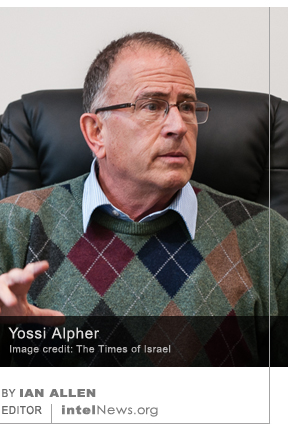 Yossi Alpher, a former Israeli intelligence officer, who was directly involved in numerous top-secret operations during his spy career, has published a new book that analyzes the overarching strategy behind Israel’s spy operations. Alpher served in Israeli Military Intelligence before joining the Mossad, where he served until 1980. Upon retiring from the Mossad, he joined Tel Aviv University’s Jaffee Center for Strategic Studies, which he eventually directed. Throughout his career in intelligence, Alpher worked or liaised with every Israeli spy agency, including the Shin Bet –the country’s internal security service.
In Periphery: Israel’s Search for Middle East Allies, published this week by Rowman & Littlefield, Alpher examines Israel’s so-called ‘periphery doctrine’. This strategy was devised by Israel’s founder and first Prime Minister, David Ben-Gurion, and formed the basic operational doctrine of the Mossad since the organization’s inception, in 1949. The strategy was based on forging deep operational ties between Israeli and non-Arab intelligence services in the Middle East and Africa, and then presenting these alliances as assets to the United States, so as to win Washington’s support. In pursuit of the periphery doctrine, Israel focused on strengthening ties with religious or ethnic minorities in the Middle East, including the Kurds in Iraq and Syria, and signed intelligence cooperation agreements with countries such as Iran, Turkey, Ethiopia, Kenya and Uganda.
According to Alpher, the most ambitious part of the periphery doctrine was the secret intelligence pact signed between Israel, Turkey and Iran. Known as C’lil in Israel, and as Trident in the United States, the agreement was struck in Ankara in 1958. Almost immediately after signing the treaty, senior Israeli officials contacted Washington and presented the secret pact between three American allies as a barrier against Soviet influence in the Middle East. Alpher says the Americans’ response was so enthusiastic, that the Central Intelligence Agency even agreed to fund the construction of a two-story building in a remote region of Israel, which served as C’lil/Trident’s headquarters. The building still exists today, says Alpher.
In another aspect of the periphery doctrine, the Mossad trained the bodyguards of senior Moroccan government officials and funded the science and technology division of the Moroccan intelligence services, almost in its entirety. In the book, Alpher reveals that Yitzhak Rabin visited Morocco incognito when he was prime minister, wearing a blond wig, in order to avoid being noticed by the press, diplomats or foreign spies. Alpher also discusses in unprecedented detail Operation ROTEV, a secret program implemented by the Mossad in the 1960s to arm the Yemeni royalists involved in the North Yemen Civil War. He told Israeli newspaper Yedioth Ahronoth that he was personally tasked with inspecting Israeli weapons and ammunition destined for the Yemeni royalists, in order to ensure that they could not be traced back to Israel.
A number of Israeli authors, notably Shimon Shamir, professor emeritus of Middle East history at Tel Aviv University, have authored highly critical appraisals of the Mossad’s periphery doctrine, arguing that it prevented Israel from seeking peace with its Arab neighbors. Additionally, the periphery strategy prompted the Mossad to collaborate with several governments that Yedioth Ahronoth calls “dark regimes and terrible dictatorships, by actively supporting them and sometimes tipping the scales in their favor”. Alpher recognizes the ethical problems of the periphery doctrine; however, he remains supportive. The periphery doctrine allowed Israel to survive by giving it funds to develop weapons programs, which in turn allowed it to win two wars against Arab armies, he says.
► Author: Ian Allen | Date: 23 June 2015 | Permalink: https://intelnews.org/2015/06/23/01-1720/
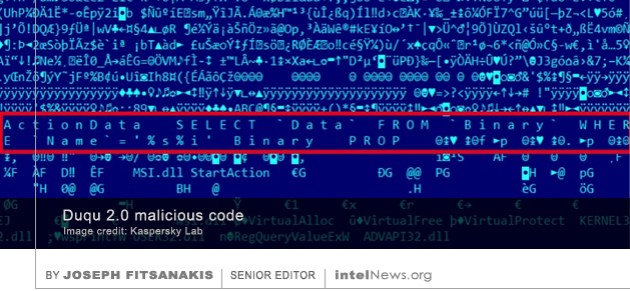 The Israeli government rejected reports yesterday that its spy agencies were behind a virus found on the computers of three European hotels, which hosted American and other diplomats during secret negotiations on Iran’s nuclear program. Cybersecurity firm Kaspersky Lab said on Wednesday that it first discovered the malware, which it dubbed “Duqu 2.0”, in its own systems. The Moscow-based firm said the sophisticated and highly aggressive virus had been designed to spy on its internal research-related processes. Once they detected the malicious software in their own systems, Kaspersky technicians set out to map Duqu’s other targets. They
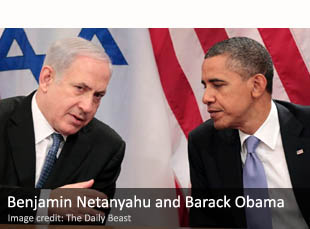
 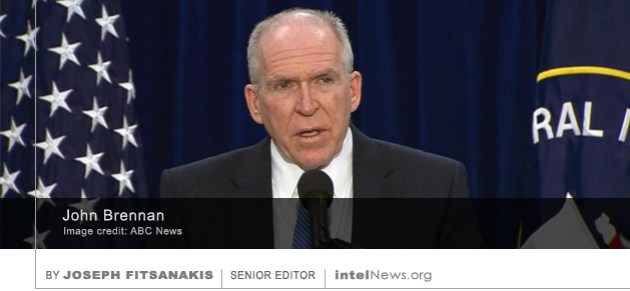 The director of the United States Central Intelligence Agency visited Israel in secret last week to discuss the Jewish state’s refusal to endorse an emerging deal with Iran over its nuclear program. Citing “two senior Israeli officials”, the Tel Aviv-based Israeli newspaper Haaretz said on Tuesday that CIA Director John Brennan arrived in Israel last Thursday. Although he was officially hosted by Tamir Pardo, director of Israeli intelligence agency Mossad, Brennan used the opportunity to hold secret meetings with several senior Israeli officials, said Haaretz. Among them were Prime Minister Benjamin Netanyahu, National Security Adviser Yossi Cohen, as well as Major General Hartzl Halevi, who heads Israel’s Military Intelligence Directorate.
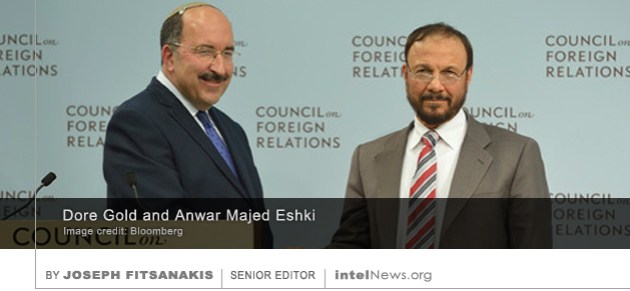 Representatives from Israel and Saudi Arabia have publicly admitted for the first time that they met secretly to discuss their common foe Iran, even though Saudi Arabia does not officially acknowledge Israel’s existence. The admission was made at a symposium held on Thursday at the Council on Foreign Relations, a foreign-policy think tank based in Washington, DC.
 A team of officers from Israel’s Mossad intelligence agency were heading to Cyprus late yesterday to be briefed on the arrest of a dual Lebanese-Canadian citizen, who was found to be in possession of 67 thousand packages of ammonium nitrate. It is not yet clear whether the passports held by the 26-year-old man are genuine. Cypriot police said he used his Canadian passport to enter the Mediterranean island about a week ago. But he was
 By JOSEPH FITSANAKIS | intelNews.org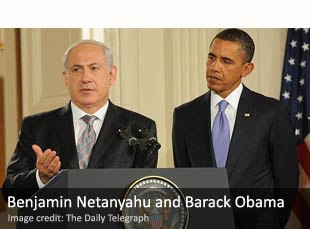









 intelNews.org
Leaked document confirms Israel was behind Syrian official’s killing
July 16, 2015 by intelNews 1 Comment
On August 1, 2008, Suleiman was shot dead with bullet wounds to the head and neck fired from a silenced rifle. He was shot as he was hosting a party on the beach behind his luxury villa at the Rimal al Zahabiya (Golden Sands) resort area, located to the north of the Mediterranean port city of Taurus. The assassins are believed to have fired the shots from a yacht, which was seen rapidly sailing away from Rimal al Zahabiya moments after the shooting. Most observers put the blame squarely on Israel. In 2009, an investigative report by German newsmagazine Der Spiegel said Israel had killed Suleiman due to his leading role in Syria’s nuclear program. However, a cable released by whistleblower website WikiLeaks in 2011 revealed that French intelligence analysts believed Suleiman had been killed as a result of a bloody power struggle within the Assad regime. These have been the two leading theories behind Suleiman’s mysterious killing.
On Wednesday, however, a document authored by the United States National Security Agency (NSA) was leaked, which shows that American intelligence analysts are certain that Israeli commandos were behind Suleiman’s assassination. The document was leaded by former NSA contractor Edward Snowden, who defected to Russia in 2013. It comes from Intellipedia, the US Intelligence community’s classified version of Wikipedia, which was formally launched in 2006. It describes Suleiman’s killing as an operation carried out by “Israeli naval commandos” and calls it “the first known instance of Israel targeting a legitimate [foreign] government official”. According to The Intercept, which published the leak, the Intellipedia document is labeled “SI”, which means that the information contained in it was not voluntarily shared with the US by Israel, but was rather acquired through the interception of electronic signals.
If the leaked document is accurate, it would mark the first confirmation by a government agency that Israel was indeed behind Suleiman’s assassination. The Intercept contacted the NSA and the Office of the Prime Minister of Israel. However, neither party responded to several requests for comment.
► Author: Joseph Fitsanakis | Date: 16 July 2015 | Permalink: https://intelnews.org/2015/07/16/01-1736/
Filed under Expert news and commentary on intelligence, espionage, spies and spying Tagged with assassinations, Edward Snowden, Intellipedia, Israel, Muhammad Suleiman, News, NSA, Syria