Will Israeli spy Pollard receive secret spy wages after US lets him go?
July 29, 2015 3 Comments
 Lawyers for Jonathan Pollard, an American with Israeli citizenship who spied on the United States for Israel in the 1980s, confirmed on Tuesday that he will be released in November, by which time he will have served 30 years of a life sentence. The news was welcomed by Pollard’s supporters in Israel, who consider him a hero, as well as by pro-Israel Americans, who have been pressuring the US government to release him. But Newsweek’s veteran intelligence correspondent Jeff Stein responded to the news of Pollard’s release by posing an interesting question: when Pollard is released, will he have access to close to $1 million in spy wages that his Israeli handlers are reputed to have deposited for him in a Swiss bank account?
Stein was referring to a practice that is common among intelligence agencies, namely to deposit cash in offshore bank accounts as a way of compensating their assets. The latter can gradually access those funds during trips abroad, usually after their retirement, long after having ceased their espionage activities. If the asset is arrested or perishes, the funds are usually passed on to the asset’s surviving relatives. This method protects the asset from the prying eyes of counterintelligence agencies in the asset’s home country, and sends a message to future recruits that assets and their families will be taken care of by their handlers.
Following Pollard’s arrest in 1985, US government prosecutors repeatedly rejected the view, put forward by Pollard’s legal team, that the former US Navy analyst was a romantic who had spied on the US for Israel because he wanted to assist a small country surrounded by enemies. They told the court that Pollard had also spied for South Africa and had tried to spy for Australia, before finally settling for working for Israel. Far from being a romantic, they said, Pollard was a calculated businessman, who sought financial compensation for his services to the Jewish state. Indeed, according to the Naval Criminal Investigative Service and the Federal Bureau of Investigation, Pollard had pocketed at least $50,000 from his Israeli handers by the time of his arrest, in addition to receiving several expensive items as gifts. The spy had also been promised that Israel would deposit $30,000 every year in a Swiss bank account, which Pollard could access after his retirement.
In his article published Tuesday, Stein wonders whether Israel has continued to deposit $30,000 a year in Pollard’s reputed Swiss bank account, which is a standard practice for intelligence agencies. If the answer is yes, then the amount available today would be in the neighborhood of $1 million. If Pollard moves to Israel come November, as many believe he will, will he then have access to the money he earned by spying on the US government as an unregistered agent of a foreign power? And if so, how should this be expected to affect the already rocky relations between Washington and Tel Aviv?
Stein said he spoke to Pollard’s New York lawyer, Eliot Lauer, who called the rumors of a secret Swiss bank account “poppycock” and added that Pollard had been “secured employment and housing […] in the New York area”. Additionally, there are some who speculate that Pollard may not be allowed to leave the US as part of the conditions of his parole. At this stage, however, nobody knows for sure. Stein contacted the US Parole Commission, NCIS and the Central Intelligence Agency, but all declined comment.
► Author: Joseph Fitsanakis | Date: 29 July 2015 | Permalink: https://intelnews.org/2015/07/29/01-1745/
 A United States Navy intelligence analyst, who is serving a life sentence for spying on America for Israel, may soon be set free in an effort by Washington to quieten Israeli criticism of a recently struck international agreement on Iran’s nuclear program. Many in US counterintelligence
 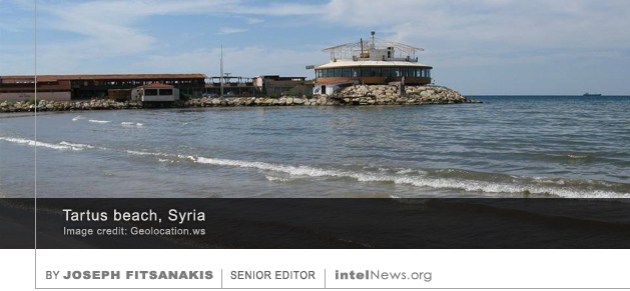 A leaked document from an American intelligence agency appears to confirm that Israeli commandos were behind the assassination of a top Syrian government official, who was shot dead outside his luxury villa on the Syrian coast in 2008. Muhammad Suleiman had been a close aide of current Syrian President Bashar al-Assad even before the latter rose to power in 2000. Once al-Assad became ruler of Syria, Suleiman was appointed special presidential advisor in the areas of arms procurement and strategic weapons. He handled intelligence affairs for the Assad regime and he was involved in weapons transfers from Iran to the Lebanese militant group Hezbollah, while also helping train Hezbollah operatives. He was also rumored to have a senior administrative role in the Syrian nuclear weapons program.
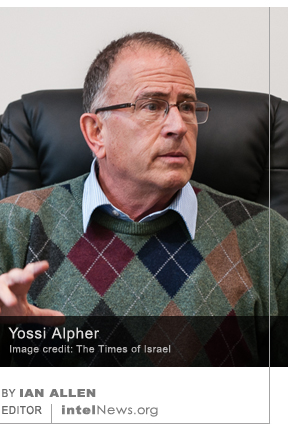 Yossi Alpher, a former Israeli intelligence officer, who was directly involved in numerous top-secret operations during his spy career, has published a new book that analyzes the overarching strategy behind Israel’s spy operations. Alpher served in Israeli Military Intelligence before joining the Mossad, where he served until 1980. Upon retiring from the Mossad, he joined Tel Aviv University’s Jaffee Center for Strategic Studies, which he eventually directed. Throughout his career in intelligence, Alpher worked or liaised with every Israeli spy agency, including the Shin Bet –the country’s internal security service.
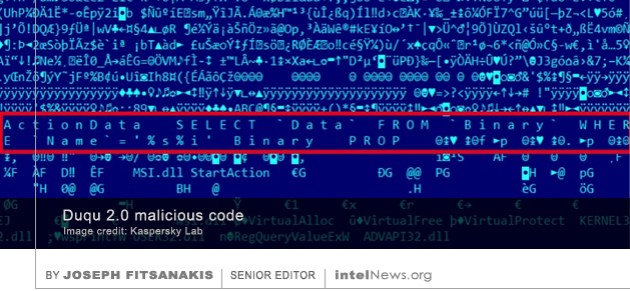 The Israeli government rejected reports yesterday that its spy agencies were behind a virus found on the computers of three European hotels, which hosted American and other diplomats during secret negotiations on Iran’s nuclear program. Cybersecurity firm Kaspersky Lab said on Wednesday that it first discovered the malware, which it dubbed “Duqu 2.0”, in its own systems. The Moscow-based firm said the sophisticated and highly aggressive virus had been designed to spy on its internal research-related processes. Once they detected the malicious software in their own systems, Kaspersky technicians set out to map Duqu’s other targets. They
 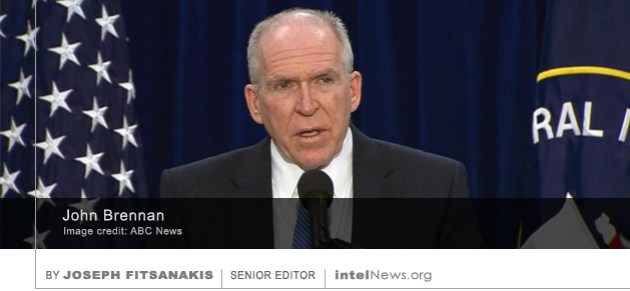 The director of the United States Central Intelligence Agency visited Israel in secret last week to discuss the Jewish state’s refusal to endorse an emerging deal with Iran over its nuclear program. Citing “two senior Israeli officials”, the Tel Aviv-based Israeli newspaper Haaretz said on Tuesday that CIA Director John Brennan arrived in Israel last Thursday. Although he was officially hosted by Tamir Pardo, director of Israeli intelligence agency Mossad, Brennan used the opportunity to hold secret meetings with several senior Israeli officials, said Haaretz. Among them were Prime Minister Benjamin Netanyahu, National Security Adviser Yossi Cohen, as well as Major General Hartzl Halevi, who heads Israel’s Military Intelligence Directorate.
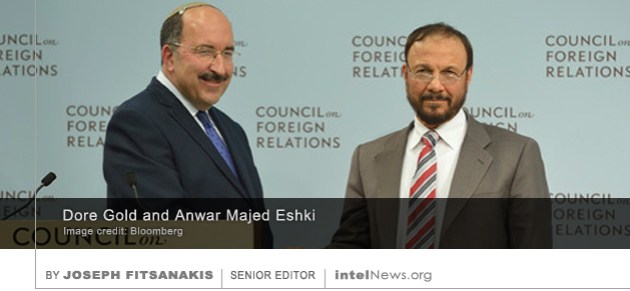 Representatives from Israel and Saudi Arabia have publicly admitted for the first time that they met secretly to discuss their common foe Iran, even though Saudi Arabia does not officially acknowledge Israel’s existence. The admission was made at a symposium held on Thursday at the Council on Foreign Relations, a foreign-policy think tank based in Washington, DC.
 A team of officers from Israel’s Mossad intelligence agency were heading to Cyprus late yesterday to be briefed on the arrest of a dual Lebanese-Canadian citizen, who was found to be in possession of 67 thousand packages of ammonium nitrate. It is not yet clear whether the passports held by the 26-year-old man are genuine. Cypriot police said he used his Canadian passport to enter the Mediterranean island about a week ago. But he was
 By JOSEPH FITSANAKIS | intelNews.org









 intelNews.org
Israel charges Swedish citizen with spying for Hezbollah
August 10, 2015 by Ian Allen 2 Comments
Shin Bet said that Hizran had been asked by his Hezbollah handlers to gather intelligence relating to Israeli military installations and that he visited Israel several times in order to fulfil his missions. He would then return to Lebanon after visiting a third country in order to provide his Hezbollah handlers with the information he had collected while in Israel. Sources in Tel Aviv said Hizran visited Lebanon at least twice since his 2009 recruitment, specifically in 2011 and 2013. He returned to Sweden with monetary sums given to him by Hezbollah as payment for his services, which amounted to several thousand dollars, according to Shin Bet. The Israeli security agency said the Swede was helping Hezbollah identify military targets for a future war, which it interpreted as “proof that Hezbollah is preparing for the net war with Israel by compiling a target bank”.
According to the Israelis, Hizran had also been tasked by Hezbollah with recruiting Arabs with ties to Israeli Jews, but that he was either unable or unwilling to do so. However, on Sunday he was charged with three criminal counts including contacting an agent of a foreign government and communicating sensitive information. The Swedish man’s Israeli lawyer, Leah Tsemel, denied that her client was guilty of espionage and claimed that he had “refused repeated requests to inflict harm on the national security of Israel”. The Swedish and Lebanese governments have not commented on Hizran’s arrest.
► Author: Ian Allen | Date: 10 August 2015 | Permalink
Filed under Expert news and commentary on intelligence, espionage, spies and spying Tagged with espionage, Hassan Khalil Hizran, Hezbollah, Israel, Lebanon, News, Shin Bet, Sweden