News you may have missed #449

  • Damning report on CIA attack on missionary plane. US Central Intelligence Agency officers involved with a secret counternarcotics mission in the Peruvian jungle routinely violated agency procedures, tried to cover up their mistakes, and misled Congress immediately after a missionary plane was accidentally shot down in 2001, according to a blistering CIA internal report released on Monday.
  • Israeli legislators call on US to release Jewish spy. Members of the Israeli Knesset are calling on US President Barack Obama to pardon American-born spy Jonathan Pollard, having been jailed in a maximum-security facility since 1985. George Bush refused to pardon Pollard in the last days of his presidency.
  • Analysis: Britain’s MI6 operates a bit differently than CIA. “Like the CIA, MI6 has a website, but while the U.S. agency site is only in English, MI6’s is also in Arabic, Russian, French, Spanish and Chinese. Another sign of British sophistication: while the CIA site has games and quizzes for kids, the MI6 site gives short tests to allow potential recruits to assess their analytical and administrative skills”. Interesting comparative assessment by Walter Pincus.

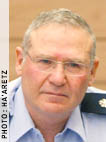
Israel intel chief hints at role in Syrian nuclear facility bombing

Amos Yadlin

Amos Yadlin

By JOSEPH FITSANAKIS | intelNews.org |
Israel’s outgoing senior military intelligence chief has implied that Israel had a role in a mystery 2007 bombing of an undisclosed Syrian government facility, which is widely believed to have been a nuclear reactor. Speaking on Tuesday before the Knesset’s Committee on Foreign Affairs and Defense, Amos Yadlin, who heads Israel’s Military Intelligence Directorate, referred to having overseen intelligence operations against two nuclear programs during his tenure. Delivering a public statement before the Committee, Yadlin noted that he had “been through two wars and […] contended with two nuclear programs of enemy states”. Security observers consider this an indirect reference to Operation ORCHARD, the 2007 attack carried out by Israeli fighter jets in the night of September 6, 2007. The target location was Al-Kibar, a site deep in the Syro-Arabian Desert, twenty miles from Deir al-Zour. Neither Syria nor Israel have directly commented on the attack, which is widely thought to have targeted a Syrian nuclear reactor. Read more of this post

News you may have missed #448

  • Russian intel source threatens WikiLeaks. A Russian secret services expert has denied that whistleblower website WikiLeaks poses a threat to Russia, and warned that the “right team” of people could simply shut down WikiLeaks “forever” if it posts classified Russian government documents.
  • UK female spy gave rare interview about WWII exploits. It has emerged that British wartime spy Eileen Nearne, who died aged 89 in September, and whose exploits echoed the fictional character Charlotte Gray, gave an interview 13 years ago –in disguise– in which she told how she was tortured by the Gestapo.
  • Lebanon sentences 3 to death for spying for Israel. A Lebanese military court on Monday sentenced three people to death for spying for Israel. Two of the Lebanese nationals, Sami Farhat and Amar al-Halabi, were sentenced in absentia because they have fled the country. The third man, Jawdat el-Hakim, is held by Lebanese authorities. Dozens of alleged Israeli spy cells have been uncovered in Lebanon in the past year.

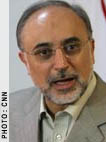
Iran admits some of its nuclear scientists spied for the West

Ali Akbar Salehi

Ali Akbar Salehi

By JOSEPH FITSANAKIS | intelNews.org |
A top-level Iranian government official has admitted that some scientists and technicians in Iran’s nuclear energy program were successfully lured into spying for Israeli and Western intelligence agencies in the past. The disclosure, which was characterized as “stunning” by the Associated Press, marked the first-ever open admission by the Iranian government that the country’s nuclear energy program has been penetrated by foreign spies. It was made last weekend by Ali Akbar Salehi, Iran’s Vice President and Director of the country’s Atomic Energy Organization. According to the Iranian government-controlled Fars News Agency, Vice President Salehi told an audience that individual scientists and technicians working in Iran’s nuclear program had used their access to classified relevant information to benefit from “foreign purchases and commercial affairs”. Read more of this post

News you may have missed #442

  • Israeli lobby intensifies Pollard release effort. As convicted spy Jonathan Pollard approaches 25 years behind bars, Israelis and others are renewing efforts to secure freedom for the former US Navy intelligence analyst, who is serving a life sentence in the United States for relaying military documents to Israel.
  • No compromise in WikiLeaks expose, concludes Pentagon. Much ado about nothing. The US Pentagon has concluded that no US intelligence sources or practices were compromised by the posting of secret Afghan war logs by the WikiLeaks website. Meanwhile, WikiLeaks is preparing to publish more revelations.
  • Niger ex-spy chief arrested. Seini Chekaraou, head of counterintelligence at the uranium-rich nation of Niger, has been arrested along with four senior members of the West African country’s ruling junta, allegedly on suspicion that they were “attempt[ing] to destabilize the [military] regime” that took power in the country last February.

News you may have missed #441

  • US officials admit terrorist suspect was DEA informant. US government officials have told The Washington Post what the world’s media has been saying for almost a year, namely that Pakistani-American David Coleman Headley, who was arrested by the FBI in October for plotting an attack on a Danish newspaper, was working as a Drug Enforcement Administration informant while training with Islamist insurgents in Pakistan.
  • Ex-CIA officer decries Israeli policies. Philip Giraldi, a former counter-terrorism specialist and military intelligence officer at the CIA, has said in an interview that Israel’s policies in Palestine “are manifestly evil”.
  • Bomber who killed seven at CIA base was not vetted. Humam Khalil Abu-Mulal al-Balawi, a Jordanian al-Qaeda sympathiser who killed himself and seven CIA agents at a remote base in eastern Afghanistan in January had not been properly vetted, the CIA has said.

British citizen among Mossad assassins intrigues investigators

Christopher Lockwood

Lockwood

By JOSEPH FITSANAKIS | intelNews.org |
Only a handful of the 33 members of an Israeli assassination squad, who killed a senior Hamas member in Dubai last January, carried non-fraudulent passports. Most of the assassins, who in all probability worked for Kidon, an elite assassination unit within Israel’s Mossad intelligence agency, used forged British, Irish, German, Australian, and other passports. Dubai officials investigating the murder of Hamas weapons procurer Mahmoud al-Mabhouh have identified at least one British citizen among non-fraudulent passport holders in the Mossad assassination team: he is 62-year-old Christopher Lockwood (photo), who helped facilitate al-Mabhouh’s assassination by transporting some of the Mossad members around Dubai “in a [rented] white minivan with tinted windows”. Read more of this post

Israel may have helped FBI nab American Jewish informant

Akamai Technologies logo

Akamai logo

By JOSEPH FITSANAKIS | intelNews.org |
The government of Israel may have tipped off US federal agents about the activities of an American Jew, who was arrested by the FBI earlier this month for sharing confidential information with an undercover FBI agent. Elliot Doxer, a 42-year-old finance department employee of Massachusetts-based Akamai Technologies, is charged with providing inside company information to a Bureau agent posing as an Israeli spy. According to court papers, the FBI counterintelligence operation against Doxer began after he emailed Israel’s consulate in Boston, in 2006, identifying himself as a Jewish American “offering the little [information] I may have […] to help our homeland and our war against our enemies”. A year later, an FBI counterintelligence team posing as Israeli Mossad operatives contacted Doxer and offered to satisfy his request for $3,000 in return for inside information on Akamai, a company whose role in the architecture of Internet’s worldwide infrastructure is instrumental. But how did the FBI know about Doxer’s attempt to contact the Israeli consulate in Boston? Read more of this post

News you may have missed #438 (Stuxnet edition)

[Research credit to Arthur Sbygniew]

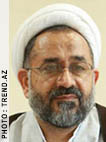
Iran announces arrests of alleged nuclear spies

Heidar Moslehi

Heidar Moslehi

By IAN ALLEN | intelNews.org |
The Iranian government has announced the arrest of an unspecified number of alleged nuclear spies, reportedly in connection with a sophisticated virus that infected computers used in Iran’s nuclear energy program. The arrests were publicized on Sunday by Heidar Moslehi, Iran’s Minister of Intelligence, who said those arrested had helped facilitate the spread of the so-called Stuxnet virus last June. The malicious program, which appears to have been designed to sabotage sensitive hardware components found specifically in nuclear centrifuges, has infected at least 100,000 computer systems worldwide, most of which are located in Iran. Speaking to Iranian media, Moslehi accused Israel and the United States of trying to sabotage the Iranian nuclear energy program, but noted that Iran’s intelligence services have resumed “complete supervision of cyberspace” and will successfully prevent “any leak or destruction” of the Islamic Republic’s nuclear research and development program by outside forces. But elsewhere in Tehran, Hamid Alipour, an Iranian government Senior Information and Technology official, admitted that technical experts are still working on containing the virus, which appears to be mutating. Read more of this post

News you may have missed #437

  • Huge demand for spy balloons in Afghan war. The hottest US weapon in Afghanistan lacks a lethal capability, floats thousands of feet in the air and doesn’t carry troops. It’s a spy balloon. Similar contraptions have been making appearances at the Lebanese-Israeli border.
  • One, two, many WikiLeaks. Daniel Domscheit-Berg, a defector from the WikiLeaks website has said he has decided to jump ship and is thinking of creating a competitor site to Julian Assange’s whistleblower platform.
  • Is publication of classified info a criminal act? When WikiLeaks published tens of thousands of classified US military records concerning the war in Afghanistan last July, did it commit a criminal act under US law? A US Congressional Research Service report argues that it did not.

Experts see nation-state behind sophisticated computer virus attack

Ahmadinejad

By IAN ALLEN | intelNews.org |
Computer forensics specialists are split as to the purpose and initial target of a sophisticated computer virus that infected computers used in the Iranian government’s nuclear energy program. The virus, named Stuxnet, was discovered in Iran in June by a Belarusian computer security firm doing business in the Islamic Republic. It has since infected at least 100,000 computer systems in countries such as Brazil, India, Russia and the United States. But the primary target of the virus appears to have been the Iranian nuclear energy program, specifically computers located at the Islamic Republic’s nuclear reactor facility in Bushehr and the uranium enrichment plant in Natanz. Several commentators, including Wired magazine, dispute the existence of any evidence pointing to a clear target inside Iran.  But Israeli media maintain that computers at Natanz were the primary target of Stuxnet, and that subsequent infections at computer labs at Bushehr were in fact an unintended side effect. Read more of this post

News you may have missed #435 (cyberwarfare edition)

  • Analysis: Cyber attacks test US Pentagon. US military and civilian networks are probed thousands of times a day, and the systems of the North Atlantic Treaty Organization headquarters are attacked at least 100 times a day. Meanwhile, more than 100 countries are currently trying to break into US defense networks.
  • US should be able to shut Internet, ex-CIA chief says. Cyberterrorism is such a threat that the US President should have the authority to shut down the Internet in the event of an attack, Former CIA Director Michael Hayden has said.
  • Iran battling alleged ‘spy virus’. Iranian officials have confirmed reports that a malicious computer code, called Stuxnet, was spreading throughout the nation’s nuclear infrastructure. But they have given differing accounts of the damage, said to be capable of taking over computers that operate huge facilities, including nuclear energy reactors. Did someone say ‘Israel‘?

Lebanon charges PKK Kurds with spying for Israel

PKK banner

PKK banner

By IAN ALLEN| intelNews.org |
Lebanese authorities have detained three alleged members of the Kurdistan Workers’ Party (PKK) on charges of spying for Israel. The three arrestees, whose names have not been released to the media, were reportedly arrested last week by Lebanese military intelligence forces in Jounieh, a town located on the Mediterranean coast, about 15 kilometers north of Beirut. The arrests form part of a wider Lebanese counterintelligence offensive that has netted over 100 alleged Israeli agents in Lebanon since April of 2009. But news of the detentions have inflamed an ongoing discussion in Turkey about alleged covert links between Israeli intelligence agencies and Kurdish separatists operating in Turkey, Iraq and Syria. Read more of this post

News you may have missed #433

  • White House quiet on Pollard release speculation. The Barack Obama administration is staying silent on a reported offer from Israeli Prime Minister Benjamin Netanyahu to extend a settlements freeze in the occupied areas, in exchange for the release of Jonathan Pollard, currently held in a US prison for spying on America for Israel.
  • ‘The Secret History of MI6’ published. An authorized history of the first forty years of Britain’s Secret Intelligence Service, MI6, has been published by Bloomsbury. The book is written by Professor Keith Jeffery, of Queen’s University, Belfast, based on his unrestricted access to SIS archives of the period.
  • Pakistan accuses Briton of spying. Authorities in Pakistan are holding a 70-year-old Briton on suspicion of spying for almost a month in the country’s lawless tribal areas. Nicholas Bain, who claims he is an author researching a book, is suspected of “working for a British intelligence agency”, according to a Pakistani official.